
Translated material
The Ministry of Finance sees no reason for further weakening the ruble and does not believe in $ 60 per barrel of oil
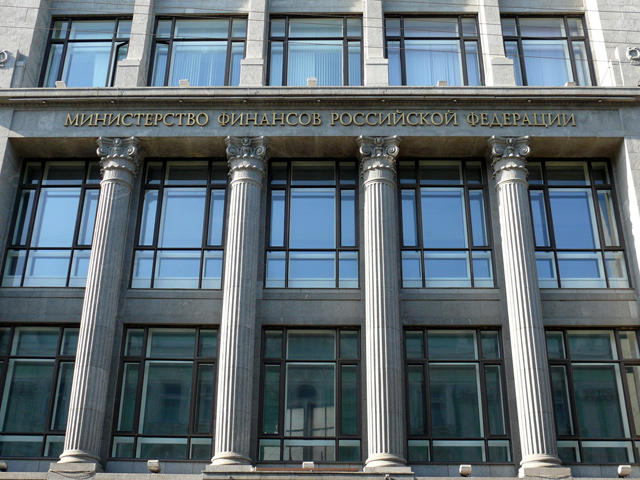
There are no fundamental reasons for further weakening of the ruble, but this cannot be excluded, the head of the Department of Long -term strategic planning of the Ministry of Finance Maxim Oreshkin believes.
“We need to look at fundamental indicators. Always the currency course returns to some fundamental indicators. If we recall 2008-2009, if we recall the first quarter of this year - it is always, when there is a trend up, an equilibrium is often a flight. Then, when the situation calms down, it is returned closer to fundamental indicators,” the interfax official quotes the statement quoted.
According to him, it is impossible to talk about the specific values of the ruble in a floating exchange rate. “If we talk about fundamental factors - with the current level of the course, our current account is very quickly strengthened. It cannot constantly strengthen. Accordingly, fundamental reasons for some kind of weakening of the ruble from current levels are not,” said Oreshkin.
At the same time, he did not rule out such an opportunity. “Of course, this can be, because the market is free, there is a demand, there is a proposal. If, for example, those who usually sell currency will take a pause, the rest will begin to buy more actively than usual - the course will go above the equilibrium level. But the period of return to fundamentally determined values comes,” he said.
According to Oreshkin, the current policy of the Central Bank is more than enough to have a strong current account even with the current oil price at the beginning of next year. "This means that in the absence of new shocks, fundamental factors will contribute to stabilization, a certain fortress of the ruble regarding current levels," he said.
On Friday, the weighted average dollar exchange rate of today at a single trading session (ETS) MICEX grew by 33.62 kopecks compared to the result of previous trading and amounted to 40.2656 rubles/1 dollar, the euro rose by 12.28 kopecks to 51.0819 rubles/1 euros.
Oil price will not fall to $ 60 per barrel
The price of oil is unlikely to drop to $ 60 per barrel, its short-term decrease to 85-80 is possible, and stabilization at $ 90 per barrel, the head of the Department of Long-term strategic planning of the Ministry of Finance believes.
"At $ 60, I do not really believe, $ 90 is what it looks more objective and we spoke about the same level when the oil was $ 100, we said that $ 90 is the level where it can stabilize. It is clear that we can take a short time to $ 85-80, but in the medium -term we will strive for $ 90," he told the journalists.
In his opinion, to predict prices, it is important to understand what kind of nature is “shock”. "We do not really believe in oil $ 60 per barrel for a long time, because the difference between the oil situation is now from the 2008 situation, when we fell up to $ 40, it was a cyclic fall associated with a cyclic drop in demand due to the global crisis, the oil has fallen and quickly recovered. Now we see more structural reasons - an increase in oil production in countries such as the United States, Iraq, and the restoration of oil in Libya.
At the same time, Oreshkin noted that if the oil price remains at the current level, it will be lower than the base, which is taken into account when forming the budget ($ 96 in 2015), and in accordance with the budget rule, the use of the reserve fund may be started. According to him, when deciding on the use of fund funds, the situation with budget revenues, a foreign exchange rate, and the economy will be taken into account. "Our desire will be to use in as low as possible. When we offer some solutions, we will look not only at the situation in 2015, but at the medium -term perspective, taking into account the preparation of the budget until 2018," he said.
Oreshkin recalled that the federal budget in the case of a fall in prices has different levels of protection - 70 billion rubles of the anti -crisis reserve that remained from the current year, transfer of the budget residues since 2014, which can double this amount, as well as the right to use the reserve fund, which is laid down in the budgetary rules to support the execution of budget expenses in the situation of falling oil prices. "We now have such a situation, so we can use the reserve fund, we immediately laid up to 500 billion rubles in the budget with the right to use the government. There will be 60 dollars per barrel, it is clear that this amount will be larger. But we understand that the use of the reserve fund can only be short -term, it cannot become a constant source of financing," he said.
Speaking about the amount of funds that could be used from the reserve fund, Oreshkin noted that this also depends on what decisions will be made to optimize the cost structure. "A government commission was created under the guidance of the First Deputy Prime Minister Igor Shuvalov, who works with state programs and analyzes what expenses you can cut out. There will be a list in which you can look at, look at the current macrosature, decide that for 2016-2017, expenses should be cut out for so much, expenses will be chosen from this list and the budget situation will be stable," he explained. According to him, the commission will continue to work in the coming months. “I think we will find out the list next year,” said Oreshkin.
He also recalled 2.5% of conditionally approved expenses that may not be implemented if it is necessary to reduce expenses.
Pure capital outflow in 2014 may slightly exceed $ 90 billion, and inflation - 8%
Pure capital outflow in the Russian Federation in 2014 may slightly exceed the forecast of $ 90 billion. This opinion was expressed by the director of the Department of Long -term strategic planning of the Ministry of Finance of the Russian Federation Maxim Oreshkin to reporters.
“In principle, even 90 was a completely real scenario, but maybe a little more. That is, it seems to me to review it somehow dramatically,” TASS quotes Oreshkin.
According to the Bank of Russia, in January-September 2014, the net outflow amounted to $ 85.2 billion, which is almost twice the indicator a year earlier (44.1 billion). The outflow of capital, taking into account currency swaps, for 9 months amounted to $ 77.5 billion. The first deputy chairman of the Central Bank Ksenia Yudaeva told reporters that the Central Bank in December plans to revise its forecast of $ 90 billion.
“They can raise a little bit, but again: in the third quarter- $ 13 billion. If we assume the same in the fourth quarter, it will be 90. But most likely there will be a little more in the fourth quarter than in the third,” Oreshkin suggested. He added that, according to his assessment, the outflow of capital "would rather not exceed" the level of $ 100 billion.
The official also does not exclude that inflation in the Russian Federation in 2014 may be 8%.
“I do not exclude that this option is possible,” he told reporters to the question of the probability of inflation for the year above 8%.
Oreshkin also noted that inflation will take place at the beginning of next year. Earlier, the Ministry of Finance expected the peaks to be completed in June-July of this year. “We said this (that the peaks passed - approx. IF -Afi) and it is clear why we were mistaken. First of all, this is due to the underestimation of the dynamics of the food price that occurred. Another factor that adds a little to inflation is the second wave of the weakening of the ruble, which we also did not expect in the basic scenario in the middle of the year,” he explained.
The head of the Central Bank of the Russian Federation Elvira Nabiullina last week said that this year inflation will be about 8%. The last target forecast of the Ministry of Economic Development of Inflation for the current year is 7.5%. At the same time, the Minister of Economic Development, in mid -September, stated that there were risks that inflation at the end of the year could be 8%, and in 2015 “fairly high risks” exceeding the target forecast of 5.5%.
According to Rosstat, inflation in the Russian Federation for a week from September 30 to October 6 amounted to 0.2%. The previous two weeks of prices also grew 0.2% after an increase of 0.1% from September 9 to 15 and 0.2% from September 2 to 8. Based on the data of the Federal State Statistics Service, the inflation in annual terms as of October 6 increased to 8.1%, exceeding the key rate of the Central Bank (8%) against 8% at the end of September and 7.6% at the end of August.