
Translated material
New York Almanac
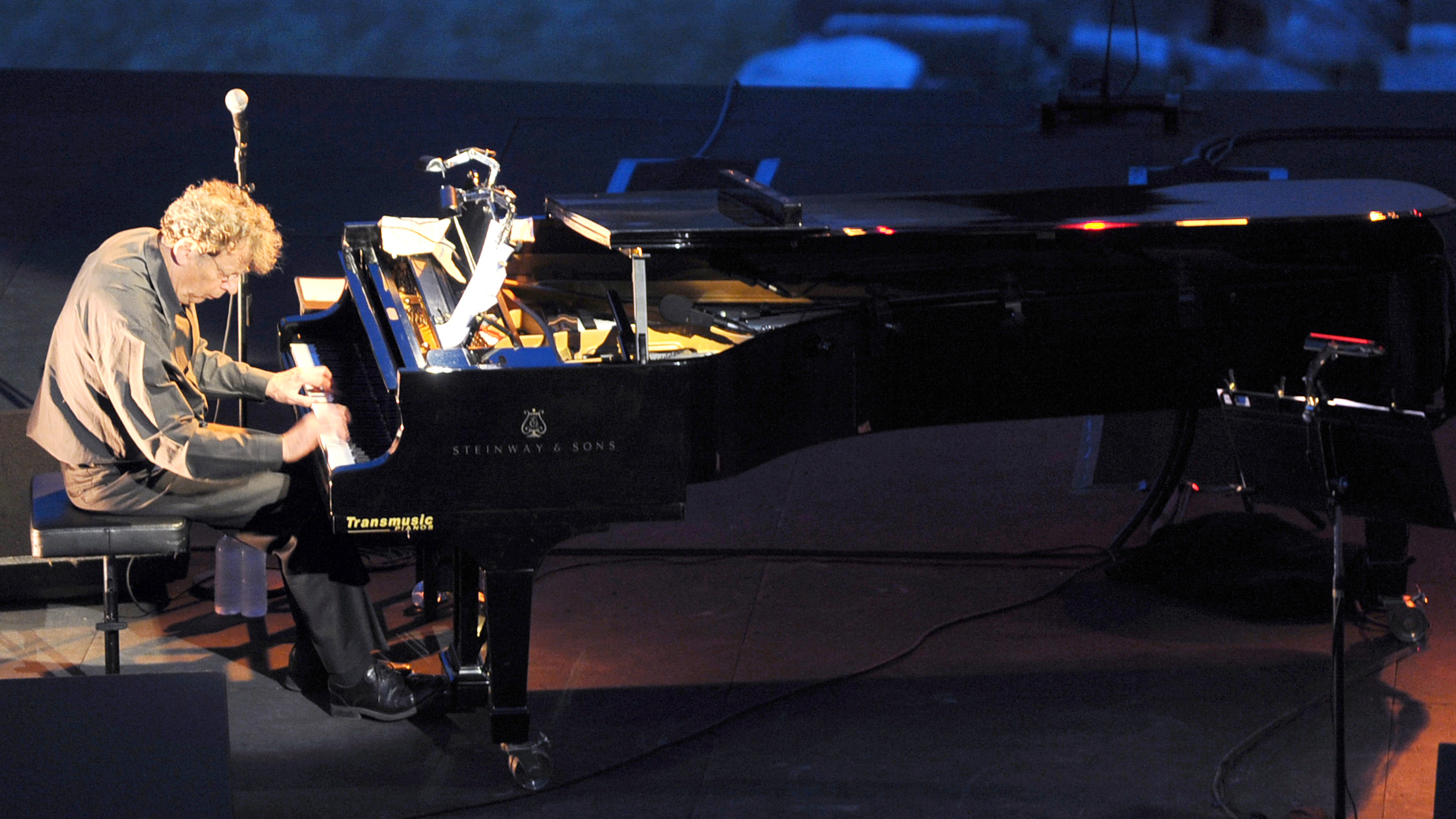
Glass and Reich: Reunion of the minimalists. Georgian cinema retrospective in the USA
Alexander Genis: In the second part ACh-New York Almanac, in which Solomon Volkov and I talk about the news of cultural life-what they see from New York.
(Music)
Alexander Genis: This fall, an important event in the history of music took place a concert of two American classics Glassic and Reich. For the first time in 40 years, they joined their efforts to perform in the BAM. Solomon, explain what is the importance of this moment.
Solomon Volkov: Yes, the moment is really very interesting, because these two people, and I am also familiar with Philip Glass and with Stephen Reich, I can testify that in the presence of one to start a conversation about the other, according to the general opinion of friends, it would be extremely tactless. For example, suppose it is the same as in the presence of Aksenov to start a conversation about Brodsky and vice versa.
Alexander Genis: Or in the presence of Yevtushenko about Voznesensky. And vice versa.
Solomon Volkov: Although at the same time they were also there, like Glass and Reich at first, this was later divided, as you know. The same, by the way, was with Glass with Raich, because 40 with something years ago they performed together.
Alexander Genis: They were young, non-residency and enjoyed, where they could, namely, in the loft of their friends, in some museums, where they called. Because they started very difficult.
Solomon Volkov: We will return to this. And here I want to say this. Sometimes they ask: what is the reason for such a 40-year disagreement? Honestly, I have a simple and trivial answer to this. Firstly, of course, it may very well be that there are some motives unknown to us, which, should you notice, very often affect the relations of the titans of the pen, brush and musical lines. It can be such a simple thing as, for example, a woman was not divided, in the end. But I think everything comes down to the fact that they both work on a certain site, it can be large, it can be narrow, but this is one site, and it is called “American minimalism”. Because they are both really fathers of American minimalism. It is very likely that no one wants to share this title, everyone wants to be one father and the main one at the same time.
Alexander Genis: Commenting on this concert, the New Yorker critic noted that the difference between the Glass and Raich is the same as between Handel and Bach. At the same time, Philip Gandel is Gandel: an extraver artist who specializes in operas, like Gandel, that is, a person who enjoyed great success in his lifetime, a person who deserved respect for the court, he lived perfectly and worked perfectly in England. And Bach is more spiritual, more restrained, more ascetic and deeper. Such a critic, he entered the picture. Do you agree with her?
Solomon Volkov: I will tell you this: if I were the editor -in -chief of the New Yorker, and my employee would bring me such an article where he would compare Glass and Rych with Handel and Bach, respectively, I would seriously think about dismissing this employee. Because this kind of statements seem to me irresponsible. Although it is quite in the dispositions of the American "cultural" irony. In America, they are very fond of finding parallels to some specific American phenomena and compare them with the titans of the past from the heritage of European culture. This is no coincidence.
Let's say Ellington is traditionally called the “American Beethoven”, suppose. This is also an extravagant comparison, it is designed to emphasize significantly the contribution of Ellington to American music through jazz and its influence on world musical processes. No one will deny this. But still Beethoven is Beethoven, and Ellington is Ellington. The same thing here. When we even talk about Handel, I know that Handel has a lot of fans, fans, I do not belong to them personally, although I played Handel's sonata as a violinist, so I respect his work.
Alexander Genis: His oratorio “Messiah” is performed by every Christmas in America, and it is impossible to live in New York without hearing this oratorio. So Handel still will not discard from the ship of our time.
Solomon Volkov: I'm not going to do this at all, do not take me for such an extremist. I have great respect for Handel, but with Bach I would not have set him in any way. In this regard, I just agree with the critic from the Newyorker that when comparing Raich and Glass compared, I also sympathies, of course, I give them to Raikh. It seems to me more interesting and thinner.
Alexander Genis: What is the difference between two types of minimalism? It should be noted that neither one nor the other recognize the term “minimalism”.
Solomon Volkov: This is also traditional.
Alexander Genis: No one wants to be at school, everyone wants to be the author of their style.
Solomon Volkov: No one wants to glue the label, what is now also called the word “label” in the Russian language. No one wants to have a label on the forehead.
Alexander Genis: And yet, how do these two versions of minimalism differ?
Solomon Volkov: First, I want to say that if I was asked who to compare Glass and Reich, I would say that these are American musical Alexandra Matrosov or some Japanese kamikaze. Because what they did in the music of the 1960s at the time of their youth (and how everyone is recognized at the moment, their highest achievements nevertheless relate to the early years of their work, and so, what they did was a feat. Because remembering that depressing situation in the so-called academic music of the 1960s, it was just a dead field. Because the second was scored by the second,, The third, five-, ten-grade epigones of Schlenberg and Weberna, people who literally produced essays based on serial dodecophone technique.
This again, despite the fact that the founding fathers of the dodeconon system and serial music, are the same Shenberg and Weberne, are wonderful composers whom I love and respect very much. But their followers turned it all, as I said, into a depressing conveyor, which sorted out the landscape. You know, Brodsky has his favorite expression, which he even inserted into poetry, that Corbusier mutilated Europe worse than the Luftwaffe. In this regard, I can say that the damage that was caused by these epigones of the then vanguard of the music in the 20th century, in the second half, in particular, in early 1950 and in 1960, it may also be compared with the raids of the Luftwaffe.
In this setting, these two, Glass and Reich, made a breakthrough of extraordinary courage, they really changed the situation. Moreover, as they laughed at them and mocked them, as they were hidden, now it’s even difficult to imagine. Indeed, they were in poverty, Glass drove a taxi, as you know, to break through. They laughed at them both behind them and in the face, because they at once simplified the music and returned the music to some kind of listening level.
Alexander Genis: And how did they do it?
Solomon Volkov: They rejected all the composer technique based on the use of these series of the so -called, when, according to certain rules, the sounds were to be constructed, and then, on the basis of artificially designed rules, all the so -called thematic material was displayed. There were no longer any melodies, it was all fragmentary, although formally organized, but by ear a completely chaotic pile of sounds for the uninitiated listener. For a specialist, for me and my colleagues, it was quite understandable music, created according to the wonderful samples of Shenberg and Weberne, but sounding terrible in their epigones. And here, Glass took the repeatability of simple melodic forms - memorable, very easily digestible, which could be laid out by kilometers, which he began to do. Glass is proud of those, and is quite rightly proud that his music can be recognized after the first few minutes.
Alexander Genis: You know, this always reminds me of the evil statement of one musicologist, who said that Vivaldi composed one wonderful concert 600 times.
Solomon Volkov: This is a similar situation in a sense.
Alexander Genis: Although I completely disagree with him, of course.
Solomon Volkov: Nevertheless, the situation is similar. It is true that Vivaldi has a lot of similar music. Another thing is that Vivaldi peaks are among the most significant achievements of the history of music in general. On the other hand, it is unlikely that anyone today will include, say, Vivaldi in the first ten composers. And Bach, who used the music of Vivaldi, again, it seems to me, if you build any lists, to call any numbers, then, in my opinion, there should, of course, have a bang.
Alexander Genis: I will not argue with you. I would do the opposite: I would make two lists: in one - only Bach, in the other - all the rest.
Solomon Volkov: I completely agree with you. But back to the minimalists. Glass. Actually, I must say that recently the enthusiasm for both of American musical criticism has seriously chopped. Regarding this anniversary concert, and it is anniversary because three concerts have passed, all three are dedicated to the 50th anniversary of the nonsense company.
Alexander Genis: ... who made it possible to emerge minimalism in the American music markets.
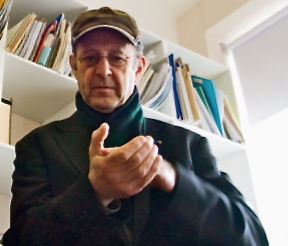
Solomon Volkov: You and I have two favorite companies, two favorite label: one “nonsach” American, and the other ECM European. Nonsach literally carried out on its shoulders the work of both Glass and Reich. The head of this company, my good friend, will idolize these two composers, he is ready for them for absolutely everything. When he talks about them, his eyes shine, he begins to gesticulate, he is a very fond of a person, for him it is the gods. For me, these are very significant figures, which really have done a lot to change the situation in modern musical creativity - for the better, but to sit a whole concert of Glass or a whole concert of the Reich or even two of them - it still needs special efforts. This is especially true for Glass. According to the remark, a rather vicious critic from New York Times, Glassa is always too much. He is more careful to the matter than his colleague from New Yorker already mentioned, he says that Glass's music is similar to the light of neon advertisements and signs. And the Music of Reich, to whom he also experiences great sympathy, like me, he compares with other materials - with wood and stone.
Alexander Genis: A curious comparison. That is, in order to imagine Philip Glass - you need to imagine Broadway: everything sparkles, everything shines, shimmers, and everything went a little loudly and went. And Reich, this is such, I would say, the Zenbuddist kindergarten, which consists of stones and trees.
Solomon Volkov: Here we are also concerned with a curious thing, namely: just from them two Glass is rather a Buddhist, which is curious, he composes a specific music often on Buddhist texts, is fond of broadcasting, I would say, humanitarian projects on Budyan soil. One of them was the famous film "Coyaniskatsi." Of course, you remember this film, it became a cult among such fans of environmental beautiful opuses.
Alexander Genis: I would say that this is one of the fundamental films of New Age, a film that creates under spiritualist music, a special modified state is a mental stress, and maybe, on the contrary, peace. The word itself means in the Indian language a state of stability in the world, it is practically not translated, so they used the Indian word. But an interesting technique was used there: the film showed clouds that were shot at the wrong speed, and this created a somnambulic effect.
Solomon Volkov: Listen to an excerpt from Philip Glass's music to the film.
(Music)
Solomon Volkov: Reich, on the contrary, is not a Buddhist, as far as I know, his religion is Judaism. He often addresses Jewish theme, he is more often than Glass expressed about specific political events, which also actually impresses me. I love when serious artists take up relevant topics, if they succeed. Say, Reich has a special composition dedicated to the tragic fate of the American journalist Daniel Pore, who washeaded by Islamic fanatics. He has an essay on the tragic events of September 11th. We showed this music, I think we will return to it. Until now, this is the best essay from that number of publishers that have appeared on this topic. There, Reich managed to observe a very difficult balance between the tragic stress and restrained objectivity (namely that using a “tree and stone”, as we spoke with you). Without this, it is impossible to affect such a topic so that they do not work out, as I express in such cases, “snot and screams”.
We will now show the essay that sounded in one of these anniversary concerts. It is called "electric counterpoint." Opus will be performed by the famous guitarist Johnny Greenwood. It was built as follows: a person, in this case, Johnny Greenwood, wrote down the sound of ten different guitars in advance, he played on ten guitars, these tracks were united, plus two electronic bass parties were added there, and then he already alive made the sound of the 11th guitar.
Alexander Genis: This is a game characteristic of the Reich with all kinds of technical capabilities of contemporary art.
Solomon Volkov: That's right. We will show this work of Reich performed by Greenwood. For the first time it was released just the other day by Nonsach, whose 50th anniversary was celebrated by these three concerts. This is an exclusive recording, it has not yet entered the sale, I received it directly from the company "Nonsach".
So, the "electric conrapunct" of Steve Reich performed by Johnny Greenwood.
(Music)
Alexander Genis: This fall, in the New York Museum of Contemporary Art, which everyone calls Moma, is the extremely curious retrospective of Georgian cinema. Moreover, it is interesting that exactly the same retrospective took place in Berkeley, on the other side of America, in California. This is a large festival of Georgian cinema in New York with great interest and was well met by the press. The Georgian cinema was written as a phenomenon that requires a separate understanding, since this is not part of the Soviet cinema, and not part of European cinema, but a separate aesthetic phenomenon. Do you agree with such an assessment?
Solomon Volkov: Yes, of course. And I also recall the impression of the phenomenon of Georgian cinema made on us all when we lived in the Soviet Union. This was also a completely special phenomenon.
Alexander Genis: I remember how you once said that the Georgian cinema for us was the same as Italian neorealism.
Solomon Volkov: Yes, right. Here, after all, this is curious here is what: Georgian filmmakers, of course, have gleaned a lot from Italian neorealism, but they did it in more attractive folklore forms. Georgia, in general, Transcaucasia, especially Georgia and Armenia-these were some fabulous edges for us, not so much a country as certain mythologems. Moreover, in relation to one and another country, and to Armenia, and to Georgia, these mythologems began to take shape before the revolution. Bryusov showed particular interest in Armenian literature, releasing the corresponding anthologies. Subsequently, this may be due to the fact that Stalin was considered a Georgian, there are some controls on this subject, some insist that he was Ossetian, but it doesn’t matter, all this was within the framework of Georgian culture. Poets, our best poets from Zabolotsky and Pasternak to Akhmadulina and Yevtushenko translated Georgian poets.
Alexander Genis: It is interesting that great poets often shared the Transcaucasia: Mandelstam took Armenia for himself, Pasternak - Georgia.
Solomon Volkov: That's right. Remember also Bitov’s travel prose, because it was also perceived as a sip of fresh air. So there are quite a lot of curious here, which could be specified and argued.
We are both from Riga. I went to study in the Latvian class in Riga, because there was no musical special school in this special school, where I entered, there was no Russian set that year and it was only possible to go to the Latvian class. I finished this class as an excellent student, one of the two excellent students, my commendable letter is still stored with Stalin and Lenin. I knew the Latvian language very well, now, of course, I forgot, but I knew well. He was friends with many representatives of the Latvian intelligentsia, with poets and with artists, with composers. In my presence, they were not particularly shy and greatly scolded the pressure that, as it seemed to them, was carried out by the authorities from Moscow. Well, this is like in any intellectual campaign. In fact, in Moscow or Leningrad cuisines they said the same thing. But in Riga, this was aggravated by the national aspect. И им всем казалось, что если бы они освободились от тяжелой опеки со стороны Москвы, их культура найдет свободный доступ на Запад и получит там гораздо более широкое распространение. И вот здесь, как мне кажется, они ошиблись.
Александр Генис: Это еще как сказать. Посмотрите на нашего земляка Петера Васкса, который нашел себе аудиторию на Западе. Посмотрите на эстонца Арво Пярта, который стал композитором с мировым имнем. Нельзя сказать, что они совсем забыты.
Соломон Волков: Можно посмотреть и на грузина Гия Канчели, кстати, который написал музыку для многих грузинских фильмов. Но тут есть и другой аспект, потому что эти как раз авторы, (и я об этом тоже все время думаю и говорю), при том, что, на мой взгляд, они являются национальными голосами своих стран, их, за исключением может быть Пярта, по-настоящему за национальный голос своей страны в этих странах не принимают: они для них слишком нетрадиционны.
Александр Генис: Так или иначе, возврашаяь к грузинскому кино, скажем, что в первую очередь оно привлекает нам потому, что оно грузинское, оно очень этноцентрическое, и часто эти фильмы пользовались огромным успехом именно благодаря экзотике.
На фестивале в МОМА представлены были среди грузинских фильмов фильмы Параджанова. Это, конечно, некоторый ляп, потому что хотя Параджанов и вырос в Тбилиси, но он, конечно, армянин, который снял самый знаменитый фильм - «Тени забытых предков» - в Киеве. Но так или иначе он человек тбилисской культуры — это тоже правда, но это -отдельная история. И фильмы Параджанова, конечно, заслуживают отдельного фестиваля, потому что их нельзя смешивать ни с грузинским, ни с каким другим кино.
Соломон Волков: Ни с грузинским, ни с армянским, ни с украинским — это страна Параджанова.
Александр Генис: Совершенно верно, именно так к Параджанову относятся в Америке. Я бы сказал, что из всего русского кино, если это можно назвать русским кино, кино, которое делалось в Советском Союзе, как раз именно фильмы Параджанова нашли себе самых благодарных зрителй в Америке.
Соломон Волков: Если не считать Тарковского, конечно.
Александр Генис: Я бы сказал, что Параджанова любят здесь больше, потому что у Параджанова есть свой культ. Я видел людей, которые сходят с ума от Параджанова и которые поклоняются ему, причем я их видел живьем, когда Параджанов впервые приехал в Америку. Вот о чем, мы поговорим отдельно.
Однако, и без Параджанова там были еще очень интересные фильмы. Для меня, пожалуй, главным было кино Иоселиани. Дело в том, что там показывали его лучшие, на мой взгляд, фильмы, а именно: “Листопад” и «Жил певчий дрозд». Эти картины я до сих пор считаю шедеврами, и знаю, что я говорю., ибо недавно проверил свое впечатление на картине «Жил певчий дрозд».
Мы были молоды, когда фильм этот только появился, а он снят в 1971 году. Для нашей компании это был фильм-пароль, по нему мы судили о человеке: если он понимает это кино, то это наш человек. Прошло много лет, однажды мне написали из Москвы, что собираются выпускать серию: все фильмы Иоселиали, и спросили, не готов ли я написать предисловие к фильму «Жил певчий дрозд». Я с радостью согласился, мне прислали фильм, я его посмотрел, написал предисловие. Больше я никогда этих людей не встречал, не слышал, все это кончилось, и никто мне не ответил, как часто в таких случаях происходит.
Но я не жалуюсь, потому что благодаря этому я посмотрел заново этот фильм и обнаружил, что он ни капли не устарел, только изменилась его тема. Конечно, не она изменилась, а я изменился. Если для меня в молодости это был фильм о лишнем человеке. Вы помните, герой фильма «Жил певчий дрозд» - человек, который не удался, он ничего не успел сделать, потому что он все время был занят чем-то посторонним своему композиторскому призванию. И тогда мы думали, что это фильм о лишнем человеке, типичная фигура для русской интеллигенции, такой Евгений Онегин нашего времени, который все время занимается не тем, чем надо. Но теперь, когда я его посмотрел заново, я подумал о том, что это фильм о том, что лишних людей не бывает вообще - герой свое дело сделал.
Соломон Волков: Он состоялся как личность.
Александр Генис: И в этом самое главное: лишних людей не бывает.
А какой ваш фильм любимый из тех, что показывали на фестивале?
Соломон Волков: Вы знаете, в каждой эпохи обыкновенно бывает две личности, представительная пара: Толстой или Достоевский, условно говоря, Прокофьев или Шостакович. И в грузинском кинематографе, мне представляется, такой парой Иоселиани и Абуладзе. Мы с вами часто делим между собой такого рода пары.
Александр Генис: По-моему, это плодотворно для наших диалогов.
Соломон Волков: Так вот, я в этой паре выбираю Тенгиза Абуладзе. Моя любовь к Абуладзе началась с его фильма «Мольба» 1968 года, который на меня произвел такое впечатление, что я его ходил тогда смотреть никак не меньше 10 раз, и с каждым разом я находил в этом фильме какие-то новые оттенки, детали. В фильмах Иоселиани пленяет такая непосредственность и легкое, плавное движение нарратива.
Александр Генис: Да, это импульсивность, внезапность поворотов. Но на самом деле это - мастерски продуманная внезапность, которая оставляет ощущение импрессионизма.
Соломон Волков: Ощущение легкости. Фильмы Абуладзе совсем не такие, они перегружены.
Александр Генис: Они театральны, барочны, они напоминают оперу.
Соломон Волков: Правильное совершенно определение их как барочных, потому что они перегружены, как и все барочное искусство символами. И с первого раза невозможно оценить всю эту насыщенность символических фильмов Абуладзе. Она, кстати, очень ярко проявилась и в его последнем фильме «Покаяние» 1987 года.
Александр Генис: Который и оказался в центре нью-йоркской ретроспективы.
Соломон Волков: «Покаяние» парадоксальным образом, (я вспомнил, я совершенно об этом факте забыл, но когда думал о сегодняшнем нашем разговоре, то вдруг вспомнил), на следующий год после выпуска еще успел получить Ленинскую премию. Большего абсурда не могу себе представить.
Александр Генис: История с этой Ленинской премией напоминает мне, что Петербург до сих пор находится в Ленинградской области. Что-то общее здесь есть.
Соломон Волков: Шнитке нашел тогда силы отказаться от Ленинской премии, на которую его выдвигали. Абуладзе эту премию взял. Я не собираюсь никоим образом никакими камнями в него кидать, а просто хочу сказать, что «Покаяние», конечно же, тоже великий фильм. В тот момент, может быть, мы несколько недооценили «Покаяние». Нам казалось: ну хорошо, это может быть первая ласточка на такую сложную тему как Сталин и десталинизация. Потому что там эта оттепель, это оттаянивание после сталинского режима замечательно изображено. Но сейчас задним числом я могу сказать, что ничего лучшего в кинематографе, пожалуй, не было создано. Для меня «Покаяние» так и осталось самым сильным фильмом на эту тему. Я могу его только, пожалуй, сопоставить с фильмом Германа «Хрусталев, машину». Это абсолютно разные по полюсам, конечно, произведения. Я вам должен сказать, признавая гениальность обоих этих фильмов, если выбрать, что смотреть, то мне трудно было бы пересматривать еще раз и еще раз «Хрусталева», потому что это очень тяжелый, царапающий сердце фильм, а «Покаяние» смотреть можно, сколько угодно. Особенно и потому, что там использована музыка Пярта. Это большая находка Абуладзе, здесь очень пригодилась ему эта музыка, заметим, эстонского композитора. Там есть гармония во всем этом внутренняя, какой-то покой. После просмотра этого фильма ты испытываешь колоссальное удовлетворение.
Александр Генис: Тот самый катарсис, которого Герман нам не дал.
(Music)