
Translated material
All this jazz Efima Barbana
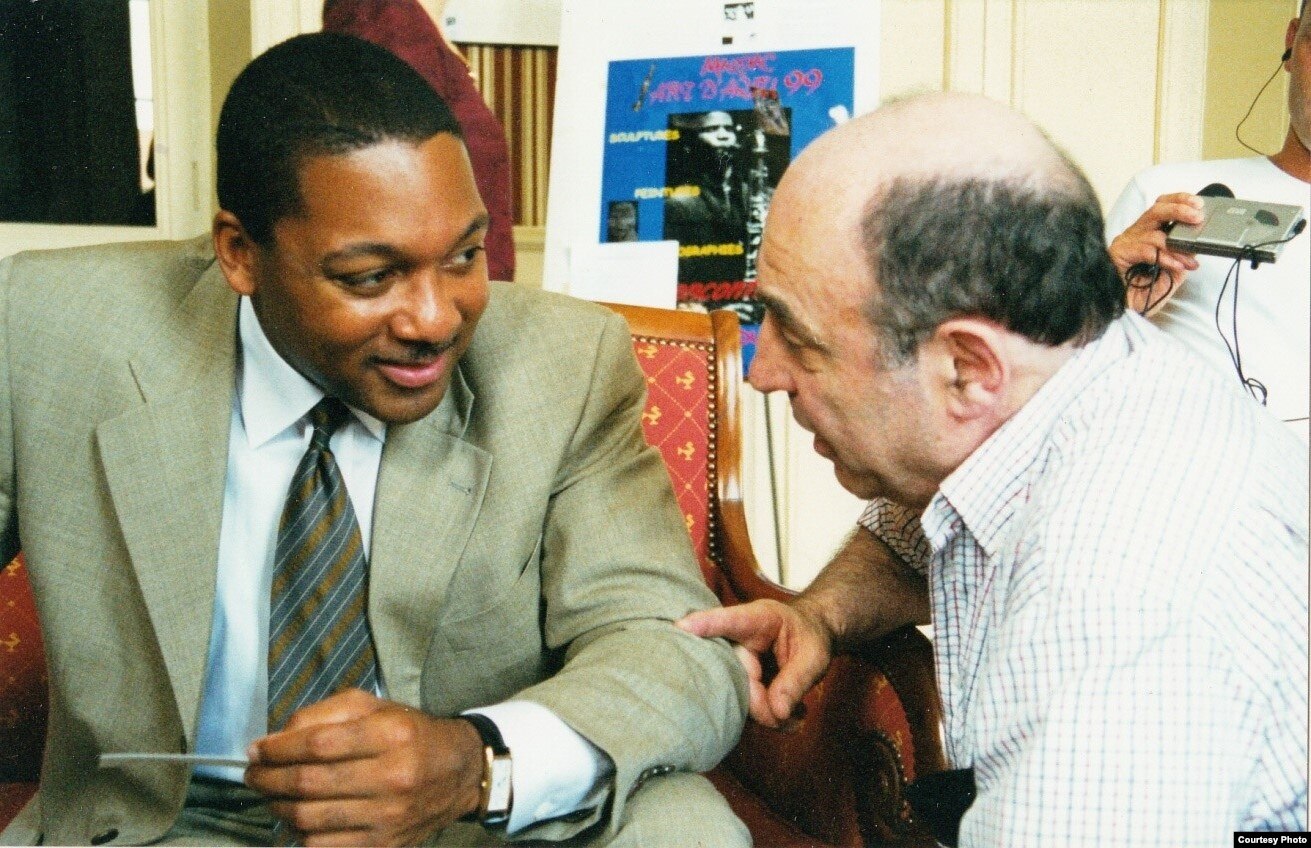
In its unique encyclopedia, a well -known musical theorist prioritize the development of world jazz
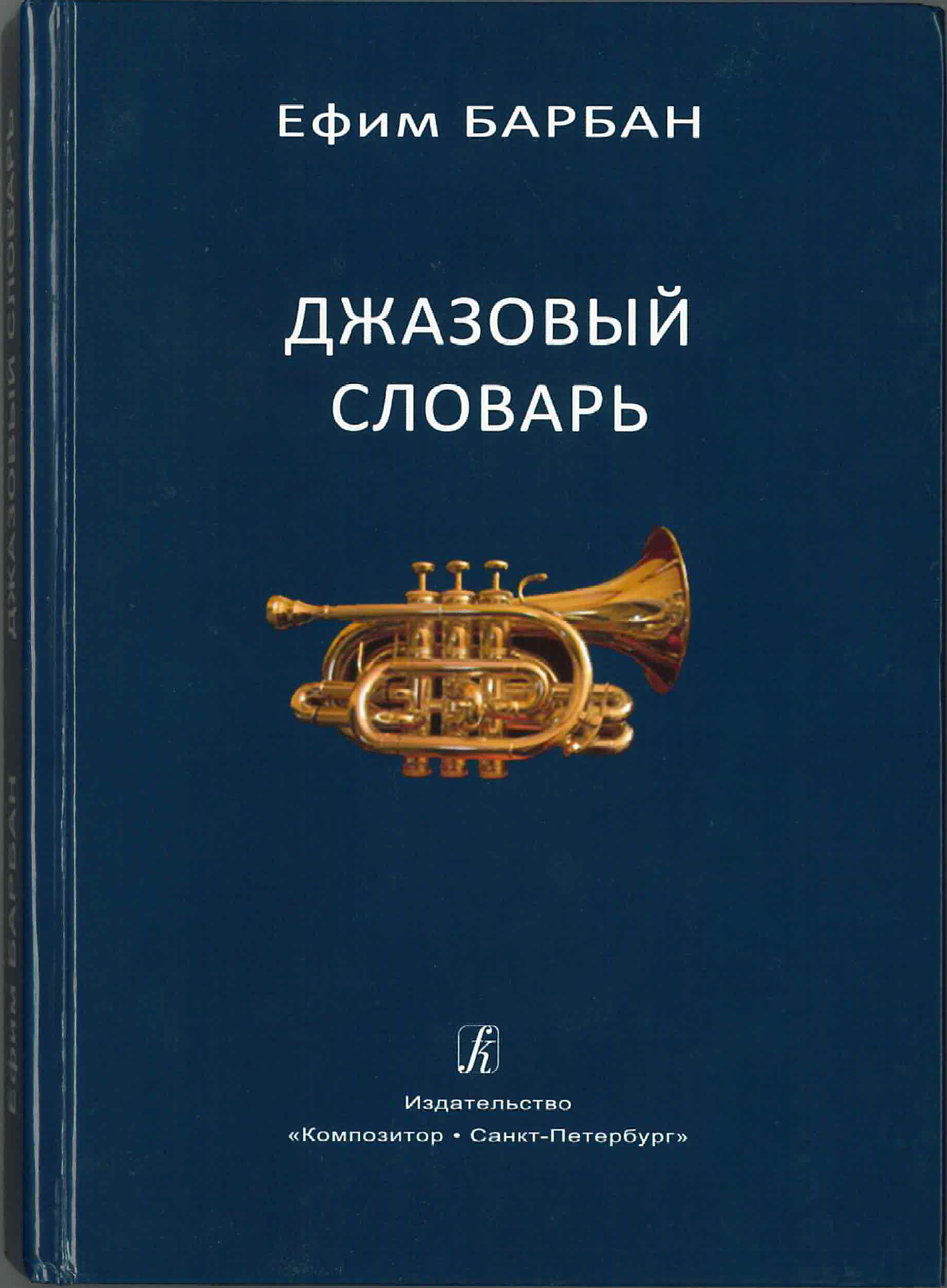
The Petersburg publishing house "Composer" has published a new book of leading Russian -speaking critic and theorist of Jazz Efim Barban "Jazz Dictionary" . This is very useful for every jazz lover an encyclopedic book on the theory and history of jazz. The dictionary contains jazz terms and includes articles on different aspects of jazz theory, history, stylistics, subculture, basic elements of jazz.
Efim Barban studies the theory of jazz for more than half a century, he is one of the creators of the first D-58 jazz club, the publisher and editor of the Samizdat typewritten magazine "Square", the author of the first Soviet book about the FRI-Jazz "Black Music, White Freedom" . For many years he conducted music programs on the BBC. In recent years, he published the books "Jazz Experiments", "Jazz Dialogues", "Contacts", a two -volume "Jazz portraits".
The author of the "jazz dictionary" told Radio Liberty about his vision of the modern jazz map of the world.
- For many reasons, American jazz is out of competition, as, however, has always been. The point is not only in the deep rooting of jazz in American traditions and culture, not even that all jazz innovators, the creators of the new jazz stylistic directions - from Armstrong to Parker and Coltrane - were Americans.
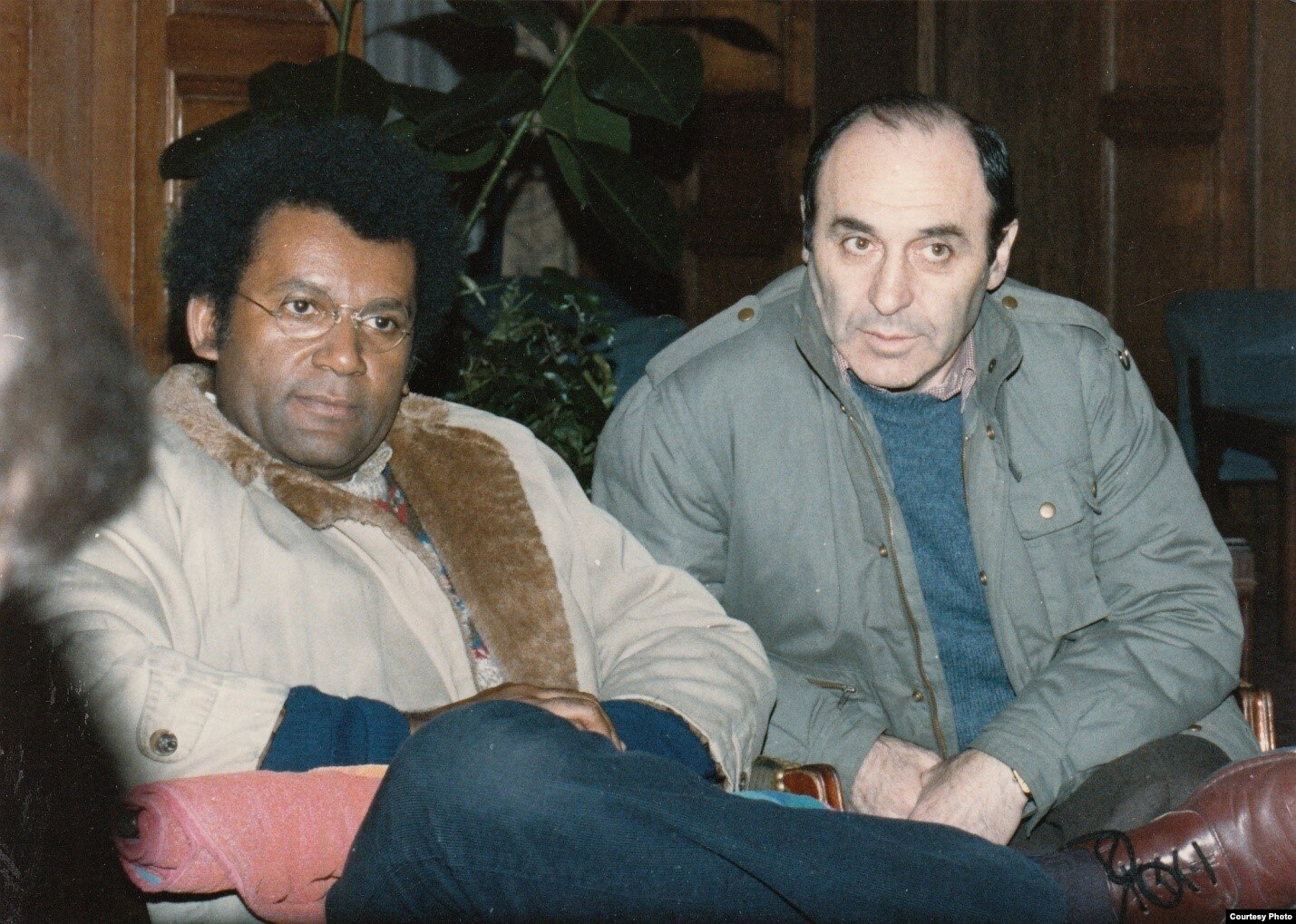
The jazz unattainable of the United States for other countries of the world is explained primarily by a powerful jazz infrastructure: a wide level of jazz education, an extensive jazz audience, a developed institute of jazz criticism, the existence of jazz research centers, the presence of a specialized press, a lot of jazz firms of grams, festivals, a huge network jazz clubs ... At about 120-130 American universities and colleges, there are jazz faculties and departments; In America, it is difficult to find a secondary school in which there would be no jazz orgamble.
- It will not be a shame for European jazz musicians to hear that Europe is the second jazz league?
American priority is in innovation and in the level of jazz culture as a whole. I would not say that there is a tremendous difference in skill, but the jazz resource of Europe is simply not comparable with the American jazz galaxy
- In fact, it is. The problem is that in the most jazz countries, such, say, France, Poland, Germany, Holland, there are enough brilliant, excellent playing musicians. Many Europeans, having moved to the United States, became jazz "stars". Take, for example, British jazz, which is closest to me, since I have been living in London for a long time. The stars in the homeland of Jazz were the pianists George Shiring, Marion McPartland, Victor Feldman, Basist and Band leader Dave Holland, guitarist John Mclaflin, all of them are the British. American priority is in innovation and in the level of jazz culture as a whole. I would not say that there is a colossal difference in skill, but the jazz resource of Europe is simply not comparable with the American jazz galaxy.
- Several European countries are given to several European countries. Your big jazz five - Great Britain, France, Germany, Poland and Russia. Russia on this list - by jazz merits or is it a tribute to the origin of the author?
If we consider Russian jazz in the context of world jazz, then at the same time it seems quite peripheral, if not provincial
- Russia was not lucky with jazz. The history of Russian jazz basically fell on the Soviet period, and the Soviet government, as you know, did not complain. Only in the mid-1950s, a jazz underground began to arise in the Soviet Union when the musicians began to copy American samples. The entire pre -war Soviet jazz was essentially a pseudojaz, a synonym for the word "jazz" in those days in Russia was a foxtrot. As a result, the Russian jazz fifty to sixty years fell out of the global jazz process. In the 1980-90s, a significant outflow of jazz musicians from Russia to the West occurred. Many beautiful musicians left: Trubach Valery Ponomarev, pianists Nikolai Levinovsky and Vyacheslav Ganelin, saxophonists Roman Kunsman, Vadim Vyadro, Sergey Gurbeloshvili and many others. In Russia, of course, there are large jazz talents, musicians of the European and even world level - German Lukyanov, David Goloshchekin, Alexey Kuznetsov, Igor Butman. But in general, if we consider Russian jazz in the context of world jazz, then at the same time it seems quite peripheral, if not provincial.
- Why did Poland enter your large list of leading European countries? The same "iron curtain", the same prohibitions on the performances of jazzmen. Where did such jazz traditions come from in Poland?
- As for Central Europe, Poland is the most jazz country, which had a tremendous influence on the development of Soviet jazz. However, not only jazz, but also on the development of Soviet unofficial culture of that time, because the entire Soviet intelligentsia of the 1950s and 60s taught Polish and read Polish books. I myself wrote out half a dozen Polish magazines. Joseph Brodsky once told me that he had to learn the Polish language to read poetry in Polish, translations, say, from English. Polish jazz had a huge impact on the development of Russian jazz, and the first international festivals in which Russian jazzmen took part in Poland - in Sopot and Warsaw. Poland played an important role in the development of not only its own national jazz, but also jazz in all countries of the Soviet bloc.
- One of the main characteristics of jazz, judging by your encyclopedia, is the ability to self -development and improvisation. But after meeting your book, I admit, I felt the feeling that the golden era of jazz was behind, that in many ways this music has exhausted the potential of its creative development ...
Slowly but surely jazz turns into academic music, into museum art
- You are in many ways right. Honestly, I look quite pessimistic at the current state of jazz, although the jazz mainstream is now full of brilliant names: Sonny Rollins, Winton Marsalis, David Merrya, Joshua Redman, Joe Lovano, Nikolaas Payton, Keith Jarrett are only some names. However, the "golden" era of jazz-the 1930s, "silver" I would call the 1950s. Until the mid-1960s, new jazz styles arose about every 10 years. But then, after the emergence of FRI-jazz, the stylistic development of jazz stalled. Hybrid jazz alloys-with rock, pop music, global folklore (jazz rock, fink-jazz, esid jazz, ethnojaz called Fuzhn)-go beyond the jazz aesthetic system and erode jazz genre features. These hybrid and only partially jazz genres focus on the aesthetics of pop culture. It is easy to notice that modern jazz demonstrates stylistic exhaustion. Yes, and the musicians of the caliber, say, Armstrong, Davis, Parker, Coltrane, Mingus stopped arising. Slowly but surely jazz turns into academic music, into museum art.
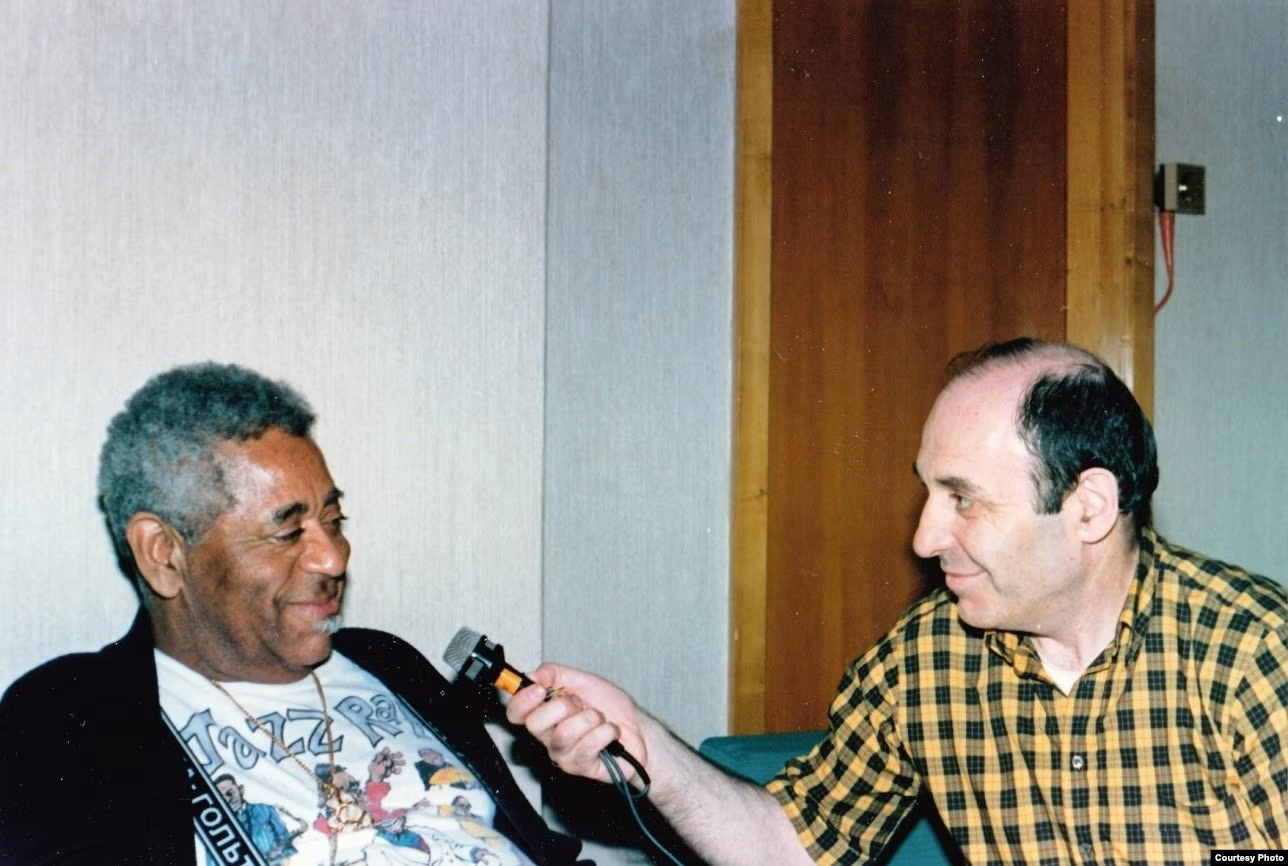
However, I would not call the current state of jazz crisis. I recall my conversation with the brilliant American saxophonist Scott Hamilton, who said that jazz could follow the path of development of academic music, in which, in principle, a stylistic exhaustion arose after the rapid development of the avant -garde. A modern Philharmonic repertoire - and this is basically classical music of the XVIII - XIX centuries, perhaps the beginning of the twentieth century. People go to listen not so much music as its performers. Hamilton, in my opinion, quite reasonably claims that classical music has retained its artistic potential over the past 300-400 years due to the fact that a new interpretation could breathe new life into it. He believes that jazz will go along the same path.
- What is the best in jazz now, in your opinion?
-In modern jazz, all historical jazz styles coexist-from dixiland to frer-jazz. If we talk about the jazz mainstream, then many brilliant masters work in this genre, although in principle they repeat what jazz classics did before them. Often the work of these jazzmen is united by the term "neobop". In fact, in a jazz mainstream there is an epigonal interpretation of historical jazz styles. Together, this is a kind of retrodzhaz.
Miles Davis plays Sketches of Spain
However, this does not mean the lack of talent among the current epigones. I am now not discussing a rather narrow segment of jazz neo -Avangard. It is difficult to highlight the most significant in modern jazz music, just people are significant. But, unfortunately, their creative potential does not reach the level of giants of the "golden" and even "silver" eras of jazz.
- Efim, if I ask you to choose a musical anthem for your "jazz dictionary", what composition will you choose?
-Several compositions come to mind at once: say, Take the "TRain" Billy Streikhorn performed by Big band Duke Ellington or Solea Gila Evans performed by his orchestra from his own joint Sketches of Spain, or Take Five, or an ingenious, or ingenious. In my opinion, the composition of Charlie Mingus The Black Saint and the Sinner Lady, said Radio Liberty Jazz critic Efim Barban.
Fragment of the final issue of the Freedom Time program
-
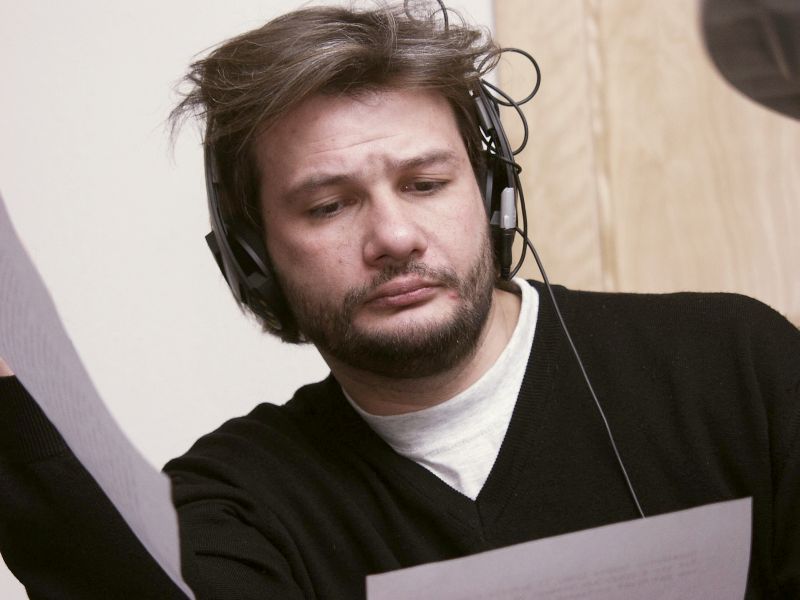

Andrey Shary
I.O. Regional Director of Radio Free Europe/Radio Liberty for Russian -Sound Content
Andrey Shary on Facebook
Sharya@rferl.org