
Translated material
Russia is in stagnation
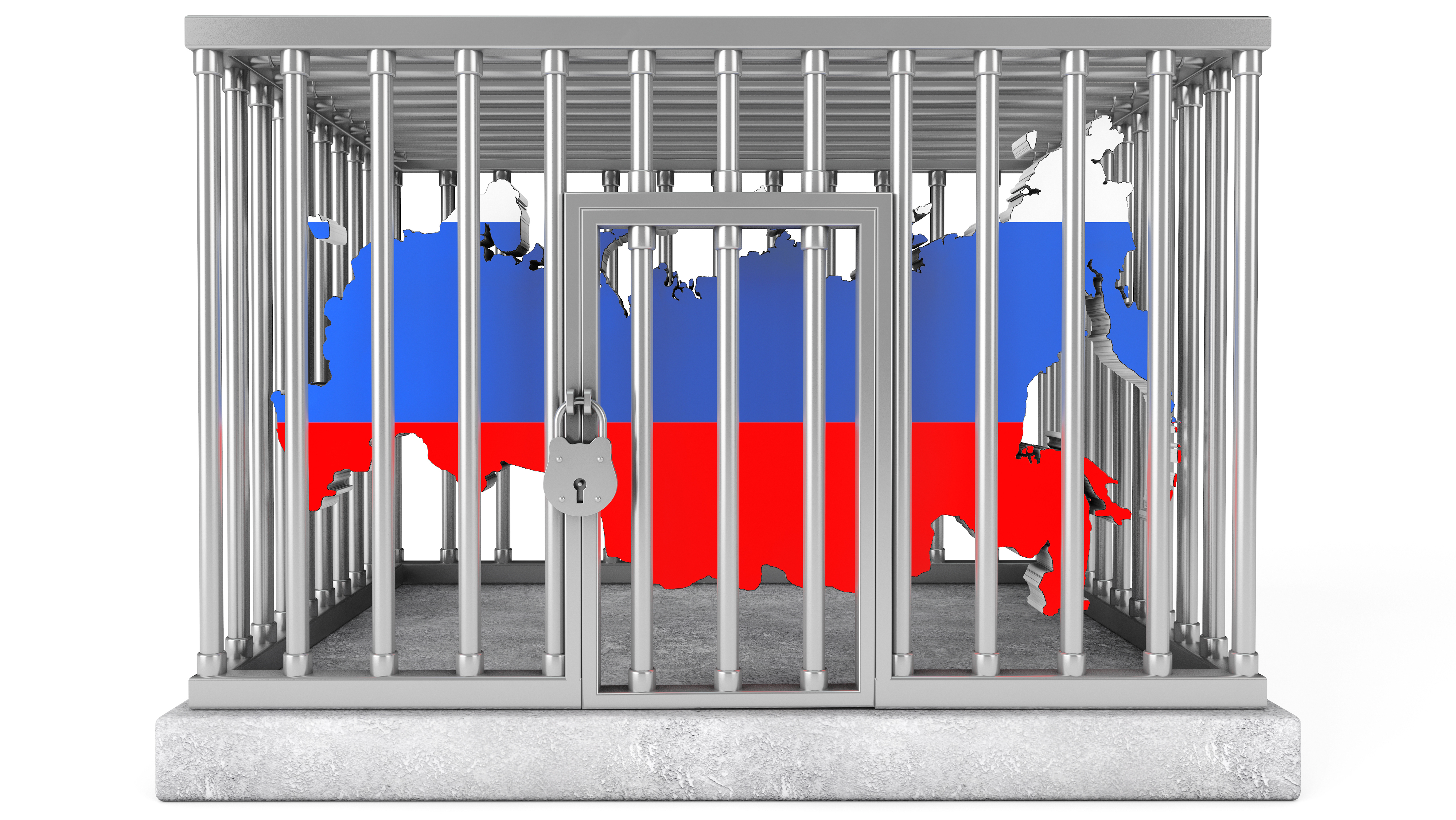
Was the fall of the Russian economy in September the first tangible consequence of international sanctions?
What is behind the cost of oil: manipulations of opponents of the Kremlin or market processes? Do sanctions affect the Russian leadership? We discuss these issues with Mikhail Burnstam, a professor of economics by an employee of the Goverov Institute in California, Gregori Grushko , executive vice president of the financial company HWA and American publicist former correspondent of the newspaper Financial Times in Moscow David Satter .
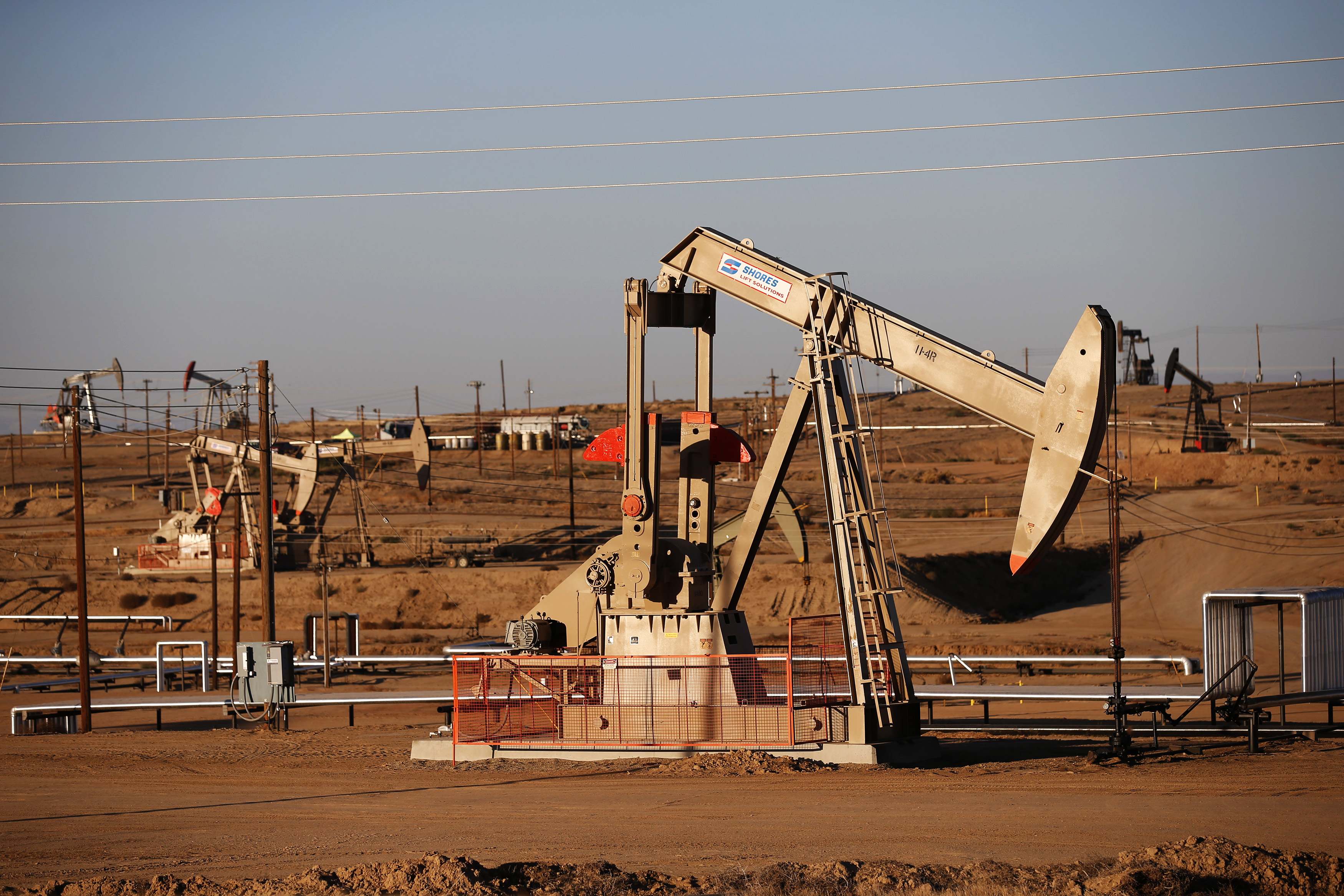
Was the fall of the Russian economy in September the first tangible consequence of international sanctions?
On Wednesday, the respectable American newspaper The Wall Street Journal has announced that the economic growth in Russia in September has stared. The newspaper made this conclusion on the basis of a statement by the Minister of Economic Development of Russia Alexei Ulyukaev that the country's economy grew over three quarters of 2014 by only seven tenths of percent. Moreover, The Wall Street Journal did not stop there and suggested that in fact in September, Russia could become a victim of an economic recession.
The USA Today newspaper is also close to such a conclusion, which, however, fluctuates in its assessment of the situation between the definitions of Stagnation and Decline. In a note, entitled "Reduced oil prices push Russia to a recession", she writes:
"If the sanctions, inflation and the risk associated with the political situation were not enough, then the falling prices of oil pushing the Russian economy from the already experiencing difficulty for the recession. The price of oil" Brent "last week dropped to the lowest mark in four years and amounted to $ 83 per barrel. This week the price was $ 85, but there is a probability that it may be likely that it may It will be much lower than 80 dollars to Russia.
- This is the opinion of the commentators of the newspaper USA Today. Professor Bernsstam, did time come to say that the jam of the Russian economy, and perhaps the fall became a direct result of the international economic sanctions that Russia is exposed?
- So far, we are talking about stagnation, and this is the continuation of the trend that began last year and intensified this year, - Says Mikhail Bernsstam. - The main reason is not sanctions and, moreover, not oil prices, but a drop in investment. And it lasts almost two years, respectively, for a long -term perspective slows down economic growth. The sanctions begin to affect, but their blow will have to be for the future. Moreover, if we talk about oil prices, then their fall will be noticeable in the future. When all these three factors are together together, then the Russian economy can fall into a recession.
- Gregori Grushko, is it possible, in your opinion, it is possible to conclude from these data that Russia begins to directly feel the consequences of international sanctions, or is it something else?
The sanctions were and are a catalyst for those destructive and destructive processes in the Russian economy that have been going on for more than a year
“I think that the sanctions have been and are a catalyst for those destructive and destructive processes in the Russian economy that have been going on for more than a year, they have only pushed and accelerated these processes,” says Gregori Grushko . - Example: the so -called CAZUS EUTUSHENKOV. The largest one -day fall in the ruble occurred after the arrest of Yevtushenkov. This is not Western investments that left Russia - this is a Russian business that takes money from the country.
-If we talk about the fall of oil prices, the question that has become very relevant in Russia in recent days, because oil really fell unexpectedly low, according to many. Professor Bernsstam, as it seems to you, what are the reasons for the reduction in oil - these are market processes, these are some manipulations, according to the conspiracyologists, what is it?
- This is primarily a technological process and then a market process. One of the main factors is American shale oil. America was now equal to Saudi Arabia as the largest oil manufacturer. If we consider raw oil and associated gas, then Saudi Arabia and the United States already extract 11.5 million barrels per day. Each year, mining is growing by 12-13 percent, that is, it is tremendous growth. Therefore, this, of course, increases the supply in the world market. Saudi Arabia, on the contrary, is trying to raise prices, save prices. Saudis reduce export and expand their oil reserves. For recent months, they throw 300 thousand barrels per day less. But this does not help. That is, from the point of view of a proposal, this is an increase in oil production. From the point of view of demand - a slowdown in economic growth in Europe, a slowdown in economic growth in China and, as a result, oil becomes cheaper.
- Professor, you mention mainly macroeconomic circumstances, which are mentioned for several years. But why suddenly the fall of oil sharply cut through the Russian budget now, in these months after the Russian, let's call the invasion of Ukraine, after the rejection of Crimea? Is there a connection between this? After all, it is no coincidence that Vladimir Putin the other day asked the question: does he believe that there is a conspiracy between Washington and Riyadh in order to reduce oil prices?
As for the conspiracy, the conspiracy is in order to increase oil prices
- As for the conspiracy, the conspiracy is in order to increase oil prices, ”says Mikhail Bernshtam. - Because Washington does not allow drilling in coastal shelf zones, puts off the construction of pipelines, does not encourage shale oil. Er-Riyad is also trying to raise oil prices in his own way, reducing exports. But technological and market processes work to reduce prices.
- Gregori Grushko, from your point of view, the practice operating in the financial market, the twenty -sixth percent drop of oil in ten months looks like a natural or, say, artificial phenomenon?
- I am really a market person, and as a market person I do not believe in the effectiveness of long -term manipulations. Manipulations take place and have a certain effect, but this is usually a short -term effect. The market is influenced by two main factors - demand and supply. As Professor Bernhett, the proposal continues to grow due to the development of shale oil primarily in the United States. The other day, the US analytical company in its report said that even at the price of a barrel of $ 57, the development of shale oil in the United States will remain profitable. Last year, in their own report, they believed that such a breakless cost would be about $ 70 per barrel. At the same time, they believe that production costs can be reduced by another 40 percent by improving logistics, relationships with suppliers, and so on. This year alone, 18 thousand wells were drilled in the United States. This means that the proposal continues to grow, while the demand, which is the function of the world economy, remains more or less stable, at least not so quickly growing in order to meet and satisfy all the proposal that continues to grow at a very rapid pace.
- David Satter, as a specialist in the field of political sciences, how do you feel about the assumption that a sharp sudden drop in oil prices may be the result of the action of not market, but political forces? After all, there are sustainable rumors that in the eighties, the Saudis organized an artificial drop in oil prices at the request of the United States in order to crush the Soviet Union.
- Of course, this is a precedent of the 1980s, when Saudi Arabia actually collaborated with the Roigan administration to reduce the cost of oil prices, ”says David Satter. - And this, of course, affected the fate of the Soviet Union. But it was another era, other conditions. The relationship between Saudi Arabia and America was also different. Therefore, I have not yet seen the signs that there is a similar situation now. It seems to me that this is a market operation.
-The professor, so was it, in your opinion, a precedent of an oil conspiracy between the United States and Saudi Arabia in the eighties?
“In 1985, just by random coincidence, Saudi Arabia did everything in order to raise oil prices,” says Mikhail Bernstam. - Because the price of oil really fell very much. But she fell compared to 1979-1980. In 1979-1980, the price of oil in modern dollars was higher than a hundred dollars per barrel, which was unprecedented. But why? The Iranian revolution, the Iraqi war led to the fact that the supply of Iranian and Iraqi oil to the market ceased, but at that time they began to seriously enter the Venezuela, Nigeria market, sharply increased the production and export of Mexico. In the early 1980s, partially the sale of Iranian, Iraqi oil, plus Mexico and Venezuela, was restored, plus production in the Soviet Union rose, the Soviet Union sharply increased export. Therefore, since the mid-1980s, oil prices began to fall sharply, and this trend lasted 20 years. Saudi Arabia tried to change this. These are the facts. So there was no conspiracy, there was no manipulation either in the 1980s or in the 1990s, this is now, and this is impossible.
- It is interesting that, more recently, answering the question about the possible anti -Russian oil conspiracy, Vladimir Putin expressed doubts about its existence, noting that the drop in oil prices to the current level is already beating for its main manufacturers, who expect their budgets based on higher prices. Indeed, Deuteche Bank, for example, calculated that Saudis need ninety -dollar oil, and Venezuens need to earn one hundred and sixty dollars per barrel for normal life. If so, is the current level of the limit of the fall of oil, because manufacturers will not allow it to fall below?
One of the sources of reduction in oil prices in the world market is President Putin, metaphorically speaking, Russia
- It is difficult to say, but we, apparently far to the bottom now, will continue the gradual decrease. As for the versions of President Putin, one of the sources of reduction in oil prices in the world market is President Putin, metaphorically speaking, Russia. Russia was about 6 million barrels at the day in the day in 1998, since then it has sharply increased and almost reached and reaches the Soviet level, then it was 12 million barrels a day in the RSFSR as part of the Soviet Union in 1989, now it is already somewhere approaching 11 million barrels per day. Therefore, it is precisely Russia, if it is looking for those responsible for reducing world oil prices and an increase in supply, and there is one of the reasons for this trend. But this is good for Russia to increase production, increase exports, and even with a decrease in oil prices, Russia will be able to use its oil resources. But on the budget, a decrease in oil prices will affect very painfully. Because the calculations show that about $ 15 per barrel, what has happened in recent weeks, Russia will lose about $ 25 billion, which go to the budget. Oil and gas revenues for the budget of Russia give approximately $ 220 billion a year. The loss of 25 billion is a loss of 11 percent, it is a big blow to the budget.
Over the past months, American, Western experts persistently predict the emergence of very painful economic consequences as a result of international sanctions. This is how the current situation of the British The Telegraph is seen:
"This time, Russia has encountered the need not to respond to the Reagan Strategy of the US nuclear re -equipment, as happened with the Soviet Union, but it, like nuclear missiles, was directed, and in the world with a globalized banking system this more dangerous weapon, which many people imagine.
It will not be an exaggeration to say that the capabilities of the United States in the field of regulation of financial institutions have never been as far -reaching as now. As a result, Russian banks and the company controlled by the state turned out to be cut off from world capital markets, and Russia will be unable to refinance its external debt with a size of $ 720 billion.
The reserves of cheap raw oil in Western Siberia are reduced, but huge investments from Western countries and the supply of Western technologies are blocked necessary for the development of new deposits. So, for example, Exxon Mobile was ordered to suspend a joint enterprise with Russia in the Arctic, and the development of the Bazhenovsky shale oil deposit is impossible without computer equipment from the United States. China cannot fill this gap.
The latest IMF report for Russia contains such sad conclusions regarding the economy of the Putin era: market barriers on the path of product movement are the most difficult to say of all large countries, and the Russian economy is a confusing ball of difficulties. In other words, the Russian development model has exhausted itself. "
- David Satter, judging by the public statements of Vladimir Putin, he simply continues to dismiss these forecasts, and judging by polls by public opinion in Russia, most of the country's residents believe that sanctions are not so terrible for Russia. Can sanctions work with such unanimity, that is, force the Kremlin to change their behavior in Ukraine or the Western capitals counted?
- I believe that they can, but only in the future, and not in the literal sense, but since the situation in the country worsens, Putin and his environment, if they continue to rule the country, will look for exits. Now everyone says that sanctions are not important, we somehow can handle this situation, ”says David Satter. - This corresponds to a chauvinistic rise in the country, which continues to this day. But these sanctions can have far -reaching consequences. These consequences will affect the situation a month after a month in connection with other circumstances and growing dissatisfaction with the regime, they can, of course, represent problems for Putin and his environment.
- But there is another point of view: such, roughly speaking, the collective form of punishment of Russians, as a blow of their well -being, will only rally Russians on the Kremlin’s platform, which, perhaps, should not be tested by deprivations of all Russians?
Russian population ... must also understand that aggression has a certain price
- In Russia, there is a very specific political and social situation, ”says David Satter. - This is a society that is devoid of moral guidelines. Especially when it comes to the state and foreign policy, the behavior of leaders. In such a situation, you can’t react - this indirectly confirms these distorted views on things that Russian leaders promote. Naturally, no one wants the Russian population to suffer, but still the Russian population as part of Russian society should also understand that aggression has a certain price, that the outside world is capable of and is ready to respond. This can even help in the future. Because nevertheless, that the most important thing here is to initiate a process to rethink in Russia. This is absolutely possible. Because if the economic situation worsens, people will still associate this with sanctions.
- David, roughly speaking, are you not afraid that you will cause this even more angry negative feelings in Russia in relation to the West and will actually work into the Kremlin’s hand?
- The attitude to the West will be the same as it is. But the most important thing here is that this will be the desire to create pressure on Putin and on its regime. Because nevertheless, he will be afraid of the destabilization of the situation in Russia, and this can push him to some concessions, which will further make the situation for the Russian population better.
An authoritative American economist, Professor of Colombian University , Padma Desai spoke in the British Financial Times with an unexpected analogy. She wrote that Russia could expect a fading similar to what the Soviet Union of the Brezhnev era experienced. That's what she writes:
Today, Russia is facing a prospect of a long decrease in economic growth, and this resembles the situation of Brezhnev times
"The instructive can be a comparison between the state of the Russian economy today and the long period of reducing the rate of its growth in the Brezhnev period. By the end of Brezhnev’s reign, the volume of the Soviet economy was not only not growing, but on the contrary, it was reduced, and this despite the fact that investments in the economy of all internal financial sources were high. In the most recent years of Brezhnev’s rejection, this indicator ranged between 25-30 percent of the national violence But all these financial influences have not led to anything, for the simple reason that the Soviet economy is now the performance of the Russian economy than in Soviet times, since it is mainly functioning according to market standards. объявленную ими политику переориентации экономики на внутреннее производство. Массовое "импортозамещение" окажется непродуктивным, так как это – то, на что обрекает страны политика протекционизма. Снижение уровня иностранных инвестиций в российскую экономику также приведет к тому, что Россия потеряет доступ к жизненно важным западным технологическим инновациям, которые крайне необходимы для оздоровления ее экономики. Иными словами, сегодня Россия стоит перед перспективой длительного снижения темпов экономического роста, а это напоминает ситуацию брежневских времен".
– В свое время Егор Гайдар писал о том, что резкое падение цен нефти обрекло Советский Союз на крах. Профессор Бернштам, как вы относитесь к такой аналогии между Россией эпохи Владимира Путина и СССР эпохи Брежнева?
- Моя точка зрения была изложена в моей статье в январе 1986 года в газете The Wall Street Journal, где как раз говорилось, что начало падения цен на нефть может привести к улучшению отношений Советского Союза с Западом, к большим уступкам, потому что трудное положение будет вести к необходимости увеличения западных кредитов. То есть речь не шла о том, что произойдет падение советской экономики или падение Советского Союза, речь шла о том, что произойдет изменение советской внешней политики. Падение Советского Союза связано с теми экономическими реформами, которые были произведены внутри Советского Союза. Падение цен на нефть было третичным фактором. Более того, в постоянных ценах цена на нефть в конце 1980-х годов начала даже подниматься по сравнению с 1985 годом.
– То есть современной России едва ли грозит судьба Советского Союза?
В России власть держится, надо честно сказать, за счет той легитимности, которую ей создало восстановление экономики
- По современной России надо учитывать несколько факторов. В 1990-х годах произошла экономическая катастрофа гораздо большая, чем Великая депрессия. 44 процента падение валового внутреннего продукта по сравнению с 29 процентами в Соединенных Штатах и 16 процентами в Германии. В Германии 16 процентов падения валового внутреннего продукта достаточно было для того, чтобы Гитлер пришел к власти, началось экономическое восстановление путем государственной политики, а затем реваншизм. В России власть держится, надо честно сказать, за счет той легитимности, которую ей создало восстановление экономики, восстановление жизненного уровня в 2000-х годах. Эта власть может быть какой угодно отрицательной для внешнего мира, но она положительно рассматривается населением, потому что население видело глубочайшее падение экономики и жизненного уровня в 1990-е годы и восстановление в 2000-е годы.
– Но не поставила ли сегодня эта власть себя под угрозу, провоцируя экономические санкции, то есть подвергая угрозе это самое экономическое оздоровление, выздоровление, выбирайте какое угодно определение?
- Началась стагнация, и стагнация началась по внутренним причинам, потому что резервы роста на восстановление экономики были исчерпаны, а источники дальнейшего роста уже сверх этого уровня, их в России нет. Нет технологического обновления, за 25 лет не создано ни одной новой отрасли промышленности, – говорит Михаил Бернштам. – Научные открытия русских используются на Западе, а не в России, нет новых технологий, падают инвестиции, значит экономического роста в ближайшие годы ожидать не приходится. Но санкции и затем падение цен на нефть отрицательно скажутся на состоянии экономики, на жизненном уровне населения. Очень сомнительно, что они приведут к политическим потрясениям.
– Грегори, ваша точка зрения, можно ли предположить, что экономические санкции окажут резкое влияние на экономическую ситуацию в России и, скажем так, переломят хребет российской экономики?
Чем хуже состояние российской экономики, тем больше падает рейтинг Обамы в России
- I don't think so. Я считаю, что чем хуже состояние российской экономики, тем больше падает рейтинг Обамы в России. То есть российская пропаганда настолько эффективна в России сейчас, что все, что негативное сейчас происходит, это очень легко перебрасывается как вина на западных империалистов и врагов России. Поэтому я не думаю, что какие-нибудь весьма серьезные экономические потрясения приведут к большим политическим изменениям внутри России. Санкции являются катализатором негативных структурных процессов в российской экономике. Если бы экономика продолжала расти, если бы экономика России не зависела только от нефти и газа, если бы существовали какие-то инновационные процессы, тогда можно было бы поговорить о чем-то совсем другом. Но поскольку российская экономика входит в стагнацию и без санкций, сама по себе, санкции только подхлестывают, только подталкивают эти негативные процессы, которые шли в России не первый год.
– Дэвид Саттер, Грегори Грушко говорит о том, что падение российской экономики, экономические проблемы приведут к падению рейтинга президента Обамы, у вас тоже такое ощущение или они все-таки могут возыметь какие-то другие последствия?
- Мы должны быть немножко осторожны по поводу прогнозов, потому что ситуация может измениться мгновенно. Никто не ожидал, что ситуация в Украине будет так трансформироваться. Почему она трансформировалась? Потому что если бы милиция не избила молодых демонстрантов на Майдане в ночь, когда Янукович отказался от соглашения об ассоциации с Европейским союзом, может быть, этого не было бы. Такие примеры сплошь и рядом в России. Потому что Россия – страна большой несправедливости, и ситуация в стране может меняться, особенно в реакции на события, которые мы пока не можем предсказать. В этой ситуации этот фон экономический, ухудшающий условия, трудности, безработица, высокие цены, которые давят на людей, – это все может играть свою роль.