
Translated material
Why do they learn Russian in America

Ach guests - Professor Slavists
Alexander Genis: American Slavs are sensitive to political changes. As the director of the Russian school in Vermont told me last summer, “I should open your mouth to Putin, as we have five new students.” And all of them have to master one of the most difficult languages in the world. The Russian language teachers at American universities tell our correspondent to Vladimir Abarinov about how this is happening.
Vladimir Abarinov: To learn a foreign language means to understand the way of life and the logic of its native speakers. This is not easy when there is a cultural barrier. The teacher has to explain the things that seem obvious to him and which he himself never thought over. I talked about this with my three acquaintances teaching Russian and literature to American students.
One of them is Julia Trubikhina. She teaches at the New York College of Hunter. To begin with, I asked her what kind of students were her students, why did they Russian language.
Julia Trubikhina: For various reasons, they are recorded on Russian courses. In New York, we have a huge Russian population. That is, part are children from Russian -speaking families. Some of them go to language courses, because they still need some kind of foreign language, and at first many of them hope for an easy assessment. This almost never turns out. American non -Russian -speaking students choose Russian ... well, I don't know why. Maybe because they always wanted, maybe because it is interesting, maybe they read something in the news, maybe because Russian friends or a Russian girl or a young man. All the same, they need to take some foreign language. But those who are enrolled in literary and cultural courses are different with them. Interest in culture or literature can arise while you are engaged in language. It depends on the teacher. If you like the teacher, then they go to literature and culture. And some are really fond of this. So there are very different motivations.
Vladimir Abarinov: Diana Gratinya began to teach foreigners the Russian language in her native Saratov. Now she is teaching at the University of Meriser, which is located in the city of Meikon, Georgia. The question is the same: what are her students are, what explains their interest in the Russian language?
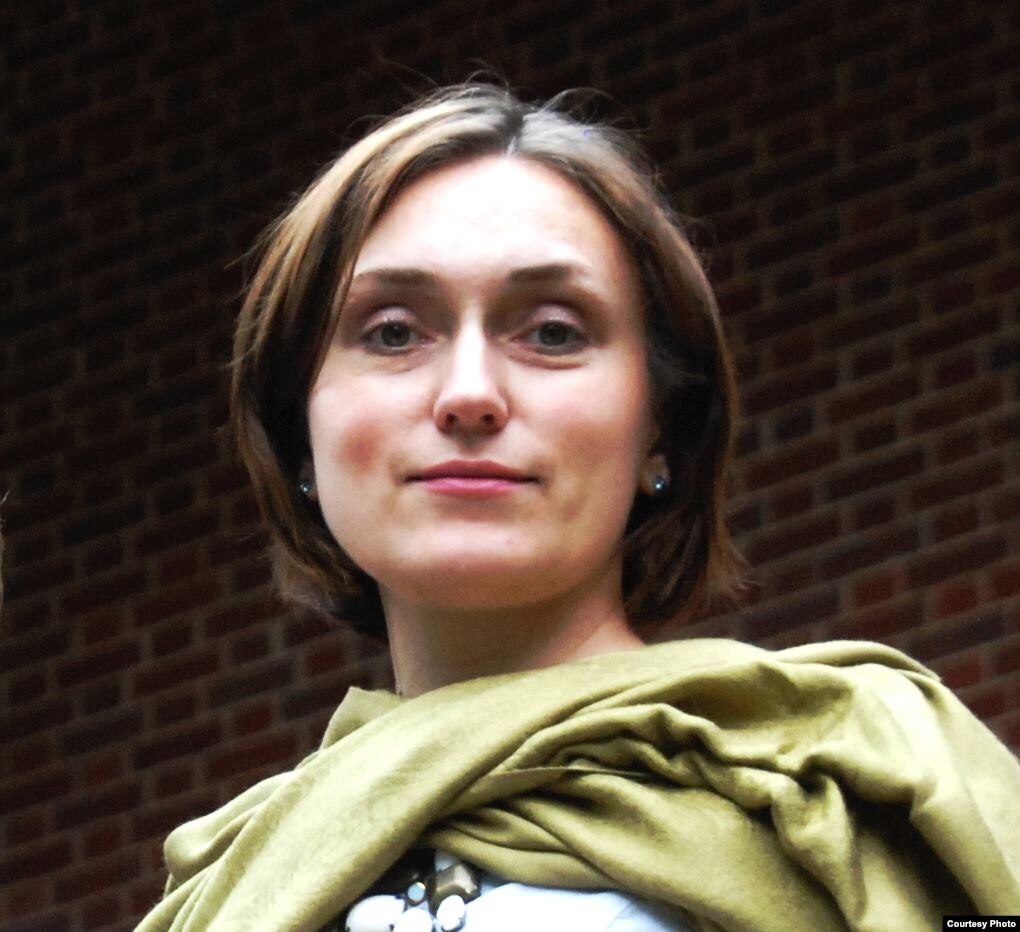
Diana Gratinya: This is always a very interesting question, and I asked myself many times for myself: why do they learn the language? Interest and motivation can be anything. But what happens to them in the process of studying the language and comprehension of culture is the most interesting. All of them are clearly distributed in two poles: those who do not accept culture experience difficulties in learning the language. Often there is a psychological background here-not its own linguistic of some kind of obstruction, namely psychological difficulties. And there are those who fall in love from the first moment, and no matter what happens to them in Russia, they really like everything. Of course, something happens to everyone, they all fall into extreme situations, but then their character is checked. One way or another, many are the majority! - They experience a hot interest in the subject.
Vladimir Abarinov: Elena Reznikova, teacher of the Union College in the city of Skenecti in the north of the New York, answers the same question.
Elena Reznikova: What encourages them? Well, in principle, many of them are engaged in either political science, or ecology, or international relations, so the Russian language is relevant and interesting for them. Some come to study Russian, because they have some kind of grandparents or more distant ancestors from Russia. Someone is simply interested in Russian culture, Russian.
Vladimir Abarinov: Problems begin with grammar.
Elena Reznikova: Well, of course, the very first thing that affects students is a grammar. Students are generally not prepared for this level. If they studied Latin in high school, or at least just a serious grammar of the English language, then, of course, they would be ready for this. But when they have to comprehend all the subtleties of cases, declension and conjugation, they begin to panic a little. After that lesson, when all the secrets of the genitive case were revealed to them, all these are many forms, they moaned for a whole week. Well, of course, as soon as the case ended, a perfect and imperfect look began.
Vladimir Abarinov: But in English there is also a perfect and imperfect form of the verb.
Elena Reznikova: Yes, yes! They were very surprised when they learned that there were equivalents in English. When I told them: but you know, for example, that in English there is Present Perfect? They said: what are you? Give an example.
Vladimir Abarinov: What is a cultural shock, Diana Gratinya understood in Saratov.
Diana Gratinya: The first thing that comes to my mind at the moment is the story with a student from New York. It was Afro-American. She arrived 10 years ago to Russia and ran into racism. But what plan is racism? People paid attention to her. She studied then in Saratov, and in a provincial city, even a large one, people paid attention to her appearance, she was very pretty and, apparently, in a cafe where they rested, some comments were made, apparently, and the word “n” forbidden in the USA was pronounced, and she suffered very much about this. So she could not do it. Very often with students, not only from America, we have to explain in the lessons ... We postpone all our materials and explain why people do not smile, or smile, but not as it should, or not there, or, conversely, why they are puzzled by your smiles ...
Vladimir Abarinov: Well, there are comic cases.
Diana Gratinya: I had a family of American Mennonites. Mom and dad taught Russian, and they had three charming kids. And so they lived in Russia, because in Russia there are also mennonites in Russia, they have a parish, and dad there is a priest. But I was interested in: what exactly did they show the children when they came to Russia? They went to Moscow, as always, to Red Square and showed the children of the Lenin mausoleum, they were in the mausoleum. And they went to the Cosmonautics Museum and showed all these, you know, spaceships, devices, Gagarin and so on. In my opinion, a very strange choice for mennonites. It seems to me that these parents remembered something from their childhood and wanted to see it themselves. So. When dad and mom came to me to play Russian, my daughter entertained children. She was then 10 years old, and she had a book richly illustrated, which was called "Russian History". And there, in a popular way for children, the whole Russian history was told with many pictures until the 60s of the 20th century. And there were Soviet posters dedicated to space. And before that there were posters dedicated to Lenin, revolution and so on. And after one lesson, the older boy, he was seven years old, went to his parents and said: “We have now watched Russian history. Do you know that Gagarin flew into space and flew to God himself? ” Then a pause hung. My parents looked at me, I am at my parents. My child, of course, did not say anything like this, that is, it was his own conclusion of the boy. Parents tried to open their mouths and explain that, probably, he still did not see, but then the youngest, who was four years old, and he said very solemnly: “But God was Lenin!”
Vladimir Abarinov: And here is what Julia Trubikhina says - about her students.

Julia Trubikhina: Both the power of American students and their weakness is that they do not have a cultural context. This problem is big. It seems that there was no common context. Previously, the very least mass culture of some kind of general context gave at least a general context. It turned out that with an increase in the number of foreign students in common there is nothing at all, you are afraid to joke - they won’t understand. And the amazing equality is absolutely wonderful, the absence of hierarchy. I remember how in the course of Russian culture one girl cheerfully started an essay on Habakkuk (and this, of course, is insanely difficult, we read some fragments from the Avvakum) as follows: “As we say in our Oklahoma ...”
Vladimir Abarinov: When reading literature, students are primarily faced with unfamiliar realities.
Elena Reznikova: For example, we read Bulgakova. What concerned all this phantasmagoric reality of Moscow of the 30s was very difficult to understand. The apartment question, all these communal apartments - I had to explain for a very long time. All this currency situation ...
Vladimir Abarinov: But it is much more difficult to comprehend the way of thinking and the logic of the actions of the heroes.
Elena Reznikova: It was very difficult for students to read “Crime and Punishment”. Dostoevsky in itself, even harasses the soul of Russian readers, and such protected American teenagers, of course, have nothing to say. It was very difficult for them to understand all the suffering, all these throwing the main character and the whole galaxy of characters. Katerina Ivanovna, in my opinion, was erased to everyone her soul with her mummaged children, dinner, and so on. Students asked a lot of questions: why are they doing all this? Why do they behave like that?
Vladimir Abarinov: With understanding of poems in general, trouble.
Julia Trubikhina: One boy was Tsvetaeva’s “attempt” ... And so it is very difficult for them, and he completely does not notice the quotation marks, interpreting the replica “Hiring Hight”, and suggests that maybe Tsvetaeva wanted too much money from her lover. The house is. The lover was too expensive - so he did not want to contact her. Probably so.
Vladimir Abarinov: Another wonderful example of differences in cultures.
Diana Gratinya: We had a Corean student. She studied the Russian language at the Literary Institute for several years, then left for Korea and became a translator. And translated Russian fairy tales, in particular “Teremok”, into the Korean language. The fairy tale was published, and she brought her as a gift. And then we put an experiment. We gave our Korean students this fairy tale in Korean and asked to translate it into Russian. It is very interesting to see how different cultural codes work. For example, in our fairy tale, the mouse ran across the field without any reason, just fled. They all run: a frog, a bunny - there is nothing. But in the Korean translation, they all fled for some purpose. The mouse was looking for grains, the frog was looking for juicy grass, someone else was looking for something there-they all had a goal. That is, in Korean culture, no one can just run somewhere, there should be a goal. Further: when a bunny knocked on them, that is, there were already two animals in the Teremke, and they always answered the same thing at the request “let me live”: “Now we will consult.” And they began to consult, you can let the next beast or not. And when it came to the bear, the animals were divided. Strong animals - a wolf, a fox - said: "The bear is big, he will crush us." Because they knew. And the small animals believed that he would protect them. And since there were more of them, a mouse, a bunny and a frog won a vote and launched a bear, and then what happened happened. Of course, we have a completely different fairy tale. Adapted for understanding Koreans.
Vladimir Abarinov: It is interesting, but it happens that students make teachers see the situation from a new, unexpected angle?
Elena Reznikova: It seems to me that what foreigners notice is most likely the absurdity of what is described in a literary work. There are a lot of situations, some idiosincretic features of the heroes, completely crazy, absurd, who have no sense in a normal, sound situation. That is, very often they contradict common sense. This is clearly visible on the example of the prose of Petrushevskaya - her heroes.
Vladimir Abarinov: Julia Trubikhina believes that traditional teaching methods do not work with modern students.
Julia Trubikhina: In general, modern students, they are simply different. They generally read little, but they are absolutely visual. It is difficult for them to focus on one for a long time. Therefore, the educational process is obtained as television, with advertising pauses - before them you need to sing or dance. Figurely speaking.
Vladimir Abarinov: And Diana Gratini believes that all these torments are not in vain.
Diana Gratinya: And this is the cross of the Russian language. Both Russian literature and Russia. They draw you so much and suck into themselves ... It seems: Come on, I stayed here, left and that’s it. But no. Here he takes by the heart and holds. And then they begin to rush about: we want to come - they come, and read, and read, and become translators, researchers. And it all starts with a completely innocent: I knew nothing, I decided to try it.
Abarinov
With us were teachers of the Russian language and literature in American colleges Elena Reznikova, Julia Trubikhina and Diana Gultinya.