
Translated material
People against sociologists
There will be no communists in the new composition of the Verkhovna Rada and, it seems, nationalists
But the success of real reforms in Ukraine is still not predetermined.
According to the Central Election Commission (on October 28), 6 political forces take place in Rada: the People’s Front - 22.03%of the vote according to the election on October 26, the Petro Poroshenko Bloc - 21.67%, the self -help party - 10.94%, the opposition block - 9.46%, the radical party of Oleg Lyashko - 7.47%and the party "Fatherland" - 5.7%.
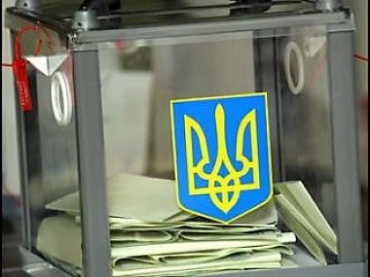
Few could predict such a result: sociological surveys gave another configuration of the Ukrainian parliament - with the participation of the “civil position” of Anatoly Gritsenko, the nationalist “freedom” Oleg Tyagnibok and “strong Ukraine” by Sergey Tigipko. However, the people ordered differently.
Vote
Almost all observers admitted: the elections met European standards and passed without serious violations. “Despite the high competitiveness, the elections were calm and organized,” it is noted, for example, in a statement by observers of the organization for democracy and economic development (GUAM). The same observers - about the organization of elections and the work of the election of election in the field: "... comments on individual polling stations that the group of GUAM observers have do not have a fundamental nature and cannot significantly affect the voting results."
The conclusions of the observers of the GUAM are generally shared by their colleagues from the European Parliament: “We visited many polling stations and are ready to draw an optimistic conclusion regarding the organization and holding of elections,” the mission of observers from the European Parliament said.
“We congratulate Ukraine on the election that met international standards. This vote confirms the desire of Ukrainians for national unity, ”said Viktor Esh, co -chair of the delegation of the International Republican Institute, in turn.
The turnout in these elections turned out to be unprecedentedly low - 52% (for comparison: 58% in the 2012 elections). Considering that there were no votes in the Crimea, as well as, partially, in the most densely populated areas of the country - Donetsk and Lugansk, people who supported one or another party were not enough. So, the Popular Front received a little more than 3 million votes throughout the country, which is approximately equal to the number of people of Kyiv. The Kharkov region “voted” for the block of Petro Poroshenko-almost 3 million “Self-help” secured the support of the “whole” Ivano-Frankivsk region-about 1 million 400 thousand people. The sympathizants of the “opposition bloc” are as much as the inhabitants of the Cherkasy region (about 1 million 265 thousand), and if you are also brought to all the “radicals” from all over the country, then they could fit in Odessa (1 million 015 thousand). For those who voted for the "Fatherland" would be needed a smaller city - Zaporozhye (760 thousand) would have been suitable.
“The factors that have influenced a low turnout are primarily associated with growing social depression (heating problems, unemployment, household troubles on the eve of winter), a continuation of the war in the east of Ukraine,” and the political strategist Taras Berezovets believes. - Especially, in his opinion, this applies to the turnout in the eastern regions of Ukraine - they no longer vote for the party of regions, and new parties that could be followed, did not appear.
Coalition
Already on the night of the elections, President Petro Poroshenko announced the creation of a new parliamentary majority until November 6.
According to the president, the ten days that the law allows for calculating and announcing the final results of the parliamentary elections is more than enough to complete all negotiations on the coalition and determine the figures of the prime minister and speaker of the Rada. At the same time, the president specified the basis of the paralmatic coalition, the Petro Poroshenko bloc will be: “If you want to ask me if I see the Popular Front as a coalition partners, then my answer is yes, these are our main partners. We must definitely be together. ” According to Poroshenko, the coalition “will open proposals for so many, but definitely not for the“ opposition bloc ”.
By the way, the first coalition negotiations were held on October 27. The head of state met with Arseny Yatsenyuk and Lviv mayor Andrei Sadov, whose “self -help” suddenly turned out to be one of the main favorites of the race. This party should be said separately.
Until October 26, she was not a political force of national scale - she was invented by Sadovaya - a successful mayor, a creative manager, and also the owner of popular media resources - he, in particular, owns the 24 information television channel, as well as the share of Savik Shuster Studio, which makes the most popular political talk shows of the country.
Sadovaya very subtly felt a request from Ukrainians and formed an almost win-win party list: without persons of the old government, but with representatives of unsuccessful socio-political associations, such as the Volya party and a resuscitation package of reforms. Well, the soldiers of the volunteer battalions added there, in particular, he invited the commander of Donbass Semyon Semenchenko. As a result, a team of young, honest, aimed at the success of people who went to the polls under the slogan “Take and do” was formed.
According to preliminary estimates, “self -help” will receive 33 mandates - it is this fraction that can become the carrier of the “golden action” in the formation of the majority.
If the coalition will take place in the format of the Petro Poroshenko bloc (160 deputies), the Popular Front (82 deputies) and “self -help” (33 deputies) then the majority will form in the Rada - 275 deputies (in total in the Ukrainian parliament of 450 deputies, and the necessary majority for adopting laws - 226 votes). This number of people's deputies will be quite enough to appoint the Prime Minister and form a government aimed at reforms. By the way, the issue with the new prime minister is practically resolved - this post is most likely to take Arseny Yatsenyuk again.
"
Sadovaya very subtly felt a request from Ukrainians and formed an almost win-win party list: without persons of the old government, but with representatives of unsuccessful socio-political associations
"
But there is one “but” in coalition negotiations - the “self -help” itself is not officially ready to join the coalition and run into it at the first call of the president. Self -help did not enter into any formal negotiations on the coalition. At the same time, we are aware that Ukrainians gave the mandate of trust in a number of pro -Ukrainian and projuroral parties, which should jointly look for contact points to solve the urgent issues of the state, ”Andrei Sadova wrote on his Facebook page. And one more thing: “We are not interested in quotas! We are interested in the opportunity to create a government of professionals who will not think about ratings (own and party), but about the tasks for which they were hired. After the elections, Prime Minister Arseniy Yatsenyuk called me. Subsequently, I personally met with the President of Ukraine Petro Poroshenko at his invitation. When asked about the possible entry of “self -help” in the coalition, I said: such a decision will be made jointly by the future faction and the party leadership on the basis of the above principles. ”
Of course, in the format of BPP + NF, the president and prime minister will get the majority - 242 deputies. But, firstly, this will indicate that the coalition does not reflect the interests of all democratic voters, and secondly, such a number of deputies will not be enough to carry out truly large-scale reforms, with the adoption of amendments to the Constitution, which in turn can be carried out with at least 300 deputies.
The choice of partners of Poroshenko-Yatsenyuk is small: the radical party Lyashko (RPL, according to preliminary data, is 22 deputies) and the "Fatherland" led by Yulia Timoshenko (19 deputies).
Lyashko would not mind joining the new parliamentary majority, which by the way, had already announced publicly. But only to see the “main radical of the country” in this majority there are almost no people. “As for the radical party ... I know little about its real intentions. You see, the presidential plan of reforms does not provide for eating the land and the milking of the cow (these PR campaigns conducted Lyashko before the elections-V.K). If Lyashko declarates the desire to work on reforms - why not? But here we must take responsibility: the reforms will be difficult, often not popular, and will become a test for parties, ”said one of the leaders of the BPP Yuri Lutsenko.
Yulia Tymoshenko is a very subtle political player: preliminary election results became barely known, she instantly lowered the degree of her rhetoric in relation to Poroshenko and Yatsenyuk.
"
There remains Yulia Tymoshenko, who received the lowest result in its political biography in these elections and, as a result, the smallest faction in parliament. “As far as I understand, she simply did not have enough time to conduct rebranding after they were divided, and the Popular Front went into free voyage with valuable resources. This took the electorate from the "Fatherland", - comment on Tymoshenko’s failure, political analyst Vitaly Bala.
But Yulia Tymoshenko is a very subtle political player: preliminary election results became barely known, she instantly lowered the degree of her rhetoric in relation to Poroshenko and Yatsenyuk.
“In these elections, Ukrainians once again entrusted the right to exercise power to two political forces - the bloc of Petro Poroshenko, headed by the President of Ukraine and the“ Popular Front ”of Arseniy Yatsenyuk .... People confirmed for these two political forces the mandate for the exercise in Ukraine,” said Julia Vladimirovna at a briefing immediately after the results of Exit -Polls became known. And she added: “Our team - the Fatherland Party - will be with all its possible means, all its possible resources and forces to help the power that the people will form.”
Opposition
However, a non -access to the parliamentary majority does not yet say that RPL, Fatherland or Self -Help will find themselves in the parliamentary minority. They will simply exist in the Rada on the rights of third -party observers and situationally join the parties of Poroshenko and Yatsenyuk. The only force that will be in counterattack with the new government is the “Opposition Bloc” (OP) with 30 deputy seats so far. But the situation may change. These 30 go to the Rada on the lists, but many of the sympathizers of the opposition hid behind the sign “Self -nominates” - we are talking about candidates who were running and won in the majority districts. In total, more than 100 such “self -nominated” is a serious resource, which each of the parties who held their candidates on party lists hopes to get.
No matter how cynically it sounds, it was the instability of the situation in the east of the country that allowed the presidential and premier parties to get a majority in the Rada.
"
By the way, if not for the war, there would be more supporters of the opposition. In fact, in the east of the country, from 4 to 6 million people could not vote - the same voices that at one time helped Viktor Yanukovych and the Party of Regions. Some of these votes now migrated to the “Opposition Bloc”: its current electorate is residents of Donetsk, Lugansk, Zaporizhzhya, Dnipropetrovsk and Odessa regions.
“... people representing today's power do not have a clear understanding of the development of our country. Therefore, we will be in the opposition. And with whom - for us not so fundamental, ”said the leader of the OP Yuri Boyko. He expressed the hope that the OP would be able to bring the total number of his deputies close to number 60: “First of all, we plan to fulfill the promises that voters gave ... these are a number of social laws that are aimed at supporting people .... And they are very important today for the most affected layers of the population. ”
No matter how cynically it sounds, it was the instability of the situation in the east of the country that allowed the presidential and premier parties to get a majority in the Rada. Yatsenyuk and Poroshenko can change their attitude to their policy only by conducting a course of reforms in the country. But if the economic well -being of Ukrainians will deteriorate, and the level of discontent is to grow, then the revenge that Ukraine has already experienced - in 2005, when President Yushchenko got rid of Prime Minister Tymoshenko and Viktor Yanukovych came to the political arena, who occupied the chair of the head of government. This was the first step towards the new revolution.
Future
The famous economic expert Eric Nayman calls four possible scenarios of the country's further development: a) the parliament imitates reforms with the financial support of the West; b) the parliament imitates reforms without injections from the EU and the USA; c) the gladness is inclined to “quick shock reforms”, which will be carried out in a “strict order”, as well as “active cleaning-lustration and without looking at the short-term negative social effect” d) Parliament carries out real reforms, based on the support of Western advisers and overcoming the resistance of officials.
One way or another, “ahead,” the expert summarizes, “Ukraine’s most important months, according to which it will become clear by what example the country will go - Argentina, Yugoslavia, Singapore or Greece.”