
Translated material
Symbol and our freedom
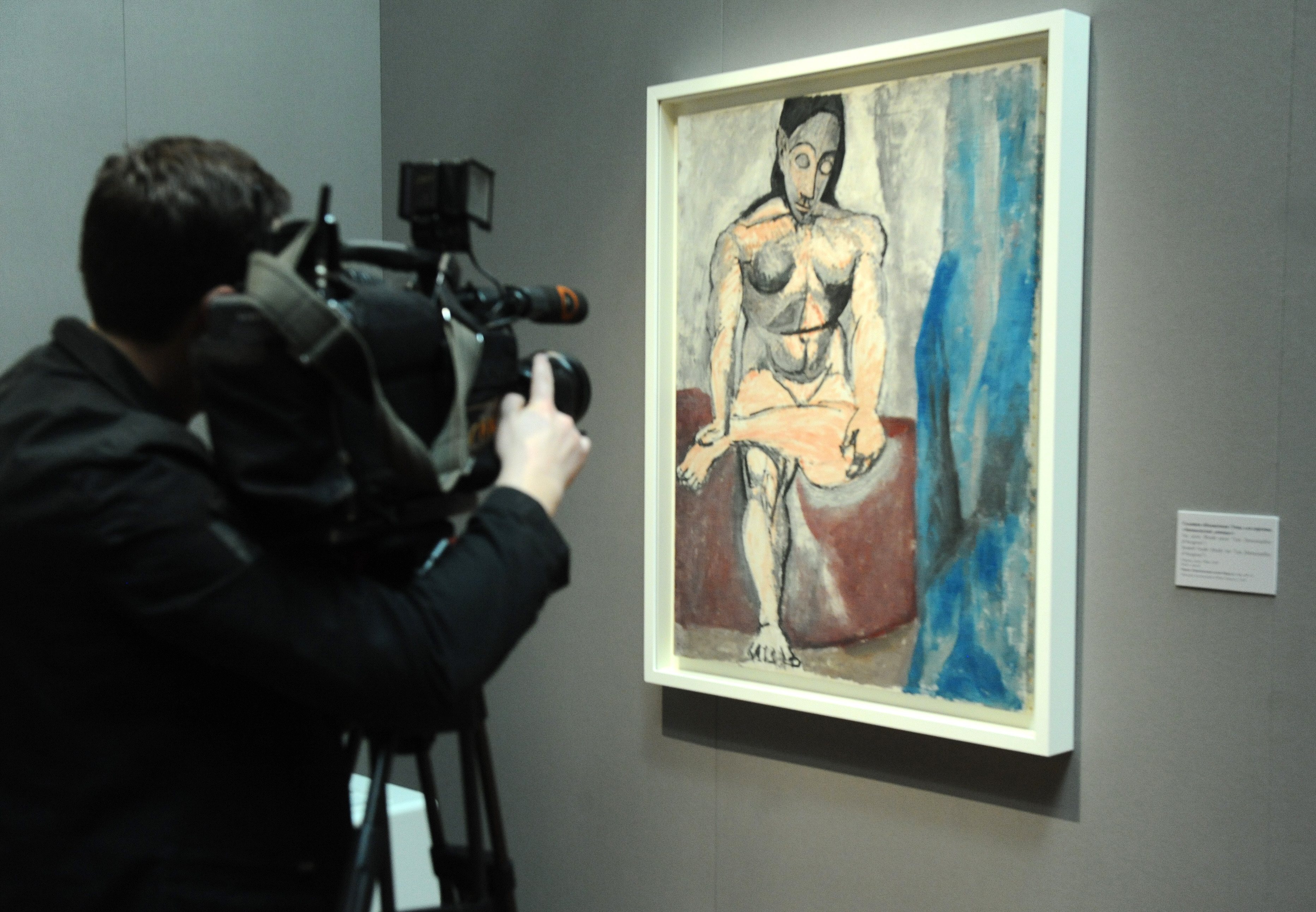
In the cultural life of Europe, a truly long -awaited event occurred: after a more than five -year break, one of the two largest monographic museums on one genius on the continent again opened - the Parisian Museum of Picasso (the second - the Salvador Museum in Figios - worked safely all these years). The Crimea is far from France, and Iraq and Syria are no closer, so the news about the opening of the Picasso museum hit the first strips of the press even before it happened: I hold in my hands and a special application released on October 17 in the form of a magazine, to the newspaper Aujourd'hui ["Today"], as well as a newly-old museum of more than a 100-page Special Speaker Beaux arts ["art"]. It deserves the attention of how the Spaniard Picasso was the largest and most beloved artist of France, but, Lord, should we be surprised at this?! Is there an artist more Russian, more beloved by the Russian intelligentsia and more significant for Russian intellectual and artistic history than Picasso?!
We all know and love the works of Picasso since childhood: Sergey Ivanovich Schukin has gathered the best collection of his works created before the First World War, and, exhibited in the Hermitage and the Pushkin Museum, for many decades they have become for millions of people cut off from the actual art of the West with an iron curtain, by which one could judge what is the "modern one, which is" modern art". Picasso himself went, of course, significantly further in comparison with the search for "blue" and "pink", and a little later - cubic periods, but there was no one to buy these subsequent works for the Soviet audience.
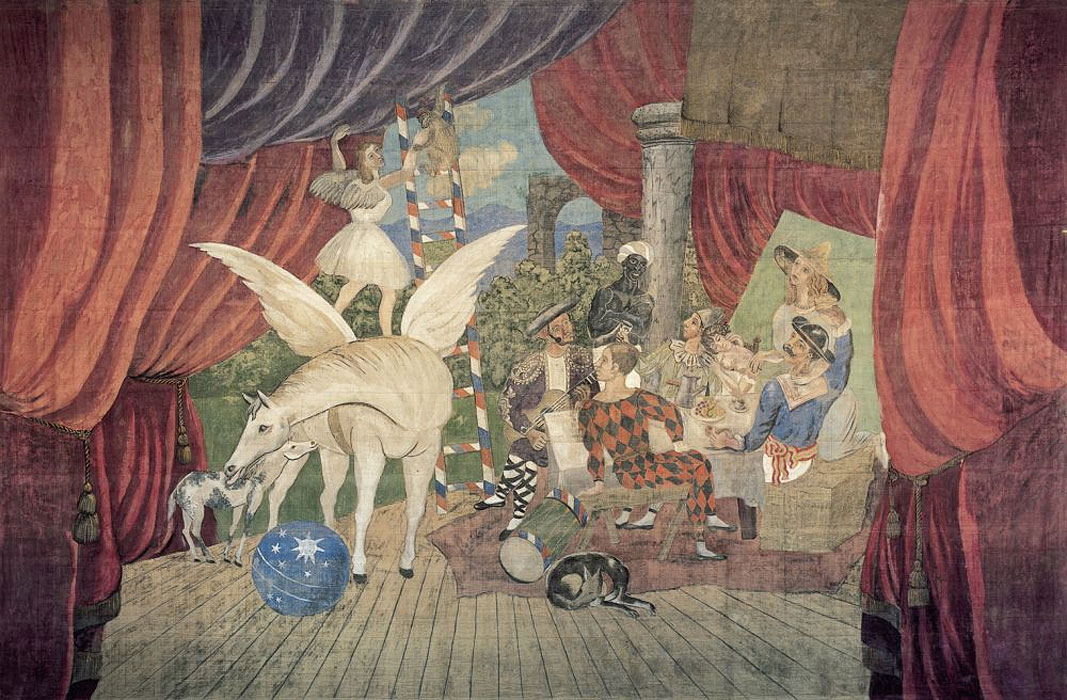
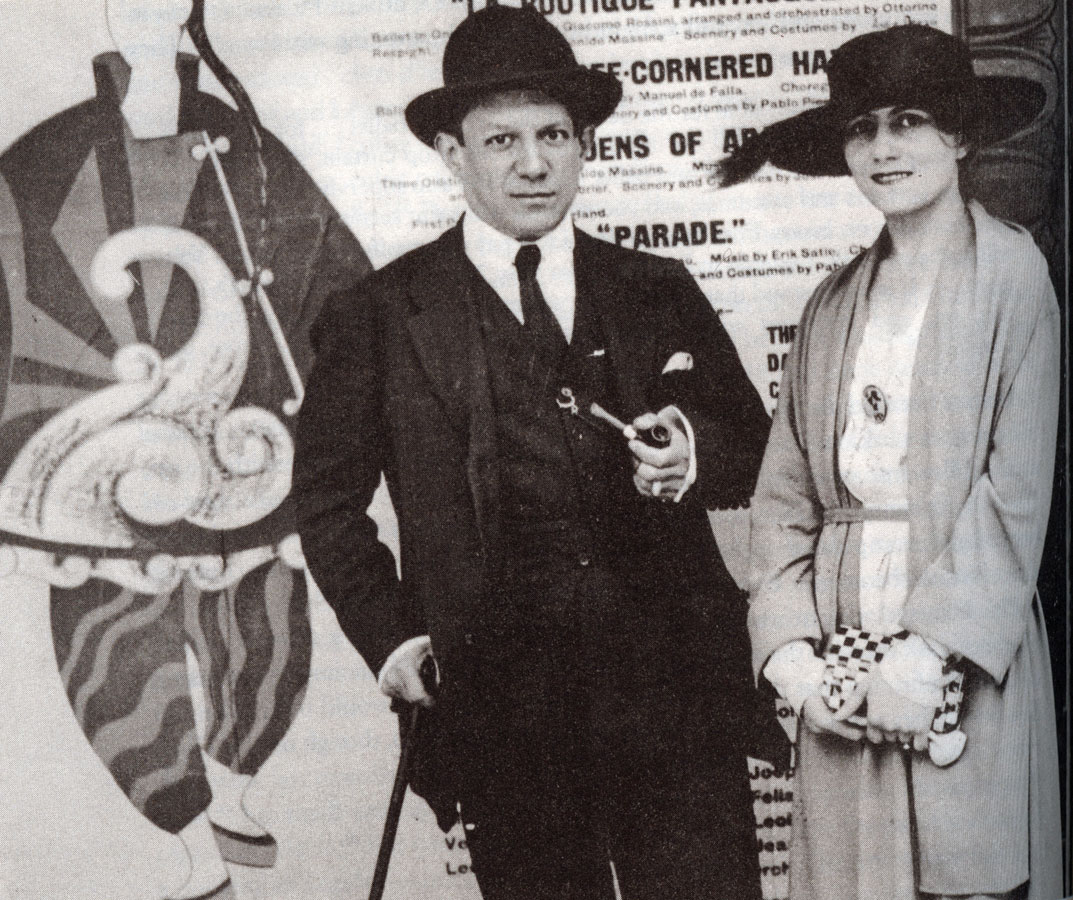
Generally speaking, with Picasso we were related at a time when in Russia they no longer spoke to muse, but guns. Until 1917, Picasso was an artist widely known in very narrow circles: the Russian impresario Sergey Diaghilev made the famous 36-year-old painter, who invited him to work on costumes and decorations of one of his most revolutionary ballets-the "parade" to the music of Eric Sati, which at that time was ready to recognize music. The “insightful” critic - a profession, alas, has not disappeared since then, - he expressed indignation that “the geometric mazila and Pachkun Picasso crawled to the foreground of the stage, while talented artists are humbly waiting for them while they are exposed.” The performance was held at the Chatele Theater in the very center of Paris only once, on May 18, 1917, and there was an Ovistan like, generally speaking, none of the Diaghilev deliveries boasted either before or after, although a whole team of geniuses worked on the ballet: Libretto was written by Jean Coctea, and the choreographer was one of Diaghilev’s favorite young people, an outstanding dancer and ballet and bubbler Leonid Myasin. In the center of the curtain created by the Picasso for the Parade is a ballerina, whose image Picasso wrote from Olga Khokhlova, with whom he then had a stormy romance and which he married in 1918. Already this Picasso gained the eternal love of Russians - what other Western genius married in an Orthodox church?! We did not know about Fernande Belvalla (Olivier) and Eve Guel, former companions and Muses of Picasso in 1904-1917, and formally Olga - the first, who was married to Picasso. When his first Moscow retrospective was held, Olga was no longer alive, and Picasso, giving birth to three children from Maria Teresa Walter and Francoise, lived, and also creating dozens of paintings captured by the image of Dora Maar, was married to Jacqueline Rock - we didn’t care, Picasso remained “ours”, as our Matisse was right for Lydia. Delectorship and Dali - as the husband of Gala Dyakonova.
For many years, people of the older generation spoke with a breath about the stunning impression that the Picasso exhibition, which opened in Moscow at the end of October 1956, made on them. In the context of the Western art of his time, among the Georges of Marriage and Juan Gris, among Graham Suserland and Francisis Picabia, Picasso - the first among equal terms, but the Soviet intelligentsia saw the Picasso exhibition in a completely different context: in Moscow and St. Petersburg museums, contemporary art represented Lenin on the Tribuna and Voroshilov in the Kremlin of Joanson, Gerasimova, Gerasimova, Gerasimova, Gerasimova, Gerasimova, Gerasimova, Gerasimova, Gerasimova, Gerasimova, Gerasimov Vladimir Serov ... by the efforts of the tireless Ilya Ehrenburg Picasso, he burst into the consciousness of the Soviet intelligentsia, having built forty years later the bridge to the painting that was recognized as an unworthy of the Soviet viewer, as a result of which a repressed museum appeared in the USSR - a disbanded museum of new Western art. Picadoxo Picasso, known in the USSR with all his “pigeons” and received from Soviet power in 1961 the International Lenin Prize for strengthening the world between the peoples, connected the Khrushchev “thaw” with pre -revolutionary philanthropy: it was impossible to show new works of impressionists and post -impressionists - these artists had long gone into the world of another, and Picasso, and Picasso, and Picasso, and Picasso, and Picasso, and Picasso, and Picasso, and Picasso, and Picasso, who It was already 75 years old, appeared in all the splendor of the genesis of his creative path. Then, with the help of the same Ehrenburg, a small 60-page brochure about Picasso came out-the first monographic publication about him in the USSR, and more than symbolic, that this book became the first separately published text by A.D. Sinyavsky - an outstanding thinker, an essayist and writer, five years after the publication of this brochure of the convicted prison for seven years in prison for non -certificate publications in the West under the pseudonym Abram Terz. The first Soviet brochure about Picasso turned out to be repressed twice, thus becoming a symbol of half a “thaw”, and by no means half a “stagnation”: in 1961, 70 percent of the circulation was not allowed to sell and, apparently, were destroyed due to a denunciation directed by the chief party ideologist M.A. Suslov by the leadership of the so -called Academy of Arts, which bewhelmed to the alarm due to the fact that young Soviet art historians, instead of showing a Picasso fighter for realism and the matter of the world, promote his formalistic and abstraction "delights." The second time, the unfortunate brochure was removed from the libraries when A.D. Sinyavsky was convicted, and his co -author I.N. Golomstok emigrated.
Picasso was the only genius of Western art of the middle of the 20th century, which could be loved relatively freely and without risk: he was not reproached, and his albums were not confiscated to customs, as was the case with Dali or Max Ernst (on the contrary, in 1967 he even released the elaboration of the Picasso schedule), and he was considered a “progressive”, and this is this, and this He won the legitimization of the presence in the socio-artistic space, which no one of the stars of Western art in the USSR had. In fact, for decades, Picasso became the ambassador of all modern world painting in Russia, the Russian “other” art was formed during the years of thaw, bothering more than others from Picasso. It seems that so many biographies of any other Western artist were translated into Russian: “Picasso” Henri Zhizda, “Picasso. Portrait of the artist in the youth“ Norman Meyler, “Picasso” Antonina Vallanten, “Picasso. Life and creativity of Roland Penrose,“ Mythical and Magic World of Picasso ”Carlos Rohasa,“ Picasso. The creator and destroyer "Arianne Stasinopulos Haffington, not to mention the original books, including the recently published remarkable album, the text to which the outstanding art critic Mikhail Herman wrote. In the era of perestroika, in 1988, an event was held at the Museum on Volkhonka and in the Hermitage Exhibition of painting and Picasso's graphics from his Barcelona museum. By the end of the first decade of the 21st century, those who wanted to know already knew a lot about Western art in Russia, but a large exhibition from the meeting brought to Moscow and St. Petersburg in 2010, which was then closed to the restoration of the Paris Museum of Picasso, became one of the most visited in the post -Soviet art history: more than half a million people visited it in two capitals. Half a century has passed, but even today Picasso remains on the banner of the Russian intellectual and artistic dissidentism: on the hat of the pages of Nadia Tolokonnikova, his famous "Termnika" is placed on Facebook ...
The fact that Muscovites had the opportunity to see during the three spring months of 2010, Parisians will be able to see constantly. It is predicted that the Picasso museum will visit at least a million people a year. Picasso, who has not been alive for more than 40 years, and still remains one of the most beloved artists of the planet, and the cosmic prices of his individual canvases at leading world auctions fuele interest in his personality and among those who are not a regulars of art museums. Today we are without Picasso - nothing.