
Translated material
Lame fate
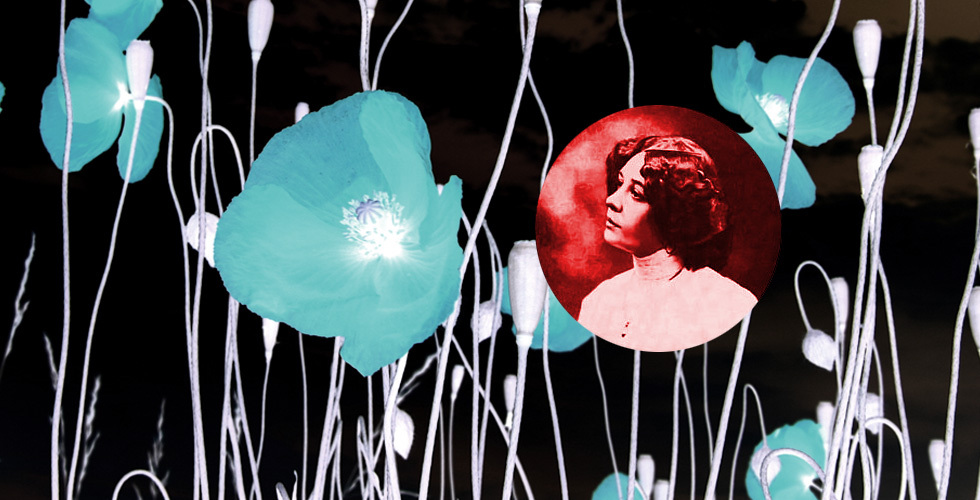
“I met her last night. The pale light of electricity, merging with tobacco smoke, a light blasphemer hung in a large white hall, lined with tables, and the wide, almost black leaves of piles and palm trees were drawn on snow -white walls with an almost mourning pattern.
When I entered here and, squinting from the bright light, was looking for the eyes of my free place, some woman in a red and hoarse voice sang a screech chansonette onto the stage.
And dirty, shameless words, like small sharp pebbles, flew into all corners of the White Halls, and the singer, smiling at a children's smile, turned the crowd with gray naive eyes, and a vulgar motive flew with bright painted lips, in response to which the faces smiled with a cynical smile, and a dim fire of voluptuousness lit up in his eyes ... "
Read? Now imagine that you are not you, but Ivan Bunin. And having tried it, imagine further such a picture: to you, the first Russian Nobel laureate, the author of Arsenyev’s life already published and not yet published “Dark Alleys”, was a kind of persistent reporter-some Kandalupsky Bob from the Milyukov’s “Last News”. And instead of starting an interview with the question of how you disposed of the cash content of the premium just received, and then Russian writers, you see, are pretty worried, why you decided to share it more than with Shmelev with Zaitsev, instead of asking really substantial questions, this same Bob read the above, hardened text and asked: “Tell me, Ivan. Alekseevich, as you think, who could write a sort of write? " What would you, being Bunin, answer him? Most likely, approximately the following: “And the devil knows, my dear, who could ... but anyone. Some Bryusov ... or this ... like him ... Kamensky ... If you knew how many lousy decadents were in those days, only for such and capable, they wouldn’t ask! .. ”And when the reporter would call you the name of the author of this passage, your reaction would probably be even more predictable:“ What is the Peter? .. Morphinist, or what? ”
***
There is a well -known expression - "man -made poets." With stress on the first vowel. What names arise in the head of any more or less educated reader when he hears this expression? Charles Bodler and Paul Verlaine, of course. Still-Tristan Corbier, Artyur Rimbae, Stefan Mallarme, Vilier de Lil-adan and other French poems, at first of the end of the nineteenth century, and then the whole century of the twentieth. The list is still open, and in order to get into it, it is necessary to comply with the initially given criteria, such as: to be asocial, not to recognize the norms of behavior accepted in the respectable society, consider yourself unrecognized genius, engage in systematic self -destruction and - most importantly - it is necessary to die very old and, if possible, not its death. And after death, be sure to become famous.
If Nina Petrovskaya was a nee Frenchwoman, the place in this doubtful - from the point of view of the normal layman - the list would be guaranteed to her. But she was not lucky in this. As in everything else. First of all, over time and especially with the place of appearance in this more than a strange world.
For several years of the mid-1900s, Nina visited her mistresses by Konstantin Balmont, Andrei Bely and Valery Bryusov.
The exact date of birth of Petrovskaya is unknown. As well as the place. Only the year is known-the 1879th, and he is not for sure, the month is either January or March. Its social origin is also unknown. Most of the acquaintances from among his contemporaries considered her the daughter of some small official, that is, the bourgeois of the most banal gesture; She herself preferred to tell about her origin not to tell, and indeed she hid biographical data, including age, which is so characteristic of women in general, and belonging to artistic arartical bohemia-in particular.
In Bohemia, Petrovskaya hit in 1903, about twenty -five years old. Bohemia was Moscow, and at that time a phenomenon called “symbolism” was born in it-that cornerstone, on which, in the next one and a half decades, the cards of the Russian Silver Age were erected, estimated by the world cataclysm of the 1914th and especially 1917. In order to draw the attention of the “masters” of the just arising symbolism, the young lady, like Petrovskaya, should have acted one of two possible ways: either to start writing something brilliant (it is better, of course, poems, but the prose will also go), or go to the “masters” in bed. And even better - for fidelity - to undertake both.
For several years of the mid-1900s, Nina visited her mistresses by Konstantin Balmont, Andrei Bely and Valery Bryusov. This is only one of the most famous, recognized "masters"; The less known in connection with Petrovskaya is usually not mentioned. But she did not marry any of them, but for her almost one-year-old-a lawyer, a graduate of the law faculty of Moscow University Sergey Sokolov. Sokolov served as an assistant to the sworn attorney, but in his soul he considered himself a poet. This happens, especially in Russia, the matter, as they say, is everyday life. The novice poet created under a rather transparent pseudonym - Sergey Krechetov. True, Sokolov-Krechetov was poorly bad, but it was very good with organizational abilities. And since no one wanted to print Krechetov’s v theirmits, the young poet intended to become also a publisher. And in the same 1903, he became, now founding the legendary Griff publishing house, in which, in addition to the works of its owner, books of writers close to him-Balmont, White, Sologub, Severyanin, Annensky were published. Also in the first years of its existence, the Griff produced the annual almanac of the same name, in which young, eager for recognition and glory of talents were published - for example, Vladislav Khodasevich.
The wife of the publisher was one of these talents. Nina Petrovskaya wrote small in volume of the novels, mainly from the first person, and, interestingly, not from female, but from the male. The theme of her works spoke exclusively around psychological internal experiences associated with confusing human passions - unhappy or unreasonable love, the desire to find it to the fullest to fully gain it, all kinds of fears, betrayals, broken illusions and defeated dreams. That is, the very one, expressed in Bunni, "lousy decaddland."
Petrovskaya was published in various periodicals - primarily in her husband (Griff almanac, the magazine "Pass"), as well as in other Moscow and provincial newspapers, magazines and almanacs ("new", "Voice of Moscow", "Crystal", etc.). A dozen stories printed in 1906-1907 compiled the first book published at the end of 1907, entitled in Latin- “Sanctus Amor” (“Holy Love”), which was not only the first, but also the last during the life of Petrovskaya. The book remained almost unnoticed; The reviews of critics on her were few and hesitated from neutral-widential (from their side) to dismissive-blocking-such as a replica, who was moving to the poetess Zinaida Hippius: “The works of some Petrovskaya “ Sanctus amor ” -nothing more than self-objective of the woman who recognizes the gender with her exhaustive essence ...” well, did not like Anton The extreme poetess and writers, what can you do. And the customs in the Russian artistic bohemia of the beginning of the last century were never different with mutual complimentation.
Bohemian existence is inseparable from the accompanying world of vices. This term is primarily meant not so much chaotic sexual behavior as the tendency inherent in bohemian characters by self -destruction by abuse of ethyl alcohol with liquids and causing short -term euphoria with chemicals. Petrovskaya did not escape this either. During those eight years that she rotated among Moscow Symbolists, Nina tried everything that could be tried at that time. The consequence of this was, firstly, chronic alcoholism, secondly, no less persistent drug addiction, and thirdly, the most severe mental problems. Family life was dispelled like smoke, there was nothing to exist for. To commit suicide to stop torment from an unbearable existence was scary. However, the further stay of this woman in an environment, where she had long been perceived not as a writer, but as death on two legs, was further unthinkable.
It all ended in the fact that in November 1911, the math-symbolists threw away who and sent Nina Petrovskaya abroad-to Germany, punishing the enlightened European psychiatry and not showing the nose to Russia and not to show the nose until he is completely healing. That is, they actually sent her to forced emigration, so this woman got them all her unpredictable behavior. Moreover, all of them in their memory was a story of six years ago, when Petrovskaya tried to shoot Bryusov right during his public performance in front of the students, but Browning gave the misfire and Matru was lucky to survive.
***
Staying in the Munich Bulf of Petrovskaya, if it helped, is not very much and not very long. Having left the monastery of sorrows, in the prewar years she moved from the country to the country - from Germany to France, from France to Italy - without for a long time lingering and it is not known for what kind of money the existing one.
There are unfounded evidence of contemporaries that at least twice in these years she tried to commit suicide. For the first time - it seems to be thrown out of the hotel window to the pavement, in the second - by cighing under the car. Or maybe it was the same case, only interpreted in different ways. But from the windowsill to the sidewalk it turned out to be low, and Petrovskaya failed to break to death. And she only managed to break her leg; The bone then grew poorly, and Nina became a laminel for the rest of her life. Such a conflict becomes a severe psychological trauma for any woman, for Petrovskaya it has become doubly tragedy. As for the Russian writer from getting under the German motor, then if this case really took place, and was not invented by Alexei Tolstoy, known, gently putting on a fantazer - it turns out that the driver was more agile and managed to turn away in time.
Wandering around Europe, Petrovskaya continued to write stories. She sent ready -made texts to Moscow, where they were sometimes published in the newspaper “Morning of Russia”. However, with the outbreak of World War II, Petrovskaya’s publication in the Russian periodicals, already extremely rare, completely ceased. It has not become at all to literature. The world moved somewhere completely in the wrong way. Especially the Russian world. At first, the dashing offensive of the Russian troops was choked with blood in Eastern Prussia and Galicia, then the war turned into a positional meat grinder, then the king renounced the throne, the Provisional Government number once, the Provisional Government number two, the “Kornilov rebellion”, the pre-Parliament, some Bolsheviks ...
Nina Petrovskaya did not know and did not understand anything of this. The beginning of the war found her in Rome. There, she spent the next eight years, living in monstrous poverty and it is not clear what to earn on not to die of hunger. It is possible that - nothing, but by whom.
Meanwhile, in her homeland, the imperialist war smoothly passed into the civil war. Former husband of Nina Sergey Sokolov-Krechetov, a front-line officer-warmer, returning from German captivity, became one of the ideologists of the white business, and the former lover, Valery Bryusov, joined the Bolsheviks. Life scattered the symbolists, acmeists, futurists and other “ostents” on different sides of the barricades and state borders. As a result, many of them at the end of the Civil War ended up in Berlin, Paris, Belgrade, Sofia and other European cities, which are difficult to recover after a four -year European cataclysm.
***
In the early 1920s, the main center of Russian anti-Bolshevik emigration was Berlin. In this city there were several hundred thousand Russians of all classes, various beliefs and religions. People were very different, and only one united them - to one degree or another, a pronounced hostility to the new government established in their homeland. Among the refugees from the Council of State were many intellectuals and representatives of creative professions - artists, writers, artists, musicians. In Berlin, Russian cultural life blossomed. Some, behind the others, like mushrooms after the rain, publishes, cabaret, art salons were formed. White emigrant periodicals began to come out.
In the camp of white emigration, a feverish revitalization reigned. Vesti came from abandoned Russia, which seemed to be in an optimistic way: Kronstadt sailors rebelled against the Bolsheviks, in 1917 the former main shock force of Lenin and Trotsky when they were seized, then the peasants of the Tambov and Voronezh provinces massively took up the cuts and axes, then the rebel movement in the Don and the Volga region broke out ... Many intellectuals from among the victims of the White Guards perked up and expected in the near future to return to their homeland and enter Moscow on white tanks. Among them was Sergey Sokolov-Krechetov, who had resumed the usual lesson in Berlin, which this time was no longer called the Griff Publishing House, but the publishing house “Bronze Horseman”. And there were plenty of people like him.
During those eight years that she rotated among Moscow Symbolists, Nina tried everything that could be tried at that time. The consequence of this was, firstly, chronic alcoholism, secondly, no less persistent drug addiction, and thirdly, the most severe mental problems.
But there were others in this environment. Understanding that the Bolsheviks seized power, if not forever, then for a very long time. And that before those Russians who were forced to leave Russia to leave, there is a dilemma: either to live in poverty, but with a clear conscience, or adapt to the changed conditions, stuffing the conscience deeper into an empty pocket. In which over time, God will give, something and rustling, or even rang. These people called themselves “changing” - from the sign of their manifesto, published in 1921 in the Prague of the collection of articles “Change of milestones”, in which they called on radically tuned colleagues to exile, if not directly recognize the new Russian power, then, in any case, to stop actively fighting it, since this is a meaningless and in a historical perspective. For the thin world, as is known to any Russian person, is much better than a good quarrel.
This performance did not go unnoticed in the Kremlin. Soon, very soon with the “shifts”, contacts were established by the department, aparting in the building in Bolshaya Lubyanka, and yesterday’s Russian intellectuals quickly began to turn into agents of Bolshevik influence into anti -Bolshevik emigration. The center of subversive work, of course, was the same Berlin, where in the spring of 1922 it was the beginning of the newspaper called “the day before” - it seems to be an emigrant, but with Bolshevik money.
Now only a literary experts know about this publication; Those who just heard something somewhere, if they can say about “the day before”, they usually recall this name only in connection with the Bulgakov characteristic recorded by the writer in his diary “under the fifth”: “the company of exceptional bastard” .
The bastard was really exceptional. Someday, someone will write about the history of the newspaper “On the eve” of a fundamental monograph-and you, dear readers, can see for yourself. In the meantime, this did not happen, I have no choice but to ask you to believe us with Mikhail Afanasevich for a word. Moreover, I started talking about “the day before” for a reason, but in connection with Nina Petrovskaya. Which, having moved in the fall of 1922 from Rome to Berlin, began to have the most direct attitude towards this publication - as one of its most prolific authors.
***
Once on the eve, Petrovskaya turned there to the fullest. For twenty months of cooperation with this publication, from October 1922 to June 1924, 4 of her stories, 32 journalistic articles and essays and 86 reviews, notes and reports were published in the newspaper. The first of these texts-the essay "Rome"-appeared in "On the eve" on October 15, 1922, the latter-"Still on the" Hungry Bright ""-June 13, 1924. Two days later, when the next one did not leave the printing house, in a row of the 652nd, the number, readers and subscribers “The day before” became clear that the newspaper died.
The termination of the newspaper’s publication was a consequence of a combination of very prosaic circumstances, namely: Lubyanka stopped funding, considering that the tasks “the day before” were fully completed. В последние недели перед бесславным концом редакцию «Накануне» сотрясали перманентные дрязги и скандалы, бесконечные разборки относительно того, кто чей агент, а также взаимные обвинения в воровстве получаемых от ГПУ денег. Положение усугублялось тем, что вертевшиеся там персонажи сами по себе были людьми из категории «никто, ничто и без пальто», а их единственный «авторитет» — «красный граф» Алексей Толстой, бывший основным мотором данного сомнительного предприятия, еще в августе 1923-го сбежал из Берлина в большевистскую Москву.
***
Пока существовало «Накануне», жизнь Петровской в Берлине была более-менее сносной. Авторам в этом издании платили долларами, и платили не скупясь. В условиях же тяжелейшего экономического кризиса, сотрясавшего в те годы веймарскую Германию, и сопутствовавшей ему гиперинфляции, когда килограммовый батон хлеба стоил килограмм резаной бумаги с вензелями государственного казначейства, обладателям твердой валюты можно было ни о чем не беспокоиться. Разве что о том, сколько на выдаваемых им банкнотах чужой невинной крови, но получатели гонораров в кассе «Накануне» такими вопросами не особо задавались.
Когда «Накануне» лопнуло, Петровская снова попала в уже хорошо ей знакомое состояние бедности на грани нищеты, а затем и полной нищеты. Мечтая хоть как-то заработать на жизнь, она принялась писать воспоминания, значительное место в которых отводила первому периоду своего творческого пути, то есть середине и второй половине 1900-х годов, а также своим взаимоотношениям с Брюсовым, Белым и компанией. Однако не доведенная до конца рукопись никого из эмигрантских издателей не заинтересовала. Дела их с каждым месяцем шли все хуже и хуже, в условиях сокращения количества читателей выживали немногие, а у авторов, замаранных сотрудничеством с гэпэушной газетой «Накануне», шансов пролезть в белоэмигрантские издательства и журналы не было никаких.
Оказавшись в полнейшем вакууме, Петровская как-то прожила в Берлине до мая 1927 года, после чего с огромными трудностями перебралась в Париж. Там она пыталась работать в социальном учреждении Армии спасения, раздавая нищим суп, но это занятие ей быстро наскучило. В очередной раз ударившись во все тяжкие — в наркоманию и алкоголизм, — Нина Петровская стремительно покатилась туда, куда так часто попадала в прежние годы своей непутевой жизни, — то есть на дно. Конец не заставил себя долго ждать. В ночь на 23 февраля 1928 года Петровская вошла на кухню третьеразрядного отельчика, в котором обитала, и, поплотнее закрыв дверь в коридор, открыла газовый кран. Труп обнаружили соседи по распространявшемуся по зданию запаху. Самоубийце было не то сорок восемь, не то сорок девять лет. На сколько она выглядела — свидетельств, за исключением оценок вроде «ужасно», не сохранилось.
Зато сохранились некрологи. В одном из них, помещенном в газете «Дни» за 25 февраля 1928 года, в числе прочего говорилось:
«Кончилась ее подлинно страдальческая жизнь, <…> и эта жизнь — одна из самых тяжелых драм в нашей эмиграции. Полное одиночество, безысходная нужда, нищенское существование, отсутствие самого ничтожного заработка, болезнь — так жила Нина Петровская, и каждый день был такой же, как предыдущий, — без малейшего просвета, безо всякой надежды. <…> Вынужденная жить буквально подаянием, помощью отдельных писателей, <…> одинокая и забытая, она не выдержала этой жизни, сложившейся для нее особо несчастно».
Некролог не был подписан, но по стилю легко угадывается рука Владислава Ходасевича, имевшего к газете «Дни» непосредственное отношение. Тот же Ходасевич оставил и получившие широкую известность воспоминания о Нине Петровской. В этом эссе, озаглавленном «Конец Ренаты» (под таким именем Петровская была выведена в аллегорическом романе Валерия Брюсова «Огненный ангел»), размышляя о причинах, побудивших его старинную знакомую свести счеты с жизнью столь страшным образом, автор «Тяжелой лиры» писал:
«Жизнь Нины была лирической импровизацией, в которой, лишь применяясь к таким же импровизациям других персонажей, она старалась создать нечто целостное — “поэму из своей личности”. Конец личности, как и конец поэмы о ней, — смерть».
Как ни цинично это звучит, но смерть людей, подобных Петровской, приносит их знакомым гораздо больше облегчения, чем огорчения. Их стараются как можно быстрее закопать и забыть — слишком уж тяжелы связанные с ними воспоминания. Так произошло и с Ниной Петровской. Ее похоронили, и о ней забыли. Но, как оказалось, не навсегда. Всего на шестьдесят лет.
***
Возрождение интереса к жизни и творчеству Петровской произошло в конце 1980-х годов. В ту пору стали постепенно приоткрываться двери советских архивов, и из них стало вылезать на свет божий кое-что любопытное.
В числе прочего этим «кое-чем» оказался и манускрипт «Воспоминаний» Нины Петровской, обнаружившийся в фондах Государственного литературного музея (ГЛМ) в Москве. Выяснилось, что рукопись попала туда еще в 1934 году и с тех пор лежала за семью замками и под семью печатями, хотя ничего такого «крамольного» — исходя из представлений литературоведов в штатском — она, разумеется, не содержала. Как она туда попала, какими неведомыми путями — бог весть. Главное, что сохранилась. И спустя пятьдесят пять лет была наконец опубликована — в 8-м выпуске исторического альманаха «Минувшее», издававшегося в ту пору в Париже Владимиром Аллоем. Публикатором была итальянская славистка, профессор Миланского университета Эльда Гаретто.
Затем настал черед и публикаций на родине Петровской. Первоначально они были немногочисленными, в основном в специализированных литературоведческих изданиях. В 2004 году появилась и первая книга — огромный том переписки Петровской с Валерием Брюсовым, подготовленный к изданию Николаем Богомоловым и Александром Лавровым.
А еще через десять лет вышло и полное собрание сочинений Нины Петровской. Московское издательство «Б.С.Г.-Пресс» выпустило книгу «Разбитое зеркало» — по названию сборника ее рассказов, который вроде бы готовился к изданию в Москве в 1914 году, но не был выпущен из-за вскоре начавшейся Первой мировой войны и всех последовавших вслед за этим российских катаклизмов.
В огромный, без малого тысячестраничный том вошло все, что от Петровской осталось. Точнее — все то, что удалось обнаружить и с уверенностью атрибутировать. Последнее выполнить несложно, поскольку никакими вычурными псевдонимами Нина Ивановна не пользовалась и подписывала свои произведения или подлинным своим именем, или образованным от него криптонимом.
Книга делится на две неравные по объему части. В первой, большей, находятся беллетристика, газетная публицистика и эссеистика Нины Петровской; во второй, меньшей, — принадлежащие ее перу рецензии и литературные обзоры. Обеим частям предпосланы обширные сопроводительные статьи, написанные совместно составительницей тома Марией Михайловой и Ольгой Велавичюте. Они же — соавторы и в обширнейших комментариях. Комментарии эти вообще являются украшением издания — настолько они детализированы и информативны. Почти для всех включенных в книгу сочинений Петровской в них указаны не только точные места и годы первопубликации, но и все прочие сведения, которые библиографические материалы обязаны содержать. Не говоря уже об именном указателе и списке рецензированных Петровской книг и периодических изданий.
В целом же, если судить по столь милому сердцу Виктора Шкловского гамбургскому счету, книга «Разбитое зеркало» является наглядным примером того, как именно следует такие книги издавать. И даже не примером, но — образцом.
***
Случись такая книга в России лет шестьдесят назад, она стала бы изрядной сенсацией и наверняка была бы сразу же запрещена к свободному обращению. Случись лет тридцать тому — была бы заметным явлением и продавалась бы не хуже какого-нибудь Пикуля. Но эти времена в прошлом. Ныне, по прошествии без малого столетия со времени завершения земного пути ее автора, книга эта не может претендовать ни на что более существенное, чем стать явлением в узкой среде — профессиональных литературоведов и историков культуры Серебряного века и русского зарубежья. А поскольку здание виртуального дворца Истории, как и здания обыкновенных домов и дворцов, возводится из тщательно подогнанных друг к другу кирпичей, не подлежит никакому сомнению, что «кирпич» под названием «Разбитое зеркало» займет свое, одному ему предназначенное место в одной из стен этого сооружения. И за это — низкий поклон и сердечная благодарность всем тем, от кого зависело его появление. Поскольку без Нины Петровской история российской изящной словесности неполна так же, как и без имен тех несправедливо забытых ее представителей, чьи архивы еще ждут своего изучения и издания.
Нина Петровская. Разбитое зеркало. Prose. Memoirs. Criticism. — М.: Б.С.Г.-Пресс, 2014. 960 с.