
Translated material
"We live in a country of unmanned slavery"
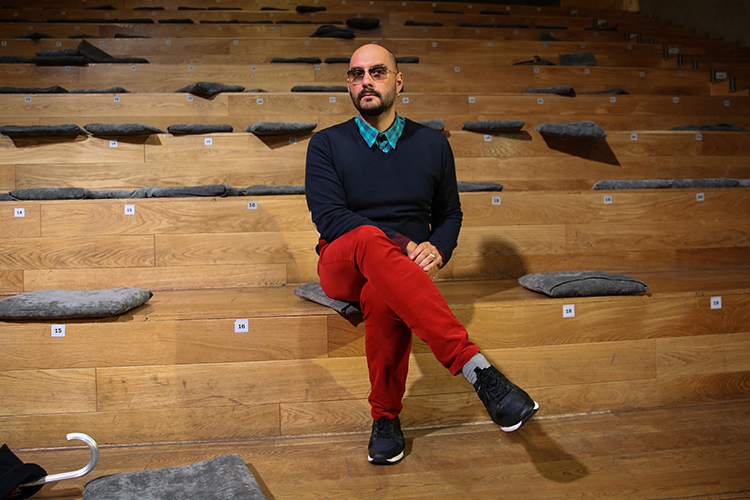
Kirill Serebrennikov always works a lot, and even now, when the “Gogol Center” began to repair both halls, he rehearses two new performances at once: he puts Goncharov’s “ordinary history” on his own staging and Nekrasov’s poem “Who lives well in Rus'” together with the Volkov Yaroslavl Theater. Alena Solntseva talked about Russian classics and Russian life with Cyril Serebrennikov.
- Where did the very idea come from to put a Nekrasov poem?
“I always wanted to work with this text, and when we began to talk about a joint project with the Yaroslavl Volkovsky Theater, I suggested making such a performance.” They immediately agreed: "Of course, this is our fellow countryman, we have a house-museum in Karabikh."
- When is the premiere?
-On May 12, we are releasing a performance at the Gogol Center. It is very large, it will go throughout the space of the theater, at different sites. And then he was drunk in Yaroslavl.
- Why did the Yaroslavl Theater arise? Since you did not think about Nekrasov in connection with him.
- There is a rise, the theater is developing interestingly. They work brightly and work hard, they began to receive “golden masks” for performances, the artistic director is now there - Evgeny Marcelli, a wonderful director, he invited young artists to the troupe, spectators willingly go to the theater, so they are fine.
- And how are you going to put a Nekrasov poem, what is the dramaturgy?
- The performance will be built from different stories, plots, as this, in fact, has Nekrasov. I do not want to reveal all the secrets of the not yet staged performance. I can only say that in addition to Nekrasov’s poem, we work with the “fairy tales of the Russian people” from the Afanasyev collection - they will also become part of our performance. They were friends: Nekrasov published Afanasyev, on the table in Karabikh it is precisely this book.
- But how will it all look in the theater?
- Come to the premiere in May and see.
Fortress law and the Gulag archipelago dissolved in Russia, they did not spill them inside, did not throw them out, did not pull them out.
- But the text will sound Nekrasovsky?
- Yes, sure. Let's just say: we will work with the text of Nekrasov, trying to identify meanings important for us today. The main thing, in my opinion, what Nekrasov is talking about, is slavery, which has not taken anywhere with the abolition of serfdom. There is an amazing novel “Off” - about how men, so as not to upset the sick master, pretend to be slaves, although for many years it has passed since the abolition of slavery, they have long been free people, but voluntarily play the roles of slaves.
- How is this due to today?
- But do not we live in the country of unmanned slavery? Are we free? Fortress law and the Gulag archipelago dissolved in Russia, they did not spill them out, did not throw them out, did not pull them out - and they gradually infected everyone. Now they are even trying to formulate a new attitude towards serfdom for the needs of the authorities that it was such a type of public contract. As Firs in the "Vishnevo Garden" said: "It was before misfortune." The attitude to freedom as “misfortune” ... We never accepted freedom as value, they did not fight for it, it was almost always given in Russia from above. After 1991, everyone thought that chaos was freedom, and decided that we did not need such freedom. All these are sad topics, think about it sad ...
- I know that in the summer you traveled around the Yaroslavl region with actors engaged in rehearsals. For what?
- We decided to see how people live in Russia now. We will not play about the peasants of the times of Nekrasov, about the village after the reform, about the 70s of the XIX century. What do we know about it? We need to play about us and for this to understand how the Nekrasov text is reflected in us. Well, let's go.
I must say that in our play, mostly young guys who rarely leave the city stone jungle are engaged in our play in their theaters. Margarita Georgievna Vanyashova, professor of the Yaroslavl Theater School, a wonderful literary critic, a culturalist, made us a route based on his own connections and contacts: somewhere she knows the local historian, somewhere a museum employee, someone studied from her. And she knows many, she is a man of encyclopedic knowledge, and according to these personal “hangers” she paved the ten -day path to us. The cities of Rostov the Great, Uglich, Rybinsk, Myshkin, and small villages, and completely abandoned villages, and even, for example, one former noble estate, where there was a school was in the nineties, bought out a descendant of the former owners, which now lives there alone, sheep is trying to divorce.
“You had ten days to understand what the Russian province lives?”
- Well, we were taught to observe and draw conclusions. Of course, one cannot claim the truth in the last instance, but you can rely on impressions.
- What impressed the most?
- If we talk about the good, the only thing that inspires and impresses is people. People are amazing. In Myshkin, we met with Vladimir Alexandrovich Grechukhin, the director of the local museum, he wrote a book about Tyutchev, whom he loves and knows thoroughly. He was among those who achieved the return of the status of the city to Myshkin. After the revolution, for the fact that the city of Myshkin did not support the Bolsheviks, he was turned into the village of Myshkino as a punishment. In the time of Yeltsin, it was possible to return the city status again, and Grechukhin did a lot to make tourists come there, created the mouse museum, the Museum of Vodka, the museum of something else-just to attract tourists. And when he tells how they had to fight that they had to go through, you think: since there are such unique people, then not everything is lost. And then you look at how these people live, how they are alone with circumstances, you understand that there are no options ... People, the earth are abandoned, no one needs. Full decline. And social apathy. People who live there say that their parents still lived almost under Luchin, because they spent electricity in the 60s. Then they issued a passport. That is, in the middle of the 20th century there was still practically unmanned state slavery ... And now they are closed by schools, maternity hospitals, clubs, and they talk about it as calmly as about changes in the weather. They scold the power very much, but at the same time they treat it as atmospheric phenomena: it is raining or snowing - nothing can be done with this, it means that.
- And how did young actors react to this?
- This is quite interesting - because when a person sees this, he includes self -defense mechanisms, he tries to pull away through humor, even cynicism. Here we come to the city of Poshekhonya - and there is nothing there. In general, nothing - people say: everything fell apart, all the young ones left, some old people remained. The cheese used to be Poshekhonsky, but now it is gone, the plant was closed. Or we were in the village of Porechye, where there is the highest rural bell tower in Russia. The ensemble built around it, they say, the architect Zhilardi ... Local merchants who produced vegetables there and sent them to large cities and abroad to Europe - it was the center of Russian gardening - they earned so much money that when Zhilardi restored Moscow after the fire, they came to him and asked to work in their village. It’s like a hadid or Norman Foster today local entrepreneurs would call to build some kind of in the regional center. And he built a whole ensemble around the bell tower, which was already higher than Ivan the Great. She is now in the form in which she remained after the civil war, when the bells were torn from her. Devastation and ruin. Decline. No vegetables. Poverty.
Or the village of Kukoba. At the very beginning of the 20th century, one philanthropist decided to give two million rubles to its inhabitants, in one million he built a hospital, school, a shelter, and how to spend another, he suggested choosing them: what to build - a railway or a temple? Residents refused the railway: "Besses will come to us on it." And they chose the temple. So in the village of Kukoboy, a huge temple in the pseudo -Russian style was built, it was built by the St. Petersburg architect, materials were brought from Finland, Germany. In 1912, the construction was completed, the temple was consecrated, and after the revolution the same people who chose the temple, and not the road, so that “demons do not come along it”, they would be ruined, put up in the altar, arranged an atheistic club with dancing, and then a warehouse. And only because this place is very far from the railway, and the materials were foreign, they could not destroy it at all. And today's residents of this village, realizing that one temple of tourists could not be attracted, decided to earn differently and opened the Baba Yaga Museum. And on the one hand - the Spassky Cathedral, and on the other, Kikimora dance. The priest that serves in this temple-intelligent, modest, from Moscow-I ask: and it is not enviable for you that others serve in the capital, go to foreign cars, with gold hours, and are you here next to Baba Yaga? He answers honestly - enviable!
I am very bitter from all this. I would like my country a different fate.
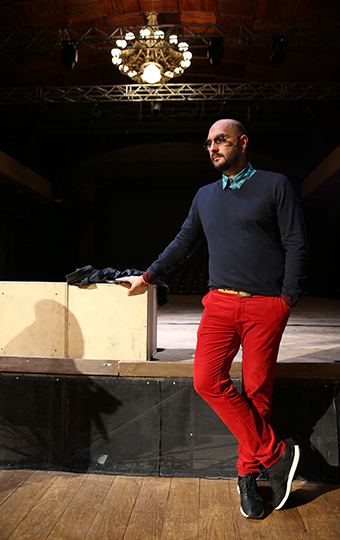 © Vyacheslav Prokofiev / TASS
- You travel a lot around the world, work in Europe; When you come here, to your homeland, do you feel these feelings?
- I am very afraid of such a look of a foreigner, I would not want to see Papuas in compatriots, look at them like animals, many people blame the new film by Andrei Konchalovsky. It seems to me that such a view of the conquistador is inhuman, and I would like to protect myself from this position. Russia is a very large space that cannot be covered with imagination. Only eight hours or even more, how can you imagine it to fly over it? How do they all correlate with each other-all these cities, villages, megacities, some city of Barnaul, in which the theater was ruined as unnecessary, and the city of Petersburg? Kazan and Pskov? How to combine everything - both that and that? This is too much something immense, not to understand. Therefore, for me, the Motherland is people whom I know and love. I do not communicate with some abstract Russia, but with people. And there are people - amazing. So they are Russia for me.
- And how do you combine today's impressions with the text of Nekrasov?
- The guys every day during our journey showed independent studies. We walked, looked, met with people, recorded, filmed, and in the evenings everyone broke into groups and showed fragments of the poem, the actors tried something, searched for how these meanings could sound today. It turned out very interesting.
It seems that city people who live in the metropolitan, comfortable, European life have no life at all at all the life of their compatriots in deaf provincial places. And even if a person was born in a small city, he, having arrived in Moscow, tries in every possible way to get this memory out of himself.
And start all over again. But this is not for the artist. Here I am - exactly the opposite, I do not want to forget my Rostov past at all. When I worked on Rostov television, I had the opportunity to travel around almost the entire region, I saw terrible things, shot a variety of stories: from dying drug addicts in brothels to singers from the academic Cossack choir ... These impressions are the basis of my work.
Misha tee, he plays Nozdreva in “Dead Souls”-from Rybinsk, and when we arrived there, his beautiful father led us to the shipyard of the Nobel brothers, who is now in decline, but thanks to people like Misha’s father, an enthusiast engine of still Soviet times, there is still something in working condition. And why Misha Tiper to abandon his Rybinsk? Let this Rybinsk live in it. And let the audience read the realities of his small homeland through him.
- And what is needed to melt this sad reality into something creative?
- What do you need? Talent is needed! In fact, this is impossible to rationalize. The artists have several approaches, techniques, mymeisis, for example, you can imitate reality, but for this you first need to see it. That's why it is important not to close only in the theater.
- That is, you brought them there not for conclusions, but so that they look like this life, this life is arranged?
- Well, yes, how Russia is arranged, but not for ethnography ... We did not come to the peasants to look - yes they are not long ago, they got out, they were killed, drank, went to the cities. They were at Nekrasov, but now we did not see them, we saw abandoned fields, rickety huts, poor cities, off -road and rare foci of civilization, mainly where oil and gas are triumphantly go to the west.
- Those who make decisions today, including not too professional and even stupid, dangerous, from our point of view - they are often from these places. What is the connection between them and men? This is one social group?
- No. Not one. Different. Russia is managed by nomenclature. Between the authorities and the inhabitants in Russia is a huge abyss. The official can come from the hinterland, but, having worked with a screw, a screw in this system, he changes completely. Here we are now making a performance on Goncharov's "Ordinary History".
- Do you also put Goncharov?
- Well, yes, according to Nekrasov, the prime minister will be in May, and we will show Goncharov in March. This will be a story about how, from living, feeling, who believes into ideals, a person turns into something completely opposite, into an element of the system. When he passes through this "alteration", he loses all connections. He may think that he remembers, knows and feels, in fact - nothing like that, he is different. Moloch grinds them. The power system in Russia is not at all the same as in Germany, or in France, or in Liechtenstein, and it, as we know, has not undergone any changes since Soviet times.
The billionaire, the oil magnate, affecting the fate of the world, on its private plane intersects with Russian reality, with sloppiness - and that’s all.
- Only from the Soviet ones? And from pre -revolutionary?
“I don't know that.” That is, I can say that from those times, but it will be such literary knowledge. I do not consider myself entitled to make statements when I do not have my own emotional impressions, about what I know only reflected in literature. But what rules us now - I understand very well. Noticed that we began to say “they” again? And I see the abyss between them and those to whom they seem to serve. In fact, the system works for itself. The people even interfere with her. There are too many authorities in Russia, and it is almost uncontrollable. The masses, in the name and with the support of which everything is done, is easy to buy, recruit, passionate, deceive, so they, in principle, do not decide anything. Remember: "There are two misfortunes in Russia: below - the power of darkness, and at the top is the darkness of power." Everything remains.
-And where are we with you?
- But we are not.
-In Russia, rational explanations, alas, do not work, but you can emotionally explain to people through the theater what is happening, somehow captivate, support them?
- I don’t know, I don’t know ... Russia is a country where the entire budget should be spent on education, education, and culture. The entire budget, all the oil that flows through the pipes must be returned back and spent on education. Russia today is an incredibly dark country, ignorant, and it becomes even darker, obscurable, it looks like a catastrophe. And in the end, no one can defend himself from this. In any way, in any way, no fences to the sky can be protected from this power of darkness, even if it is an electoral support, these conditional “86 percent”. It is like a collapse in Vnukovo-3, when a billionaire, an oil magnate who affects the fate of the world, intersects with Russian reality on his private aircraft, and all. So if you are at least the Lord of the World, if you get to Russia, you are not protected from anything. I recently participated in the discussion at the Moscow Cultural Forum in the arena, and I was shocked by MP Elena Drapeko, who shouted to me: “You raised conformists - a generation that is not ready to die for Russia!” I answered her: why die for her, maybe you have to live for her? When in the heads of people from power sits that it is necessary to die for their homeland, it is completely scary! Are they preparing for war?! On TV, a woman is shown in a black scarf, who says: I am proud of my son (he died in Ukraine), and if I had now to, I would tell him again - go, son, fight, die. And the whole studio applies to her. Shahidov, or something, are they cooking?! How did it become possible?
- And what to do to us, those who still live in the world, where there is logic?
- We must protect him. He is very fragile, this world. No need to save everyone. We must save yourself, those who are nearby, close people, their own circle. I am responsible for my artists, for these spectators of young people who go here to work, buy tickets for all the performances of the Gogol Center, post photos on Facebook-here are thirty tickets at once. This must be preserved, do not fight for everyone at once, do not “save the world”, as the Russian intelligentsia did, not noticing how their own children are drunk. I am now much more important to communicate with critics, not with experts and a festival circle, but with these specific spectators. Even if they have to make some concessions in the language, to be more traditional, to abandon radicality, and an experiment in form. In European theaters, I can try all sorts of sharp things, strange, and here it is important to be understandable, understood. I rejoice when I see that the audience has touched.
- Do you like to evoke an open emotion in the viewer?
— Да, я сам театром стал заниматься из-за того, что меня там пробивало, я выходил зареванный. Я хочу быть потрясенным, хочу, чтобы произошла какая-то работа, изменения на эмоциональном, внутреннем уровне.
— Сейчас часто говорят, что нет будущего, то есть люди перестали ждать чего-то от будущего. У вас нет такого ощущения?
— Есть, только я сказал бы по-другому. Есть ощущение тщетности усилий. Это про разочарование. Вот в «Обыкновенной истории» дядюшка говорит племяннику: «Да ты, Саша, разочарованный, как я погляжу». Мы все разочарованные. И даже те, кто еще этого не понял. Они поймут позже, когда вранье рассеется. И будет что-то похожее на мои разговоры с родителями, когда я их спрашиваю: почему вы терпели? Почему вы не видели? Почему вы участвовали в этом всем?.. А они: мы верили... нас обманывали... нас так учили... мы просто жили...
— А как с этим бороться и можно ли?
— Ответ у Чехова: нужно работать. Теория малых дел. Книжки читать, писать их, снимать, что можешь. Это дает мотивацию. Фиксировать этот момент. Запоминать. Вы знаете, для меня это сейчас почему-то кажется едва ли не самым важным — зафиксировать то, что есть, запомнить. То, что сейчас происходит, и то, что с нами было.
У всех есть ощущение, что мы стоим на краю каких-то глобальных перемен, связанных не с Россией даже, а с миропорядком, с цивилизацией. Кажется, что-то случится, накроется все медным тазом, и хочется запомнить этот мир, пока он есть. В его прекрасных чертах. Плохое произойдет и без нас.
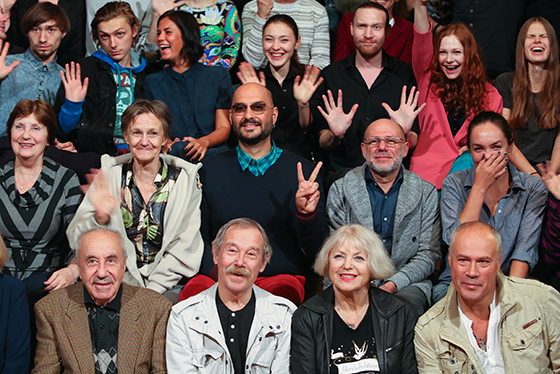 © Вячеслав Прокофьев / ТАСС
— Вы думаете, произойдет?
- I think yes. Но я в силу профессии сразу задаю вопрос: если произойдет что-то неотвратимое, то в чем твое действие? Мы можем сделать этот последний момент особо запоминающимся, раз уж мы не можем ничего предотвратить. Путешествовать, влюбиться, напиться... Надо инвестировать в себя. Научиться жить. Заставить себя быть счастливым.
— Вы же всегда были оптимистом?
— С чего вы взяли? Я разный. Я просто никогда не жалуюсь. Мне в детстве родители запрещали плакать, прямо били по мордам, и потому я привык — никогда не жаловаться.
— И своим студентам вы это запрещаете?
— Да, строгое спартанское воспитание, поплачь в углу и выходи с улыбкой.
— Но в вас всегда был кураж созидания, вы всегда были готовы идти вперед и завоевывать новые территории.
— Ну да, вот меня рейдером и называли…
— И что, сейчас уже не надо? Но вы же хотите завоевать молодежь, новое поколение зрителей?
— Мне не нравится слово «завоевывать». Военное какое-то. Самое важное — ежедневная работа. Надо стараться, чтобы сюда люди ходили, ходили в театр, на хорошие, честные спектакли, на хорошее, честное кино, чтобы они не разочаровывались в нас.
— А как это — не разочаровывать, что им обещать? У вас есть — страшно сказать — идеалы?
- Certainly. Мой идеал — это жизнь. Счастливая жизнь. Человеку должно быть хорошо, для этого надо работать. Никому не должно быть больно, никаких страданий, все должны быть влюблены и рады, хорошо обуты, одеты и вкусно накормлены. Война мне противна не только как дело противоестественное, противное жизни, но и тем, что все люди, которые в ней участвуют, несчастны. All. Поэтому да, мой идеал — счастье. Art. Beauty.
— Но не все смогут его найти.
— Даже в концлагерях выживали те, кто умел радоваться, кто был настроен на жизнь, кто из ошметков газет вырезал салфетки, чтобы ими украсить нары, те, кто театром там занимался. Казалось бы, какой театр, все умирают, а нет — давайте сыграем по памяти Мольера! Нам нужны знания, которые делают нас счастливыми. Счастье — не только радость, не только улыбка беззаботности, счастье — это мышление, это жажда знаний, это творческий процесс, это путешествия по миру или по собственной фантазии, где нет никаких границ. Быть счастливым без «возвышающего обмана».
— Так кому на Руси жить хорошо?
— Не знаю, ответа на этот вопрос в спектакле не будет, как его нет и у Некрасова. Зрителю хорошо.
— Это вы сейчас всерьез сказали?
- Yes. Seriously.
— То есть хорошо тому, кто может наблюдать, не участвуя?
— А знаете, кто зритель в нашей ситуации? Artist! Author! По Хайнеру Мюллеру (все это есть в «Гамлет-машине»), художник стоит над схваткой, он ни там, ни там, не с этими и не с теми, он и тем сочувствует, и этим... Самое правильное место, наверное. Это единственная точка зрения, которая сейчас может примирить с действительностью.