
Translated material
Senators after the deputies will be asked to submit diplomatic passports
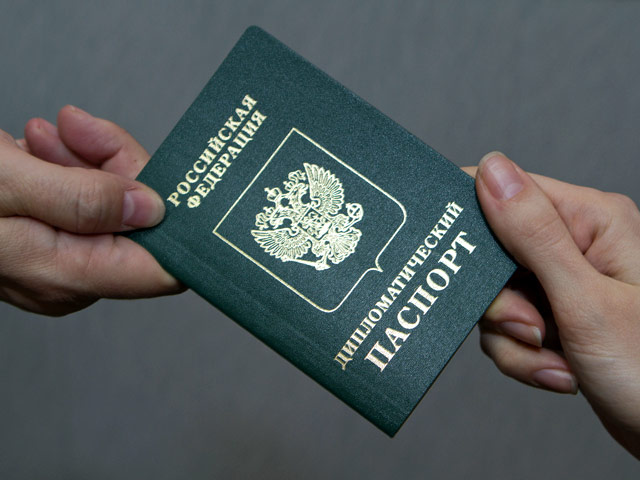
Members of the Federation Council , following the deputies of the State Duma, will be asked to put their diplomatic passports for storage, and recognized Vedomosti . According to the publication, a few days ago, the apparatus of the upper house notified the senators in orally, and the corresponding order of the speaker of the Council of Council Valentina Matvienko will be sent to the senators in the coming days.
According to the law of the diplomatician are issued to deputies, senators, employees of ministries and departments for a specific foreign business trip. At the same time, they are obliged to submit this document to the Council apparatus within three days after returning from each trip. However, in practice this often does not happen: deputies and senators leave their passports and use at their discretion. Among other things, the diplomatic passport gives its owner a number of advantages when crossing the border and the right of visa -free entry into the territory of many countries, including the states of the Schengen agreement.
Many members of the upper house really do not always pass the diplomatic dispensing upon returning from abroad, the newspaper was confirmed by an unnamed employee of the apparatus of one of the committees of the Council. He explained that senators are often on foreign business trips and hand over the document after each trip is “physically inconvenient”.
However, the first vice speaker of the upper house, Alexander Torshin, stated in the commentary of Interfax that "there are no orders from the leadership or personally our chairman about the delivery of diplomatic dispenses and cannot be, since there is a strict requirement that diplomatic service passports are issued to the senators before the trip, and we are mandatory after traveling to the international administration. At the same time, he noted that this rule applies not only to Senators, but also on their assistants, and on employees of the Chamber apparatus.
Earlier, the chairman of the Rules of the Regulations Vadim Tulpanov assured the journalists that all diplomatic and official passports after foreign business trips were returning to the Council of Councils on the deadline allocated by law.
This week it became known that the State Duma speaker Sergey Naryshkin asked his colleagues to pass the diplomatic expression until October 31, sending the corresponding letter to the heads of the Duma factions. According to RBC , statistics were attached to the letter, from which it follows that such violations are committed by more than half of the deputies.
The letter of Naryshkin states that "in the context of a deterioration in relations with the EU countries and the imposition of sanctions by the USA, the EU and Japan, violations of the State Duma of the procedure for using diplomatic passports can cause unpredictable consequences," was reported in publication.
At the same time, Naryshkin himself, in a commentary, rejected the connection between the “organizational decision” adopted and Western sanctions against Russia. He only noticed that for a personal trip, the diplomatic passport is unacceptable.
The topic of possible restriction of deputies of traveling abroad was raised in September. Then this was not associated with a tense relationship with the West, but with the desire to avoid repetition of situations with the ex-head of the State Duma Information Committee Alexei Mitrofanov , who went abroad after depriving his deputy inviolability, as well as with Ilya Ponomarev , who left Russia due to the recovery of large debts.
In early October, journalists became aware of the impending law providing for tightening the order of departure from the country for civil servants who have access to state secret, including, possibly, for deputies, since by default the members of the Federal Assembly have the second form of admission.
Earlier, in April, the Russian Foreign Ministry issued a recommendation to citizens of the Russian Federation on the unwillingness of departure to the United States and the countries with whom the United States has agreements on the mutual benefit of criminals. Soon, employees of law enforcement agencies received a direct ban on traveling abroad: managers of all levels of the Ministry of Internal Affairs, employees of the FSO, the Ministry of Emergencies and the FSKN. There was no question of deputies and senators. And the other day it turned out that the list of non -traveling people can be replenished by employees of state -owned companies .