
Translated material
Whether the nerves will surrender from the Central Bank
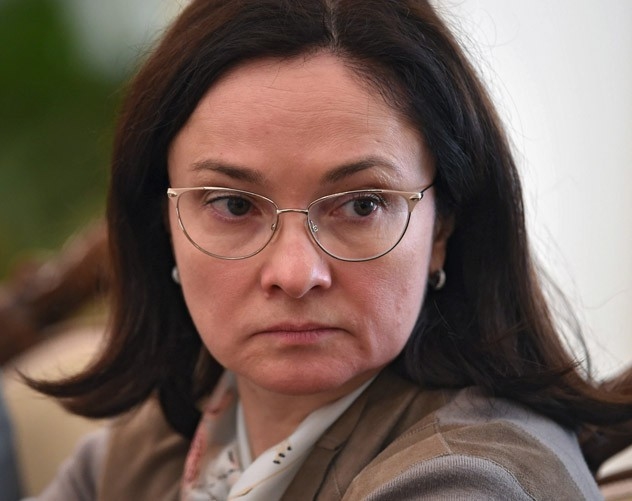
Today, the Board of Directors of the Bank of Russia must decide whether to increase the key rate. Directors will make this decision against the background of increased inflation, a frank currency crisis in the country, an extremely nervous situation in the foreign exchange market and failures in the use of tools, which the bank has high hopes next year.
Currency crisis in Russia
In October, the ruble broke all possible records and shame the most desperate analysts. No one expected his fall from 39.38 (September 30) to 43.39 (October 31) - more than 10% in one month. And this is after an impressive fall in September by 6.6% and in August by 3.4%. In just 3 months, the ruble lost 21.4% by world standards, this is a real currency crisis (more than 20% of the currency fall).
The fundamental reasons for the fall of the ruble are all the same - stagnation of the economy, malfunctions of the payment balance, and from the summer - the fall of world oil prices and western sanctions, which sharply limited the refinancing of the external debt of Russian corporations and banks.
The fall of the ruble profitably the main players of the market - the Ministry of Finance frankly earns on this, the Ministry of Economicians hopes on the positive influence of the fall of the ruble on the growth of the country's economy, the Bank of Russia is preparing to leave the foreign exchange market next year, exporters are experiencing a clear currency shortage to serve their external debts.
And the Bank of Russia, which is directly responsible (until the end of this year) for the ruble, also fell into his own trap. He proceeds to the inflation control mode using interest rates. And therefore, he made it a rule to give the market as much ruble liquidity as it needs to keep market rates near the key rate.
As a result, a simple mechanism turned on: banks take rubles from the Central Bank and buy currency from the same Central Bank on them. The Bank of Russia sees an outflow of rubles (due to its foreign exchange interventions) and compensates for their shortage. As a result, it turns out that the Central Bank itself finances the transition of its foreign exchange reserves to commercial banks. He himself gives them cartridges with which they shoot his currency reserves.
At the same time, the fall of the ruble of the Central Bank does not care at all. The lower the ruble exchange rate will be by the beginning of 2015, the easier it will be to stabilize it in conditions when the bank formally refuses currency interventions.
The alternative to foreign exchange interventions of the Central Bank did not work
The Bank of Russia, declaring the departure from the foreign exchange market, actually decided not to leave it, for which he invented the “safety net” - the operation of the currency repo. We are talking about providing loans to banks in currency for the same security that RUBR RUBLIC LOTS are provided (state, municipal and corporate bonds and other types of securities in rubles, named in the pawnshop list of the Central Bank). The program was announced until 2016 in the amount of $ 50 billion.
The idea of the Bank of Russia was to translate a significant part of the demand for currency from the exchange - to the off -bank market; And from the purchase of currency - to receive a loan in currency. This would formally leave the currency reserves of the Central Bank by the same, despite the fact that their ninth part ($ 50 billion) would be used by banks. And the wolves are full and the sheep are intact. But it was smooth on paper ... The first two auctions took place yesterday and today. The Central Bank offered banks for them $ 3.5 billion at 2.4–2.1%. Auctions frankly failed. Yesterday's banks took only $ 201 million, today - $ 51 million. Demand turned out to be seven times less offer yesterday, today 40 times less. Banks ignored the new Central Bank tool. This is a serious failure of one of the key elements of the future policy of the Central Bank. And he has to figure out how to make this tool attractive to banks. In the meantime, the banks clearly and defiantly turned away from him and continued to buy currency on the exchange for both last days.
In fact, why do banks take currency on credit, if you can buy it? No need to pay a percentage and take care of the return/refinancing of the debt. And the percentage rates themselves are too big. London Libor interbank today is less than 0.5% per annum. And our large banks, even under sanctions, can go there (financing less than 30 days). And the Central Bank at its auctions increased this rate by 4-5 times. Although, when compared with the percentage of foreign exchange deposits for the population within the country (4–7%), the rates do not look too large, at least for small and medium -sized banks that do not have exits to London.
Today, a nerves have been handed over from the Central Bank or the market
After yesterday's closure of the market, news from the USA came. The Fed’s completely expected for everyone completed the policy of “quantitative mitigation” (buying on the balance of the Fed Gosbumag and mortgage bonds) and did not raise the interest rate. Usually the market does not respond to expected events - they are already laid down in the price of traded assets. But our market, it seems, was only looking for the reason to go crazy and found it. The ruble at the evening session (closed to the public) has fallen markedly, and in the morning today the quotes of cash currency in exchangers have grown noticeably. Expected, the market yesterday opened with a gap up and grew by 1%. The Central Bank clearly spent $ 2-3 billion at the opening to contain the course. But at one hour, someone threw up to $ 3 billion (Central Bank? Gosbank? Speculators? Usually only the Central Bank operates with such amounts), and the dollar collapsed by 6.6% within an hour and a half. This happened just before the second currency repo of the Central Bank and, possibly, was aimed at attracting banks to repo, showing them the instability of earnings on currency ownership. But the result turned out to be the opposite - the market “ate” the currency on the exchange and practically ignored the Office Auction of the Central Bank. Such a volatile market and also multidirectional for one day without serious external reasons has not been observed for a long time. Someone clearly surrendered their nerves after a 20%rally of the ruble, the introduction of foreign exchange repo and the Board of Directors of the Bank of Russia.
Great selection of Directors of the Bank of Russia
Directors of the Bank of Russia will have to decide on the key rate. Will it be increased? Based on the logic of the latter, September, there are no meetings. Inflation increase factors (Russian counter -sanctions and ruble devaluation) are one -time from the Bank of Russia and their influence will end mainly this year. There is no need to increase the rate in order to restrain inflation. And this year has disappeared anyway, inflation will be obviously higher than goals. The negative impact of an increase in interest is enough: the risk of translating GDP stagnation into a recession (decline), as well as a reduction in the banking margin and an increase in the problems of small and medium -sized banks with the prospect of a banking crisis. However, earlier (for example, in July) the Central Bank increased the interest rate simply upon the exceeding the forecast of inflation on the target for the year, not discussing either one -time inflation factors, nor about its influence on GDP. What logic will the Bank of Russia adhere to tomorrow? Olympic calm when looking at the falling ruble and accelerated inflation or will his nerves surrender and will he still increase the rate? Most analysts believe that the rate will be increased.
But be that as it may, the real choice of the Central Bank is completely different. If it continues to pump up the banking liquidity banking system, then you need to prepare to continue the ruler’s wake rally. Moreover, the level of the rate is neutral in relation to the level of the course (the dollar at the 8%rate of the Central Bank cost 32 and 42 rubles) and in relation to its dynamics (except that a small pause in the fall of the ruble).
If the Central Bank decides to squeeze liquidity, then it will step on the throat of his own song about the transition to targeted inflation and manual management. The market rate will go far outside the key rate of the Central Bank. This can be done by quantitative restrictions on providing liquidity banks with any - and current - a percentage rate. To do this, it makes no sense to increase it.
I would not increase the interest rate on the site of the Bank of Russia. The risks for the economy and banks are great, and the effect will be extremely limited in time.