
Translated material
God is rock and roll

For 30 years now, and maybe more Alexander Borisovich Gradsky has been wearing the title of “First Soviet Roker” and “Father of Russian Rock”, which he did not deserve. Firstly, despite the fact that starting from the age of 14, Gradsky was noted in the series of the first Moscow ensembles to imitated The Beatles , “Slavs”, “cockroaches” and “Scythians”, and in 1966 he gathered his own-“buffoons”, the very first Russian-speaking rockers should still be considered Yuri Ermakov’s beetle, “Sokol” Which long before Kino was engaged in Yuri Aisenshpis. Secondly, Russian rock is not like rock Alexander Gradsky. The Grand Gradsky, who graduated from the Gnesinsky Institute for Opera Vocal Class and the Faculty of Moscow Conservatory, closely in any niche, and he fled from the narrow cage of Russian rock in the late 1970s-before he left the underground to the masses. It is unlikely that for Gradsky it will be honorable to recognize himself as the father of offspring from Leningrad, Sverdlovsk and other rock clubs, most of which, in his own opinion, were poorly composed, played and sang.
Rock Alexander Gradsky
In some ways, Gradsky was the first-for example, he was the first rock musician recognized by Soviet official culture, and therefore the first to lit up on an ideologically verified CT with a long Hair. Alexander Gradsky, thanks to the Music film, Andrei Konchalovsky, “Romance of Lovers”, in which the vocal leader of the “buffoons” was looked closely for an affair as a proven vocalist close to youth culture, but due to his insolence, the 25-year-old rock musician became the author of the entire sound composer of the USSR (according to legends, willingly supported by his audio. Abg, he began his acquaintance with Konchalovsky in that he was anger covered him with obscenities and thereby wrapped it up). “Romance about lovers” received the “Crystal Globe” in Karlovy Vary, and Gradsky, who strengthened his connections with the system with the system of the flaminarly executed hymns of Pakhmutova and the membership in the Union of Composers, was a carte blanche at the All-Union Studio “Melody”, which, like any Soviet bureaucratic office, could not be hacking without “crust”. This connection was according to the calculation, and Gradsky skillfully benefited from it not only for himself-appearing on the artistic councils of the “melody” with his independent opinion, he helped to push the records of young rock groups.
But this is not the main thing. The main thing is that Alexander Borisovich Gradsky was our first rocker on the scale of ambitions. The drummer of the “Skomorokhov” Vladimir Polonsky recalls that the cherished dream of young Gradsky was to “dug the“ Beatles ”.” "Enough! They are already sitting too much! " -said a 16-year-old student who tried to see the brand of the apparatus in which Liverpool idols play in newspaper photos. Sasha Gradsky was completely sure that if his group, who performed with home -made columns with Hungarian speakers, would take the coveted Vox AC 100 , then Beatles at the top of the musical Olympus are numbered. We did not have any other such arrogant and bold ones, alas, there will be no more.
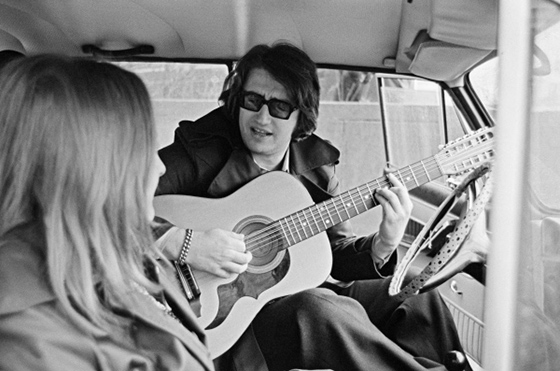 © RIA Novosti
The giant ambitions of Alexander Gradsky are protruding from his discography, like a powerful admixture. Starting with “buffoons” from songs to poems by Burns and Voznesensky, Gradsky composed song suits, in fact rock symphony, based on the works of Elyuar, Sasha Cherny, Rubtsov, Shelley and Nabokov and wrote them down on “melodies”, using the technical capabilities of the studio as much as possible. He is the author of three rock ballets and two rock modes, written for decades: the “stadium” about the murder of the Chilean singer Viktor Hara and “Master and Margarita”, in which Makarevich, Kobzon, Kazarnovskaya and Leps are found, and Gradsky himself sings both for the master-yushua, and for the catham cat. After the death of Vladimir Vysotsky, Gradsky, with the All-Union Bard, did not meet him personally, but writing friendly initiations to him, felt like his successor-he realized himself not only in his voice, but also in a word and began to burn the verb of the heart, performing his own toxic-social songs for the guitar. (It is funny that the last sensational song of Gradsky is dedicated to the Olympic construction in Sochi .) In 1988, he sang to himself, as usual, immodest: “God is rock and roll, you became fat and old, but, by the way, / you did not break either in essence or by the way. / Let anyone get into the heroes of the scene today, / From this dust, from this soot, God Rock-Roll will wash the walls. ” This song was also released at the two-disc collection of the best songs by Gradsky “Favorites”, released in 2011. A blue volume of verses and stories of the singer, stylized as the famous book series “The Library of the Poet”, founded by Maxim Gorky, was attached to him. A branded joke, in which only a share of a joke, from a master who, from birth, considers himself a genius, God and classic and arrogantly singing what he wants.
It is amazing that on the all kinds of “demon” Gradsky, so little space is allocated to his best work - “Russian songs”, as if the author himself forgot about it. This plate, recorded in 1976-1978, and published in 1980, is called the first Soviet full-format rock album published on the monopolist of the Melodia. This is also not quite true. Before her, “Russian pictures” (1977) came out in the Union, where the Chelyabinsk group “Ariel” fantasized how the bitter muses could be played on Russian folk stories, and the “Guslyar” of the Belarusian “Songs” (1979)-Folk-Rob-Opera according to the poem by Yankee Kupala.
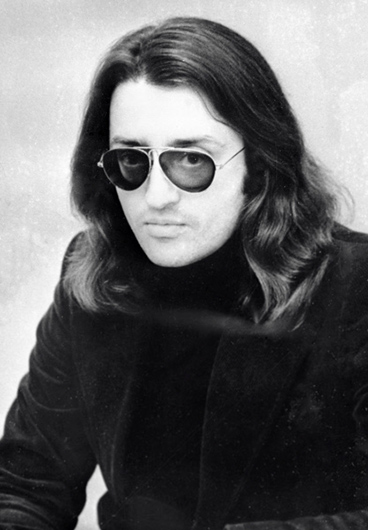 © RIA Novosti 1979
“Russian Songs” - more than rock, on the envelope of the record of the word this word is not listed. Alexander Gradsky designated the genre of the album as "Suite on the themes of Russian songs." At this point, the 27-year-old singer, who had already trampled at stadiums and set to study at the conservatory, was thinking about "ending with all this stage, songs, bat and guitars." “First of all, I am an opera artist and want to sing big music,” said Gradsky. “Russian Songs” is a self-built bridge, on which the gifted singer wanted to leave the rock star, bypassed by him and across, to the continent of large music.
Gradsky went to the sound of a folk tank. Faced with genuine rustic singing during expeditions in the Ryazan region and Bryansk region and in the conservatory’s folklore office, the rock musician discovered the essence of Russian songs-plunged into the black depth of the whirlpool, which is hidden behind their superficial calm, simplicity and serenity. It only seems that “nothing in the pole is swaying,” the storm of Shakespeare's passions is actually walking there, and Gradsky, who developed the original “Italian-Negritian” manner of singing, in which the verified technique is combined with improvisation, and classic accuracy-with rock and rolling rash, managed to direct it to it. listener. From half of the “Russian songs”, the cold is to the liking: “Tanya White”, where the Hitchcock tension is created by the contrast between the emotional equalibrics of the voice and the indifference of the Austral synthesizer bass; The terrible “cry”, in which Gradsky sings with a church clerk and a hysterical old woman; The sad acapelic “not one in the field of the road”, where the singer is accompanied by a ravon of Gray and a wars of snowstorms. A revolutionary requiem crowns the record “You fell victim”, ending with the noise of the surf and ascending to eternity with a chant.
Alexander Gradsky - "Russian Songs"
There are no electrihitars on Russian songs, which is without rock music. The Synthi 100 synthesizer is solved on the record, brought to the Union by Peter Zinoviev himself, the creator of EMS , - this advanced instrument Gradsky discovered for himself during the time of the Romance of Lovers. On “Russian Songs” the first Soviet Synthi 100 benefit occurred, which was not too behind other benefits from the synthesizers in pop culture-from the Pincludovskaya “Dark Side of the Moon” , where the closest relatives of Synthi 100 sounded, and to the Berlin trilogy of David Bowie.
Unlike “Ariel” and “Songs”, Alexander Gradsky on “Russian Songs” does not try to adjust the folk song to rock and roll schemes, does not engage in stylization and ornamentics. It leaves authentic elements characteristic of the folk song manner - unusual musical sizes, freely floating stresses, archaic words, but at the same time boldly reproaching the melodies, treating the ancient song as with its own, or, overwhelmed by composer ambitions and inspired by the Beatles and George Martin studio experiments, inserts quotes from Bach, Stravinsky And “Farewells of the Slavs”, references to Chaliapin, Lemeshev and Musique Concrète . “Russian Songs”, for all its truthfulness and sincerity, is a recording through the postmodern, that is, corresponding to the spirit of its time. In general, this plate is both fatal, anti-zero, and natural-living, and theatrical-heating, and timely, and timeless-one continuous paradox, like Russian life itself.
The paradox is also that the road that Alexander Gradsky reached on “Russian songs” has not taken it anywhere. Perhaps because this is a Russian road - along it “yes you can’t get through or pass”, as is sung on the album. The singer drove in the experimental field and returned to the inhabited rock fasteners. The vocal suits that followed “Russian songs” (“Life itself”, “The star of the fields”, “utopia A.G.”, etc.) repeated the finds of “Russian songs”, but did not add anything to them - shifting to the music of Shelley, then Mayakovsky, Gradsky competed with himself in vocal athletics and practiced stylizes, but composed the claimant in parallel. Rock operas near Webber and Bardov’s song near Vysotsky. Gradsky’s discography ends with the tombstone of the album “Fruits from the cemetery” (1994), where a great voice sings in the tired of Karaoke “Imagine” , as if admitting to himself that “to dug“ Beatles ”did not work. Although this disk can be considered for the prophecy - about the appearance of one television show, in which Alexander Borisovich is now magnificent sitting the patriarch of vocal art. Absolutely deserved.
The anniversary concerts of Alexander Gradsky “65/50” will be held on November 12 in St. Petersburg in the Grand Concert Hall “Oktyabrsky” and on November 25 in Moscow in the Crocus City Hall concert hall.