
Translated material
We will replace robots
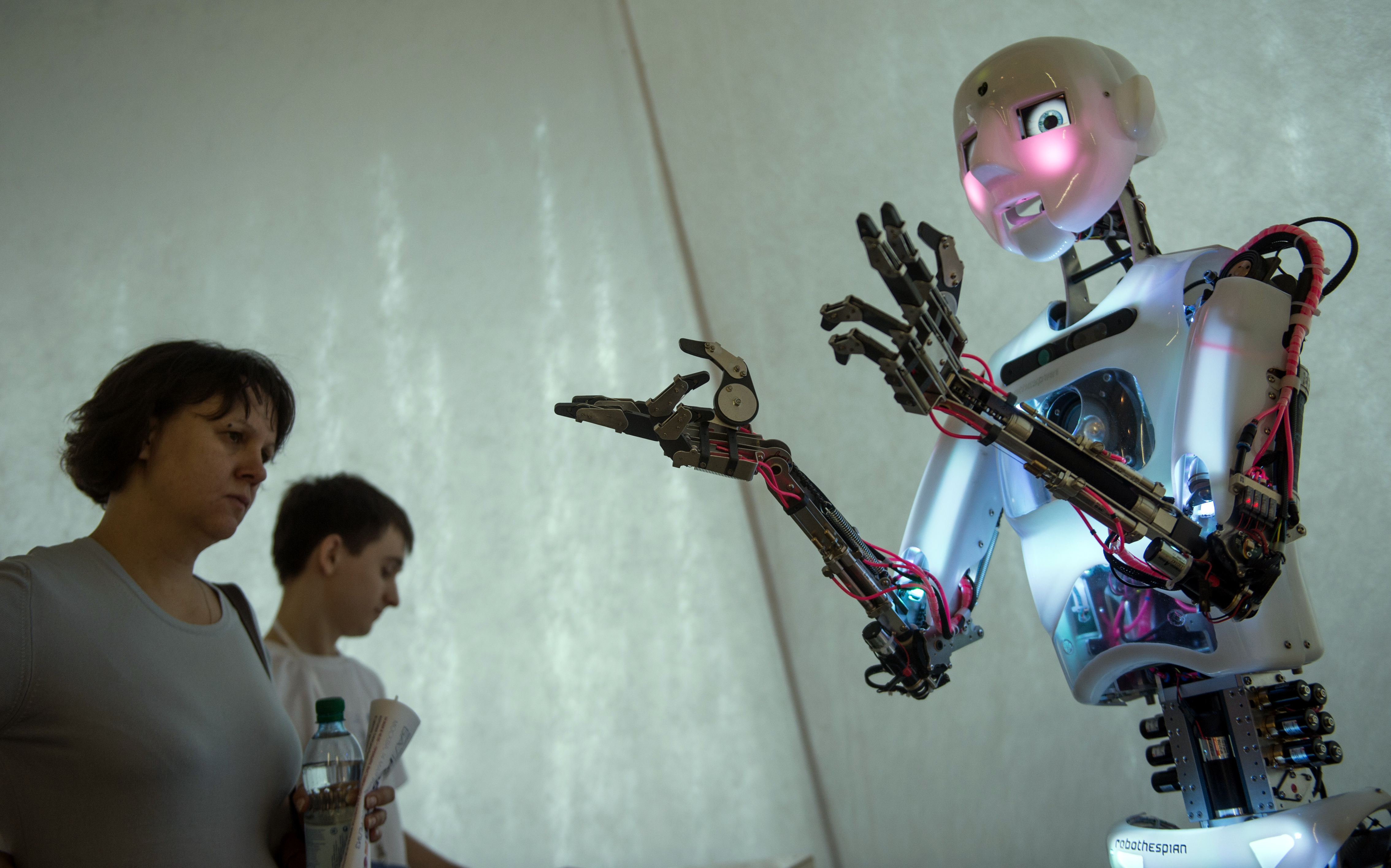
Modern society is not able to do without the help of cars, and this dependence is becoming more obvious and comprehensive every year
Robots perform more and more tasks that were previously performed by people. In developed countries, this strikes primarily in the middle class: cars are not yet able to perform the simplest and most complex tasks, but easily replace the middle link in the work chain. In the future, this trend is able to lead to a reduction in a huge number of jobs in Europe, experts of the French branch of Roland Berger , an international company engaged in strategic consulting, say.
Their new study presents a very difficult picture of how the French labor market will look in 2025. On the example of France, the compilers of the document demonstrate the back of the rapid automation of the Old World. According to the above data, by 2025, about 20 percent of the tasks in various fields that people are performing today will be given to machines.
“In France, this may lead to the fact that more than three million people will be out of work,” says Roman Lucaso , strategic consultant Roland Berger . Almost all sectors of the economy will be affected: agriculture, construction sphere, industry, hotel business, public sector (including the police and the army), the service sector and much more. Cardinal contractions are not expected only in areas such as education, medicine and culture.

"In the average and long -term perspective, 42 percent of workplaces in France will be automated. We came to this figure using the previously developed methodology of experts from the University of Cambridge, which they used to do 45 percent. This is the global potential of robotization. This trend will lead to the automation of three million jobs in France for ten years," says he says. " Lucaso. According to him, if the state does not take adequate measures, automation can lead to an unprecedented increase in unemployment in the country - 18 percent in 2025 (compared to the current ten). True, about 500 thousand new jobs will be created in areas such as environmental protection, advanced technologies and customer service, but this is too little to ensure the work of all the labor automation that have lost it. This process, the consultant says, will be accompanied by the extreme polarization of working functions: on the one hand, low -paid labor to ensure the current operation of the machines will be in demand; On the other hand, the labor market will need highly qualified personnel. Automation will affect the intellectual professions of the middle class, such as an auditor, accountant, lawyer, journalist. In these areas, many functions can be automated, which will invariably reduce the number of people employed in these areas. The task of the state is to adequately prepare for the upcoming changes, creating an effective mechanism for professional training and reorientation of personnel, the authors of the study believe.
Robotization will have a clear positive effect for the country's economy. The competitiveness of enterprises will increase, but not only: “Automation, which will lead to a reduction in jobs on the other hand, can lead to enrichment. We evaluate this capital, in the case of France, at 30 billion euros of additional income of the state, another 30 billion additional investments, and 60 billion euros of income from activities that will be a direct result of this automation. Here is a positive effect that the state will be able to be able To achieve, provided that it will not try to slow down the automation process, ”says Roland Berger expert.
As a result of robotization, the purchasing power will increase significantly
A similar situation is characteristic of other European countries, says Jeremy Bowles , an economist in the Bruegel Brussels Research Center: “EU countries, whose economy is more based on agriculture and production, are more at a greater risk in the context of labor automation than such economies in which the service sector is greatly developed - for example, in the countries of Northern Europe. In connection with computerization and robotization At the same time, the process of adopting new technologies is abolished at the same time, the fact that technologies already exist, does not mean that these countries will immediately begin to use them from the point of view of many companies. countries ".
The robotization of the European labor market undoubtedly has positive aspects, says Bowles. This is a significant budgetary savings, and therefore a decrease in tax burden and the growth of private investments. Due to the redistribution of public goods and lowering prices, purchasing power will increase significantly in European countries. To taste these fruits, countries need to prepare for future changes. And this training should take place both in the field of economics and professional retraining, and in the field of education and training of new personnel.
Automation will help more people to devote their time to the family
In addition to the favorable impact on the state treasury, labor automation is able to reorient the energy and enthusiasm of citizens to fulfill such tasks as labor for the benefit of other people, according to the German professor Getz Werner , the founder of the DM perfume stores, the head of the interfacial entrepreneurial institute in Karlsruy. In the article for the publication of The European, he talks about the need to reconsider the approach to work as a whole and begin to appreciate the work that people do, helping others.
According to Werner, European society should ensure the existence of such work by introducing basic wages for all citizens without exception. As an example, he gives women who have chosen their lives to the education of their children, helping elderly parents and support their husbands. Such work should also be rewarded, and automation will help more people to devote their time to such important tasks as these, instead of spending it on boring, deprived of interests, which the German entrepreneur and teacher believes.