
Translated material
For civil education
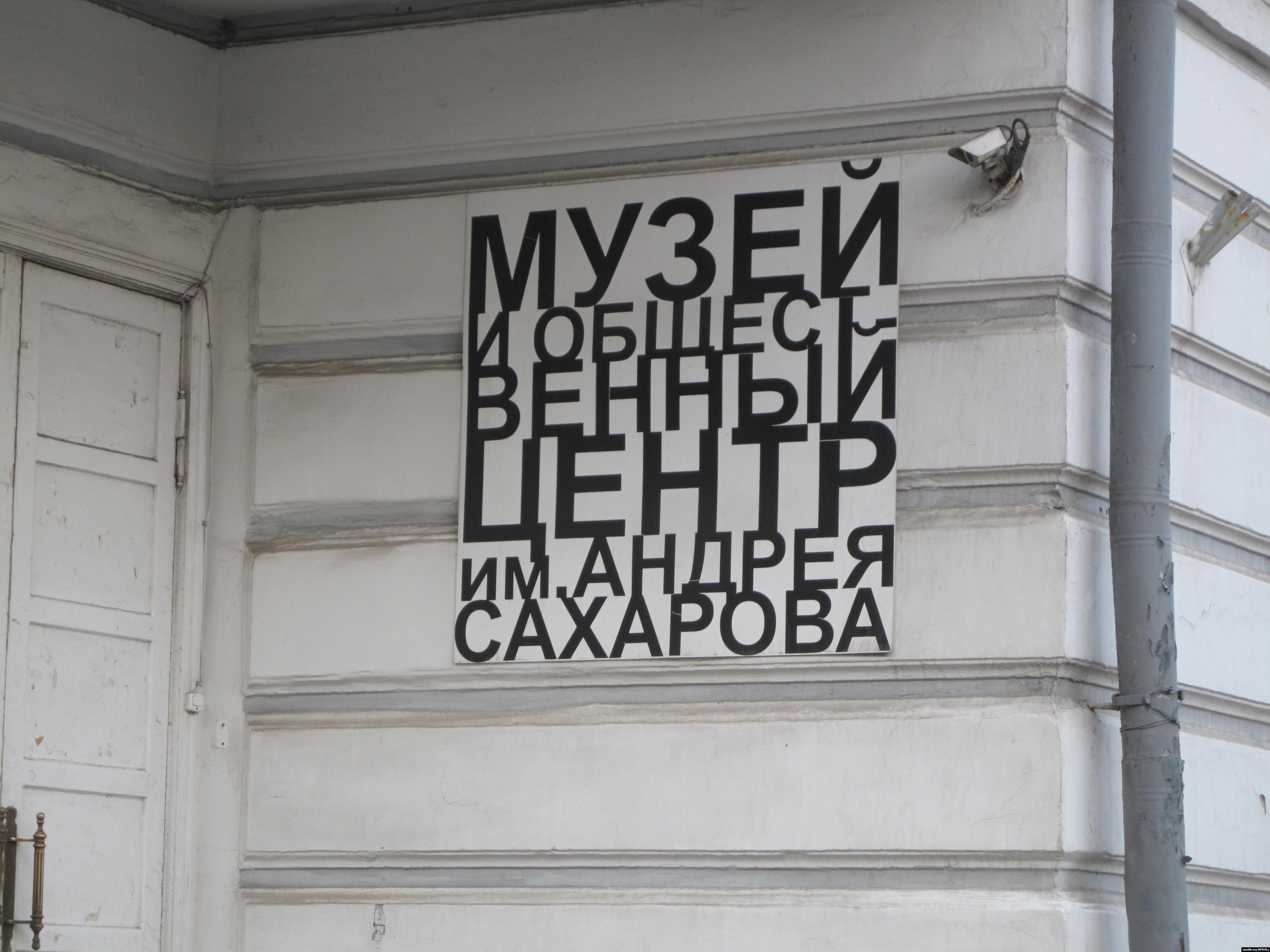
In Moscow in the Sakharov Center, a set of listeners at an open civilian university was opened
Open Civil University (OSU) is a new educational project of the Sakharov Center. With its opening, the educational area of activity of the Center will be expanded - since 2011 the Human Rights School of Rights have been working in its walls.
The course at the university will consist of two lecture cycles. The first is called "Historical argument in modern public discussion" and was created with the participation of a free historical society. The second cycle of lectures is devoted to the relations of the state and society in modern Russia. The director of the Sakharov Center Sergey Lukashevsky spoke about the tasks of the university in an interview with Radio:

- It seems to me that for institutions such as the Sakharov Center, in the current Russian conditions the main thing we can do is to engage in education and enlightenment. The school of human rights continues its work, now its next session is beginning. But we thought how to develop our educational direction, because, of course, it is now obvious that not only human rights are a zone-lakuna, where Russian society, primarily young people, lack knowledge. We decided that the sphere of humanitarian knowledge as a whole also deserves attention in this sense. So far, what we will do is essentially a pilot project. I do not know how widely we will be able to develop him. So far, these are two small courses for six lectures-meetings. The first will be devoted to history within the framework of a public discussion, because we are constantly faced with the fact that history as a collection of historical myths is used for political manipulations state propaganda or unscrupulous political and public figures. Within the framework of the course, such objectively complex topics as the history of Crimea, the history of the Russian Orthodox Church, the history of the Great Patriotic War will be affected. We also conceived the second bloc, which is dedicated to Russian society and the state, in which relations they are. We attract sociologists, political scientists who will look from different directions at these relations, at the prospects of the public movement and civil participation, on what kind of social treaty existed and exists.
- Which of the historians and experts has already agreed to take part in the Lectures of the OSU?
- This is the historian Nikita Sokolov , chairman of the Council of the Free Historical Society, professor of the Higher School of Economics Hasan Huseynov , journalist Andrei Arkhangelsky . In the second block, there will be political scientist Tatyana Vorozheikina, director of the Levada Center Lev Gudkov and many others.
- Who can sign up for courses, and are you observing interest in this initiative?
Despite the worsening socio-political background, on the scale of our school, interest in finding out what human rights are not falling
- Anyone can sign up. Of course, we first want to see students and young specialists, but this initiative is open to everyone. Subsequently, we will not publish the announcements of each specific lecture on social networks, since we want people to pass this course as far as possible to the end. We are not going to take a fee from anyone, so this kind of registration remains the only possible way to motivate. At the moment, we have already registered about a hundred people. And I think this is a very good result for a pilot project.
-As for the school of human rights, which began to work in the wake of the growth of public activity in Russia, what is the trend in it-whether there have become more participants in recent years, because people are not so actively going to rallies as in 2011-2012?
- When we were just starting the school of human rights, we have an interest in geometric progression. Now he has stabilized: from 100 to 150 people participates in it during each session. And in reality, we still do not have enough resource capabilities to accept a larger number of participants. But, surprisingly, interest does not fall. Despite the worsening socio-political background, on the scale of our school, interest in finding out what human rights are, and how it is possible to protect them, does not fall, ”said Sergey Lukashevsky.
The first lecture at the open civilian University will be held on November 6, it will be devoted to myths in historical discourse. Konstantin Morozov , Deputy Chairman of the Human Rights Procedure Center, will tell about the problems of the demand for research and the style of the historian in the modern public space.