
Translated material
Hybrid virtualism
The word "hybrid" is widely used for mixed structures and actions - for example, in the now popular term "hybrid war". The term "virtualism" as an independent direction in philosophy, science and practice was proposed by Nikolai Nosov and received an official status in creating a virtualism laboratory at the Institute of Man of the Russian Academy of Sciences in 1991.
Virtualism proceeds from the principle of the multiplicity of the origin of generating and generated realities of different levels of complexity and the degree of influence on each other. The world is real and virtual at the same time. Distinguish virtualism lively (natural), technical (created by man) and hybrid, such as "man - machine - man."
However, virtualism appeared in human culture long before creating a computer "miracle": go inside any temple, and you will find yourself inside the virtual reality of the "large helmet", which gives rise to special states, thoughts, sensations, emotions, feelings and desires.
I will explain what is about. Click your fingers and you will get a new reality - sound. Chirk a match on the box, and light will appear. Sound and light are always virtual, and manifest themselves only as something (someone) generated, secondary physical phenomena. It is from this that the Old Testament begins: "And God said: let the light be! And the light became." You read "Mom"-and you already see her image and feel something pleasant. “Motherland”-new sensations, and the “villain” causes an hostile reaction to a specific image of a person that arose inside you.
In a dual virtual, a person is generally “bifurcated”, and the head and body begin to solve their problems separately from each other, which leads to incomprehensible and stupid mistakes by the type of “mind for the mind”
These are examples of the initial entry into the virtual-the image of something and someone with a positive, negative or dual sensory content. The virtual itself is spontaneously generated and begins to seize a person into his arms to achieve some goal. In a positive virtual, the poet from under the pen an amazing lines come out by themselves, from under the intelligence of the violinist-captivating sounds, the football player clogs a fantastic goal, the hostess cuts a delightful salad, and the world himself miraculously transforms. It is this condition that occurs with an orgasm, and it is experienced each time as new.
A negative virtual is a stupor, anger, irritation: as if something badly seizes a person, everything is falling from his hands, "the crocodile is not caught, the coconut is not growing", in short, "trouble has come-open the gate." In a dual virtual, a person is generally “bifurcated”, and the head and body begin to solve their problems separately from each other, which leads to incomprehensible and stupid mistakes by the type of “mind for the mind”.
The main feature of entry into virtual states is manifested in the fact that the personality ceases to distinguish between the reality of different levels of complexity and automatically acts in a natural or hybrid virtual mode, depending on the situation. All types of dependencies are essentially virtual states and processes. A person sits in front of the TV and watches shots about the death of innocent people, hears the denunciation of the Dictor, and this hybrid virtual gives rise to a desire to take revenge on the killers in the viewer. Everything “boils” from indignation inside the virtual “sofa fighter”, but he can not help himself except switching the “box” to another program. However, some viewers really break down from the homes and go to restore "order" in the hot spots of the foreign countries.
Why do they voluntarily reach for death? I’ll try to explain this phenomenon from the standpoint of virtualism on the biosocial model “Crime - Punishment - Forgiveness”. During the creative counseling of customers, I suggest that they first perform biosocial self-esteem using a polygraphic and (or) colorographic egoscopy. Instrumental diagnosis takes the first step in communicating with virtual problems of a person. At the exit, the real attitude of the tested people to these very important social criteria is clearly manifested, especially to intuitive-emotional imperatives of punishment and forgiveness. The irrational model of forgiveness can be in the plus: it means that the personality is focused mainly on a positive attitude towards himself and his environment; If the model is in the red, then a person leads a distrust of himself and others along with the fears of deception and betrayal. If the punishment model is in the plus, then the subject enjoys the punishment of others; If, on the contrary, she is in the red, then this person does not like to punish anyone.
The second action is carried out in the process of virtual travel in time and in the space of feudal relations "Sovereign - Vassal". With the help of simple actions, a person transforms into a “sovereign” who, in a virtual state, is invited to go a path from universal love from his subordinates to the betrayal of close friends, which forces to execute them publicly. At the same time, the full -time executioner cuts off the criminals of the head, but refuses to do it to his father, and then the sovereign himself plays the role of the executioner. The law and justice triumphed. Then this whole situation is played again, but the "ruler" makes an unusual decision and forgives the conspirators.
After these "film" and emotionally saturated virtual events, people voiced their thoughts, sensations and feelings. The minority received physiological pleasure from execution - these are born executioners, and this model can really appear in their life. Work with their psychosomatic problems is hopeless, since they intuitively seek “criminals”, their potential sacrifices. About the same percentage of customers experiences unpleasant feelings from the naturalistic process of punishment and receives ethical pleasure and even some kind of self -esteem from forgiveness - this is a model of Christ. The majority internally agreed with the obligation of death, but they did not really like the way of public execution; Forgiveness caused bewilderment and moral captivity. This is the most common behavioral model in our society.
The same “fairy-tale therapy” at the school allowed to clarify the share of potential “executioners” among students of grades 6-11, on average there were 5-10%. It is noteworthy that in these children, teachers noted behavioral and communicative problems of varying degrees of severity. The results obtained can quite extrapolate on real events that occurred and continue in the east of Ukraine. In the continuation of the "hybrid war" in the Crimea, surprisingly quickly executed with the help of the dirty politeness of "green men", hundreds or thousands of volunteers penetrated into Lugansk and Donetsk. But these were not "soldiers of good luck" and not the personnel military who act under the contract. In their bioethical essence, these “militias” are like virtual executioners who waited for a star hour and received an indulgence to restore supposedly violated justice. Alien death for them is a social and physiological buzz, they do not need money.
The critical mass of this militarized rabble exceeded the permissible limit, and everything has grown in a whirlwind of their indomitably repeating desire to kill for no reason and for no reason. It is symbolic that the Russian authorities reacted to them not as heroes, but as extra people, and do not want to stir their “polite” hands with social kinship with moral discharges: they went missing without glory, there is a road there.
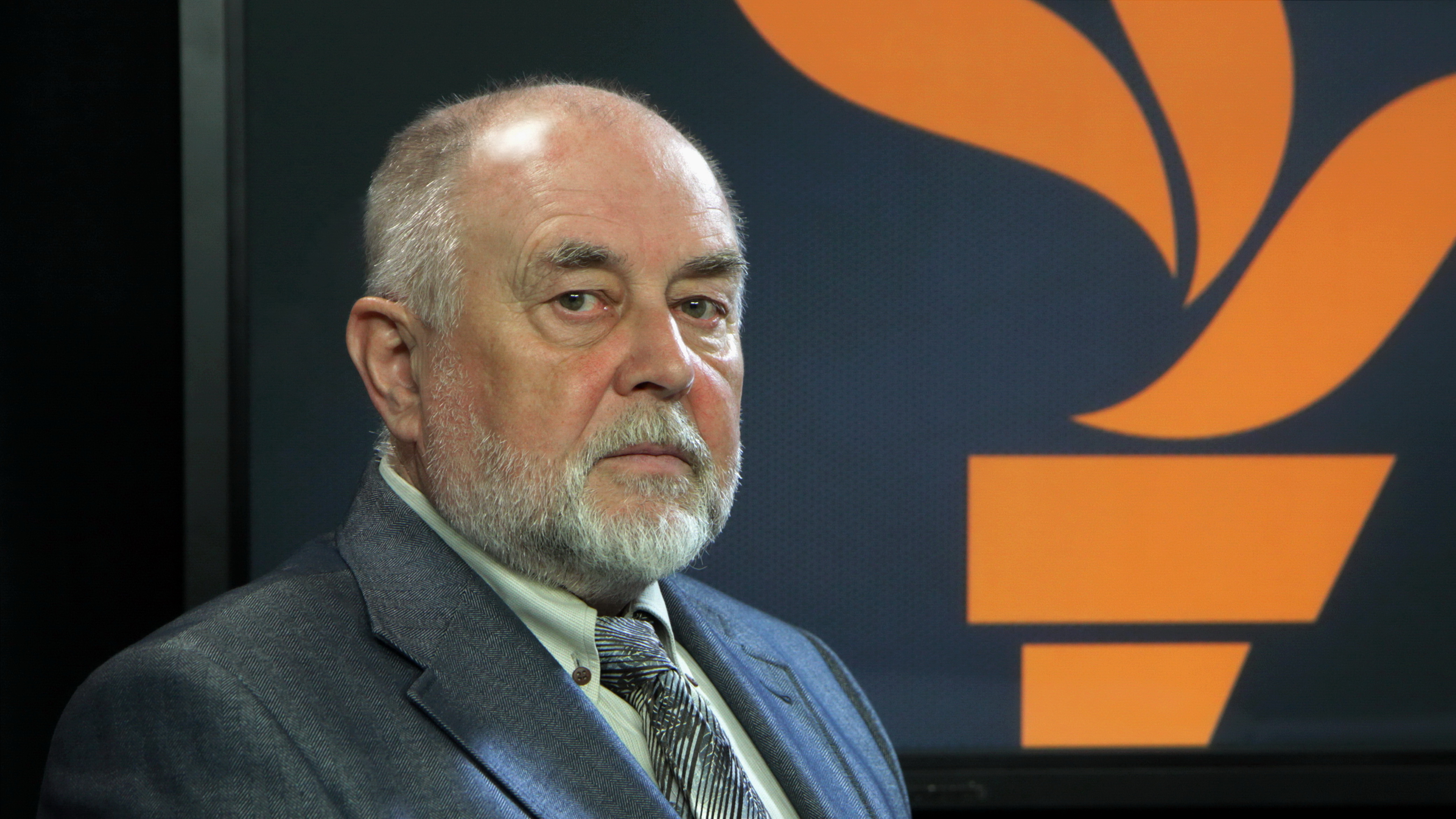
Georgy Yuryev is the main researcher at the Humanitarian Expertise and Bioetics sector of the Institute of Philosophy of the Russian Academy of Sciences, Doctor of Medical Sciences, Candidate of Psychological Sciences, Family Psychotherapist of the highest category