
Translated material
From jass to jazz
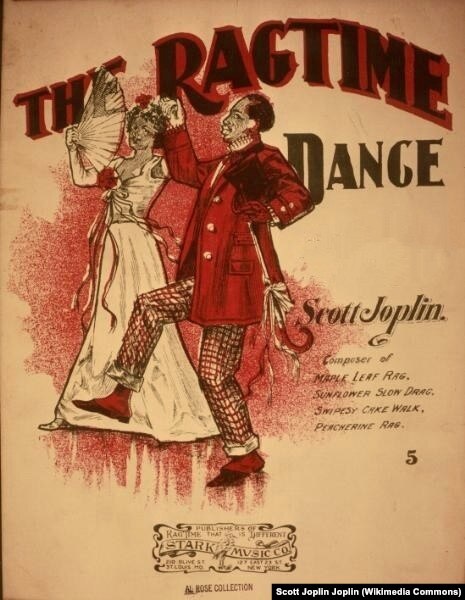
The origin of the word "jazz" up to our times remains a mystery. Is it true that it was born in New Orleans? Or did the word “jazz” came from other edges and slowly lost its slang tint and entered the American dictionary already on equal terms with the rest of the new terms of the twentieth century?
Etymology, the origin of the word jazz: I happened to talk about it, but for a very long time. Accurate data, dates, evidence from where this word came from - no. There are only assumptions. Some, as it seems, are close to the answer, others are quite fantastic.
Wherever fate brought you, namely, she is engaged in drifts, welcome to the Jazz Time Club. Our address: short waves of "Freedom" and network residence permit www.svoboda.org . The microphone in Paris has Dmitry Savitsky.
Scott Joplin - Weeping Willow Rag - 3:23 (Scott Joplin - The Entertainer Classic Ragtime from Rare Piano Rolls - Biograph RDS)
"Weeping Willow Rag", "Reging willow" Scott Jeplin. He is for the piano. December 1902, St. Louis. Only the first three compositions of the fourteen were played by the author himself, but they all went on Piano Rolls, mechanical musical rollers. Later, the company "BIOGRAPH RDS" postponed the entry on CD.
Total, at first there was a reg. This is approximately 1895 - 1918. Almost until the middle of the tenths there was no jazz. There were no words, although the register was the grandfather of Jazz. Regai melodies were very syncopted: the bass sounded on the odd ones, and the chords on even fractions of the tact. Many compositions consisted of four different musical topics.
Here is what the Russian “Vicky” writes on this topic: “Jazz inherited from the regaym rhythmic severity, created by the mismatch of rhythmically free, as if“ torn ”melody. For some time after the First World War, the rugtime was again fashionable as a salon dance. Other dances came from him, including Foxtrot. The originality of the rhythm of this form is very widely used in professional music. These are the works of Antonin Dvorzhak on the American theme: the symphony “from the New World” and the string “American quartet”, as well as “Ragteim” (1918) Igor Stravinsky for eleven instruments. The origin of the word "rugtime" is still unclear. Perhaps it comes from the English Ragged Time ("Torn Time", that is, syncopted rhythm). "
Here are the most famous regteim of Scott Jeplin, and therefore the whole history of this style:
Scott Joplin - Maple Leaf Rag - 3:14 (Scott Joplin - The Entertainer Classic Ragtime from Rare Piano Rolls - Biographs RDS)
“Maple Leaf Rag”, “Rag of maple leaf”, Scott Joplin, Sedalia 1899.
The era of regay, especially in New Orleans, was an era of a cheerful stormy life: both for a certain category of grandchildren and children of slaves, and for creola. The young virgins sent from France to Louisiana (an overabundance at home) immediately engaged in the usual business and for at least a little wealthy residents, the brothels decorated with velvet and mirrors were opened, and the famous Honki Tonk for the poor population; In general, taverns, where cheap beer and bourbon poured rivers, and local hetors already paced in the clouds of smoke. This is where they played the very music that gradually gained shape and turned into a regmeal, taking a course in the early jazz.
Earl Hines - A Monday Date - 2: 3 (Earl Hines - Earl Hines and His Orchestra 1928-1932 - Classics)
“A Monday Date”, “Date on Monday” - composition and solo Erla Hines, 1932, Chicago.
Earl Hines claimed that when he began to play Chicago, the word "jazz" was still practically unknown.
Traditionally, I remind you that you are listening to the weekly “jazz time” - on short waves of “freedom”, from satellites Hotbird and Asiasat -7 and from our website www.svoboda.org. The microphone in Lutetia has your ds.
The roots of the words "jazz" were searched in Africa and in the Middle East, but to no avail. Since the new Orleans was an ethnic cocktail of races and peoples, the first assumptions were, of course, French. French jase - meant "chat", "crash." It seemed to some researchers that the reduction of American names, such as Charles to “hour” or James to “Jas”, could also form the basis of the word “jazz”. Another source was a Chicago musician named Jesbo Brown, but this version was from unconvincing.
Sidney Bechet - Days Beond Recall - 4:51 (Sidney Bechet - Petite Fleur Quadromania - Membran)
“Days Beond Recall”, “Days that cannot be remembered ...” - the composition of Sydney Beshe. Johnson Bank is a pipe; Sandy Williams - thrombone; Cliff Jackson - piano; Pops Foster - double bass; Manie Johnson - drums; Sydney Blazhe is a clarinet and a leader. New York, March 10, 1945.
In order not to forget: the musical forms or rhythmic elements similar to jazz were not found in Africa.
At the dawn of the last century, the word "jazz" sounded indecent. It came around with the jargon words Jism and Jasm, and those in turn designated the seed, sperm, and the word "jazzing", respectively, copulation. There was a hint that the French heters were that wine, for they were strangled by French spirits from Jasmine and Jasmine could also go to Jazzing. Usually, the girls asked the client: - Well, dear, Jacc (after two EECs; from from jasmine) you have on your mind today?
In short, the legalization of the word "Jazz" was long and not simple. And Jazz himself, the music itself, with all its revolutions and revolutionaries, went forward.
C. Hawkins & E.Hines Trio - Rosetta - 9:05 (Coleman Hawkins & Earl Hines Trio - Rifftide - Pumpkin RDS)
"Rosetta", classic Erla Hines. Coleman Hawkins-Tenor Saxes; Earl Hines - Royal; George Tucker - double bass; Olivar Jackson - drums. New York, March 1965.
That's right: your short -wavelells are configured to freedom frequencies. You also listen to us from our site www.svoboda.org. The microphone in Paris has Dmitry Savitsky. Our today's topic - the word "jazz" or "jass" - in the very first slang and indecent sound.
For the first time, the word "jazz" appeared in the press, in New York Times on February 2, 1917. First with one "z", then with two. It appeared in the advertising department, which sounded so "the first performance on the eastern shore of the famous Dixieland Jazz Band orchestra." On the advertising posters, this was still written with two “C” and the children crossed out the first letter, so it turned out, alas, another indecency - “ASS”, that is, to put it mildly, the ass.
Louis Armstrong - Black and Blue - 4:39 (Louis Armstrong - Satch Plays Fats - Columbia)
“Black and Blue” - Fats Waller, the words of Andy Razuf and Harry Brooks. The pipe and vocals of Louis Armstrong. His combo included: Barney Bigard - Clarnet; Trami Young - thrombone; Billy Cail - piano; Arvl sho - double bass and Barrett Dims - drums. May 3, 1955.
Despite the fact that New York agreed to the word "jazz", the province was still resisting. In Zion, Illinois, in January 1921, jazz was banned on a par with cigarettes and alcohol. The city city hall claimed that this, I quote, "a sin, without which residents can do." Wild dancing for jazz, the fathers of the city were sure, could lead to degeneration and sexual perversions.
But in Chicago, the advertisement of the jazz orchestra, to the joy of the owners of restaurants, doubled the number of visitors! The Schiller restaurant even hired a special paid visitor who, eating dinner at dinner, screamed dancing and playing: “Jass it up, boys!”
Duke Ellington - Sophisticated Lady - 11:29 (Duke Ellington - Masterpieces by Ellington - Columbia)
“Sophisticated Lady”, “Exquisite Lady” - Duke Ellington and Mitchell Paris. The first vinyl Duke at the Columbia. December 18, 1950, New York. Among the soloists: Kat enderson is a pipe; Quentin Jackson - thrombone; Jimmy Hamilton-Clarinet and Tenor Sax; Johnny Hodges-alt-saxophone; Paul Gonzalvest-tenor Saxophone; Harry Carney-Bariton-Sax; Marshal was invented - doublebas and Sonya Grire - drums. Ivonn Lanoz - vocals.
Among the most incredible assumptions about where the word “jazz” came from is and ... baseball! Ben Henderson's serving commands “Portland beavers” invented a special blow that Ben's Jazz began to be called ... I was somehow for jasmine ...
The finish line is the chilly, as expected, the November "time of the jazz." Waves "Freedom and our site www.svoboda.org . The microphone in Lutetia has your ds.
Duke Ellington, whatever the roots, did not like the word "jazz". He said:
“Honestly, this same“ jazz ”has always been something, someone with whom you would not want to see your daughter. The word itself is a huge problem. This word has not lost connection with New Orleans brothels. In the twenties, I tried to persuade Fletcher Henderson to call our music just “Negro”. Today, apparently too late. This music has come into life and lives on a whole planet. And you can’t say who plays - white or black. ”
DEXTER GORDON - Tanya - 18:05 (DEXTER GORDON - The BEST of DEXTER GORDON - Blue Note)
“Tanya” is an excerpt from the composition of the trumpeter Donald Burd. Quintet Tenor Saxophonist Dexter Gordon. Bird - a pipe; DEX-tenor SAKS; Kenny Drew - piano; NHO Pederson - double bass and art Taylor - drums. June 2, 1964, Paris.
How many more proposals to rename the word jazz! Ragtonia, Syncopep, Crewcut, Americanimusic and Jarb. By the nineties of the last century, all this was already useless. Only historians of jazz and large fans remembered the sexual connotation. So now jazz is a wealth of styles and genres. From the same rugtai, swing, bibop, hard-box, neopop, kula, third course, avant-garde, Fujin and to Jazz Folklore. And all this is our jazz.
That's all for today. Sound engineer of "Time of Jazz" Alexander Arkadyev, author and presenter - Dmitry Savitsky. The podcasts are all the same, in our piggy bank: www.svoboda.org . All the best to you, until next week, Chao, Bai-Bai.