
Translated material
Two terrible stories
The authors of popular science texts in recent years are very fond of the influence of parasitic organisms on the behavior of the owner. Yes, and readers do not get tired of stories how the lanceolate bicom makes an ant to crawl to the top of the blade of grass so that a cow eats it there and a collar larva will have the opportunity to penetrate her body. Or about how the rats infected with toxoplasma cease to be afraid of cats, again ensuring the ingress of their parasite into the cat's body. The most interesting are stories, whose heroes (not parasites, of course, but masters) are people. Some researchers even suggest that the color scheme of Gauguin’s field paintings is due to the artist’s vision characteristics that arose as a side effect due to chemicals that the parasitic worm settled in Gaeen. Recently, the heroes of such stories are often bacteria living in the body.
To support this excellent trend, we will tell you two stories of the same type today. Due to personal inclinations, we have chosen heroes of stories from among the diverse representatives of the arthropods. The first will talk about internal parasitism and measures for better survival of the parasite, in the second - about external parasitism and effect, which does not bring the parasite of any bonuses.
God's cow-zombie protects its killer
Everyone knows God's cows. At least, almost everyone has probably seen the most famous look with us - a seven -point cow. The parasite setting in the body of this beetle is much less known. He does not even have an established Russian name, only Latin - Dinocampus Coccinellae . Dinocampus Coccinellae belongs to riders of the Braaconidae family. Representatives of this family prefer to grow their larvae in the body of other insects (in rare cases, in plants, forming the so -called galls). Many poachers are used to combat harmful insects for agriculture and forestry. Dinocampus Coccinellae chose beetles from the family of God's cows ( Coccinellidae ) as a fodder base for his offspring. The rider himself is a winged insect, four millimeters long. Almost all riders of this species - females, breeding partenogenetically, are very rare finds of males.
The choice of the rider of his goal was very successful. God's cow is a predatory beetle that can stand up for itself. It is protected by a strong carapace, and the main one is bitter to taste hemolymph, which stands out if necessary (the very yellow liquid that remains of your fingers when you take this beetle in your hands). The bright color of the overlap warns any predator: "Do not touch me." So the safety for the larvae of the rider that has ended up inside the ladybug will be ensured.
The female rider with her egg laying an egg under the abdominal covers of God's cow. A larva comes out from the egg inside the egg and first eats the eggs and genitals of the beetle, and then begins to eat a fat body - a tissue that serves the accumulation of nutrients in the body of insects. At the same time, the ladybug itself retains activity, continues with enthusiastically eating aphids, supplying food and its parasite. In 18-27 days, the larva passes four age stages, and now it is ready to pupate.
We would not describe this rather ordinary scenario of the development of a rider, if not for subsequent events. The larva rises the hole outward, crawls out of the ladybug and creates a cocoon at its feet, most often right under it. At the same time, the ladybug remains in place, serving with a good protection for a rider developing in the cocoon. No bird will take such a bug, and if some insect approach, the ladybug will also scare it away, shaking his legs menacingly.
Such a watch, not moving from the place, the ladybug carries 6-9 days until an adult rider comes out of the cocoon. Many researchers compare the cow in this situation in this situation with zombies. After the birth of the rider, the “duty” of the ladybug is fulfilled, and it usually dies.
Usually it was believed that in order to “zombie” the ladybug, the larva just before getting out, the nerves gnawing, providing the beetle’s ability to move. However, recently Fanny Maure and her colleagues from Montreal University found that the rider not only puts his egg into the cavity of the beetle, but also infects God's cow with a special virus. This virus, propagating in her body, according to researchers, at a certain moment changes her behavior. It is also interesting that 25% of God's cows, after the rider exit the cocoon, survives , recovering after paralysis.
The tick will make you a vegetarian
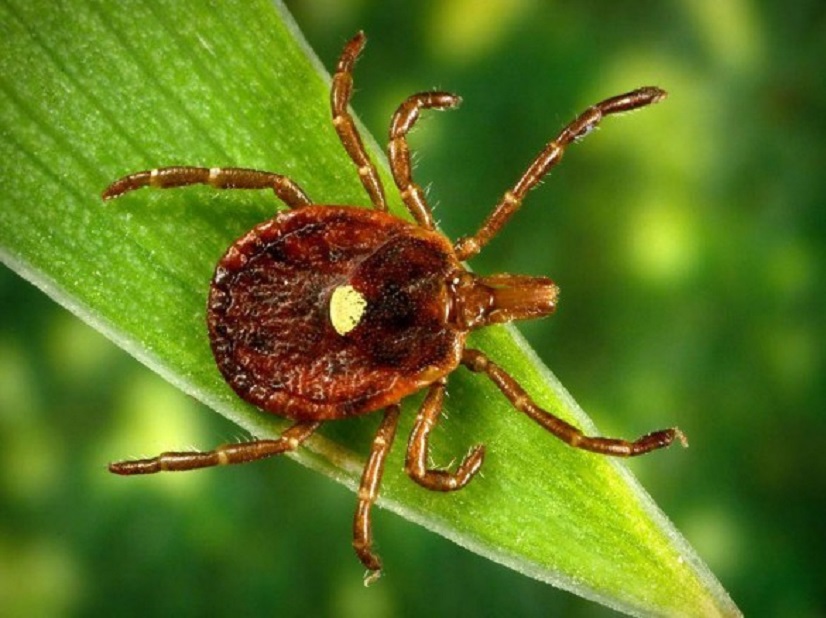
Our next hero wears the Latin name AmblyMma americanum , as well as the sonorous nickname "Lonely Star" by a white spot decorating the abdomen of this tick. Perhaps the Americans from Texas reminded of the flag of their native state, which also bears this nickname. The AmblyMma Americanum tick lives not only in Texas, but also quite widely in the south and east of the United States, also capturing most of Mexico. The northern boundary of its distribution reaches the southern coast of Lake Michigan and the south of New England. There are certain cases of its detection in Venezuela, Colombia and Canada.
Most often, the tick drinks the blood of a white -tailed deer (Odocoileus virginianus), which is widespread in North America, but can also stick to a person. And then problems begin. Not only is the tick can serve as a carrier of a large number of dangerous diseases, and even as a result of his bite, a person can turn into a vegetarian. We hasten to clarify that a person’s views on the permissibility of eating meat can still not change. But the victim himself will soon refuse to eat meat, having received a strong allergic reaction a couple of times. In the best case, a few hours after the eaten beefste, urticaria and edema appear, in the worst - vomiting, diarrhea, a sharp drop in blood pressure and anaphylactic shock. The choice between a life -threatening state and a vegetarian diet is unambiguous. The clinic of the University of Vanderbildt in Tennessee, specializing in asthma and allergies, records at least one such case per week.
For some time, the cause of allergies to the meat remained unknown. However, over time, scientists compared the geographical distribution of allergies with the tick spread area. The hypothesis was confirmed by laboratory tests. In the course of work, the head of the scientific team Thomas Ae Platts-Mills from the University of Virgin himself received a tick bite and earned allergies.
The tick itself does not extract any benefits from the allergies, which he rewards bitten people. It is only a side effect. The cause of allergies is the galactobiosis disaccharide (its full name for galactose-alpha-1,3-galactose, in English literature it is known under the short name Alpha-Gal ). It is contained in mammalian meat (except for primates), which is part of cell membranes. When we eat meat, this substance does not cause us problems, as it easily breaks up during digestion. But galactobiosis is also in the digestive tick system. When the tick is attached to the victim, galactobiosis with its saliva enters the bloodstream, as a result, the immune system begins to produce antibodies that are realizing the alien matter. Therefore, at the next galactobiosis enters the body, antibodies are triggered and an allergic reaction occurs.
This is a rather unusual type of allergy, since it occurs in response not to protein, but to a carbohydrate. Doctors do not yet know whether a person who has received a bite of a tick has such an allergy for life. Observations only allow us to argue that over time the number of antibodies in patients decreases, but a repeated bite of the tick leads to an even greater increase in allergies.
Since galactobiosis is not in bird meat, patients can without a danger to their health have chicken, duck or turkey. The fish also remains safe. As already mentioned, this disaccharide is not in the meat of primates, but it is almost not used in modern cuisine. Of course, Hannibal Lecter, he was infected with such an allergies, could satisfy the longing for meat, tasting the representative of the primates, but, it seems that he, like a true gourmet and an esthete, would suffer from the inaccessible dishes of beef, pork or game.