
Translated material
"The flow of denunciations was unprecedented"
How in Perm they fought with the Museum of the History of Political Repression: Reporting Ivan Kozlov
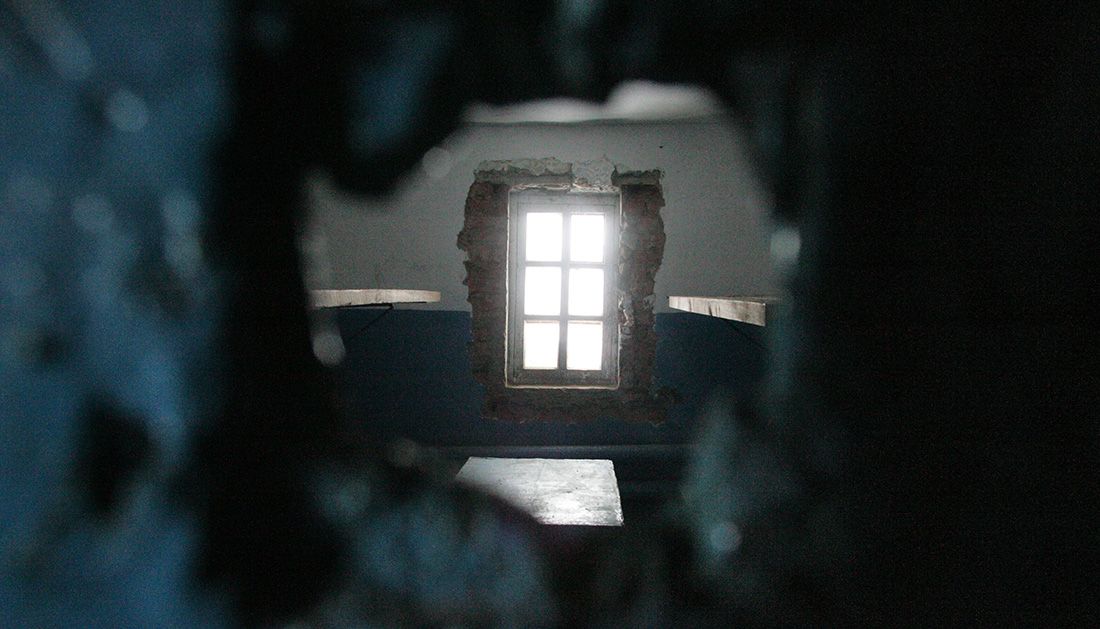
The Perm-36 Museum is the only complex of buildings of the Stalinist Gulag in Russia. For almost 18 years, the museum has successfully worked as an independent organization. But in the last two years, Perm-36 had serious problems: officials decided to make the museum state; At the same time, a public campaign unfolded against the “pseudo -museum”, incorrectly interpreting history.
Regional officials replaced the leadership of the museum, to Perm-36 repeatedly sent the inspectors, including from the anti-exploration center. At the same time, the-state activists wrote letters to the President, the Prosecutor General and the Governor-demanding to close the museum. Its employees, “incorrectly interpreting history” were criticized by the Communists and local veterans of the system of execution of sentences.
As a result, a protracted public conflict was resolved according to the classical Russian scenario - Vladimir Putin intervened in the situation, which demanded to preserve the museum “in the same form”. However, there is still no guarantees that a unique museum complex can restore normal work.
At the request of Medusa, Perm Journalist Ivan Kozlov restored the picture of the events that took place around the Museum of the History of Political Repression of Perm-36.
From Stalin to Basargin
The correctional and labor colony of the maximum regime "Perm-36" (the village of Kuchino, the current Perm Territory) was founded in 1942. After 1972, it contained people convicted of especially dangerous state crimes, that is, “political”. Among them were dissidents Vladimir Bukovsky, Sergey Kovalev, Vasil Stus and many others. The colony closed in 1988, after which a neuropsychiatric boarding school was transferred to the vacant premises. He took stone barracks of security; Wooden huts of the zone remained rot in the open field.
The history of the Perm-36 museum began on July 14, 1992-shortly after the 20th anniversary since the opening of the camp for political prisoners. On the occasion of this date, the Dean of the Perm Palace Institute of Palace Viktor Shmyrov (subsequently, the director of the memorial center) held a specialized conference; She was collected in another Perm colony-Perm-35. One of the conference participants, a former political station, insisted on a visit to neighboring correctional institutions. Perm-37 did not arouse any interest in anyone, since it was completely rebuilt. But Shmyrov still remembers the first impression of Perm-36: “Very archaic buildings. She struck me. I have been in many colonies. And this one did not resemble any of them that I saw before. "
The next two years have gone to confirm the uniqueness of the camp. Researchers were brought here from all over the country. As a result, they were convinced: the buildings that so struck Shmyrov really arose during the time of the Gulag, in Russia there are no more.
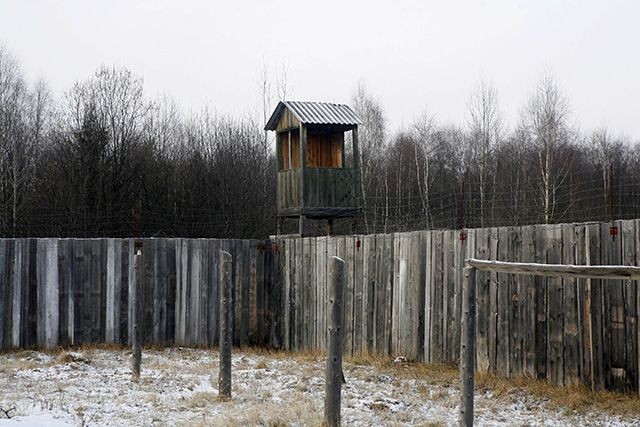
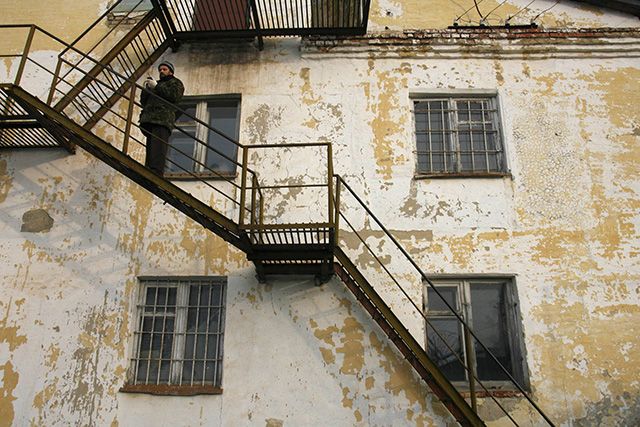
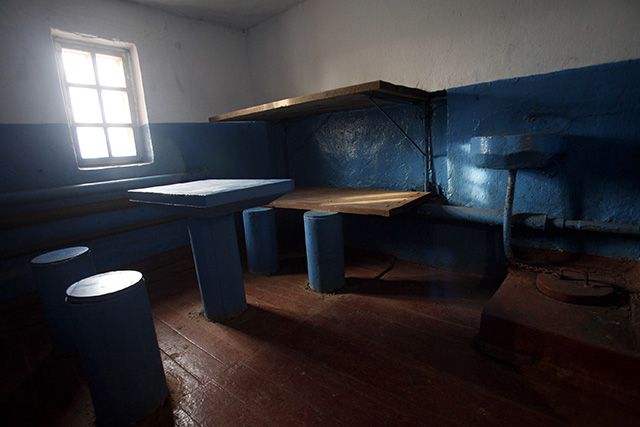
In 1994, scientists began work on the restoration of buildings. Of course, there was no money. The writer Leonid Yuzefovich, who handed Shmyrov’s fee from the book, helped with starting capital. Then the first contact with the authorities happened-the administration of the city of Chusova (the large settlement closest to Perm-36) allocated to historians a forest plot. The forest was sawn and partially sold; So a business appeared that fed the future museum - all the earned was spent on repairs. For more than two years, a special regime zone was repaired, and on September 5, 1995, the first exhibition opened in former camp huts-the museum actually began to work.
A special LLC was created under it-the Perm-36 Memorial Center for the History of Political Repressions, established by the Perm Memorial and the administration of the Perm region. In the same period, Perm-36 had a board, which, in addition to Shmyrov, included Arseny Roginsky and Alexander Daniel from the Memorial; Later, they were joined by the President of the Glasnoye Protection Fund Alexei Simonov, human rights activist Sergei Kovalev and other famous social activists.
In 2001, it was time to decide how to legally arrange huts, on the repair of which social activists spent so much effort. LLC turned into an autonomous non -profit organization (ANO). One of its founders was the regional department of property relations. At the same time, officials suggested that the creators of the museum either record all the buildings on themselves, or transfer them to the state.
It was then that the reign of the memorial center decided, which after 13 years will play a cruel joke with Permu-36-the camp buildings of the private museum were decorated on the state. However, neither then, nor later the need for cooperation with officials caused museum workers any doubts: in addition to making Perm-36 a museum of the national level, employees of the Memorial Center hoped to expand its audience-for example, at the expense of schoolchildren and teachers.
During the existence of the museum, power in the Perm Territory changed four times. Each time the new administration has suspended financing the museum complex. And each time, except for the latter, the board of Perm-36 sought to meet with the new governor, after which financing was not only restored, but even increased. Since the 1990s, regional money went to the museum from the Development Fund (special tools reserved for large and socially significant projects)-they were spent on repair and restoration work, employees' salaries and utilities. Project activities were supported by grants. Western - from the "International Coalition of Museums of Conscience" (includes more than 200 specialized museums), Charles Stuart Mott and Ford Foundation. And Russian - primarily government. In addition, at the beginning of the zero, the museum was able to receive a presidential grant.
The head of the Perm Territory Oleg Chirkunov, who had the glory of the “liberal governor” and patronized the “cultural revolution” in Perm, brought the cooperation of officials and museum workers to a new level. In 2011, he handed ANO a whole complex of buildings of a former neuropsychiatric boarding school in Kuchino (that is, former camp protection barracks)-for free and unlimited use. Chirkunov also increased the budget financing of the museum. As a result, ANO was at the disposal of all parts of the camp complex, including a boiler room, a water supply system and substation.
However, in April 2012, Chirkunov resigned, and this was the prosperous part of Perm-36 history. At that time, the museum rule was preparing to issue a camp complex as a monument of world significance and had already agreed on this with UNESCO. In parallel, the leadership of Perm-36 was negotiating with Ralph Appelbaum-the world leader in museum business, which, in particular, created the Holocaust Museum in the United States, the museum of nuclear bombing in Hiroshima and another 200 museums along the whole planet.
For the first time, representatives of Ralph Appelbaum visited Perm even under Chirkunov, who got acquainted with the estimate of the project and approved it. After the preliminary agreements were reached, a second visit was held, but Chirkunov at that time was no longer in the region, and the former Minister of Regional Development of Russia Viktor Basargin recently appointed by the Governor did not adopt the delegation. Plane-36 cooperation plans with Ralph Appelbaum were buried. This was the first case in which the attitude of the new administration of the region to the memorial center was manifested.
And the first public conflict between the authorities and museum workers occurred in July 2012, when the Civil Forum-Festival “Pylorama”, which was held annually in Perm-36, almost broke.
In general, the “sawmill” was a rather bold undertaking even for the “liberal” Perm Territory. For the first time, the festival took place in 2005; Two years later, Chirkunov included Pylorama in the list of “image projects” of the Perm Territory. The festival received budget support and quickly became one of the key cultural events of the region. Concerts, theatrical productions, exhibitions, movie sessions and public discussions were arranged at the Pylorama. The themes of the discussions (at different times, the Commissioner for Human Rights, Vladimir Lukin, human rights activist Sergey Kovalev, the defender of the Khimki forest, Evgeny Kirikov, oppositionist Boris Nemtsov and many others) were often political and quite sharp; The cultural program was also matching them - Timur Shaov and Julius Kim, Pakhu, the Barto and echo of Mu, German Vinogradov and Andrei Makarevich entered the scene of the festival.
With the cooling of the political situation in the country and the change of power in the Pilorama region from the “image project”, it turned into the “Sabbath of the Fifth Column”. In 2012, the new regional authorities cut the festival budget for 600 thousand rubles-exactly the amount that was needed to organize a discussion program. However, the museum rule managed to find a third -party sponsor. In 2013, the situation was aggravated-the authorities first tried to intervene in the content of the forum. Director of ANO Viktor Shmyrov reacted to this as a censorship: “Employees of the Territory administration asked us to show the program. Having familiarized himself, they advised to abandon four guests, for example, from [political scientist] Gleb Pavlovsky and [the current mayor of Yekaterinburg, the founder of the “City without drugs”] Evgeny Roizman. Of course, we did not go to this. Then two weeks later [the Minister of Culture of the Perm Territory Igor] declared that the budget was twice to be cut off. And again we found the money ourselves. Then the second blow followed: we were announced that they could not ensure security on the forum. The board decided - in such conditions it is impossible to hold the forum. ”
By 2014, it became clear that there would be no revival of the “sawmill”.
Denial, anger, bidding, acceptance
The administration of the Governor of Basargin in 2012 proposed to create the State Museum on the basis of the Perm-36 camp complex. According to one version, the initiative was due to the fact that within the framework of the federal target program on perpetuating the memory of the victims of political repressions, the museum could allocate 400 million rubles. Representatives of ANO, who did the museum themselves, re-registration of Perm-36 to the state seemed meaningless. However, at the end of June 2012, they learned from the press: the Minister of Culture announced the creation of the State Museum as a decision made; Moreover, there was already an appropriate order of the regional government-it was simply hidden from Perm-36 employees.
Only in December 2013, ANO rule managed to meet with the governor. At the meeting, the parties hardly agreed that the executive director of the new “State Autonomous Institution of Culture“ Perm-36 ”” (GAUK) will be appointed Tatyana Kursin-the wife of Viktor Shmyrov, his deputy and the cordinator of the educational activity of the museum. In January 2014, all the money that ANO used to go to the new government, and transferred all the buildings and buildings of the complex to it. In March 2014, the item took office.
At this very time, the former head of Perm-36, Viktor Shmyrov, was preparing for several heart operations, which he, according to him, had already postponed it endlessly. It cannot be reliably argued that the Minister of Culture of the Perm Territory Igor Gladnev was guided by the moment; Nevertheless, on May 23, he suddenly, without explanation and contrary to agreements, fired the ital. The associates who were reconciled from the operations of Shmyrov decided not to worry - he found out about what happened a month later.
In general, what was happening with the museum in Perm, in general, were not surprised. The first serious personnel decision of Gladnev as Minister of Culture (he was appointed Basargin) was the dismissal of Marat Gelman from the post of director of the Perm Museum of Modern Art. Gladnev, in principle, acted as a grave of initiatives that arose during the five -year “cultural project” of Gelman and Chirkunov. The Minister cut the financing of cultural institutions, canceled large theatrical and poetic festivals, almost squeezed out the conductor and Khudruk of the Perm Opera and Ballet of Theodore Kurentzis from the region. In addition, Gladnev tried to force subordinate institutions to coordinate the entire repertoire with the ministry.
In the place of the item, the Minister of Culture of the Perm Territory appointed Natalya Semakov, one of his deputies. So the conflict between the ANO "Perm-36" and the regional administration passed into the acute phase. The board of ANO was aware that the museum was actually taken from them (in the Perm media, the phrase “raider seizure” often sounded). As a result, the public organization, which created the museum in the camp complex, was prepared to leave it. At the same time, the state owned only the structures of the camp; Expositions, collections, archives, funds, library and equipment were purchased at extrabudgetary funds and always belonged to ANO. In general, in the case of the organization of the organization, the Perm-36 memorial complex was supposed to stay with the bare walls.
“[In Perm-36] the team completely changed, all qualified employees left or survived or survived. There is now only one person, a teacher from the city of Chusovoi, holds excursions. There are no other guides, ”Viktor Shmyrov describes the current situation in the Museum. - The new leadership shows the old expositions, since nothing new has done. Some of the expositions were generally closed, since they cause displeasure of the [public organization of Sergei Kurginyan] “the essence of time”. ”
Veterans against the museum
Perm social activists suggest that the “essence of time” simply blackmail the local administration, threatening to send reports on the insufficient zeal of officials in the fight against the “fifth column” to Moscow. “The maximum we will organize meetings with the leadership of the museum and hold consultations. We do not influence the policy of the institution, but we give people whose information could be useful, ”objects“ the essence of time ”, one of the most active fighters with the museum Sergei Vilisov. - We also do not intersect with the administration. In addition, we never wrote appeals to the police or somewhere to the organs about the museum [Perm-36]. Only open letters to the governor and the president. ”
Other opponents of Perm-36 are veterans of the Perm System of Punishment. They are unpleasant to be proposed in the Museum "Interpretation of the past", and they perceive the activities of human rights activists as a personal insult. The former colonel of the internal service Vladislav Kovalev, in a conversation with me, was moving to an increased tone: “I worked there [in Perm-36] since 1956. For simple rudeness, we could give under the officer court the honor of our own colleagues. What now? Polish people score a mop or bottle into the anus, they can simply kill someone who did not like it. The situation and ethics in this area are worse and worse. And the existence of the museum seems to solve all these problems! In fact, they simply speculate with facts, press on pain points. ”
It was the Veterans of the Federal Penitentiary Service, along with Kurginyans, created a hype around Perm-36, which, among other things, led to an increase in a variety of inspections in the museum. According to Tatyana, the tests have always been familiar to ANO. True, until 2014 it was mainly about planned checks - the implementation of target programs and the expenditure of subsidies; They are used to this in the memorial center. But in 2014, the number of inspections in respect of ANO exceeded reasonable limits. Especially distinguished by the anti -extremist center "E" at the regional State Department of the Ministry of Internal Affairs, which during the year checked the museum three times (the last check of the museum for extremism - with a zero result - ended on October 3).
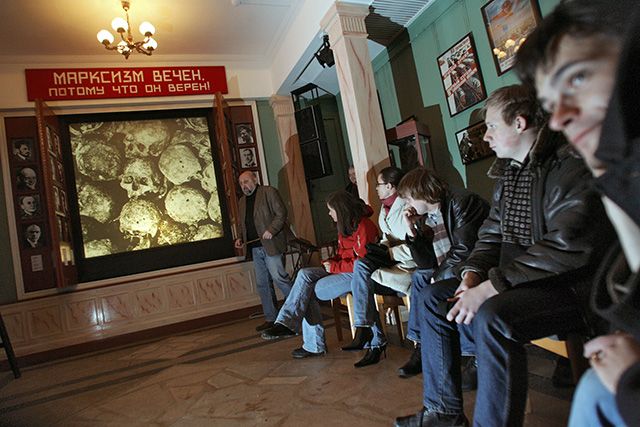
And this is not counting the visits of operatives at home to employees. Viktor Shmyrov told how on April 20 an employee of the ED center came to his house without warning. For some time he sat at a party and asked several formal questions, after which he admitted that he was a bypass at an “unreliable” list of addresses - to check if Hitler’s birthday was celebrated at these addresses. Without finding signs of a thematic party in the house, an employee of the EE Center retired.
“This year, the denunciation stream was unprecedented,” says the item. - Citizens with an active life position wrote to the president, Prosecutor General, and the governor almost once a quarter. Alexei Bessonov was especially distinguished. ” The communist Bessonov is a popular character in the city: he will certainly participate in all rallies and public events, adores discussions on social networks. Bessonov has been writing complaints about Perm-36 for several years. “The level of performances, reports, the quality of expositions - everything does not withstand any criticism. So, for example, the exposition of the Mitka group is demonstrated. Only in a state of strong drinking can all be called art, ” - a typical passage from Bessonov’s letters. According to ANO representatives, the communist “does not bother” especially, changing one or two sentences in standard texts; But the instances each time are forced to react again to its signals.
21 октября в Перми прошел митинг против музея. Пермские коммунисты вышли с лозунгами: «„Пермь-36“ — плевок в наших ветеранов» и «В „Перми-36“ оплакивают фашистских наймитов и захватчиков». Секретарь крайкома КПРФ по идеологии Геннадий Сторожев говорил со сцены: «Сейчас, когда в Донбассе продолжается кровавая бойня, а по улицам городов Украины открыто и нагло маршируют с факелами неофашисты, содержать и лелеять организацию, оправдывающую и героизирующую бандеровцев, — недопустимо!»
Кроме того, в 2014 году в «Пермь-36» неоднократно наведывались представители городской и районной прокуратуры. А в конце июля этого года музеем заинтересовался ОБЭП. О грядущих неприятностях сотрудники АНО по традиции узнали из прессы: в заметке говорилось, что новое руководство музея обнаружило на своей территории «аферу с незаконной добычей щебня». Инспекция закончилась ничем. Татьяна Курсина в связи с этим не скрывает сарказма: «По мнению [нового директора „Перми-36“] госпожи Семаковой, в музее обнаружился рудник, в котором мы добывали песчано-гравийную смесь. Кучи гравия там как были, так и есть — это собственность порта Левшино, который находится неподалеку». Представители ОБЭП были вынуждены извиниться перед музеем.
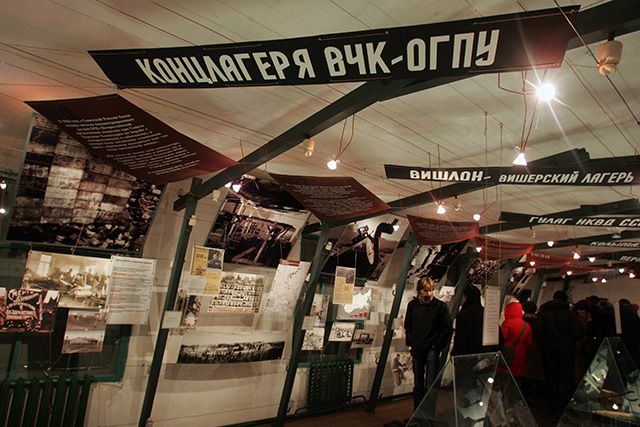
Многочисленные претензии, касающиеся долгов и задержек выплат, весной и летом этого года стали причиной для постоянных вызовов представителей АНО в суд. В 2014-м местный минкульт не выделял «Перми-36» субсидии более полугода — с 1 января по 8 июля музей существовал без региональных денег; соответственно, не мог рассчитываться с поставщиками коммунальных услуг и сотрудниками. Руководство АНО поддерживало ситуацию на плаву с помощью займов. Сотрудники к происходящему отнеслись с пониманием, а вот с коммунальщиками договориться не удалось — в апреле музейный комплекс оставили без воды и тепла. В конце концов, 8 июля средства музею направили, и АНО смогла рассчитаться по долгам. Однако к тому времени уже возникла цепочка арбитражных исков от контрагентов — представители организации до сих пор немало времени проводят в судах.
Самый неприятный инцидент лета-2014 для сотрудников «Перми-36» — визит съемочной группы НТВ, готовившей сюжет для программы «Профессия — репортер». Сюжет впоследствии лаконично назвали «Пятая колонна». По территории музея съемочную группу водили не экскурсоводы, но уже упоминавшиеся бывшие лагерные охранники на пенсии. Добро на проведение экскурсии в таком формате дала директор «Перми-36» Наталья Семакова.
Отметился в сюжете НТВ и министр культуры Гладнев. «Вдруг нам начинают навязывать понимание того, как нам самим оценивать те или иные события, те или иные персонажи и те или иные явления, в том числе нашего национального характера. Причем делают это так истово и при помощи таких огромных ресурсов, в том числе — которые из-за границы идут, что у меня возникает вопрос: откуда такой энтузиазм? И зачем он? И кому он выгоден?» — задавал Гладнев риторические вопросы. Кургиняновец Вилисов ликовал у себя в фейсбуке: «Конец вам всем, сволочи. Хотя, конечно, надо дождаться выхода передачи в эфир, вдруг что не то наснимали, но вроде договаривались, что это будет выстрел в голову псевдомузея».
* * *
В июле 2014 года стало известно, что новое руководство «Перми-36» решило разобрать шлюз, через который заключенных ввозили в лагерь. Татьяна Курсина сама видела, как это произошло: «Я просто потеряла дар речи. Несколько минут ворота пилили на моих глазах. Я спросила у рабочих, что они делают, и они ответили: „Неудобно сдавать в металлолом в таком виде“».
Спустя пару дней Семакова распространила через местные СМИ объемное заявление, в котором, в частности, говорилось: «Никаких действий в отношении зданий и сооружений, относящихся к объектам культурного наследия и наносящим им вред, государственным музеем не осуществлялось, любая другая информация является умело сфабрикованной ложью». В заявлении Семакова обратила внимание на то, что ворота не были должным образом маркированы — на них не было ни таблички, ни инвентарного номера. Представители АНО не считают это весомым оправданием.
Примерно тогда же в «Перми-36» задержали группу иностранцев. В июле туристы приехали в музей в рамках одной из международных образовательных программ. Однако экскурсию прервали полицейские и сотрудники миграционной службы, которые устроили внезапную проверку соблюдения визового режима. Бывший научный руководитель музея Леонид Обухов, проводивший экскурсию, заявил журналистам: проверяющие признались, что звонок в полицию поступил лично от Семаковой.
Получить официальный комментарий Натальи Семаковой не удалось. В ответ на официальный запрос она ответила письменно, но эта бумага потерялась в министерстве культуры Пермского края при согласовании.
Совет по правам музея
У музея, однако, нашлись и защитники. Под обращением к губернатору Виктору Басаргину с требованием сохранить «Пермь-36» собрали 85 тысяч подписей. В край пошли запросы из Совета Европы, «Международной амнистии» и других общественных организаций. Наконец, о происходящем в музее узнал президент России Владимир Путин.
30 июля Путин провел встречу с председателем Совета по развитию гражданского общества и правам человека Михаилом Федотовым, которому удалось заинтересовать главу государства судьбой музея. Путин дал распоряжения: их смысл — в необходимости «наведения порядка» и сохранении музея «Пермь-36» в прежнем виде.
В начале октября 2014-го конфликтующие стороны встретились в кабинете первого замглавы администрации президента Вячеслава Володина. Было принято решение о создании специального органа — совета по развитию музея «Пермь-36», который состоит из представителей общественности, членов АНО и чиновников. Совет должен заниматься решением всех вопросов, связанных с музеем. Председателем назначили Владимира Лукина; со стороны чиновников главный тяжеловес в совете — руководитель администрации губернатора Алексей Фролов.
Правозащитники к решению о создании совета отнеслись с подозрением. «Сперва надо понять, насколько члены совета будут свободны в своих действиях. Ведь общее направление в нашей российской действительности — это курс на особый путь развития. А эта особость, видимо, предполагает, что нам не нужно гражданское общество как таковое», — сомневалась участница совещания у Володина, глава Московской Хельсинской группы Людмила Алексеева.
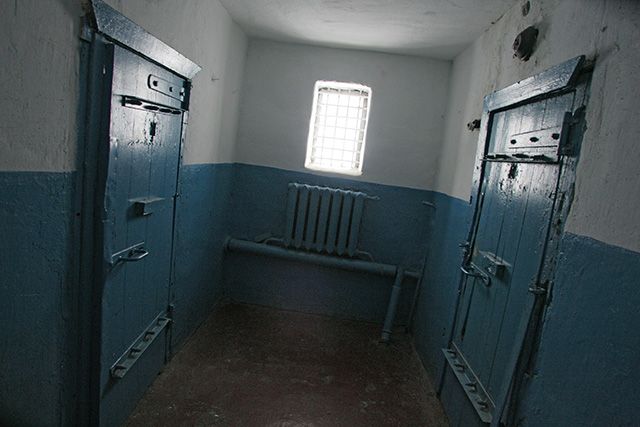
Тем не менее, в конце октября совет все-таки собрался. Он начался с символического напутствия губернатора (Басаргин подчеркнул, что видит «Пермь-36» «живым музеем», необходимость развития которого не вызывает сомнений). Остальные участники совещания обсудили проект «соглашения» между АНО «Пермь-36» и местным правительством. Общественники были несколько шокированы количеством вопросов, по которым удалось найти «взаимопонимание» с чиновниками.
После окончания совета председатель правления «Мемориала» Арсений Рогинский был осторожен: «Нужно понимать философско-политический смысл происходящего: в России власть и общество смотрят абсолютно в разные стороны. Они не любят друг друга, не хотят разговаривать и подозревают друг друга во всех смертных грехах. Здесь мы имеем попытку — возможно, утопическую — наладить диалог по конкретному вопросу и что-то сделать вместе». Зато Михаил Федотов полон оптимизма: «Мы договорились с губернатором, что до деревни Кучино будет построена нормальная дорога. Вместе с музеем будет развиваться и вся деревня, люди получат там работу. Если будет много экскурсантов, то и экономика поднимется. Люди станут жить богаче, вместо развалюшек появятся нормальные коттеджи!»
Как бы то ни было, власть и общественники пока договорились по одному важному вопросу, согласившись с тем, что мемориальный центр «Пермь-36» должен остаться музеем истории советского политического террора, а не «расплываться тематически» до «репрессий со времен Рюрика» или «музея истории ФСИН», как это в разное время предлагали чиновники.
В следующий раз совет соберется в ноябре. Предстоит очередная битва, на этот раз уже по конкретным вопросам — распределении полномочий государственного музея и независимой АНО; кроме того, ключевое требование сотрудников АНО и правозащитников — увольнение нынешнего руководителя Натальи Семаковой. Сотрудничать с ней никто из общественников не намерен. Но власть в музее — все еще в ее руках.
Ivan Kozlov
Perm Territory