
Translated material
Calling the flesh
Egon Shile in New York
The Museum of Austrian and German Modernism is a relatively recent addition to that hundred museums that adorn New York. He appeared on the “museum mile” in 2001, thanks to the generosity of Magnat Roland Lauder and the collection of Serge Sabarsky, who became the soul of the museum, and the reason for his occurrence.
Serge Sabarsky was a colorful character embodied by the spirit of the old vein, moving the will of history in New York. In his long life (1912–1996), all the gloomy adventures of the twentieth century were accommodated. After the early death of his father, he earned a living in a cabaret - a decorator and a clown. He fled from the Nazis, first to France, then to America. During the war, he served in the American army for three years, then he began to trade paintings. He opened in New York an immensely popular gallery, where he met and became friends with the rich man Ronald Lauder, who opened the Museum of Austro-German Modernism, dedicating it to his teacher.
Sabarsky did not believe in art history. He believed that pleasure from the picture occurs at the moment of merging with her, which he compared with orgasm. “Do not read the explanations,” the Sabarsky advised the audience, “and look, watch and look, forgetting about everything.” Sabarsky gathered the most famous - Klimta, Klee, Alfred Kubina, Kokoshka. But his favorite was Egon Shile, whose drawing Sabarsky saw a 10-year-old boy in the reception room of a dentist (this was possible in Vienna).
Reflecting the tastes of the collector, the museum curators devote a special place for the art of Shile. So this fall, the museum proposed to the audience the exhibition “Shile Portraits”, which, despite the name, includes an erotic hall that made the famous artist the famous.
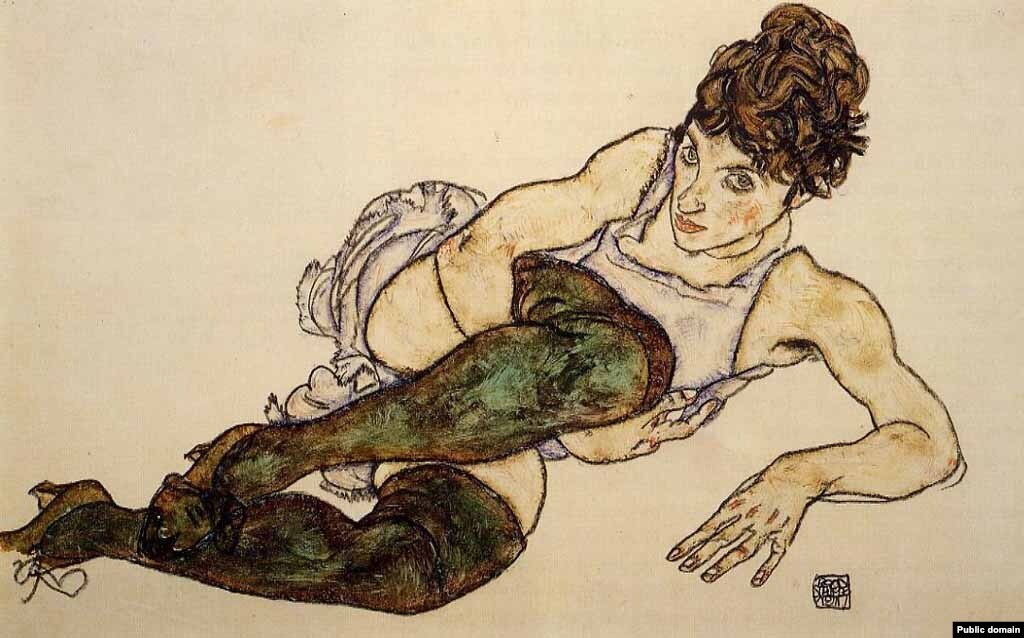
Adolf Loos, theorist and practitioner of Viennese modernism, proclaimed the symbol of the faith of this course: "All art is erotic." Shile brought this thesis to a critical limit. Sex at Shile, like his Viennese neighbor and contemporary Freud, without playing, but ruthless. Primary - daily - instinct, sex is stronger than personality and, in essence, is deprived of the face. In an effort to fix the call of the floor on paper, Shile makes an individual sacrifice to the universal. He wrote not to a woman, but a desire caused by her, not a love pair, but connecting their passion, not spiritual love, but a bodily temptation. Shile's erotica is an uncontrollable cosmic whirlwind, which, of course, cannot restrain the veriges of culture and society. The enemy is natural, Shile controlled the model as mannequins, laying them on the operating table with his unstable imagination. It is characteristic that he loved the dolls from the Java Theater of Shadows, on which he rehearsed sessions. Turning to his models as wooden, he revived them, like Galatea, a kiss, in color spots. Shile resorted to paints only at strategically important points of the picture - eyes, lips, nipples, genitals. The touch of Eros returned art to life, and Shile did not tire of monitoring the magic of this transformation until he was imprisoned.
This is not to say that he had not previously realized the provocative nature of his art. Erotica Shile was not hung on the walls. These drawings were held in albums by the rich Viennese bachelors who examined frivolous pictures after dinner for Brandy with a cigar. The artist himself, however, did not share this underground - giggling - attitude to his plots
“I draw the light emanating from the body,” Shile justified himself when he was arrested for obscenity, “and my work should be stored in the temple.”
The Austrian authorities did not agree with him. Many drawings were destroyed, and their author spent 24 days in a provincial prison. There he wrote self -portraits without a mirror and pulled a neighbor from a neighbor’s bread, and so much that this miniature sculpture seems an ancient cameo.
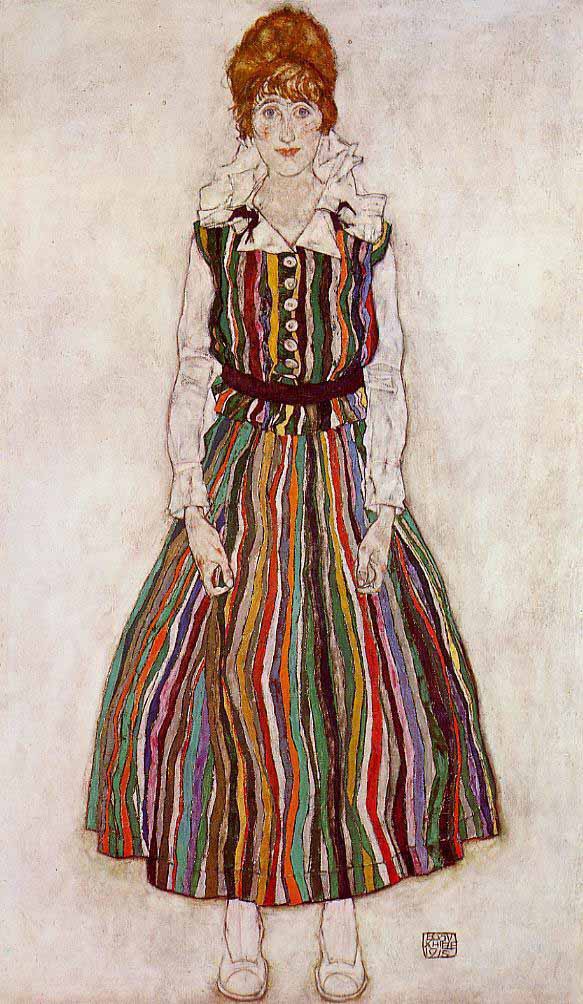
Having learned the lesson, Shile began to write dressed. For example, a wife in such a colorful dress that it almost replaced her from the portrait. It is not surprising that it is this harmless work, which has become the emblem of the current exhibition, which causes a bright poster of passers -by with the fifth Avenue.