
Translated material
After dead water
1.
A few months ago, I was asked to write an article for the centenary of the First World War - and already during the letter I realized that the text is folding towards today, its complex, flawed self, and that there is nowhere to get away from this. No matter how you shy away from historical analogies and likening, recently you can’t get rid of them, and it seems that every new comparison is pushing the country to grow to a real disaster, hidden by the standards of the twentieth century. All the rhetoric of the last months, all verbal bubbles, blew around our sad situation, have a strange pragmatist: it seems that their task is not to explain what is happening with the help of a recent, not yet cooled sample, but to enlarge it, give it an additional scale. Comparing Putin with Stalin or Hitler, calling the Kiev Maidan fascist or Bandera, they do not try to get an accurate formula - it is rather like a children's scarecrow: as if causing the shadows of a past disaster to life, you can delay or turn its pale likeness.
Any everyday life, even the most unreasonable, is always to be to blame for someone and something: just because it is adjacent to someone else's misfortune. You never know fully than your well -being darkened, with what amount of suffering it is placed in one air. In some cases - when what is happening becomes so visible that it is no longer possible to get out of it - everyday life is no longer blind, but criminal. And he herself does not know what to do with herself: to cancel, change, squint even stronger?
Now those who lose documents are sentenced to execution.
Now it’s difficult not to think that our everyday life (and Moscow in recent years has completely coincided with a generalized way of a peaceful European capital with bicycle paths, medium -sized cafes and complete unpreparedness to the danger, wherever it came) has a flip side and that the strange apathy, which now accompanies any statement placed in a public space, is ensured by the fact that it is already provided that Six months not far from cafes and paths there is a war, similar to everything that I had to read about in childhood. And what are people, including at the next table, which just this bunk structure seems natural, explainable.
Not so long ago, I read an article written by a psychotherapist whose clientele is made up of my peers, Moscow residents of about thirty -five to forty -five, burdened with Soviet childhood, softened by years of comparative well -being. Somewhere in the course of the text one dream is given; I will retell, as I remembered then. A new law came out, the dreamer says: now those who lose the documents are sentenced to execution, and I just lost my passport, and immediately came after me. At home, everything is terribly upset, but there is nothing to do, I collect things, my mother says: well, no, of course, they will not shoot, they will limit yourself to a link. And indeed, I was not shot, and now I am sitting in a frill car, and the train goes somewhere. And I think: it’s necessary, I always knew that it would be so. That my home life, all this childhood, all this of our everyday life with his petty concerns - that all this is not for long, that it ends with this, that there is nothing but this carriage. That I was born to him.
The psychologist here has to explain that this dream is typical, his varieties dream in today's Russia for almost everyone. And all that dreams about one thing: about deep disbelief in the soft surface of this world-and that it is enough to shake it to return to an icy basis, to the stale of “your or faster” and to simple knowledge: anything can happen.
2.
The events of the last two years, still seeming incredible, comic, ladder, just illustrate this thesis. It seems that there is no absurd law that would not have a chance to be adopted - at the same time, bewilderment, indignation, publicity only spur legislators. There is no situation that could be considered unthinkable. The war with Ukraine, the liberation of Khodorkovsky, the ban on Parmesan - all this is no longer surprising: at night all the swans are black. The limits of the permissible were extended to the horizon, logical arguments do not work, household pragmatism does not save: as if entering the turbulent zone shifts proportions, shifts accents - and eliminates the very possibility of the corridor, clear prospects, and species for the future. Which, perhaps, is a secret meaning of what is happening, its real task.
In a recent interview, Boris Groys speaks of the fear of the future as one of the main properties of modernity, and about the idea of salvation from the future - as an urgent problem. “There is a feeling that the future in any form entails some troubles and deterioration of what is. The general trend is to somehow hold on and preserve what is. In other words, salvation from the future is currently relevant, preserving the status quo. ”
The war with Ukraine, the liberation of Khodorkovsky, the ban on Parmesan - all this is no longer surprising: at night all the swans are black.
Perhaps this fear is nowhere to nowhere as in Russia. It is customary to be horrified by the number of Putin's supporters, the fact that he is supported (according to sociologists) 84 or 86 percent of Russians. But real consolidation is almost one hundred percent, and it comes down to fear of tomorrow, which unites everyone: Putin, Moscow taxi drivers, provincial teachers, users of social networks and protesting figures. The very idea that unsightly and uncomfortable today is not a final point, that tomorrow it will be worse, becomes a heavy, secret, common to all anxiety. Tomorrow promises many unknown troubles - war, crisis, revolution, mass repressions, and the fact that all this most likely will not happen at the same time is not taken into account by the logic of neurosis.
Putin’s rule of recent years (with its canned projects in the genre of “Stop, Moment”) was the first symptom of this worldview turn. A common place that is difficult to get around in a conversation about Putin is that in a political field he is primarily preoccupied with preserving that very status quo , strengthening his place at the gaming table. In fact, in a broad sense, Putin’s conflict with Bolotnaya Square was in a broad sense: he reminded of the public agreement of the zero (the exchange of participation in political life for private joys of movement, consumption, simple oil bonuses), the opposition demanded the future, returning to the historical process, and dynamics instead of statics. But when the events were pushed, the occurreed dynamics turned out to be more than any statics-and already in the winter of 2013 they talked a lot and thought about how good it would be to return at least a few moves ago. Last summer, in the protest spring 2012, in the peaceful autumn of 2011-when there was no “swamp business”, cannibaling laws, prohibitions on the profession and much more. In the warm statics, where life was, it turns out where it is more endured.
On the other hand, there are people who clearly enjoy the promoted dynamic flywheel - from the sensation of history. An interview with the field commanders of the DPR and LPR bubbles with this enthusiasm, who finally felt themselves in place and in business, go on the attack, take a position, rise from the knees in a new sense, which had to go in the 20th a year ago, to the Babel Konarmia with its luxurious murderers. This is a sense of history as a funny gas , a dashing carousel of opportunities, where anyone who wants is given an automatic machine and a living target in addition, until recently it seemed non -transient into the language of today.
But it is interesting that the project to remake the present is completely blind to the future, its entire pathos is retrospective. It is no coincidence that one of the main figures of the summer of 2014 is a girkin shooter, an intellectual reconstructor, which is easily turning from historical fantasies to real deaths. But in the turbulence zone, everyone restores something of their own, sculpts from what it was: someone-Makhnov’s Gulyipol, camouflage suits, pictures with cut off their heads (“We used to go to the Cossacks, / and now to the bandits”); Someone-the Soviet Union with an exhibition of achievements and a gilded fountain "Friendship of Peoples"; Someone-tsarist Russia within the boundaries of 1913-and all this is reconstruction, a dummy, a costume game for survival. The versions of the future that are proposed here are a kind of revanchist radi-maids, not a single one contains new elements, and a huge distance, which runs from version to version, allows you to represent the scale of the funnel , where we are ready to sly today.
Anyone who wants to give a machine gun and a living target in addition.
The strange optical effect of our strange time is something like unexpected myopia: 2034 is not just indistinguishable, it is, as it were, not interesting to anyone-much less than 1914. In our everyday life, there is, as it were, there is no place for futurology, nor rainbow (which is nowhere to get), nor gloomy (which scares as a realistic forecast), there is nothing more alarming and languid than fantasies about what will happen. The future is something like the next version of the iPhone, which is expected with undisguised distrust and reluctance: "It was better under Jobs." And this is perhaps the main problem - that which does not give the prospects to lollow the corridor, and an analogy - to stand on your feet. The twentieth century, according to which we equal ourselves, with which we check, was built in the name tomorrow , according to the patterns of modernist utopia - and, despite the gloomy forebodings and bloody sunsets, the expectation of a new, unprecedented, complete alteration of the whole motor, promoting a century further. The new is a multi-phase, multi-reading utopia, progressive, technocratic, so and sitting, “we’ll build a new world”, “our country will be great”, “do not leaf through the pages-resurrect”, was a kind of inclined plane, it rolled forward on it, hanging out and changing itself. The lack of longing for the new and the will to the new scares me almost more than all the collages from the old mustache and slogans that modernity occupies itself.
3.
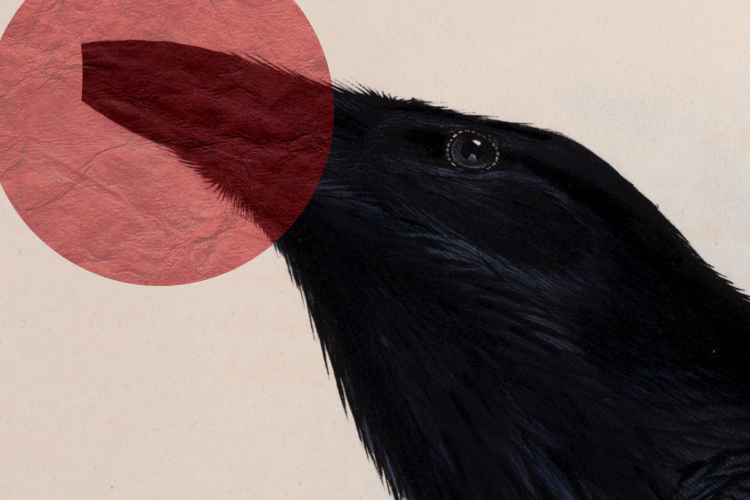
They say that if you fellate the end of the beak, it will break: the thin orientation settings, the long -range body with the future stop working, to any point one distance, the proportions are displaced, there is no exit. It also seems to me that orientation is also working in time: if you saw yourself a sense of tomorrow, you will always beat on the corners and cornices of the past: it consists only of them. It is interesting to think about the distortions that occur in consciousness, where the future is not provided (disinfected, anesthetized - and carefully masked under the present or is taken out of brackets, like someone else's tactlessness). In a world where there is only the past and present, personal choice, as it were, loses weight: events take place by the will of things, almost themselves, without any desire of the participants (which, as it were, do not participate, simply use the circumstances). Everything that happens has a whole nomenclature of prototypes, easily allowing you to shift responsibility, smear it into a dozen convenient generalizations. You often hear some of them now: “In difficult times, you always have to compromise”, “People of art have always cooperated with the authorities”, “Censorship has always been” - “always” here is a keyword that allows you not to be an exception. The future as a change in the paradigm, the ability to act in no way causes a distinct alarm. But there is nowhere to go, history caught up with us, and it will not be easy to get out of it. You can, of course, reinforce what is rewinded, erase random features, feverish flowering of films and books, exhibitions and performances, phalafel and mitballs, prepare for a long siege. This is already happening a little; State television mimifies immediately under the Soviet eighties, seventies, the seal hurries after him; What until recently seemed to be a collection of artifacts, souvenirs of lost time, suddenly gained unexpected and terrible connectedness. Like everything that has been buried for decades by attics, by caches, on distant back streets of consciousness, suddenly goes to the parade of dead things. It looks like an old fairy tale: they put a dead man of rotting pieces, sprinkled on him with black water from a bottle, and he shuddered-and he was about to open the invisible eyes.
But this water itself is inanimate. It collects the eclecticism of the late Putin years in the likeness of the system; It fastens the decayed language layers, gives them again to reach the surface. Before disappearing, the dead should become continuous : whole and visible - and from it you can neither turn away or hide. Propp writes about this: “The hero is first sprayed with dead water, and then alive. Dead water, as it were, finishes him, turns him into the final dead man. This is a kind of funeral ceremony corresponding to the sprinkle of earth. Only now he is a real deceased, and not a creature, which hits between the two worlds, which can return to the vampire. Only now, after sprinkling with dead water, this living water will act. ”
Dead water has already been shed; I would like to wait alive.
The text is written for the collection " UKRAINE , RUSSLAND und Europa "edited by Katarina Raaba, published in Gettingen in 2015