
Translated material
“No, let's not about it. I'm afraid to aggravate ... "
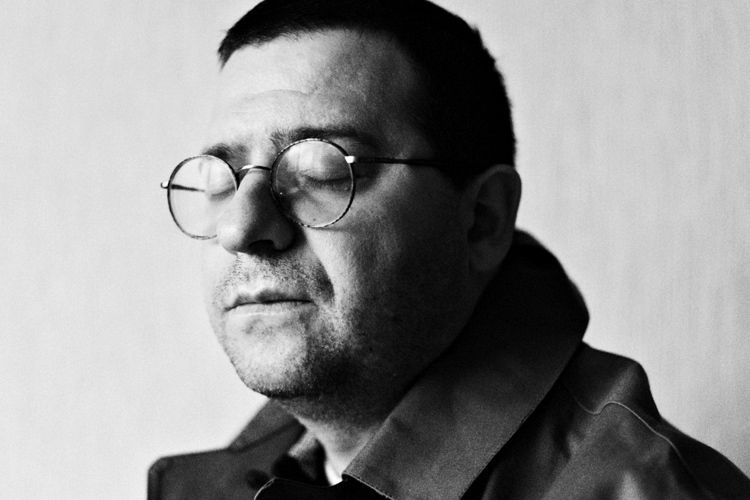
The recent resident of St. Petersburg, composer Boris Filanovsky, arrived in the city on the Neva to open the School of New Music in the Alexandrinsky Theater. Artem Melnik took the opportunity to talk with the former columnist OpenSpace, whose statements - already on Facebook - still cause nuclear discussions.
- Two years ago, I was at your lectures in Krasnoyarsk, and you seemed to me gloomy, depressive and so on. Now look happy and blooming. What's happened?
- Sorry, maybe I'll break the template now. Let me, in turn, ask: after all, this question was prepared before you saw me this time?
- Yes.
“And we will answer him now, right?” It is clear that it is assumed that the person who lives in Germany is, by definition, is happy and satisfied with everything. No! Just two years ago, I had a rather difficult move and arrangement with my family in Israel. And now I have been living for more than a year already in Berlin, and everything is wonderful. Although it also cost a lot - nerves and strength. Nevertheless, now there is some kind of prospect of life and stability of the place of residence.
- In mid -June, you finished your participation in the DAAD program . How did she help you?
- Daad ( Deutscher Akademischer Austauschdienst ) is generally a huge organization, giant. What is usually called the Daad , Berliner residence K ü nstlerProgramm is such a cherry on the cake, DAAD itself is ten times more and is engaged in students, graduate students, young specialists. The Berlin Cultural Program is for artists and artists of all specialties. What did she give me? Firstly, a year of completely carefree, comfortable life in Berlin in absolutely wonderful conditions. Very great support from DAAD - everything regarding concerts, executions, embedding into German musical life. This is a colossal career step. Over the year, I had the performance of a previously written essay, the author’s evening and the prime minister of a large essay at the Maerzmusik festival. Plus work for the future, acquaintance, connection, as usual. So I am very pleased, this year was very effective.
- In general, this is one of the ways, let's say, to integrate into a European musical life. And a Russian composer without a powerful social elevator like Daad could come and count on orders that would be paid?
-You know, there are artistic and punishment considerations here, but there are bureaucratic ones. No one will give me a residence permit in Germany just like that if I am a composer and want to live there. Unfortunately. And if you have a DAAD scholarship, then they give it, and you can extend it - if desired, zeal, which I did. The second question is orders. The more you are there, the more you are in sight, well, this is understandable. But it’s simple, from the street ... I’m just deciding: now I will be a German composer - at least in fact, in the place of the main application of creative forces ... This is quite difficult. I think that in the 90s this could have succeeded with Gubaidulina, with Shchedrin, in people whose name was already on his ear. The interest in which was caused, including the fall of the iron curtain. Now the situation is completely different.
- That is, now the graduate of the composer department, who, for a number of reasons here, in Russia, is not in demand, the path is closed?
- No, why, not closed. There is a regular set of opportunities: communication with ensembles, participation in courses, master classes, academies conducted by Ensemble Modern , Klangforum Wyen , there are different contests, residences. You need to start with something. And to complain that they are “not noticed” in Germany is counter -productive.
- Question on another topic. Perhaps this is a matter of taste, but for me it is sometimes more fun and productive, or something, to read the texts on the anger of the day that composers write on Facebook, and comments accompanying them than what is published in publications about academic music. Is it a normal situation when a polemic, intellectual life occurs primarily on social networks?
- If you abstract from the fact that there are very different composers and musical critics who write on Facebook (here, as always, there is no time at a time), - yes, this is generally normal. Why do you have such a feeling? Because a personal, diary conversation with its target audience, of course, is much more productive and interesting than unilateral communication of a musical critic with a rather blurred as an imaginary addressee. So it should be. I can say that Facebook is a rather Russian thing for serious conversations, as well as LJ. My German, Austrian, Dutch colleagues hardly communicate in the same way as we do in Russian.
- By the way, you recently quite sharply wrote there about the situation with Kurentsis, reacting to his interview . The Perm History of Kurentsis - is it more about authoritarianism or about an attempt to build utopia in a single city?
- First of all, utopia is inseparable from authoritarianism, since it is impossible to achieve collective happiness other than authoritarian methods. As far as I know, Theodore was offended by my public appeal to him. But what to do. How to say it softer ...
- You can and not softer ...
-No, no, softer, because he is a musician, to whom I bow, he is a genius. I have no doubt about this. It seems to me that everyone has the right to hate the government that controls them. If I am a citizen of Russia, then I can say that I hate and despise the current government, but not only power. I hate and despise that in the country that brought this power into power. For Theodore, obviously, Russia unfolds from a completely different side. This is Terra Incognita , in which giant spiritual forces are hidden. Perhaps this is so. But my Message Theodore was not the same. And in the fact that it is easy to confuse this spiritual breadth with internal authoritarianism, with the indifference of the boundaries with each other and others. The great law teacher Gillel, in response to a request to explain to the Torah in a nutshell, said: “Do not do to others what you do not want, this is the essence of the Torah, the rest of the comments.” Everything that is now submitted to us under the sauce of spirituality has a reverse accent: do to another what you want yourself. It seems to me that this is a direct road to social hell. It is difficult to explain, it is difficult to say, you need to write about it the text. It also seems to me that theodore received Russian citizenship ... No, let's not about it. I'm afraid to exacerbate ... In any case, I just want to tell Theodore that I continue to love him and read. But this does not mean that he cannot be mistaken about his second homeland.
- In the heart of utopia lies, it turns out, authoritarianism. What Cuorentsis does is, rudely speaking, a modern product. It turns out that you can do something new only by authoritarian means?
- It depends on the social situation and the social system. Now the whole social situation is oriented to reproduction - not just the old, but the system itself. Of course, such an oasis of the new, which theodore is now doing and - I hope, I hope very much - will continue to do it, it is possible only as an exception to the rules. As any exception, it shakes the rule, highlights it more. Why is Musicaeterna almost completely for Perm? And because it is impossible to grow it in the city without a conservatory, and indeed in any one place in Russia it is impossible to use so many people. They are physically not. Such people in the capital would be found, and one could make the same orchestra. But the fact is that the capital is divided. The capitals are in the zone of equilibrium bureaucratic forces, possibly opposing. This leaves no place for new players. And by the will of the enlightened leadership of the province, such a place can be artificially created. We must understand that this fencing leaves the fence of local musicians who cannot compete with Musicaeterna because they are the products of this system, they do not have such experience and education, they studied differently. This is understandable, this is normal, this is not their fault. But the very intention to make such a thing in Russia at the moment, to make it the only possible way - it causes social tension and friction, of course. And they drive some bureaucratic forces, which allegedly under the sauce of popular discontent try to solve their bureaucratic problems.
-And because of this confrontation, there is a confrontation between the enlightened leadership of the province and bureaucratic monsters?
- I think that the enlightened leadership itself is a bureaucratic monster. It shows its enlightenment exactly until the moment it is beneficial. And I’m afraid that the moment when it becomes unprofitable, not around the corner - due to what is happening in the country. Perhaps Theodore as a premium-citizen of Russia, who does not face everyday reality, cannot or does not want to notice this. But sooner or later this reality will invade his life.
- You arrived in Petersburg to open a new project in Alexandrinka - “School of New Music”, the first concert - “Duel of Composers” ...
- Let me tell you how the first season works. The project is called the "School of New Music", organizes its Camera Foundation OBSCURA with the support of the Prokhorov Foundation. This is new music for children, but not children's new music. The most adult music, but served in such a way that children are interested in perceiving and discussing it. We do not have a single ordinary, ordinary concert.
The first season is built like this. We already had a discovery, it is a "duel of composers." Conditional duel. At first, the harpsichist Irina Shnerova played the first of the “biblical sonata” by Johann Kunau, then her instrumentation for Ensemble , made by Anatoly Korolev, sounded, then the original work of Anatoly Korolev in the wake of Kunau. It is difficult to call all this to a duel, rather, it is sticking the spokes into the Voodoo Kunau doll. At the same time, Shnerov and Korolev talked about the device of these plays, tried to link them, as if to translate from the baroque language to modern.
Further in the season - two concerts of new media, where the children themselves will make sound within the framework of the workshop. Anton Yakhontov will do this. Plus, two concerts-lectures in the well-known in the West format “One work-one concert”. One will be dedicated to Vladimir Gorlinsky, the second - Dmitry Courland. They will represent their works themselves, talk about them, answer children's questions, and fragments will be performed.
This ends with my ensemble thing about fifty minutes, the idea of which was proposed by the project manager Anya Infantyeva: a guide to tools. We intend to do this in two stage versions: from the video of Anton Yakhontov and as a ballet of the young choreographer from Mariinka Maxim Petrov.
We proceed from the fact that in modern art, in modern music there are two types of interest. One is vertical: experts. People who have auditory experience know what classics are. They are interested in how everything transforms, they are interested in what happened after modern, after postmodern. What is modernity, how is it related to the philharmonic tradition in which they grew up in which they are brought up.
We count on another interest - on horizontal, on the interest of those who are curious new cinema, new visual art, new media, who are oriented, possibly on a momentary new experience. But I see nothing wrong with this momentary. She also forms experience and tradition.
- These are practically the same “educated inviters” about which Alex Ross writes in the book “Listen” ...
- Yes. The question is how to attract them, how to start communication with them, to understand how ready they are ready for this communication.
- Surely there is Western experience in subscriptions of new music for children.
- In huge numbers. The fact is that, for example, in France, the top -class ensembles, such as intercontemporain , 2 E 2 m , Court - Circuit , receive government subsidies and grants with the condition of concerts for children. Many of these concerts are for a mixed audience. Or, for example, in IRCAM many concerts in the format “One work - one evening” are taking place. This is literally what we are going to do. We just borrow a wonderful experience, why not. In Germany, the activities of cultural institutions are very encouraged and stimulated precisely for a social orientation. Always, in all museums there are children's projects. In any Philharmonic, there are not just public concerts with some kind of program there. Not just “well, let's play Tchaikovsky,” but interactive things. Day concerts for children and parents, special Talks , special lectures, communication with the audience.
-The fact that this has appeared now is because there are such wonderful Anya Infanteev and Nastya Zubarev, or does some kind of logical general process flow?
- A new scene of Alexandrinka appeared - a new place of power, which everything is incredibly happy about. There was a platform where you can do it all, and immediately some life began around, concerts of modern music began. We are not dealing with the dull administration of the Philharmonic or Chapel, which is mostly interested in the rent and the number of spectators. We have an administration that is interested in content, content. And immediately with this friendliness administrative, in fact completely normal, people appeared who wanted to do something there. Anya Infantyeva and Nastya Zubarev are wonderful girls, they are big well done, and at the same time, if there weren’t Alexandrinka, the place where to do it ... I do not think that this would have happened in the Philharmonic.
- About the place of power - what are your impressions of his visit?
- I really liked the audience, this is my social layer, I feel in it with mine. This is, in general, the same audience that is present (in Berlin terms), on the one hand, at the play in Schaub ü Hne , and on the other hand, at a concert at Radialsystem . Those who are really interested in new, people who do not know what they will hear and what they will see, and that is why they are ready for communication, are ready to perceive, are ready to trust the artist. This does not mean that they approve in advance. This means that they are ready for communication.
- I have long wanted to ask - what did you do with perfume?
-This is a big project that we do with an outstanding sound artist and installer Arno Fabr . Called " La Machine Fleuve , "flowing machine." This is an hour and a half concert, or a performance for twenty musical machines with a bike drive. I manipulate with musical automatic machines in real time using punch, and Arno pedals at a certain (changing) speed.
Arno and I rebuilt these music machines. Together, they form such a large tool with microton tuning, slowly and difficult to sound sound. A large slow thing for an hour and a half. Premiere - in November in Toulouse. I expect it that this will be my "story of a soldier."
- "The history of the soldier"?!
-Not in the sense of any similarity, but in the sense that Stravinsky in wartime tours with the "history of the soldier" and European tour earned his living. I hope that this work will have a happy life. Wandering and happy. It is mobile, it can be a set of minimalist sets, Openair, an event for a whole night, a museum installation, anything.