
Translated material
The head of the Russian avant -garde
In the Tretyakov Gallery, an exhibition of works from the collection of George Kostaki (1913-1990) opens.
For the first time, the audience will see paintings stored not only in Russia, but also in the Museum of Modern Art of the city of Salonika (Greece). The New Times - about the life of a person who has gathered a unique collection of Soviet unofficial art.
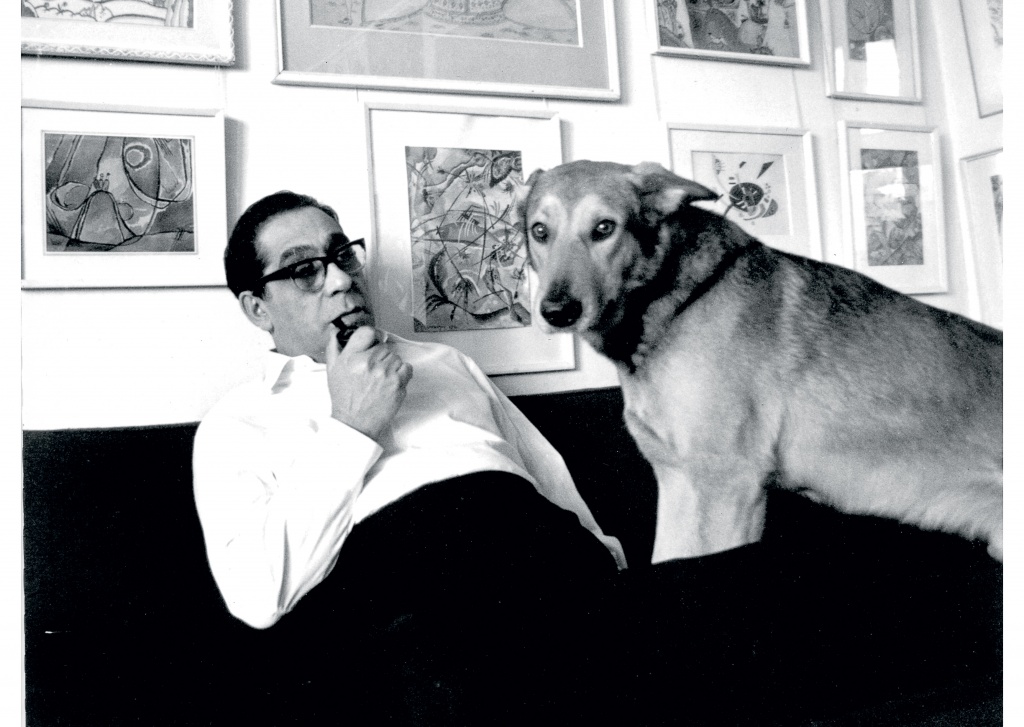
George Kostaki in his Moscow apartment. 1974 Photo: from personal archive
In the late 70s, at a party reception in one of the embassies in Moscow, a middle-aged, a dark-faced Muscovite appeared. Despite the personal invitation, he held the position by the standards of the diplomatic corps in the last three and a half decades a modest - the head of the Embassy of Canada. “You know, I feel a little embarrassing,” he admitted during the lunch of Switzerland. “Fifteen ambassadors are sitting here, and I am a simple employee of the embassy ...” “Mr. Kostaki,” the Swiss objected, “there are a lot of ambassadors, and you are alone.” You have reached us, having come here ... "
The Swiss did not flatter the interlocutor - one of the most famous people in the art circles of Moscow, whose genuine role was much more significant than a formal kind of occupation, was sitting nearby.
The famous collection of painting by George Dionysovich Kostaki consisted of three parts-icons, the Russian avant-garde of the 20s of the last century and non-conformist artists. Avangardists are considered the most valuable part. How these works in private collections got into general is still covered with fog. Many paintings were purchased in the post -revolutionary years by the People's Commissariat, after which they were sent to provincial museums. In the 30s, when the struggle with “formalism in art” began, the circular was published-to destroy everything, which was done. However, some museum directors saved paintings, drawing up fictitious acts about their destruction. It is clear that the presence of paintings by the Russian avant -garde in private collections was not advertised by their owners. Georgy Kostaki was one of those rare enthusiasts who dared to collect the “forbidden” art.
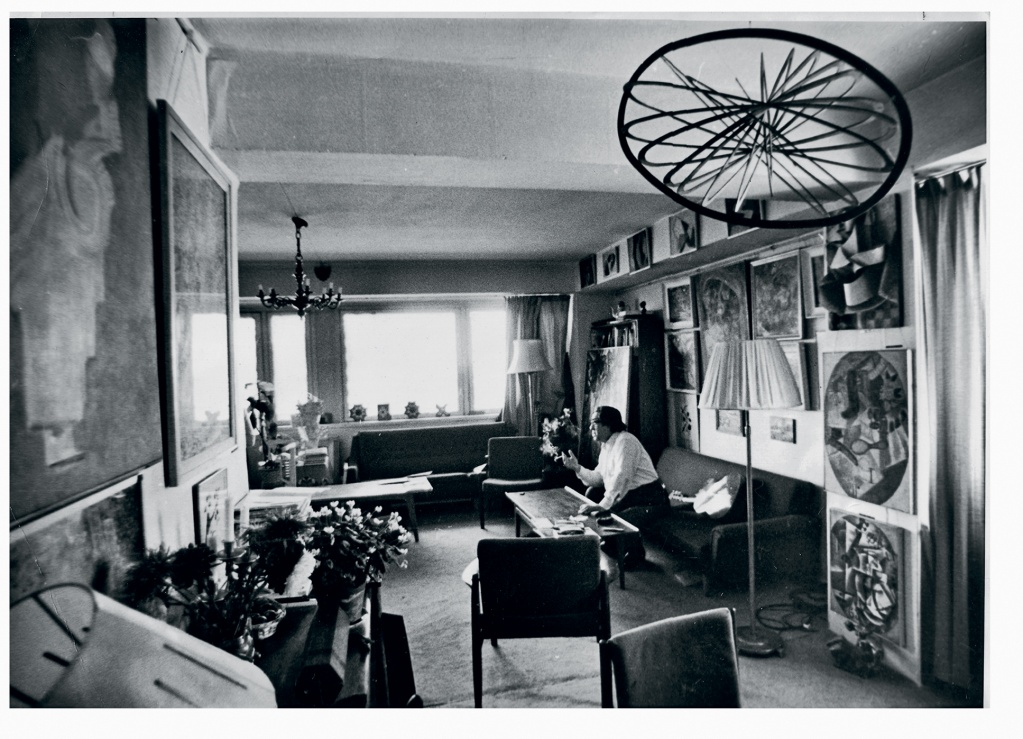
The apartment of G. Kostaki at the Vernadsky pr-teztskiy resembled a museum for many.
1974
On commissioning
George Kostaki was born in pre -revolutionary Moscow in the family of a Greek merchant who owned tea plantations in Uzbekistan. After the revolution, the family was going to leave for Berlin, but - it did not work. Then Kostaki the father arranged three of his sons with driver at different embassies-this work helped the family survive difficult times. Having lived most of his life in the USSR, Kostaki retained Greek citizenship, which gave some independence in everyday life and in communication with people. Not to mention the possibility of legally receive a salary in currency. Being a driver, he often carried diplomats on Moscow commissioned antiques. Over time, he himself was addicted to collecting, especially since his father collected paintings and brands.
First, Kostaki bought silver and antiques, then collected a collection of “small Dutch”, which he almost entirely exchanged for old tapestries. Much later, he began to collect icons. By the way, in the early 70s, the enthusiasm of the “private traders” greatly spurred the story of Vladimir Soloukhin “Black Boys”: as Kostaki recalled, after the publication of these “notes of the beginner collector” into Russian villages and abandoned churches, detachments of “icon hunters” rushed, which were often sold on the black market. Kostaki bought them (the manager of the embassy earned up to $ 2000), and over the years he has gathered a collection of icons of the XIV -XV centuries. But the turning point in the fate of the collector was the fascination with the Russian avant -garde.
The riddle of the green strip
The most famous work in the collection of Kostaki is Olga Rozanova's Green Strip. The picture painted in 1917 was bought by Kostaki in 1946 and laid the foundation for his collection of avant-garde. However, the history of this purchase is similar to a detective.
To date, there are two works under this name. One "green strip" - a masterpiece of indescribal, by the definition of art historians - is stored in the Museum of the Rostov Kremlin. There, among other paintings, she was transferred in 1922 by the department of the People's Commissariat of People's Commissariats and was in the storerooms.
Where did Kostaka suddenly have another “green strip”? The collector himself told about this: “Somehow I accidentally hit the same Moscow apartment ... there I first saw two or three avant-garde canvases, one of them-Olga Rozanova ... The work made a strong impression on me. <...> And now I bought pictures of avant -garde, brought them home and hung them next to the Dutch. And there was a feeling that I lived in a room with curtained windows, and now they opened up, and the sun burst into them. Since that time, I decided to part with everything that I managed to assemble, and to purchase only the avant -garde. It happened in 1946. "
However, his daughter Alika (Lily) calls a completely different date and tells another version: “Although dad had nothing to do with art, he had an eye. Once in 1947, in an antique store, he saw Olga Rozanova’s “Green Street lying on the floor. For him, this is Rozanova’s canvas - an artist who was the vanguard at the forefront - became an insight. ”
There is a third version: the picture was presented with Kostaki for his birthday, but much later than 1946 ...
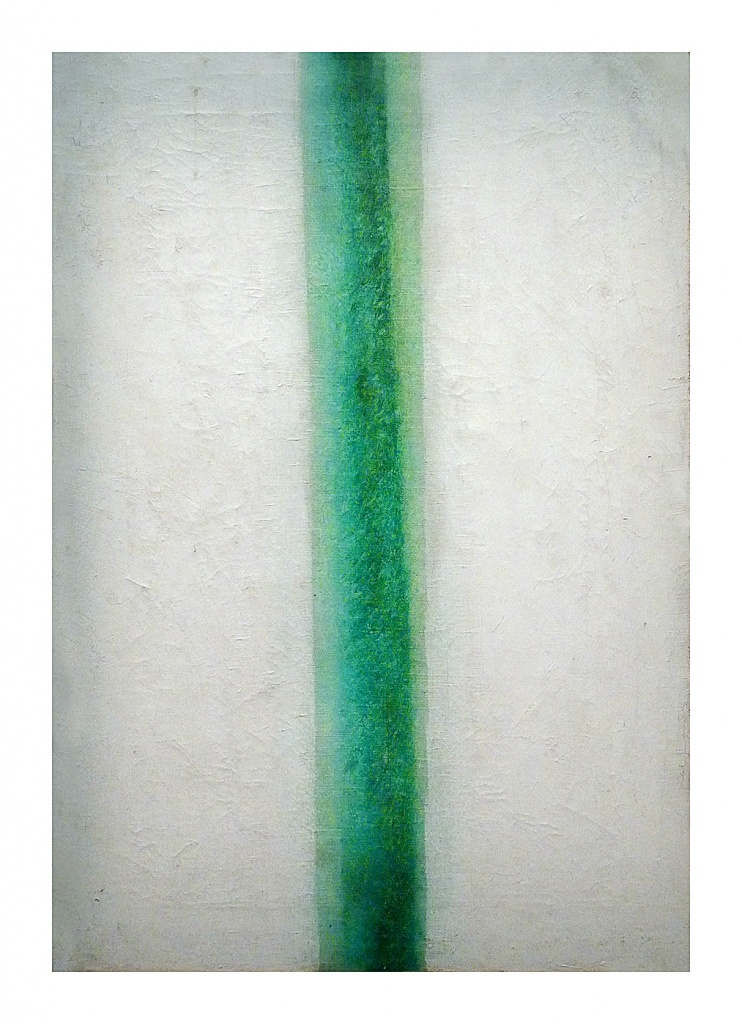
The Green Strip Olga Rozanova. 1917 Rostov Kremlin, Rostov
Purchases and gifts
“All that I collected was already in the Louvre and in the Hermitage,” Kostaki recalled. - Continuing in the same spirit, I could get rich, but ... no more. And I wanted to do something extraordinary. " The Russian avant -garde at that time was not sold in the commission (except that it fell by accident); Even in the 80s, when Malevich’s nephew wore a picture of his uncle on Arbat, not a single store took it. The avant -garde had to be sought. As the artist Valentin Vorobyov recalls, “the elderly innovators of the Russian avant -garde still lived and worked in art, hiring the sins of youth away from the eyes of the ruthless Kremlin authorities. The once famous leader of constructivists V.E. Tatlin slammed the door right in front of the nose of an unknown visitor, not to mention the sale of his experiments to some kind of manager. It was necessary to wait for the death of Tatlin (1953) so that the heirs open the treasured chests ... "
Kostaki began to walk around the old communal services, looking for relatives or heirs of artists, and bought up what could be bought ...
The newspaper publication, which the reader to get acquainted below, was destined to be the last interview of George Kostaki Russian (then everyone was Soviet, of course) to the journalist: we met with George Dionisovich in his house, in the suburbs of Athens (where he settled after leaving his family from the USSR in 1979), in early January 1990. And on March 9 he was gone. Kostaki, then it is already difficult and incurable to the sick (he went to be treated to Sweden, not trusting the Greek doctors, but this did not help), the conversation was not easy, fatigue and shortness of breath tormented, but it was clear that he wanted to speak out, as if in the end.
His name and deeds, as well as a number of other “difficult” emigrants, have already been completely rehabilitated in the Gorbachevsky Late Permanent USSR, as well as the art of the Russian avant -garde itself. Kostaki in every possible way called into an alliance on various official and unofficial occasions ... And yet-about many details of his life in the USSR, especially in recent years, the general public found out later, after August 1991: and about the surveillance of the KGB for his apartment on Vernadsky Avenue and its visitors (sometimes, during meetings with the sites of foreigners, for example, with Senator Edward Kennedy in 1974, and almost on all floors of the house people from the organs were on duty), which the owner of the apartment certainly knew; and about the survivors for some unknown reasons for the theft from his collection; And about the fact that the permission to leave Kostaki and his family, as his daughter Alika told, was personally given by Andropov and Suslov. At the same time, the Soviet state set Kostaki the condition: it can take only 20% of the collection with him. The best, the most valuable of what he had - he himself took care of the remaining 80% ... Visitors to the anniversary exhibition in the Tretyakov Gallery (part of the exposition - from Thessalonik, since many paintings at one time bought the Greek state from the Kostaka family) will surely appreciate this.
*Interview with the city of Kostaki was published in March 1990 in the newspaper Sovetskaya Culture.
"In general, everything worked out well"
- Well, sit down ... Do you want a seagull? Zinochka, - he was his wife, Zinaida Semenovna, his most long, better and most inseparable friend with him, - make tea, only good, so that it is stronger ... Maybe you will eat a pie? But here I often want sausages with green peas here ... What is in Moscow?
He is curious, sitting in home pajamas, carefully covered by a blanket. For him, great works should go a few steps from bed to chair, even relying on a simple device on wheels, with armrests, not without humor nicknamed the Rolls-Royce house. But communication with people - the best medicine, the best hope for him - said home.
Then, after a long silence:
- Resting. I let go of the pain a little, so I rest. Tired of pain ...
A huge window behind him is tightly curtained. And also half -tanned by a violent shoot of home flowers - and they are generally loved in this family - an iconostasis in the corner - amazing beauty.
Winter in Greece - almost like the Nabokovskaya “spring in Fialt” is “obscene and boring”: “Everything is wet: the podgy trunks, juniper, fences, gravel ...” - there is a snow: an unheard of business!
He is upset from bad weather: in his living room, it is somehow perceived in a special way, because behind the house a cliff, and then-the kingdom of unsettled nature, and above-only mountains. Upon arrival in Greece, he bought three houses-for himself and the children-on one heel, on the environmentally friendly northeastern outskirts of Athens with the beautiful and delicate name of the kifisiy, on the very sample top of the hill. A view of the mountain opens from the window, but very often the owner of the house, lying in the bed, looking out the window for a long time, suddenly picked up the brush and began to draw completely different landscapes ...
- That's how he moved here, and began to draw ... Time was free. There was nothing to do.
In the living room on the walls-mainly his painting. Here, for example, one of them above the sofa is a small tombstone in the form of a black square in the middle of an oak clearing. What is this? Isn't the grave of Malevich? - "Yes." Why did this topic come to mind?
- This oak clearing is located in Nemchinovka ... There, in the summer, Malevich lived in the country. Sitting somehow on the terrace, he said to his loved ones and his wife: “When I die, bury me under this oak tree,” one of them stood out very much ... The testament was completed. And during the war, these oaks were cut on firewood, everything was overlining by weeds, and for a long time it was impossible to determine where the grave was.
Somewhere in 62-63, my friend and I went there and could not find anything either. But then they restored the grave-already in the 80s, in my opinion, they put this black square there-and I wanted to reproduce all this ...
Many believe that Malevich, with this black square, seemed to put an end to art - that next, they say, there is no longer movement. But this is not entirely true, because the Black Square appeared much earlier than its Suprematic developments.
- Was there any inevitable death of the Russian avant -garde?
- Yes. The movement of the avant -garde - along with Malevich, Tatlin and constructivism, with all other “Ishma” - was ahead of time for several decades. The avant -garde players went forward without asking anyone for permission. And there were, as it were, premature birth - and people could not understand where this fruit came from, because there was nothing similar before ... The vanguard lost the prospect. But the Russian artists had great restlessness, there was anger and fear of being in the very tail of history, and they tried in every possible way to advance new art - although they were already Picasso and French Cubism - and they managed to better than others. This was and remains their feat, because the environment in every possible way opposed such a warehouse of thinking. And those who claim that the Bolsheviks are guilty are wrong in the dying of the avant -garde. The death began already in pre -revolutionary Russia. After all, even then they - the avant -garde - were not recognized ...
- Why is the avant -garde so attractive today?
-Well, this is understandable-why ... This is understandable ... Since in the 50-60s, the beginning of the 70s, contemporary art was generally recognized-however, mainly in the West,-the avant-garde began to explain the evolution of the modern world in its own way. After all, art should also be considered as a kind of science. The natural science has stepped so far that what was previously considered to be fantastic, gained as if artistic forms-and people drew attention to the avant-garde ... Thus, Malevich became a more or less recognized artist, although in 50-60 years the attitude towards him was very incomprehensible, he remained as if a white spot in art. Quite by accident, the Dutch became interested in his work-the Steedelik-Museum directorate found them with private collectors who did not know what to do with them. Prices were very low, for the entire collection the museum paid its owner the current cost of one small picture of Malevich. True, in the material assessment in the art markets, Malevich is now behind Picasso or some French impressionists, but I think that in a few years everything will fall into place. We must wait. <...>
The most interesting Kostaki seemed the question of how to achieve success in collecting.
- To do this, you need to have many qualities, which, however, are given a little. The collector should not make mistakes from the very beginning - subsequently they, like a bad line on the dress, will bulge here and there. The collector should not be omnivorous - he needs to decide once and for all for himself what he will collect, and not move away from the intended one. He should always think that it is very dangerous to overload the boat in large water - with a strong blow of the wind, it will easily overturn it, and all the contents will go to the bottom. I’m not talking about such seemingly simple things as honesty - otherwise not to enlist and a bit of trust.
And yet. The collector even when he has no money, he must feel at least a millionaire, but where to get money is his concern: either to tear friends and relatives to help, to lend, or to find some other ways ... Creating a collection is a long and painful process. Very often there are difficulties in front of which the collector, it would seem, is powerless: they promised him a thing, and it is unknown for what reason she goes into another collection. But you need to be able to survive it. And hope that the next time, maybe, lucky ...
Most of the collection - 80 % - Kostaki left the Tretyakov Gallery.
- Was there a sense of regret on this?.
- No. And it is completely surprising what happened to me. And my wife, and my children, and all loved ones thought: parting with part of the wealth that I managed to collect will cause me depression. On the contrary, a miracle happened. When the division began, I managed to configure myself very well, patriotic - I would say so. I then decided: with the Tretyakov Gallery I should share the best that is in my meeting. 80 % is when you already need to cut off the meat from the bones, and this always must cause terrible pain, but I did not have this pain. I somehow internally realized that I managed to do something very important in life. And that this important is not what I collected, but how I ordered the collected. Many dear paintings to me - take at least the same “running landscape” of Klun - I myself suggested Tretyakov Gallery ...
When they said goodbye, he was still in bed, although he was already the middle of the day, but he, as always, slowly departed from sleep - the disease took the last forces. Deeply sunk, tired and sad eyes were directed into the ceiling. Then he got up, with weak, trembling fingers volunteered to do it himself - he began to turn a sheet of cardboard into a tube: “I want to give you my gouache. Let you have. This is Suzdal ... "
Suzdal! .. Already in Moscow, he peered into details. What a strange hyperbole! The gold of the domes - there are so many of them, much more than in fact in Suzdal, but, apparently, he so remembered or he so wanted: naked black Savras trees exalted over church roofs, resting against the pink sunset sky ... His Suzdal. How can I not recall Chekhovskoye: "Sorrow is free" ...
“In general, everything turned out well,” - such were his last words on a dictaphone tape ...
Text: Boris Yunanov*
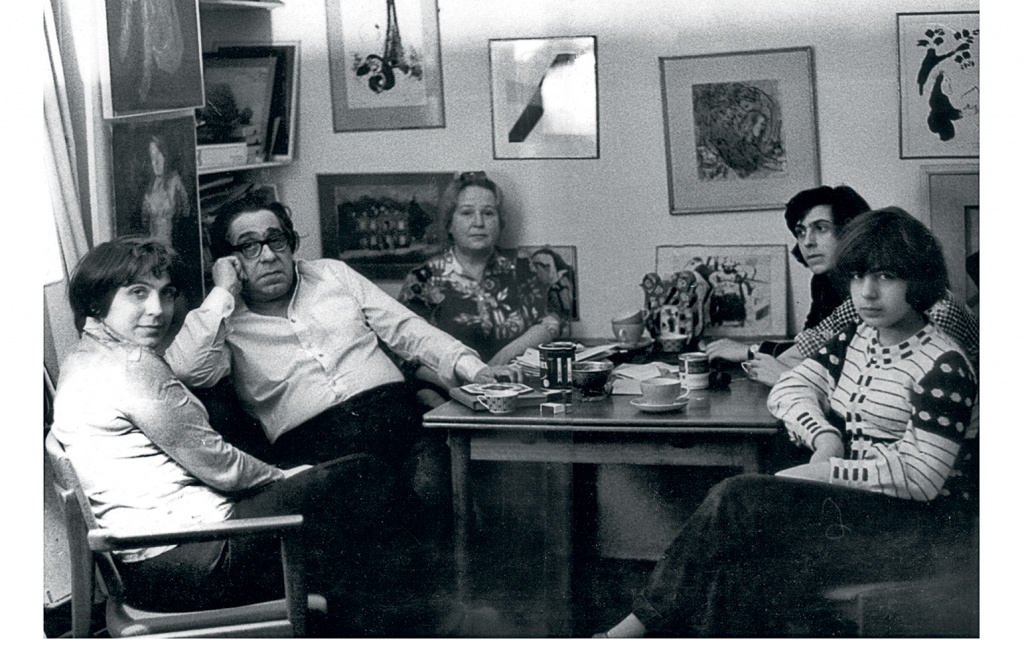
Family G.D. Kostaki: (from left to right: daughter Alika (Lily), wife Zinaida Semenovna, daughter Natalya, granddaughter Katya. Mid-70s.
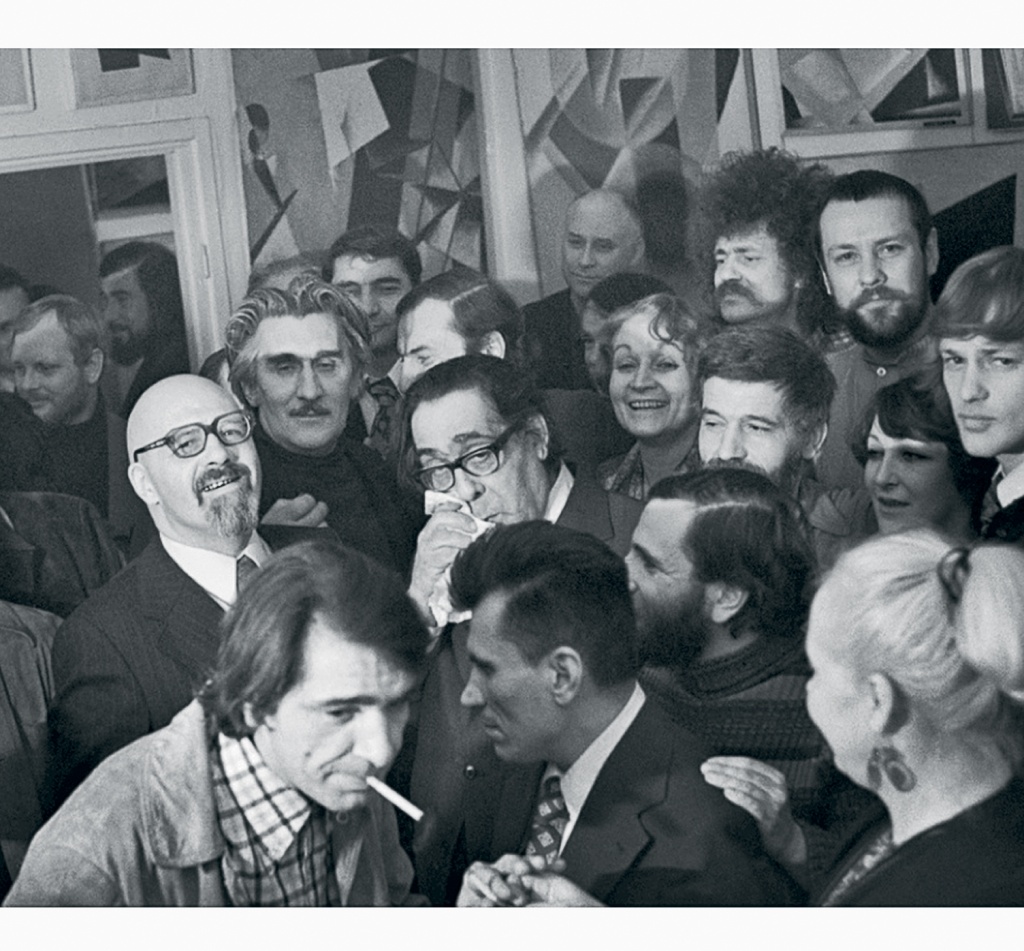
A farewell technique for George Kostaki for non-conformist artists. 1978
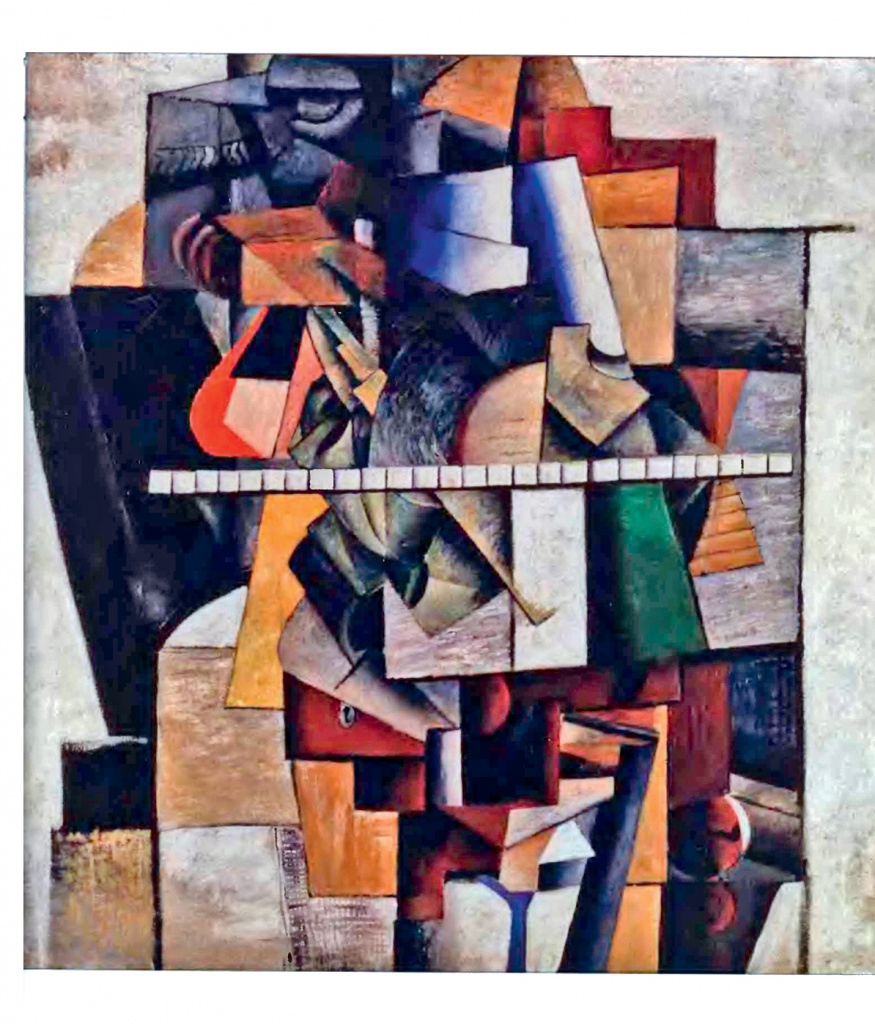
Kazimir Malevich. Portrait of M.V. Matyushin. 1913
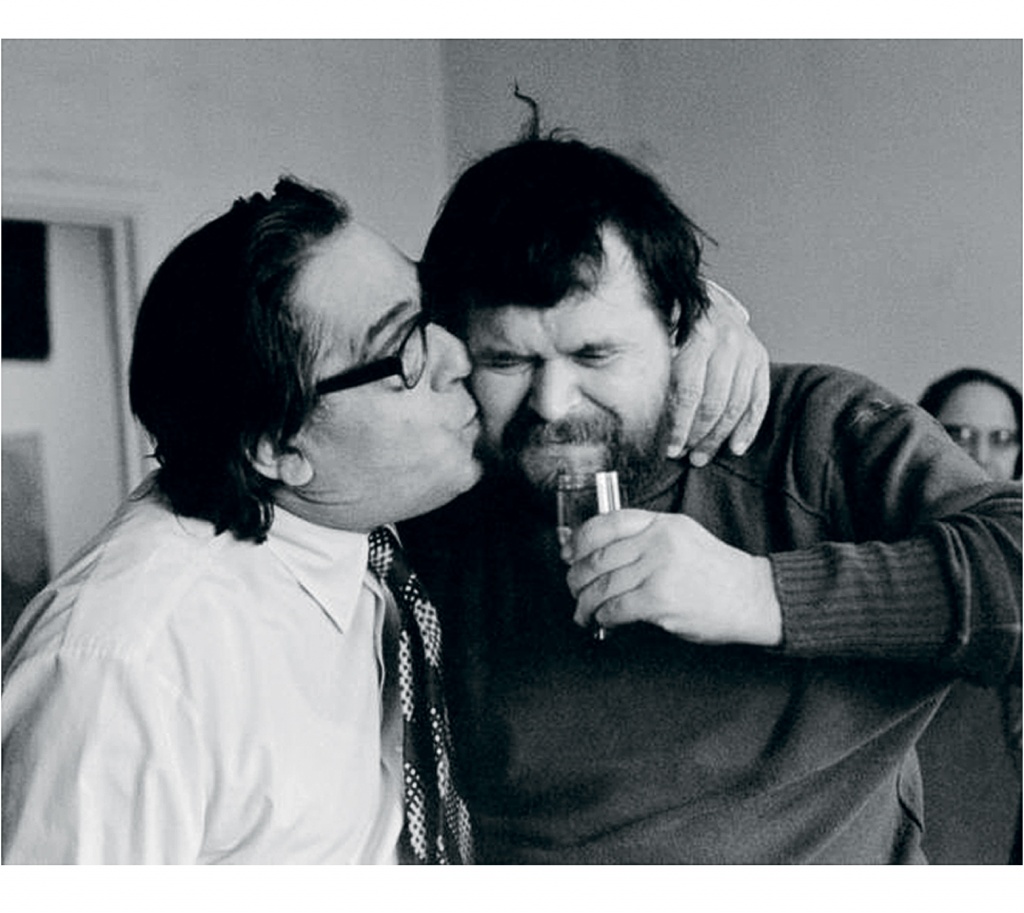
George Kostaki and artist Anatoly Zverev. 1978
Photo: Igor Palmin, from the personal archive