
Translated material
GOSTINE dead paratroopers
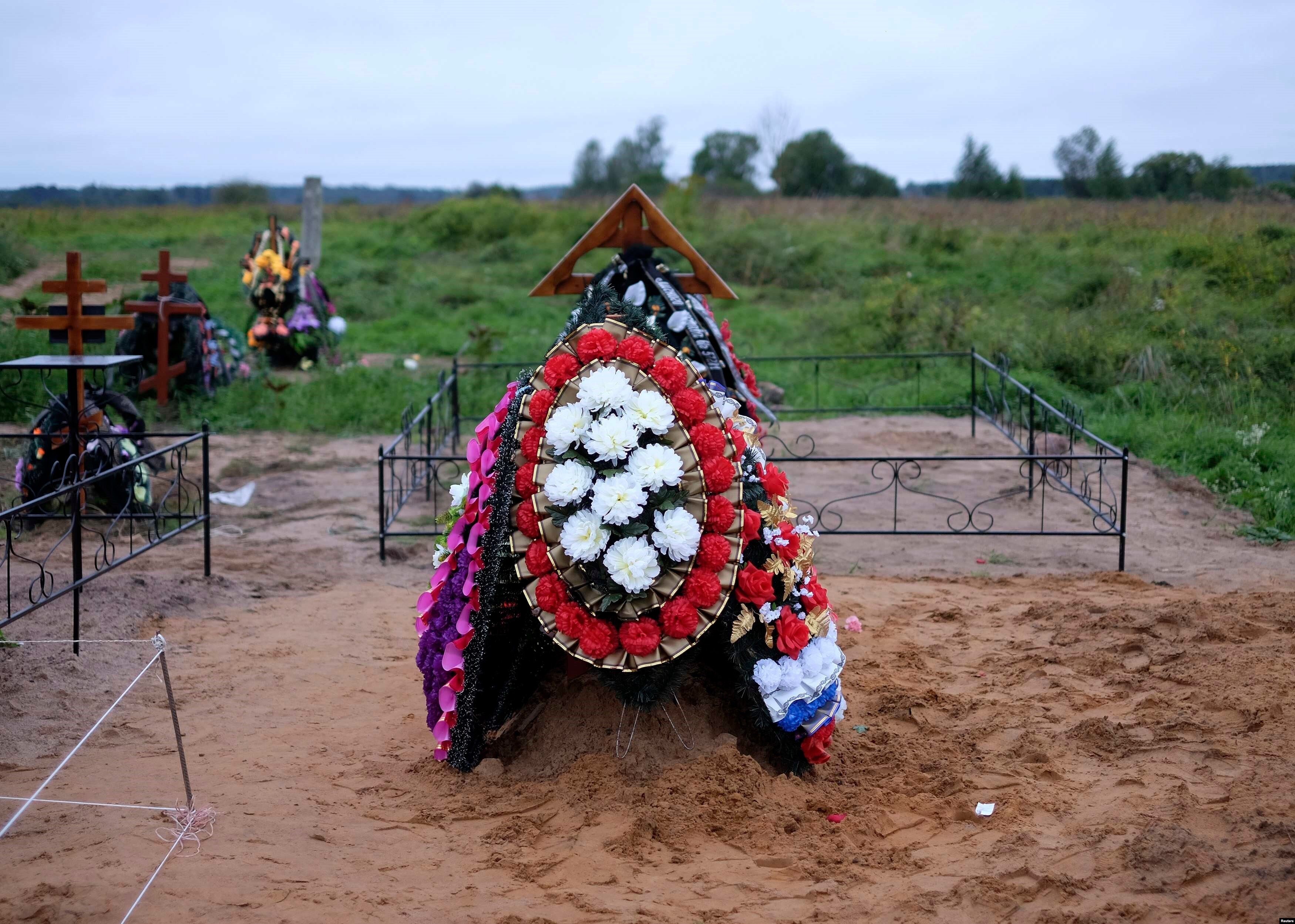
The Constitutional Court forbade hiding data on the dead Russians under the heading of "state secrets"
The Constitutional Court of Russia ruled that the investigating authorities have no right to hide information about the dead Russians under the pretext of preserving state secrets. On the court’s website, the decision adopted on November 6 at the closed meeting was published in the case of checking the constitutionality of Article 21 and Article 211 of the Law “On State Secret” in connection with a complaint of a citizen Oleg Laptev.
The court decision can theoretically help relatives of Russian troops who died in the east of Ukraine in conditions when the Russian authorities completely deny that troops are sent to the territory of a neighboring state.
Meanwhile, the very matter itself, which was considered in the Constitutional Court of Russia, has nothing to do with the events in Ukraine.
The decision of the Constitutional Court was adopted after the statement of a resident of the Republic of Mari El Oleg Laptev. His own brother, a police officer, was suspected in rape in 2011. And a few days later he was found hanged in the temporary detention of one of the Yoshkar-Ola police departments. Law enforcement agencies repeatedly conducted inspections, but refused to institute criminal proceedings, referring to state secrets, to certain "data on the forces, means, methods and persons that assist operational-search activities on a confidential basis." Therefore, Oleg Laptev and challenged several articles of the Law "On State Secret" in the Constitutional Court. The court ruling, in particular, says: “A person whose a pre -investigation was conducted on the fact of the death of a close relative, and a lawyer who is his representative, in case of refusal to familiarize himself with the materials of the report of the crime with reference to the presence of information related to state secrets, has the right to achieve all possible measures to eliminate this obstacle to those information that indicates the presence of either the availability the absence of a crime, in order to be able to form their own position regarding the legality and validity of procedural decisions on the refusal to initiate a criminal case, even if the adoption of such measures requires officials and bodies that carry out pre -investigation, additional efforts, otherwise would contradict the principles arising from articles 2 and 18 of the Constitution of the Russian Federation. ”
Can a decision of the CS apply to the affairs of Russian troops who died in Ukraine, the information about which the Ministry of Defense hides? Can the authorities now, under the pretext of maintaining state secrets, refuse to provide information about the dead or wounded Russian military personnel in Ukraine or in other "hot spots"?
The chairman of the human rights organization "Soldiers' mothers of St. Petersburg" Ella Polyakova took the news of the decision of the Constitutional Court with hope:
- This is a very good decision of the Constitutional Court, which confirms that the system of protecting human rights in Russia acts, is based on the constitutional rights of a person in the chapter of the second Constitution. But this mechanism must be worked out. In this decision of the Constitutional Court, which, in principle, pleases me, there are some disadvantages. For example, human rights organizations are not indicated that protect human rights in Russia. There are moments that confuse. But in the main one is a good solution.
- -you recently turned to the Ministry of Defense and the Main Military Prosecutor's Office with a request to submit data on the wounded and dead in Ukraine of Russian troops. They answered you, so far from the Ministry of Defense, the data was refused to provide, and they referred to the "medical secret" in the response. Now, after the decision of the Constitutional Court, do you count on receiving the necessary information?
- Yes, I believe that this particular decision of the CS will help us get such information. Because we are talking about the main thing: about the life and death of man. About the life of Russian citizens. And if some crime, attempted life and health of citizens are committed, then the investigation of this should be vowel and evidence. And officials in such a situation should protect human rights, and not hide the truth.
Human rights activist, deputy of the Pskov Regional Assembly, Lev Schlosberg, who has not yet familiarized with the text of the decision of the Constitutional Court, is convinced that it has nothing to do with the events in Ukraine:
- I have not yet seen the solution of the COP and I can not comment on this part. I assure you that this decision is in no way connected with Ukrainian events. No way. In order to make a decision of the Constitutional Court, people must pass the Russian courts, get refusals, prove that the law enrolling of the law infringes their rights, submit an application to the Constitutional Court, and there - a six -month queue for consideration of cases. It is impossible to assume that citizens turned to the Constitutional Court, and today he gave a “slap in the face” to the acting authorities. The story, on the basis of which the Constitutional Court decides, may be a year ago. This decision in itself has no connection with Ukrainian history. The Constitutional Court cannot make decisions in relation to one person. He makes decisions on the rule of law. This is not the Supreme Court, he does not consider judicial incidents. He considers only aspects of rule -making: does the law of the Constitution correspond to or not And nothing more. But his decision may affect the people who have now lost their loved ones in Ukraine.
On November 10, Lev Schlosberg received a response to his request to the Main Military Prosecutor's Office of the Russian Federation, whose representatives refused to answer his questions, citing the law "On State Secret". In his request, the deputy asked to check the information about 12 dead military personnel, to establish on the basis of which orders they left the place of constant deployment, at what geographical points and under what circumstances were killed:
- I believe that the response from the main military prosecutor’s office, despite its, say, significant brevity, is an important document in our attempts to establish the circumstances of the death of Russian troops in the summer and autumn of 2014. We assume that they died in Ukraine during illegal hostilities, complying with the order of a higher command. We have no desire to accuse of anything specific people who died. We believe that criminal orders were given to them, and due to certain circumstances they could not evade their performance. The answer of the main military prosecutor’s office to my eight questions contains, figuratively speaking, the answer to one and a half question. The main military prosecutor's office confirmed that the families of the dead are paid all social benefits laid down under Russian legislation. But at the same time, the main military prosecutor's office confirmed the fact of the death of these people. And now I can say exactly about the participation of some unidentified unknown persons who continued to lead the pages of the dead Vkontakte and speak on their behalf, on behalf of the dead, in order to imagine, to create the impression that they are alive. The main military prosecutor in this story put an end to and confirmed the fact that they died. All the other six issues that are not related to the circumstances of the exit of these military outside the places of permanent deployment, and the main military prosecutor's office confirms the fact that they died outside the places of the constantly deployment of their units, that is, outside the Pskov region; These questions were about who ordered, how he ordered where these people were moved, where they died, under what circumstances, the prosecutor's office did not answer all these questions. But, at the same time, she said that all these circumstances were established for each of the military personnel with highly professional experts of the forensic medical examination, and that the audit is being carried out within the framework of the criminal procedure law for criminal proceedings. Or refusal to excite it. I believe that in the conditions in which Russian law enforcement agencies, including the main military prosecutor’s office, this answer contains the maximum information that could be reported. Many people scold the main military prosecutor for this answer, but I do not agree. Understanding that this is not a free organization for supervision of the armed forces, I believe that the main military prosecutor’s office in her answer to everything that she answered honestly answered. The only thing I categorically disagree with is the last proposal of this answer that, according to the prosecutor's office, when analyzing orders and orders of military administration and military officials, there were no violations of Russian laws and that, accordingly, the prosecutor's office did not find grounds for taking prosecutor’s response measures. I do not agree with this. I am sure that both the Constitution and the laws of the Russian Federation were violated. Those who gave these orders have names, surnames and patronymic. Title and position. Sooner or later they will become known and will become the subject of investigation and trial. How long will it take to wait for this trial - no one will say today.