
Translated material
Recession as a reckoning for a ruble
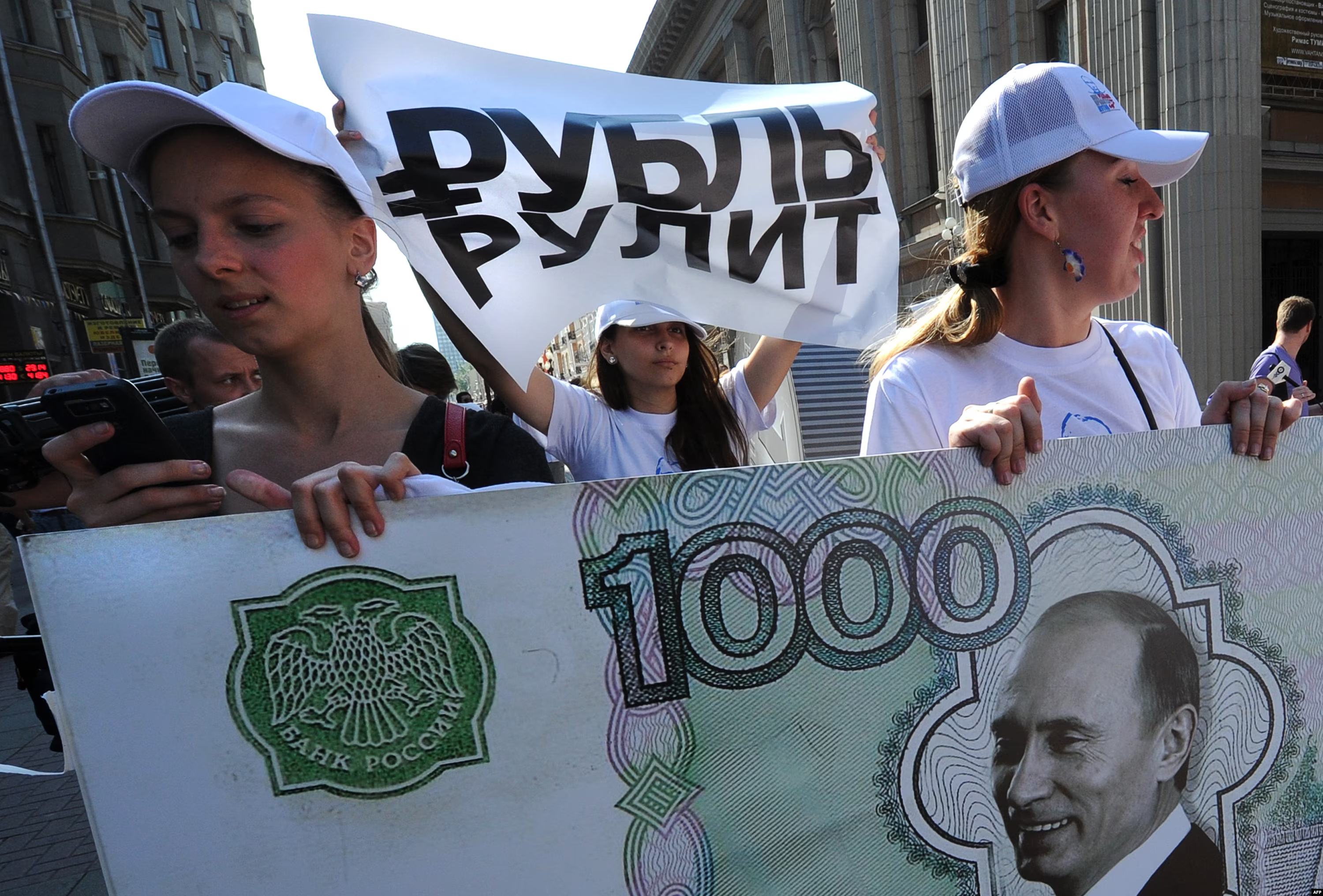
International sanctions and the ongoing drop in oil prices bring Russia closer to the new economic crisis
Since the beginning of the week, the Central Bank of Russia has actually refused to support the national currency, announcing the transition to the free formation of its exchange rate in relation to the dollar and the euro. American experts and the media interpret this decision of the Russian regulator as a recognition of them destructive for the Russian financial system of international sanctions and preparation for the worst times.
How is Russia close to the financial crisis? Such a question in his commentary for the information service of the Bloomberg agency was asked by one of the most authoritative financiers of the world, the former head of the Pimco investment fund, and now the main economic adviser to the Allianz financial company Mohammed El-Erian . The author does not give a direct answer to this question, but, judging by his arguments, then not far. “The Central Bank of Russia, apparently, is losing control of the foreign exchange market,” El-Erian writes. “The strengthening of stagflation winds is only a matter of time. Warm up oil prices, financial shocks in Russia reflect the geopolitical tension and decision of Russia, which preferred regional adventures to maintain internal economic and financial stability.”
CNN economic observers lead to five reasons why, as they write, "Russia can face the worst times." Among these reasons are almost two hundred millionth debts of Russian banks, which will be extremely difficult to serve them, sanctions that will lead to a further escape of capital from Russia, the growing inflation and behavior of Vladimir Putin, which denies the connection between the fate of the ruble and economic problems.
The fall in economic activity - this may be the price of a strategy for supporting the ruble elected by the Russian Central Bank, said an American economist, an employee of the Guuver Institute , Mikhail Bernsstam . Here's how he answers the question of what forced the Central Bank to suddenly abandon the support of the ruble in the financial markets:
Whatever you do, everything is bad, and therefore it was necessary to take some measures that would allow you to get out of a non-viable regime with minimal damage
- The fall of the reserves of the Central Bank, nothing more. The bank's reserves over the past 12 months have fallen by 17 percent: from $ 517 billion to 429 billion. Further fall of the reserves of the Central Bank would lead to further delaying the ruble money supply; The stagnation, which is now taking place, could go into a recession, and since the outflow of capital continues, it was impossible to stop the fall of the ruble. That is, the situation in miniatures would resemble the situation during the default of 1998. Whatever you do-everything is bad, and therefore it was necessary to take some measures that would allow you to get out of the non-viable monetary policy regime with minimal damage and go to the new regime, which will allow the Central Bank to lead the monetary policy.
- If the central bank deprives the ruble of support, does this mean that the Russian currency can slide deep to the bottom?
If the money supply continues to decrease, then the current stagnation will go into the recession
- The Central Bank introduced a new regime of monetary policy, which, under a favorable combination of circumstances, will stop the fall of the ruble. Namely: if earlier the holding factor was support for the ruble exchange rate by selling the reserves of the Central Bank and manipulating the flow and outflow of dollars in the foreign exchange market, now the Central Bank has introduced a new rule - the ruble money supply will be stable. It is assumed that if the ruble mass is stable and there is no large outflow of capital, then in the presence of the current reserves of the Central Bank, you can more or less maintain a stable exchange rate.
- That is, the Central Bank says that he will not engage in ruble emissions, will not print money, in other words, there will be no rubles for the purchase of dollars?
- That's right. The Central Bank introduces a regime in which the control of the cash ruble mass should serve as a stabilizer that can restrain the drop in the exchange rate of the ruble.
A good script is stagnation, stagnation. A bad script is either a sharp drop in the ruble course or recession
- But at the same time, as many Western observers predict for this, can a recession in Russia be?
- It is. Moreover, this process is already happening. In 2014, ruble money supply was already slightly reduced. It is clear that it was reduced due to the fact that the Central Bank sold dollars and pulled rubles. If the money supply continues to decrease, then the current stagnation will go into a recession. The Central Bank predicts for the next three years the lack of economic growth.
- That is, either a ruble course or a recession. Is such a dilemma loomed before Russia?
- They, under the current regime, which installed the Central Bank, has a good scenario, and there is a bad script. A good script is stagnation, stagnation. This is the best scenario that they suggest. A bad script is either a sharp drop in the ruble or a recession.