
Translated material
Possess, to waste, to be

History and theory of luxury
Philip Perrault. Luxury: the wealth between splendor and comfort in the 18th -19th centuries / Translation from French A. N. Smirnova. - St. Petersburg: Publishing House of Ivan Limbakha, 2014. - 288 p.
“The other day I will need to buy a slave in Constantinople, and another Georgian slave, because a person who does not have slaves is a fool, because there is nothing more stupid than equality, especially for the people whom it constrains, and it is extremely constrained. I hate Europe, I hate my native France, my generous homeland, willingly send it to all the dams now that I opened the door to the door to the door. It seems to me that I was once brought by the wind into this dirty country, but was born somewhere far away, because I always lived unclear memories or vague images of fragrant shores, the blue seas. I don't like physiognomy, Numidian mares, marble pools ... "
So he raged in his imagination by Gustav Flaubert, writing a letter to Ernst Shevalier in the boring bourgeois in 1840, when the golden times of European charm with luxury, truly life -giving effects on the spirit and blood of Europeans have long remained far behind. This is, in essence, nostalgic discourse.
“... And with me,” this dizzying reasoning ends, “there are only insatiable, burning desires, terrible boredom and incessant yawning. And also an old tube and overdry tobacco.”
So, in the conversation that the French cultural historian Philip Perra, is also not about luxury, in essence, talks about luxury. It has passed, the time has passed, the time has come for distance and analysis. (It is a pity, by the way, in the Russian publication of the book we will not find a single information about its author; the fact that he is the Frenchman and, in all likelihood, it is the historian of culture - exclusively our daring reader assumptions. He also abuses the title of anthropologist, expressing a lot of practical remarks about the structure of human nature.) Luxury here - no more than a way, luxurious - about yes, about, about, about, about, oh, oh, about yes, oh, about yes, oh. irreplaceable opportunities) to discern some things that go far beyond its limits and, in essence, you will not believe - who have a great attitude to wealth, convenience and pleasures. Or even - if quite by large, there is nothing at all.
They were just connected with them historically. True, but quite firmly. Therefore, you have to untie, unravel.
(... it’s definitely about the convenience of definitely nothing to do. "To give guests like an pretender Aesop, to speak the stew from the languages of birds trained; to feed like heliogabal, their palace guard with fish giblets, ostrich brains and heads of parrots; watering the planeans, like hydrangeas, sweet wine; decorating them in such a way as to wool. I acquired a purple shade and pleased my eye ... " - yes, this is a hard work. Discipline. Auscase. Poverty did not dream of this.)
In a sense, the luxury is transparent - and when it seduces and attracts, and when it scares and repels (and such plots in the book are also considered: the story of the struggle with luxury, its condemnation, rejection, overcoming, in general, all kinds of personal and social protection against it is a separate, parallel story full of its exciting events). Luxury - glass with diopters, focusing the researcher's gaze.
It looks out this look - using wasteful excess, violent splendor and expensive comfort as an optical device - the plasticity of human nature and the device of its motives. The nature of man as a creature is deep and through and through the symbolic.
And it is clear that in the studied "folly" (it is such a luxury that appears to the present "mind, rational and democratic", which in itself is a historical, and recent one) its own, very stringent, logic - and its own force of coercion. This logic - and the methods of action of this force, and most importantly, their historical variability - and the author explores.
The history of luxury, social and anthropological (taken mainly on a small historical interval - in the XVIII and XIX centuries, but with extensive excursions and beyond), Perraults laid out seven chapters. In the first - in "landmarks and prospects" - the main research attitudes are indicated. In the remaining chapters, luxury is represented in its metamorphoses and appearance: from archaic waste, designed to provide his subject with veneration (bordering, perhaps, with sacred trepidation) - through its various types, degree, modes and degrees (luxury of utilitarian, equal, shameful; luxury of false; final luxury, finally, old). Her changeable interpretations - and to the luxury of public, state "or nationalized". The opposition of this latter and the luxury of the personal “was clearly manifested precisely in the 19th century,” because only starting from this time “democratic principles make the great distributor from the modern state, distributing the“ public ”luxury. It is at him, the heir to the centralized monarchies, will be entrusted with the obligation to spend huge funds for luxury, and such huge ones that even the richest private individuals cannot imagine. “It is it, the state,” writes Perrault, “will deprive the splendor of vanity and shameful selfishness - qualities that it undoubtedly possessed, especially from the 18th century.”
However, this luxury is no longer a couple of the same, no matter how huge funds were spent on it. There is no personal character in it, which only private, vulnerable in their particular persons are capable of: frenzy and tear. In the Osmeenth century, luxury, although already slurred, still felt her sacred - dark and terrible - roots. By the nineteenth already ceased.
The history of luxury, how it was saturated with meanings and was released from them, how she changed signs to opposite, appears under the Perrot pen, thus as the history of human nature, projected on a certain aspect of society, as the history of social stress and values, which are only pronounced the language of relations with luxury. And this is an eloquent language.
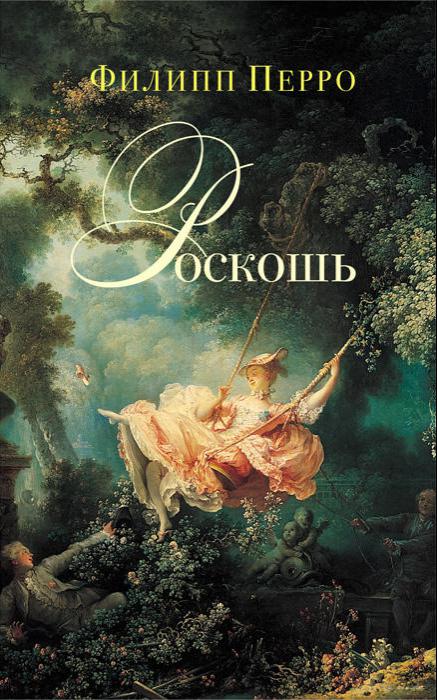
To the great reader's happiness, the book with a bit is stuffed with abundant actual material, as well as quotes - voices from different times that the author is talking about. The reader-visual once again begs about the absence of illustrations (and the colored ones!), Which, without a doubt, would greatly enrich the narrative, because the luxury so that it is really perceived and experienced as itself, you must definitely watch! She must tease her eyes and hit the imagination! However, the imagination here will find what to push away from. Moreover, he will be invited to go, among other things, and along the paths not quite traditional.
We will learn not only about what was revered by the luxurious at the time of the “crowded festivities and the exquisite techniques of the Sun King” (everything that happened there, ultimately, fits into the usual ideas related to the idea of “luxury”). We have to discover how the luxury was conquering new areas (leaving the old ones: well, who would have come to mind already in the 19th century, “breeding the rams, scolding them in such a way that the wool acquires a purple shade and delights the eye”?) As, for example, the triumph of unprecedented tootolas is inexpensive in essence and, moreover, “standard, unified” objects, unified items, unified items. Appeared, however, in discouraging abundance with the beginning of the industrial revolution. Both visitors to world exhibitions and the first large universal stores, readers and leafers of their catalogs died in a spirit: in a sensual and seemingly affordable look, infinity itself presented them.
"Starting (thanks to the development of textile production) with finished clothing and its accessories, copying what was sewn by measurement, as well as (thanks to progress in the field of electrochemistry or etamp technology) from trinkets, vases and other decorative objects that simulate manual work, serial, that is, industrial production will expand and become more diverse. Inexpensive products presented after 1855 at various world exhibitions, and even better you can see if you look at the year after the year of the catalogs of universal stores: to what was offered at first - underwear, finished clothes, fashionable new products, silk, furs, headdresses, lace -lace - bedding, furniture, car carpets, carpets of machine Groundings, glass and ceramic dishes, trinkets, children's toys, household items, garden equipment, sports supplies. "
Oh, this list of ships ... And all these are new embodiments of luxury, which, however, soon - already in the 20th century - will be left by it.
At the same time, we also find out that, with all changes in the external appearance of luxury, in the intuition itself, some constants remained, unshakable points, based on which, and by this time, more and more of its types can arise. As can be seen in the example of many inexpensive standard things, which struck Europeans of the era of the first world exhibitions, the essence of luxury will always belong to one way or another, an excess. And also - a deeply related excess - going beyond, drawn by the actual culture to the "average" person. A family of frenzy. Ecstasy.
Luxury always, whatever it is, is dealing with impossible. Or almost impossible.
Moreover, in fact, it is ecstasy, but always, one way or another, ecstasy is practically significant. Functional. Even when this practicality and functionality are not recognized by contemporaries. But then the researchers to identify them.
As for the preaching of abstinence and self -restraint - values that are inherent from the Protestant ethics, and with it - from the attitude to life that formed the culture of the modern West, it was originally doomed to secondaryness: its very existence was determined by luxury, with a crashes to the luxury of human nature itself (is it not determined to this day?).
And is it necessary to clarify that all this is also about the fact that the luxury is as a cultural form, as a modus of attitude to life - for all its, repeatedly and convincingly proven, perniciousness - is unrequited?
The history of luxury is (another of the set) the story of a person’s ways to be and declare himself.
Ultimately, in a conversation about the matters of historical and cultural, because it is always - whatever she is going on - it is about self -relief, self -mention of a person. And the luxury is nothing more than a remedy.
Or, as the platform itself is expressed, "in essence, it is only a metaphor."