
Translated material
The edge of the long -term
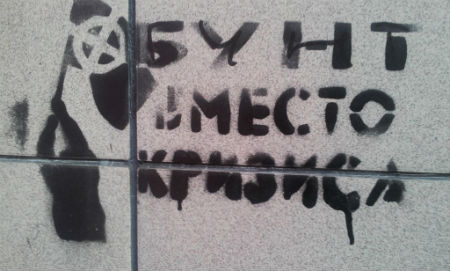
Products are getting more expensive, it becomes worse for living, but the West is to blame for everything, and we are ready to endure. Such a picture of the mood of Russians is drawn by sociologists based on the results of the latest surveys. Will the economic crisis lead to social protests ? What will be their topics and scale?
Andrey Piontkovsky , political scientist, member of the Committee of Solidarity with the Maidan:
Of course, sooner or later the economic crisis will lead to social discontent and unrest, but I do not think that it will be too fast. If I were an adviser to the authorities, I would recommend more worried about the political crisis caused by the adventure in Ukraine, which also has the economic component: the sanctions, if not the reason for the deterioration of the economic situation, then in any case aggravated it.
Putin drove himself into the military-political tsugzvang, he cannot decide on a full-scale military operation, which will entail big sacrifices among military personnel and loss of face after all demagogy about the Russian world. The military-political crisis will come faster than social. The collapse of the Ukrainian adventure will become an obvious society - just as it was with the Crimean adventure of Nicholas I, with the First World War. The consequences will be even larger than the Soviet invasion of Afghanistan. And this is more dangerous than economic troubles and social discontent.
Andrey Demidov , leader of the Interregional Trade Union "Teacher":
The general rule of sociology - a deterioration in the economic situation leads to an increase in protest moods. Probably, the growth of protest moods and promotions awaits Russia. But the question is as this protest. Probably more will go out under non -political slogans: to return the salary or index it, increase pensions or not take the last benefits. The protests of small entrepreneurs are likely - experience shows that the state is trying to save a large business, but not small in a crisis.
Political protests will also increase, but for the time being slowly. The efforts of the authorities to strictly strip the political field from leaders who potentially can lead the masses will be affected. The most indicative example is the landing of Udaltsov.
Georgy Satarov , political scientist:
The influence of the economic crisis on the protest is already. The Russian economic crisis has been going on for a long time, and the current phase is not associated with sanctions - it is rather caused by internal causes.
The crisis affects the expansion of social protest. And since there is no way to throw social speeches as ten years ago, they will rest on political barriers (the unwillingness of the authorities to talk with citizens, an inadequate reaction, the lack of mechanisms for a change of power) and will be politicized. Not ready to say for sure when this happens, but definitely until 2018.
Olga Romanova , founder of movement "Rus Sitting":

I think that what is happening in the economy will affect, alas, not to protest. People with a civil position protest. But they rebel - hungry. The protest is expressed in an ultimatum form, the argumented and articulated public disagreement with the actions (inaction) of the authorities and the public proposal of the way of change. Riot is when volunteers from Novorossia are returning home, they cannot find work and feed their families - and in the mass order are looking for traitors. After interrupting the intelligentsia and not feeling improvements, they will go to the Kremlin with a simple and natural question: "s?" Since the question does not need the answer, they just go to the Kremlin, kill the dishes, lay it in a vase and proclaim the dictatorship and other Cheka. About that goes to that.
Pavel Pharmacist , historian, observer of Vedomosti:
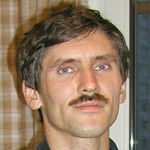
Judging by the moods of our citizens, visible in polls and on social networks, they already felt that the ban on the import of a number of products was reflected in welfare, primarily on the quality of food. However, this, as well as the loss of the prospect of “better to dress”, did not lead to a significant increase in protest moods and a sharp decrease in confidence in power and personifying it.
This phenomenon can be compared with the patriotic rise of the initial period of the First World War, when millions of people perceived the began fighting as short trials before the holiday of the national spirit, as the beginning of new, better times. The situation has changed when it became clear that hardships were for a long time, and the victory is very far (if at all). Then the attitude of people to the war and to the authorities, whose actions turned everyday life into a test, changed dramatically. Power and personifying her monarch lost their sacred authority.
Tatyana Vorozheikina , political scientist:
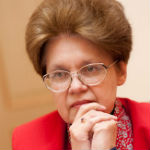
State resources are reduced, and the costs of education and healthcare will be cut. This has long been happening in that other Russia - non -Moscow. But when it began in Moscow, it became more noticeable. And I think that the refusal of the state from its social obligations will one way or another will lead to the politicization of social protests that have begun.
But there is a very important thing here. This, relatively speaking, is "our Crimea." I believe that this imperial component is the most important watershed. Everything that can be mobilized under the "Crimean" will be repaid in one way or another. What goes beyond the scope of imperial mobilization is a danger to her. The very idea - to replace the lack of economic successes of the mythical protection of the Russians and supposedly the restoration of the empire and the Soviet Union - works well because for many people, and not only at the age that the USSR has found, belonging to a large and strong country remained and remains compensation for their own insolvency.
I believe that the effectiveness of imperial mobilization will be faded, but I do not think that this will happen in direct connection with the deterioration of the economic situation. Here the relationship is more complicated.
Ella Paneye , sociologist:
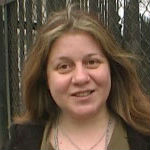
Right now, the economic crisis is unlikely to affect protests: when people feel a significant but smooth change in their economic situation for the worst, they are not up to public activity for a while, they try to keep afloat. Local performances are possible where enterprises will be closed and mass dismissals will occur, as recently happened in Moscow about the closure of hospitals and reducing medical personnel. But I do not expect a massive rise in activity in the coming months.
At the next stage of the crisis, when the recession will take a lingering character and it becomes clear that it cannot be explained by the machinations of enemies or temporary difficulties, citizens will begin to look for the culprit of their troubles under the next lantern. And under the next lantern, our beloved government and Putin Vladimir Vladimirovich personally have a comfort. Citizens will hang on them as their real mistakes and managerial helplessness (embedded in the war, spend money on all sorts of Olympiads there, feed Crimea, Caucasus, etc.), and quite objective circumstances (falling oil prices, the need to cut out budget expenses unreasonably high on a favorable situation). In the conditions of economic recession, especially high inflation, moods quickly become pessimistic, and the authorities will be responsible primarily for this - they are responsible for everything, no other politics that could be divided by responsibility in their fault in the country in fact.
In a year or two, mass protests, most likely under the populist "social" slogans, with very amorphous leadership and prone to radicalization according to the most destructive scenario with an activist nucleus. These will not be current radicals, but people who, in prosperous times (for example, during the progressive protests of 2012 or nationalist performances a little earlier) was not at all interested in. The sluggish Soviet resentment, which the regime managed to saddle and put it in the service, will encounter a much more active post -Soviet resentment under the slogan "return us oil freebies and do it as it was."
Kirill Rogov , political scientist, publicist:

It is customary to discuss this in Marxist-Lenin, relatively speaking, the scheme: people who are dissatisfied with the worsening of their position go out into the street and sweep away the government. So in fact almost never happens. And the scale of deterioration for this should be very significant - war, devastation. In other cases, the process has a much more complex appearance.
A deterioration in the economy from some point certainly leads to a reduction in the support of the regime. But the main consequence of this is not the exit of the angry masses to the street, but the decrease in the loyalty of the elites, which occurs under the influence of both the growth of discontent at the bottom and the reduction in the volume of resources with which the elites operate. A decrease in loyalty also does not need to imagine primitively: "The police chief refuses to comply with criminal orders." No, this is the latest stage. At the first stage, everything is terribly loyal, but everything somehow ceases to turn out. Orders are carried out, but goals are not achieved. This is not even front, but the awareness of the elites that the goals of the regime and their goals do not coincide.
Two factors - a decrease in support and a murmur from below and a decrease in the loyalty of elites - begin to strengthen each other. The population, seeing that orders do not reach the goal, begins to respect the power even less, and the elites, observing the growth of discontent, is even less identified with it.
Social protests will be, but they are not engines of the process. In a sense, they are not very dangerous for the regime. Moreover, the regime is carefully preparing to have money for their "extinguishing". Claims are not protests, discontent is dangerous.
Putin is trying to prevent this script with radical preventive moves. Maybe this will give something. But with no less probability, this can become a trigger of accelerating decay.