
Translated material
Attack on "Memorial"
In the opposition
 Attack on "Memorial"
November 14, 2014 Alexander Cherkasov
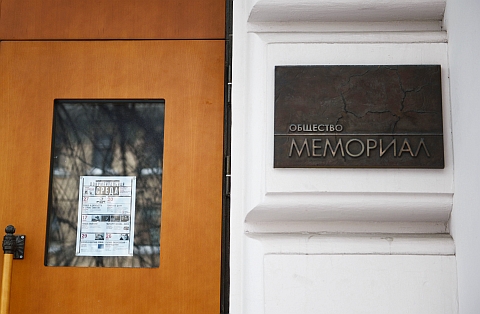
On November 13, 2014, the Supreme Court of Russia at the petitions of both parties transferred the consideration of the lawsuit of the Ministry of Justice to the Russian Memorial on December 17 .
Over the past week, the position of the department has changed dramatically.
Last Thursday, the representative of the Ministry of Justice said that at today's meeting they will insist on the immediate liquidation of the Russian Memorial and all the organizations included in it (!).
On Saturday, November 8 , the Ombudsman Ella Pamfilova addressed Putin with a letter, urging him not to allow the closure of the Memorial.
On Sunday, November 9 , Peskov replied that de Putin could consider the appeal of Ella Aleksandrovna no earlier than November 16.
On the evening of Monday, November 10 , the Deputy Minister of Justice said that the department would petition for the deposition.
Which, in fact, happened.
In the certificate below, briefly (as far as possible!) The background of the issue and the essence of the claims of the ministry was dismantled.
The requirements of the Ministry of Justice have not changed. The threat remains. We are grateful to everyone who monitors the situation and shows solidarity with us.
The situation with the "Memorial". Brief certificate
Moscow, November 10, 2014
1. History and general information
2. Organizations - legal entities and organizations without a legal entity
3. The ratio of mm and RM.
4. Checks of the "Memorial" and claims to it.
4.1. Through the Law "On Foreign Agents": Human Rights Center "Memorial".
4.2. "Bureaucratic claims" to the RM by the Law of the Russian Federation on public associations.
4.2.1. "The wrong structure."
4.2.2. "Lack of activity."
4.2.3. "Lack of funds in the account."
5. In anticipation of the court session and conference.
1. History and general information . In 1987-1988 First in Moscow, then in many cities of the USSR, the Memorial movement arose. These were groups that advocated the perpetuating of the memory of the victims of the Soviet terror, against a return to the totalitarian past, for observing human rights in the present. In January 1989, representatives of groups gathered in Moscow for the congress and created the All -Union Society "Memorial". One of the organizers and the first honorary chairman of the company was Academician Andrei Sakharov. Memorial Society was registered in 1990.
In 1991, the Soviet Union ceased to exist. In 1992, at the next congress, the Memorial All -Union Society was transformed into the Memorial International Society (below - MM), and Russian organizations in mm created the Russian Society Memorial (below - RM). Both organizations were immediately registered in state bodies.
In 1998, both mm and RM were re -registered in connection with a change in legislation.
Since 1994, once every four years, delegates from all organizations of the MM and RMs gathered at the reporting conference , which selects the reign of these organizations and determines the strategy for the period until the next conference. Between conferences, the work of MM and RM coordinates these reign.
All organizations included in the RM and in mm share the general goals and objectives recorded in the charters of the RM and MM, but remain independent in choosing the priorities of their specific activities: some are engaged exclusively with the legal and social support of the former casualties, others - perpetuating the memory of the victims, and others - the actual work in the field of human rights protection, etc.
In the financial and economic sense, all organizations are independent of each other and from the Boards of RM and MM - they do not meet each other's financial obligations.
Both RM and mm are living, changing structures. In some regions, organizations cease to exist, in some, new organizations arise. This is a constant process, although not too large -scale - most organizations have existed since the creation of the Memorial.
2. Organizations - legal entities and organizations without a legal entity . This problem concerns primarily to Russia. Most of the "memorials" were originally officially registered as legal entities , but over time, some of them lost the status of a legal entity. Basically, this happened after 2005. The status of a legal entity was lost primarily due to the fact that it was difficult for small organizations to comply with the requirements of the new legislation (“suffocating bureaucracy”: a mass of reporting, as a result, the need to have a special professional accountant and clerk). However, even without the status of a legal entity, the organization remains precisely by organizations - they act on the basis of their charters, based on the charter of the RM.
3. The ratio of mm and RM. According to traditions and adopted provisions, only those organizations can include in mm (we are not talking about individuals here) that are registered as legal entities. RM may include both organization-legal entities and organizations not registered in state bodies. Thus, the same organization (for example, the Krasnoyarsk Society of Memorial), which is a legal entity, may enter (in practice and is included) both in the RM and mm. At the same time, there are a number of regional societies “Memorial” that do not have official registration (for example, the Saratov Memorial) and can only be part of the RM.
This is one of the reasons why we can’t just take and “reduce” the RM that heavily weights and complicates our structure). In this case, organizations that do not have a legal entity would remain outside the community, whose full -fledged participants they fairly feel.
According to the situation for 2011 (after the last conference), the mm included 66 organizations - from Russia (54), Latvia (1), Germany (1), Italy (1), Ukraine (7), Kazakhstan (1), France (1). The associate member was also the “Belarusian Memorial”, which was denied state registration in Minsk.
The RM for the same period included 66 organizations, of which 54 were legal entities, and 12 organizations without a legal entity.
As a whole Russian “memorial” is not included in the international “memorial”.
New articles of the Civil Code, entered into force on September 1, 2014, fundamentally change the situation with the RM (see below clause 5).
4. Checks of the "Memorial" and claims to it . Throughout the 1990-2000s. The state bodies periodically checked the Memorial Organization in Russia. According to the results of the checks, serious claims were not presented to them.
Attack on the "Memorial" in 2012-2014. It was conducted in two directions:
4.1. Through the law "On Foreign Agents". This law "Memorial" considers both immoral and anti -law. After the prosecutor’s inspections of many Memorial organizations in the spring of 2013, several of them were claimed that they are either “foreign agents”, or they may become due to the implementation of some points of their charters. All these organizations disputed the position of the prosecutor's office in the courts. Perm, Ryazan, Yekaterinburg organizations proved in local courts that claims to them were groundless in the “foreign agency”. In relation to the human rights center (PC) “Memorial”, Moscow courts sided with the prosecutor's office. As a result of the PC "Memorial" was forcibly included by the Ministry of Justice in the register of organizations "performing the function of a foreign agent." The main point of “political activity” was recognized as monitoring of detentions on mass protests in Moscow in 2012-2013. and related trials.
The recognition by the state of the organization “ino -agent” makes it difficult to work, and in the future threatens this organization with either self -destruction or forced liquidation. The liquidation of the PC "Memorial" will cause irreparable damage not only to the PC himself, but also to the "memorial" as a whole, because PC is a basic and most authoritative organization for the entire “memorial” (both RM and MM) in the work in the human rights direction.
4.2. "Bureaucratic claims" to the RM by the Law of the Russian Federation on public associations. Claims to the RM after checking by the Ministry of Justice at the end of 2012 are reduced mainly to two points.
4.2.1. The Ministry of Justice believes that the RM is “incorrectly structured” and therefore is not an all -Russian organization. Recall that the “Memorial” was created from below: on the ground by activists, on their own initiative, organizations were created (Voronezh “Memorial”, Pskov “Memorial”, etc.), which then united in the RM, creating a general organization and choosing its board. For 20 years, the Ministry of Justice had no complaints about our structure, which practically did not change during this time. Now the ministry believes that the all -Russian organization should be created differently: consist of the board and created by decision of this rule of regional branches. At the same time, all regional organizations included in the RM should be officially called only “branches of the RM”. Those. It should not be the Voronezh Society "Memorial", which voluntarily became part of the RM, but the "Voronezh branch of the RM". Such departments should act in more than half of the constituent entities of the Russian Federation. At the same time, only in 19 regions, the organization included in the RM were called “branches of the RM”, and in other regions these are independent organizations voluntarily included in the RM, and in their names there is no word “separation”. As a result, from the point of view of the Ministry of Justice, RM is not an all -Russian organization.
Outwardly, these claims of the ministry look like a petty bureaucratic pickup, in fact, this is our fundamental disagreement with the Ministry of Justice: how should civil society be structured - from above or below?
4.2.2. The second claim of the Ministry applies to the Republics of the Republic of Moldova on its activities. RM annually sends such reports to the Ministry of Justice, who in 2012 considered that RM has no activity. Basic: RM reports the activities of organizations included in it. This is true. And the ministry wants to see reports on the "own activities of the RM." That this is not clear to us. Apparently, this refers to the own activities of the board? The rule of the RM is going to regularly and discusses a variety of issues. Members of the board regularly associate with local organizations - as necessary and to the extent that this connection is in demand. That is, on issues of books of the victims of the victims, one member of the board (from Moscow) advises, on the issues of the burial places - another (from St. Petersburg), on electronic security issues - the third (from Krasnoyarsk), etc. Since the protocols are not underway with this consultation, the Ministry of Justice believes that there is no this activity.
A number of RM projects are implemented together with the international "memorial". But since the RM never concluded any cooperation agreements with mm (with obvious unnecessary), the Ministry of Justice believes that everything does MM, and the RM is “added”.
It seems that reproaches to the RM about the “lack of activity” are again based solely on the incorrect understanding by the Ministry of Justice, how the civil society and its organization function.
The main thing is in another: the board regularly reports to the member organizations of the RM on their activities. This activity is subjected to colleagues from the regions quite interested in criticism and comprehensive discussion and generally receives a satisfactory assessment of the Member Member organizations of the RM. The activity of the RM may like or not like the Ministry of Justice, but to talk about the absence of activity is unfounded.
4.2.3. A special suspicion of the Ministry of Justice is the fact that there have never been any means on the RM account. Indeed, the RM account in the bank was opened only in the fall of 2014 to pay court duties in lawsuit with the Ministry of Justice itself. The logic of the latter - “since there is no money, then there is no activity” - seems to us, at least, strange. All the work of members of the board was always carried out only on a volunteer basis. Note, according to tradition, the work of members of the Boards (sometimes taking a lot of time) in MM and RM has never been paid, it has always been exclusively volunteer. We also sincerely do not understand why and on what basis we should submit to the Ministry of Justice reports on the work of volunteers at separate events or reports on the events themselves. Annual shares throughout the country on October 30 on the day of memory of victims or shares on October 29 “Return of Names” only in Moscow require huge efforts and dozens of volunteers. Is it really in addition to real volunteer work that we should spend no less strength and time on a constant description of our activities specifically for the Ministry of Justice?! Do we really have to record and maintain our constant conversations and substantive consultations with regional colleagues?! All this is the internal business of the organization. It seemed to us that the annual total reports that we send to the ministry give a fairly complete picture of our activities.
Yes, and only the organization (its conference) itself can judge the sufficiency (or insufficiency) of the organization’s activity, from our point of view), and not the Ministry of Justice at all.
Conclusion: We believe the Ministry of Justice’s claims to RM are unreasonable, we consider them an invasion of the legal right to freedom of associations, enshrined in the Constitution.
5. In the perspective of the court session on November 13 and the Memorial conference on November 20-23.
In early September, after the courts in a dispute with the Ministry of Justice were not on our side, we wrote a letter to the ministry that all his claims would be considered by the conference (the highest body) of the RM, which we will hold in the second half of November . In response, the Ministry of Justice filed a lawsuit in the Supreme Court on the liquidation of the RM, since the organization “did not eliminate violations”, which were recorded by the Ministry according to the results of the audit. But we disputed these violations in the courts. So far there was no decision that came into force, we should not have eliminated anything. And now, without decisions of the conference, we cannot change any provisions of our charter. We will be forced to do this even regardless of the claims of the Ministry of Justice, because On September 1, 2014, a number of new articles of the Civil Code have entered into force, and now we still need to adjust the structure (according to these articles, a public organization can consist only of individuals, and not individuals and legal, as before). We do not know whether the consideration of our case in the Supreme Court will be postponed - we turned to the court with such a request, because Our conference will take place on November 20-23. If so, then apparently, after the correction of the charter at our conference, we will still wait for a long approval with the Ministry of Justice regarding the structure and long ramps for how and what we should report to the Ministry. Then we will wait for the consideration in the Supreme Court (unless, of course, the Ministry of Justice does not respond to his lawsuit). We hope to defend our rightness. If, by the decision of the RM court, it is eliminated (November 13 or later), then we are sure that our regional branches (which, according to the Ministry of Justice, can also be eliminated) will be able to re -register and continue their work. With them and other organizations of the Memorial in the regions, we will look for new opportunities for unification into the All -Russian organization Memorial.
As for the essence of our disagreements with the Ministry of Justice, we are going to go all the way of appeal - both in the Presidium of the Moscow City Court, and then in the Supreme Court and in the Constitutional Court, where we have already sent a complaint, and, if necessary, in the European Court of Human Rights.
Photo by TASS/ Stanislav Krasilnikov