
Translated material
Mikhail Kasyanov: "The regime has two years"
Russian Prime Minister in 2000-2004, Minister of Finance in 1999–2000, Deputy Minister of Finance in 1995-1999 about why he would now refuse to head the government where the ruble is rolled, why the antisanctions have been introduced and how much money is in power
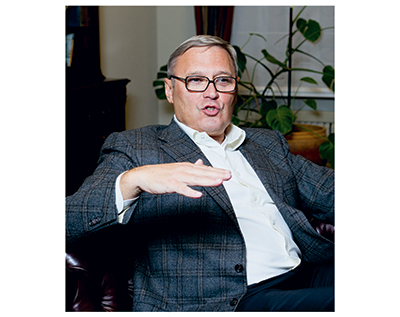
Mikhail Mikhailovich, suppose, tomorrow the president will offer you to head the government again. Would you agree?
If Putin offers? No, I would not agree.
Why?
Because I have long ceased to understand that Putin can do good for the country. When we worked with him together in the early 2000s, all the reforms that the government were initiated were supported by the president, however, with the exception of one, the reform of the gas sector, which I tried to implement three times, but Putin forbade-in the form of a persistent recommendation not to do this. Now he destroys everything that we had built before for 15 years. I consider immoral, antipatriotic to help the current regime that destroys the country. In addition, the governments today are not there - this is the Great Department of the Kremlin, led by Medvedev, there are no ministers who would be independent people - they are all like Putin’s assistants: one in finances, the other in economics, the third in healthcare or regions ...
The answer is unequivocal: no. I can help the regime calmly leave - I can.
Budget torment
You were in the Ministry of Finance, when oil cost $ 9 per barrel, became the prime minister, when it was $ 16, left at $ 27. Now she is in the area of eighty ...
If you take our oil, Urals, then already $ 77. Because our oil is worse in quality than Brent, it is a mixture of oil from different deposits of the Russian Federation - good Siberian and a little bad European, where the high content of sulfur. We are now looking at Brent, since the European market works on this. Our budget of this year is based on $ 93, and the 2015 budget is $ 96. Brent is now in the area of $ 80. I think that next year it will be-about $ 80-85, Urals, respectively, $ 75-80, and not expected $ 96.
And what will happen to the budget?
Now I will say. I just want to remind you that we did the first deficiency budget when I was the Minister of Finance, in 2000, at a price of $ 16 per barrel. Since then, all budgets for 10 years have been childless. And only when the price of oil was already $ 130, it suddenly became scarce. And we had enough money at a price of $ 20 per barrel, and at the same time they did reforms and reduced taxes.
But you did not have such a military budget as now: two years ago, 14 %of the federal budget took the army, this was 17.6 %, and 21.2 %*.
Yes, there was no such military budget. But we had measures to increase the efficiency of military spending.
So, you asked what will happen to the budget today. It can be assumed that the way the budget is made today and what the price of oil is, then, of course, the 2015 budget cannot be executed in the form as it is planned. Therefore, I think, there will be some reduction in expenses - without any special announcement: just at the direction of Putin, the Ministry of Finance will not fulfill part of the expenses. Of course, he will fulfill all social expenses and pensions, and salaries to state employees, and the money maintenance of military, and special services and regions will be issued money for salaries to state employees, but other expenses will be reduced. Everything related to development, the modernization of infrastructure, including social infrastructure, this will not be financed.
Will there be pensions?
This is a matter of the rate of deterioration in the situation. Now inflation has increased from 5 to 9 % - this will most likely be by the end of the year. This is in the general calculation of inflation in order of two thousand positions. And if we take most citizens who spend their income on four positions-these are food, medicines, transport and communal apartment, then they no longer have enough income for new boots or trousers for a schoolboy boy. Because for them this inflation is already 30 percent of 30 percent. According to statistics, in my opinion, in July, the fall of real incomes of the population began, a fall in the standard of living.
But the Minister of Economics Ulyukaev said that "if your income and ruble expenses, you should absolutely do not care what a course is (ruble to currency)."
“Anyway” is if prices are not rising. And if prices are rising, then it doesn’t matter at all. But this is for citizens. In connection with inflation, the budget will have the opportunity to somehow survive, in nominal terms to fulfill the obligations that are. But next year, problems with the financing of the budget deficit will begin, which means that budget funds, that is, the national welfare fund and the reserve fund will be spent. In each - about $ 80 billion, if you take the equivalent. But there are already applicants for the national welfare fund: Sechin asks for Rosneft $ 40 billion, Yakunin for Russian Railways - $ 30 billion, VTB ... Plus there are projects promised six months ago Putin personally distributed according to various infrastructure projects. Therefore, of course, the question is whether Putin will save these state corporations that need to finance his debts, they now have no opportunity to refinance abroad, and the debts are large, and next year about $ 200 billion must be given - I mean the entire corporate sector, and not just the state corporation. I think it will save.
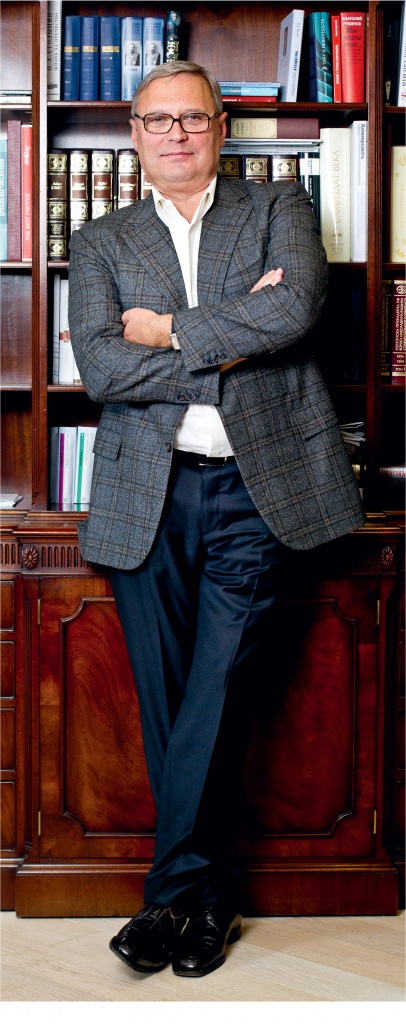
Antisanctions are beneficial
The head of the Bank MDM Oleg Vyugin called the amount two times less - $ 100 billion.
Nominally-$ 200 billion, and in fact this year, about the same thing was about $ 100 billion, and the rest of the debts are somehow settled in a different way, without cash settlements. Perhaps this is somehow ensured in a different way inside large corporations. But the fact that you need to give abroad at least $ 100 billion.
Today we have reserves of the Central Bank - $ 420 billion. And as of January 1, 2014, ten months ago, they were $ 510 billion. That is, there is no longer $ 90 billion.
Today, the reserves of the Central Bank cover the need for Russia in imports for about six months, it is critical for three months. What does that mean? It means that everything that we see on the shelves today is bought by someone for us. Bought by various trading companies and enterprises abroad. In order to buy, they must purchase currency. If they are not exporters of oil, gas and metal, they do not have currency. They go to the foreign exchange market, buy this currency in order to provide us with imports.
Oil price is falling. That is, the influx of foreign currency in the country is much less than before, and the needs are the same. Therefore, the authorities do and will do everything to reduce imports. They call it antisancies - a ban on the import of products from a number of countries as a punishment for sanctions against the Russian regime. In fact, this is camouflage. In fact, the ban on imports is a decrease in the expenditure of the country's foreign exchange reserves. Because Putin and his team understands that the problem is not in the budget is a problem in the payment balance. It would seem that the figures of reserves are huge - $ 400 more than a billion. But they can lose weight quickly. And then the country's external financial position will be so vulnerable that everything will begin to pour very quickly.
Is the collapse of the ruble also connected with this?
Today, there are no more reasons for further falling, unless oil prices are not even lower.
The ruble is hostage
To what extent is the Central Bank responsible for ruble slides?
You remember that on November 5, the Central Bank announced that the interventions will be no more than $ 350 million per day, then that there will be no interventions at all, then - that the interventions will be in extreme cases. Here is such inconsistency of actions. I guess - I don’t know, I guess that they (the management of the Central Bank) wanted to report to Putin that there were such problems and they need to make a decision. But in time we could not get to him and get “good”, from here - we reduce the intervention, then increase the interventions, then we refuse interventions, etc. From here - within one day, the course of the course of two rubles, then the next day one more ruble - these, of course, are unacceptable things. For this, there is a central bank to smooth out such problems and ensure the stability of the national currency. If there are factors that reduce the ruble, then reduce it smoothly and announce it. In response, we hear: this is all speculation. Yes, speculations lowered the ruble up to 48 (rubles per dollar). But not only speculation, there are fundamental reasons. Now the ruble returned to a more or less equilibrium state. Obviously, Putin was finally reported, and in China he announced that we were releasing the ruble in free swimming.
Please translate to public. What does it mean?
This means that Putin will do everything to preserve foreign exchange reserves, thereby extending the existence of the regime of his power. If the situation with a payment balance is worsening, measures will be carried out under various camouflage explanations in order to reduce the purchase of imported goods, that is, the expenditure of the reserves of the Central Bank. He already talked somewhere. The next may be the ban on imported used cars. Question: what does used cars have to do with it? Which country industry do you want to punish so that they go to their government and demand the abolition of sanctions? And, no, no, we forgot, it will not be used, other cars. In short, the authorities do the following: they take maximum import positions and prohibit - then there will be no expenditure of foreign currency funds. Therefore, I do not exclude that in a few months some new antisancations can be invented to reduce the purchases of imported goods with the private sector and the state.
Budget expenditures in rubles, income - in dollars. Therefore, it is beneficial to the government that the ruble is weak?
Exactly. But at the same time, you need to save foreign exchange reserves so that you can pay on debts, buy the most necessary imports, which is required in Putin’s understanding-Rosneft, Gazprom, someone else and so on.
Scenario for disaster
How much is the authorities of money? For example, economist Sergei Guriev wrote in our magazine that there would be enough money for about two years*.
Together - yes. This means the following. The first stage - Putin will not spend budget reserves, that is, the welfare fund and the reserve fund.
You want to say that he will refuse Yakunin and even Sechin?
He will not finance Russian Railways, he will not. It will be to finance the debts of Rosneft and other state corporations, but only when it has been completely asleep, it becomes clear that without this money they can no longer. Further, if there is not enough money, he will allow to spend funds to finance the budget deficit if it forms, and after about six months it can form with this price of oil. Because it is not just a flow of currency in the country, it is a decrease in revenues to the budget. Then the expenditure of national well-being and backup funds will begin-to finance the budget deficit, something will go to Rosneft, something will go to VTB, something to the state corporation. About six months, a maximum of a year, will go to spend these budget funds. That is, we will be able to live without the outside world due to the available resources for about two years. Then it all depends on what steps Putin with his team will take: either they will begin to relax the situation - they will do what they demanded by swamp and Sakharov, or there will be a fall into the abyss, delaying all of us to the abyss, to the disaster.
Do not scare - I do not want to go to the abyss.
And I don't want to. Therefore, these two years ... Actually, there is a consensus of analysts on this subject: there are two years when the regime can survive and make some decisions. There will be nothing catastrophic tomorrow, but for two years the situation will accumulate, deteriorate and deteriorate, and Putin has these two years to decide what to do with yourself, with all this team and with the country.
And if the EU in the spring of next year cancel sanctions, as some, including Western experts believe?
I do not think that the sanctions will be canceled, and next year they will be completely attended, but they may expand. So far, Putin does nothing to cancel the sanctions, but even vice versa.
Gosbanks will turn off the SWIFT system?
I think that this will not happen. From the point of view of pressure on the mode, this is not a too productive measure. Approximately 80 % of payments are currently through SWIFT, but there are alternative options. Here is the lack of access to capital markets - this is serious. The banks are now a lack of liquidity. And moreover: according to their general balance - they are all silent on this subject - there is a lack of capital. The Central Bank knows this, even in state banks everything is at the limit: the minimum sufficient capital is 10 %, and all state banks have 10.5 %–11 %maximum. And these are serious state banks that are supported and always supported by the government and the Central Bank. I'm not talking about private banks. I communicate with bankers: the requirements that are now being presented to them actually create a situation where almost any bank can be closed at any time. He will be presented with such claims that may be the basis for closing, a license to recall. Now the situation is unsteady in the banking sector - this is the real influence of sanctions.
Do you expect a banking crisis?
The fact is that although the sanctions have been imposed against state banks and individual private banks, refinancing (abroad) does not give all private banks. Therefore, everyone has problems not only for state banks, but, first of all, private banks have big problems. This is a serious thing.
The second problem area is the oil and gas sector. Those sanctions that have already been introduced do not allow companies to refinance their debts, they cannot release new papers or take loans to pay the loans already taken, the coming payments. And another problem is equipment: you can’t buy equipment in the West either to increase production volumes, or in order to maintain the existing prey. Because now they work at fading deposits in Siberia, and in order to maintain a debate of wells in normal condition, special equipment is required, which is mainly American and Canadian, which is under sanctions. This means that now the level of oil production will be smoothly reduced. My assessment - next year, oil production may fall by 2 % plus a drop in oil prices, plus revenues will begin to fall from gas - hence a decrease in the profitability of corporations and the state budget.
It is quite an apocalyptic picture.
No, in these two years you can make many decisions. This is all now in Putin's hands.
What is your forecast for the outflow of capital?
I think $ 130-140 billion will be.
And the ruble to the dollar?
Below 44 rubles. It will not, it will be 45-46.
And in three months?
This will depend on the development of the situation, you will need to look at what data on the economy will be. We already see a complete absence of investment, as well as the absence of other sources of economic growth. The consumption is bubbled, the growth of salaries has stopped, loans do not take and do not give already taken, the industry is not growing, so the next year the GDP will go a minus. Of course, we do not have a 30 percent drop in GDP, as it was in the default 1998. But we can reach that in two years. The model by which the economy has lived since 2005 - due to high oil prices, it burst everything. It was inevitable. But the adventure in Ukraine accelerated the development of a negative situation.
And what can the government do?
The government is nothing. Putin can hold normal elections in 2016 that will weaken his regime, but will allow you to begin a smooth, gradual softening of the situation. But unfortunately, he and his team are guided exclusively by his instincts, which were naked at the KGB school. For these people, the main thing is risk minimizing. He cannot live with risk, and democracy is a risk.
Passion for the ruble
Alexey Kudrin, Minister of Finance in 2000-2011:
The ruble course is a manifestation of the previous economic policy of the state or external economic conditions. For these factors, I am not ready to bear responsibility, because at that time I did not work in the government. If the Central Bank of the Russian Federation released the currency course a year ago, no one would have noticed this. The economy was still growing, the price of oil was stable, no one has yet imposed sanctions against Russia. But under the influence of external conditions, the ruble became more mobile than a year ago.
November 7, 2014
Dmitry Medvedev,
Chairman of the Government:
All analysts today admit that the ruble is greatly underestimated, this contributed to this
Unscrupulous players.
November 13, 2014
Vladimir Putin, President:
Today we have speculative jumping of the course, but I think this will also stop in the near future, bearing in mind those actions that the Central Bank takes in response to the actions of speculators.
November 10, 2014
Anton Siluanov, Minister of Finance:
I believe that the ruble that has developed today, it is somewhat underestimated, in the near future the situation will show that the overall position of the payment balance is quite stable ... the fluctuations that have occurred over the past two days are quite speculative and do not meet the basic conditions of the ruble.
November 7, 2014
Alexey Ulyukaev,
Minister of Economic Development:
When the price of alcohol was regulated and vodka cost 3.62, then 5.12. And the people said: tell Ilyich, i.e. Brezhnev, we are ten on the shoulder, and if there is more, it will be like in Poland. Perhaps now the currency course plays the role of the price of vodka as a universal equivalent of time. This is a fairly strong motivator of people's behavior, tension.
November 8, 2014