
Translated material
A person without a passport
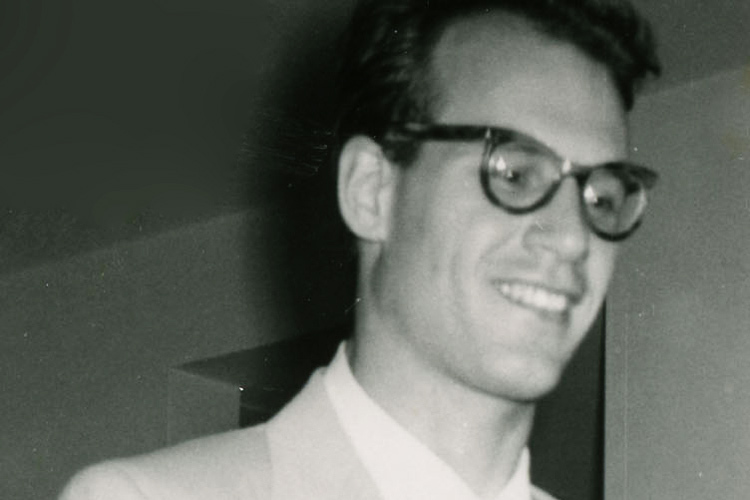
Alexander Grothendik died on November 13 at the hospital of the French commune Saint-Lisier, next to which he lived a hermit since the late 1980s; He was 86 years old. We asked to tell about Grothendik Julia Friedman, the translator of his book “Harvests and Crops”.
The “legendary mathematician” was an opponent of myth -making in lifetime biographies (probably in necrologists). In recent years, Grothentik tried to destroy every public trace of his life and the life of his parents. The site dedicated to his contribution to science , in a letter to his student, he called the "abomination" ("abomination") and demanded to remove all links to his labors. I allowed to leave the articles of other authors.
Apparently, any text of the “memory of the gross”, including the one you read, is written in violation of the will of the deceased.
Grothentic's parents were anarchists. By the time of the birth of her son, Johann Grothentik did not recognize official marriages, so that the son eventually received the name of his mother. Father, a Jew from Russia named Alexander Shapiro, at sixteen was arrested with senior comrades for preparing an attempt on the king. Together with everyone, he was waiting for death, but in his youth, the only one of the entire group was pardoned - and spent ten years in prison. He tried to run, shot him, he was wounded, lost his hand. He spent the whole fourteenth year in a single chamber. In 1917, he was released with a triumph as a hero of the revolution (dungeons collapsed!) - but not for long. He managed to fight hand in hand with the fighters of Makhno. The Soviet government soon began to pursue the anarchists, and Sasha Shapiro had to flee in 1921, straightening his fake documents in the name of Alexander Tanarov.
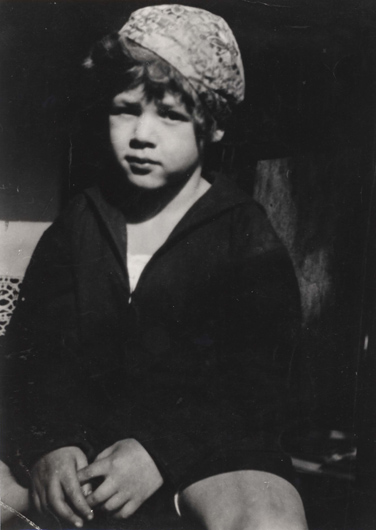
Grothendik lived with his parents in Berlin up to five years. When the idea of publishing stories from his life was not yet disgusting to him, he recalled that the diverse taboos and hard restrictions, within which his peers from more conservative families were usually brought up in his own early childhood. In particular, there were no secrets associated with the structure of the human body; The idea that there was something shameful in nudity was to him absurdity. He recalled that he saw both his mother and father naked and did not find anything strange or unpleasant in that; However, he liked the device of the female body more.
In 1933, Tanarov moved from Berlin to France, away from the Nazis. A year later, Johann Grothentik followed him, and shortly after that they both went to Spain to fight fascism. The child was left in the care of the family of Lutheran pastor. In 1939, it became clear that it was dangerous to stay in Germany in Germany. Alexander was sent to France, where his parents were already waiting for him. Shortly after the Germans crossed the demarcation line, the father of the Grothentik was arrested and brought to Auschwitz, where he died in 1942. Johann and her son first got to the camp for interned Riecro in the French Languedoc. Then, already separately, they were thrown from the camp to the camp. When Grothendik ended up in an orphanage in the village of Shambon-Sur-Lignon, he, along with other “racially inferior” children, was taken from time to time to hide from the Nazi raids.
Father, a Jew from Russia named Alexander Shapiro, at sixteen was arrested with senior comrades for preparing an attempt on the king. Together with everyone, he was waiting for death, but in his youth, the only one of the entire group was pardoned.
All this time, Grothentik mainly had the opportunity to study. In Rekro, for example, he went to the Lyceum, taking advantage of the inaccessible to adult freedom to leave the camp. The indifference with which his peers treated his studies puzzled him - he himself studied willingly, in any case, to what seemed interesting. Apparently, even then he thought as a scientist: so, having discovered that the triangle can be built on three sides, he concluded that knowledge about the lengths of the parties should be enough to calculate the area of the triangle. I looked for the appropriate formula and found it, then repeated the same with the volume of the tetrahedron. True, the socialized scientist would first go to the library and would look for ready -made work on this subject - but Grothendik, in his own words, acted in his school years as if he were "the only mathematician in the world."
After the war, Grothendik studied at the university in Montpellier. Here, a capable student was explained: mathematics is a complete science, and all its insoluble problems are closed. In the “Harvests and crops”, Grothendik recalled: textbooks gave an answer to the question of what formula to calculate the volume of the prism or pyramid, but not to the question of what, in fact, the volume is. He began to work on this completely alone (and completely happily) - and rejected, by a funny coincidence, the measure of the Lebeg . In Montpellier, they could not understand him and advised him to go to Paris to the Great Eli Cardan , the founder of the theory of groups Lee. Grothendik confused his father with his son and came to Ekol Normal for the seminar of Henri Kartan , a specialist in algebraic topology.
He felt with a clumsy, with difficulty, like a mole, which made his way through a shapeless pile of things that (as they convinced me) was important for me to know.
From Paris, he moved to Nansi - and it became completely clear that there were enough unhealthy problems. He was offered fourteen to choose from: you will solve one or two, and the dissertation is ready. During the due time, Grothendik brought all fourteen resolved.
Official biographies report that Grothendik defeated his famous teachers and senior comrades by force and depth of his rare mathematical gift at first sight. He himself writes about the same time, about his peers and about himself the exact opposite :
“I was delighted with the ease with which they, as if playing, took possession of new concepts, juggling them, as if familiar from the cradle, while I felt with a clumsy, with difficulty, like a mole, which made my way through a shapeless pile of things that (as they convinced me) to know from which I did not feel my strength. In fact, I have never been a brilliant student who easily defeats prestigious competitions, who seize impregnable programs in a very capacity. ”
He was offered fourteen unclosed problems to choose from: you will solve one or two, and the dissertation is ready. During the due time, Grothendik brought all fourteen resolved.
Mathematics is difficult to become famous in its professional quality. Everyone knows Newton due to the law of universal gravitation, this discovery is still by ear, so tons of apples from the jokes transmitted about it fall on the head of Newton-Physics. But even Newton’s formula is quoted much less often, although it is included in the school curriculum, and the fundamental contribution of Newtonian mathematics to the analysis of infinitely small, today it is easily comprehensible, did not become the material of folklore and is not quoted in jokes. The discoveries of the Grothentik, Serra and Weil in the field of algebraic geometry and that revolution in the perception of the world of mathematical objects that took place, can be compared with the opening of Einstein, which changed the view to space-time, which turned the time into “fourth dimension”, or with the theory of supergravity (if it is confirmed), which relieves qualitative distinction between particles with a semi-fingered back ("Matter") and integer ("interaction"). In order to indicate the role of the gross in science more definitely, without vague metaphors, it is necessary to have a competence significantly exceeding the preparation of the author of this note. But all this is far from household applications. The last word that is pronounced in mathematics sounds so far ahead that those who please humanity with the “last word of technology” have not yet been heard.
In order to achieve real fame, outside the narrow circle of colleagues, the mathematician should cause the scandal: say, abandon the prestigious award. Grothendik abandoned the two prestigious. In 1966 - from the Fields medal in protest against the Soviet military expansionism (that year, in order to receive a reward, it was necessary to come to the USSR; the zone of Soviet influence in the “third world” was then huge and expanded). In 1988, the Grothentica (in half with his student Pierre Delivee) awarded the Craford Award . Alexander Grothendik explained his refusal with three reasons: firstly, he is quite enough for a professor salary; Secondly, those who are awarded, already have a fairly high status; Thirdly, he left the scientific community in 1970 and the award was very late.
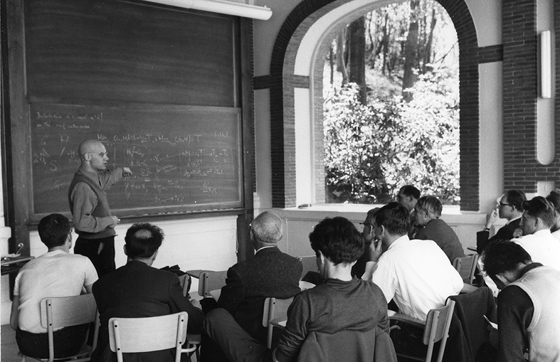 © iHes Alexander Grothendik in the 60s
In 1970, Grothendik actually left the mathematical community at the peak of his brilliant career. Then he was a researcher in IHES (French Institute of Higher Scientific Research), Einstein in mathematics, a celebrity in a narrow circle of professionals; In addition, he was fond of biology and even slightly with physics. Suddenly for himself, he discovered that studies in iHes are sponsored by the military (at least partly). This outraged him, and he left work. Grothendik was an irreconcilable pacifist; In the military confrontation between the USSR and the United States, he protested against the actions of both superpowers. It so happened that in 1967, in protest against the war in Vietnam, he gave lectures in Hanoi during the raid of American bombers.
After leaving iHes , Grothendik received a professorship in a college de-France, but soon lost it. Instead of teaching students to teach mathematics, as an expected contract, he read them a course called "Is it worth continuing scientific research?" By this, he achieved that Professor College de France unanimously decided to interrupt the contract-for the first time in the history of this venerable institution.
In 1973, Grothendik returned to the quiet provincial university of Montpellier and was listed as his professor until retirement in 1988. It cannot be said that the gross completely left mathematics: his mathematical classes were recorded by records in a diary manner, but officially he did not publish articles. This could be partly due to the influence of Arthur Kestler's book “Lunatics” (in the original - “The Sleepwalkers” ), which was consonant with his thoughts. Grothentic did not like that scientific discoveries were usually stated in such a way as if they were a genius scientist ready, from a sheet. In fact, looping, sometimes on the way to a completely different (and even erroneously set) goal, like somnambulu, about this, about this, about this, the book of Kestler.
In order to achieve real fame, outside the narrow circle of colleagues, the mathematician should cause the scandal: say, abandon the prestigious award. Grothendik abandoned the two prestigious.
It tells, for example, that Kepler discovered his famous laws of the movement of celestial bodies on a long way to comprehend the plan of the Lord God, that is, the harmony of heavenly spheres. These words should be understood literally. In the time of Kepler, only six planets of the solar system were known. And there are exactly five different varieties. If you enter the sphere in the first of them and describe another sphere around it, then describe the second correct polyhedron around the larger sphere and so on - the orbit of the first six planets correlate with the resulting system of six spheres very successfully. The desire to describe this seductive structure as elegantly as possible for twenty years in a row prevented Kepler to derive that the planets were moving through ellipses, although he now and then approached this discovery very close. Kepler said that the student of Copernicus Georg Joachim Retik, desperate to find the law of Mars, turned to his guardian angel for help. He did not slow down to appear and, taking George Joachim Retik by the hair, several times lifted the last to the very ceiling of his cell and lowered him to the floor, saying: "Here is the movement of Mars."
According to the gross (see “Recoltes et Semailles” ), there is another way, relatively directly, though groping, leading to the goal: wanting to study the object, you do not need to force the fortress of secrets, but it is better to close your eyes and listen to the researcher himself and what he says - and go to the call. One way or another, a book on algebraic geometry “in pursuit of stacks” (“ à la Poursuite des Champs ”) expressed another Field Laureate and a very unusual person Vladimir Voevodsky to proof of the hypothesis of Milnor .
In 1967, in protest against the war in Vietnam, he lectured in Hanoi during the raid of American bombers.
As the post-Soviet fantasy writers like to notice, each of us, like all of humanity, once awaits a happy ending. Grothendik, having moved from the world (according to rumors, he even bred goats), began to talk with otherworldly entities (in a letter to his colleagues, he talked about meetings with a deity named Flora and his prophecies), comprehended the truth, categorically forbidden to publish that he had previously intended for publication with a direct text. According to legend, once an angel appeared to him and reported the proof of a certain theorem. Grothendik carefully listened to the angel, politely thanked and pointed out a mistake in evidence.
In the order of debunking the myth, which is built before our eyes, “a man without a passport” from the heading of a note, Alexander Grothendik, was not always. Nevertheless, for quite some time-from the 1940s to the 1980s-he lived without citizenship, which brought well-known inconvenience, but among other things, he saved him from the need to explain with the French military ministry: he categorically did not want to serve in the army and never in common with the military did not agree to have in any form. In order to maintain the myth as the cornerstone of human culture - the gross already becomes the hero of fairy tales. Once they sent me one . It was composed by a mathematician of Russian descent, who did not reveal his name.
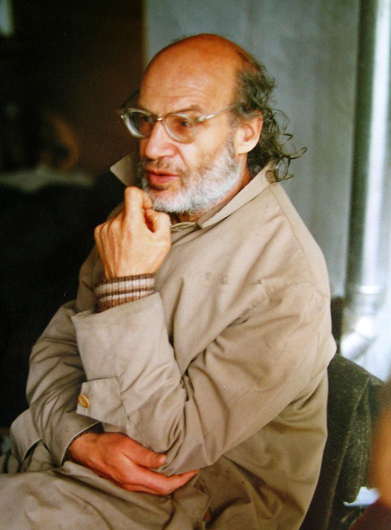 © Erika Ifang Alexander Grothendik in 1988
PS In the early nineties on the initiative of Misha Finkelberg, I made a translation of part of the memoirs of Grothentik, excerpts from the book “Recoltes et Samailles” (“Harvests and Crops”). It was not possible to obtain permission to publish a Russian translation from the author, although there was no ban. But all copies of this book in French (university preprints) were subject to withdrawal from libraries by order of the author. Our translation had a mysterious fate: some strange people repeatedly reprinted it, not notifying us at all-although it was not a fact that this was required by law, because we did not have an agreement with the author. I know that he was studied in detail by the flock of one St. Father, as well as a group of regulars of a certain youth club, which abundantly used psychedelics. A significant part of my mail at that time made letters in different languages, apparently, both from mathematicians and people far from this science, with a desperate request to help find English, French original, Italian, German, Spanish versions of this book. A few years later the original was laid out on the network, and the correspondence gradually came to naught.