
Translated material
Human rights activists talked about attacks on journalists in Crimea
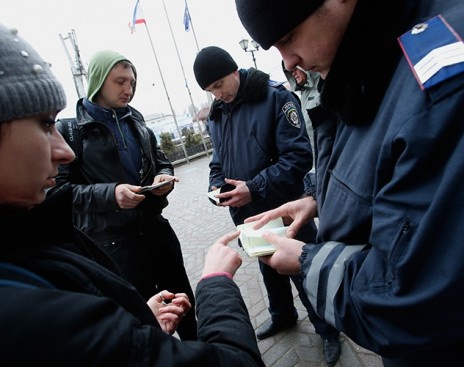
Human rights in Crimea have been severely limited since the peninsula was attached to Russia in March 2014, the report of the international organization Human Rights Watch said. Most often, the object of persecution is the Crimean Tatars, public figures and journalists who disagree with the policy of the Russian authorities in the Crimea.
“Local authorities pursued the pro -Ukrainian and Crimean Tatar media, conducted searches in their offices, some of them were closed, others are at risk of closing,” writes HRW. - The FSB and the Crimean prosecutor’s office have already issued warnings by the leading Crimean Tatar media for the publication of “extremist materials” and threatened the editorial offices that they would not be allowed to re -register if they did not change their “anti -Russian” editorial policy, ”the report said.
According to human rights activists, the pursuit of the disagreement occurs under the pretext of combating extremism. So, in some cases, searches of mosques and Islamic schools are carried out for drugs, weapons and prohibited religious literature.
The new authorities of the Crimea could not curb abuses from paramilitary units involved, according to human rights activists, in the abductions of pro -Ukrainian activists and other opponents of the regime, the report said.
Residents of Crimea, according to HRW, are forced to abandon Ukrainian citizenship. Otherwise, they become foreign migrants in their homeland, lose their right to state and municipal service and have no guarantees from possible deportation.
Russia's actions in Crimea are qualified in a 37-page report as an occupation. HRW emphasizes that they take a neutral position in relation to the very fact of the occupation, but argue that at the same time Russia violated many obligations provided for by international humanitarian law.
“The occupation authorities are forbidden to make attempts to change demography in the occupied territory, force the local population to swear allegiance to the occupation authorities, serve in armed or auxiliary forces, as well as to conduct any propaganda that pursues the purpose of recruiting volunteers to the service,” the human rights activists say.
The Commissioner of the Crimea Parliament for Human Rights Lyudmila Lubin denied the data of the HRW report. Applications about the deterioration of the situation in compliance with human rights in Crimea are not true, it said to Interfax .
“Ukraine did not invest in eliminating human rights violations in the Crimea, and no one noticed this. And now mass reports have gone, international organizations shouting screaming, ”she said.
On the contrary, after the reunification of the region with Russia, the situation in compliance with the rights of prisoners and under investigation has improved significantly, she noted. Journalists working in Crimea, according to Ombudsman, did not provide her with information about a single case of violation of their professional rights.
Information about the abductions of the Crimean Tatars also does not correspond to reality, Lubin claims. According to her, in the lists of law enforcement agencies of Crimea more than 800 people are missing, only 18 of them are representatives of the Crimean Tatar people.
“This is about 2%, six to seven times less than the share of Crimean Tatars in the population of Crimea. Although, of course, every such case is a tragedy, and we track every situation, ”said Lubina.
The Russian authorities deny accusations of the occupation of Crimea, stating that the peninsula became part of Russia voluntarily according to the results of a referendum. The annexation of Crimea caused an extremely sharp reaction from the international community that accused Moscow of violating the territorial integrity of Ukraine.