
Translated material
The legend of the land of Siberian
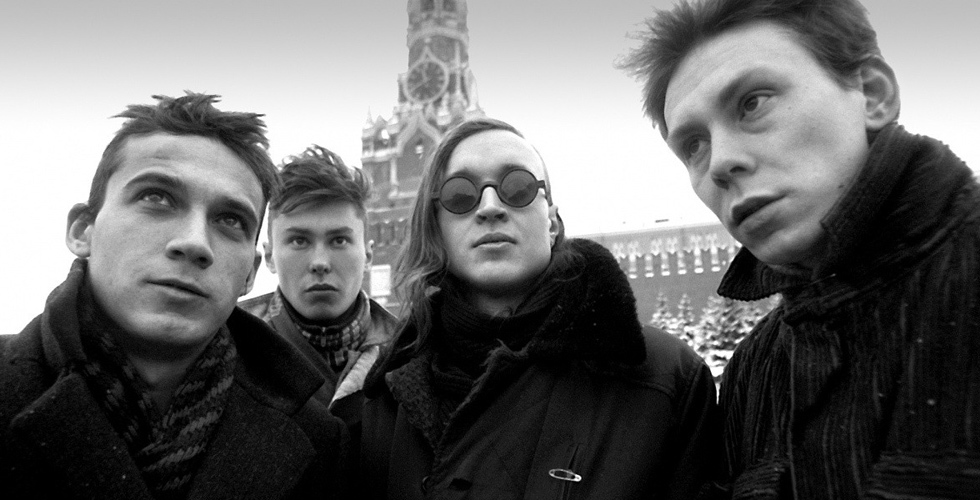
Since November 20, at the Russian box office - “great and forever” by Natalia Chumakova and Anna Tsirlin. The documentary about the best years of Yegor Letov and “Civil Defense”, who was produced, also produced by Boris Khlebnikov, was shot for five years for voluntary donations of future spectators - famous and unknown.
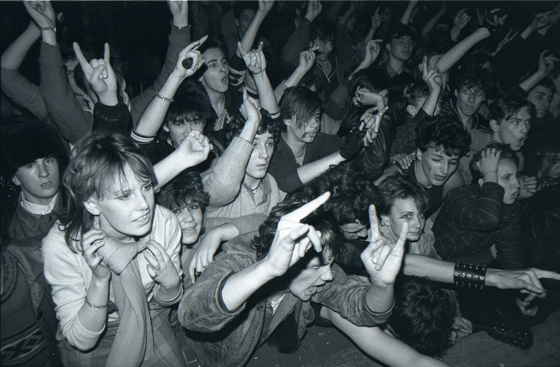
This is a very strange movie. The beginning, middle and end - all this does not have the biography of Yegor Letov, shot by his widow (and a bassist of the “civil defense”) Natalya Chumakova. The film has only eternal yesterday, which at the same time feels like eternal now. As if you were in a clot of time and energy, as if a cold universal stream was picked up and twisted. And this is all - despite the seemingly linear structure of the story. “Great and forever”, as befits a large -scale biography, begins with a prologue - an unsuccessful trip of the applicant Letov to Moscow - and ends with an epilogue (the NBP flag hanging above the stage - Letov was a fourth person who received a party card from Limonov’s hands). Nevertheless, “great and forever” does not look like a chronicle or drama. There are many speaking heads: Sergey Letov, Zharikov, Guryev, Kuzmin, Sudakov, Ryabinov - but this is not a story at all, but one continuous omen of the time, frozen Russian kneading, opening throughout the screen. The paradoxical self -generation in this completely nourishing environment is almost the main Russian cultural project and represents the Chumakova film. The chronicle shots of the fussy-ugly Soviet life, mounted with the chronicle of the rebellion against the Soviet, aesthetically little different. The Siberian punk (as well as the Moscow sotsart with romantic conceptualism) seems to be the same natural product of five -story buildings, banners, Pakhmutova & Dobronravov’s songs, the hellish decoration of the provincial houses of pioneers, as far as the California garage psyche, the Russian analogue of which the Letov felt himself, was the product of the NTR in the field of chemistry.
 © "Beat Films"
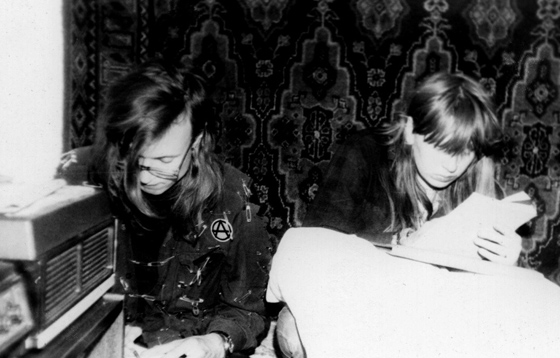
Chemistry will later appear in the life of Letov, but the period that he talks about “great and forever” has eaten, it seems, exclusively by the energy of quick decay. I clearly remember the feeling that I had the first cassette of “defense” I heard: something scorched to the ground, not yet cooled, crazy and at the same time extremely concrete and realistic, as if born inside a distraught diesel locomotive (somehow the idea was not even allowed that these sounds could make these sounds to make a person). The film is not that it confirms or rejects that impression, but as if humanizing it. Yes, these were still people-but from almost another planet (special, Siberian, the nature of the “civil defense” is constantly marked by personnel and voices). “Great and forever” generally humanize the image of Letov, constantly emphasizing: what the audience considered an anarchist riot, an uncontrollable element was actually a complex, sophisticated intellectual, spiritual and technological process. In the film, among the tough, pixels of the Siberian Parts and the Moscow crowd, touching details are hidden, capable of decorating the most Hollywood of Bayopics. The letter of young Igor brother Seryozha (topic: “Who I would like to be”). Photos of the time of "sowing"-all guys in idiotic makeup a la Alice Cooper; Siberian anti -Soviet glam, who would have thought! Tripted, structured autographs of texts. Kitty. Walks in the forest, which are necessarily mentioned by witnesses and accomplices.
 © "Beat Films"
These accomplices (Manager, Kuzya UO, Black Lukich) form the most strange layer of the film. It is their presence that does not allow “great and forever” to turn into a standard linear story leading from the past to the present. The present, in which these people sit (at some point, their black and white image becomes color, which creates a rather strong effect of irreversibility), as if separated from the past inexplicable abyss. The time imprinted on the film is especially destructive - but here there is a feeling of not so much past years as lost meaning. Apparently, the myth, the echo of the “civil defense” as a cultural phenomenon is so superior to the scale of a single person that he seems insignificant and inappropriate against his background-even if he himself created this myth. It seems that all the participants and the creators of the film were well aware of this effect - but courageously agreed to the hard and risky work of archiving their own life. And the fact that it turned out to be a proportionate era - which means that more of them are, of course, unobvious, but wonderful luck.