
Translated material
Incorrect joy
At the Moscow Operetta Theater - the premiere of the musical "Jane Air"
At the Moscow Operetta Theater - the premiere of the musical "Jane Air"
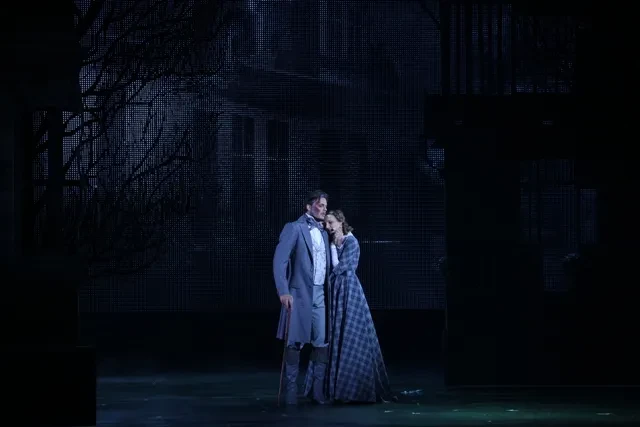
Photo by Olga Lokhova
Leo Tolstoy in Anna Karenina noticed that if Buff had to go as familiar as in an opera or drama, everyone would certainly visit Buff. Opera-buff, operetta, comic opera, Sarsuel, finally, a musical-all of them, of course, close relatives, although they appeared in different eras, in different countries and even on different continents.
When the blasphemers of the “light genre” reproached Operetta in bad cousin, vulgarity, primitivism, Grigory Markovich Yaron - the true knight of the operetta - invariably answered: “All these“ sins ”are not at all compulsory Operetta. They stem, as a rule, from the writers of the libretto, according to traditions striving at all costs to put out that part of the public, which cannot do without these “charms”. ”
Meanwhile, vulgarity can be found, unfortunately, in any genre. She is actually not monopolized by operetta. Especially today, when, going to the theater to meet with the heroes of Pushkin, Chekhov, Gogol, Shakespeare or Brecht, you are not guaranteed that you will not find her there either. The most “advanced” directors of the middle and younger generation are seriously convinced that the audience buying tickets, for example, at Hamlet or Three Sisters, are familiar with the plot of these plays a long time ago. And they, in their opinion, go to the theater, exclusively from the desire to find out what director N. who inspired this nonsense composed on this occasion on this occasion!
But today I found a rare reason to share an inaccurate joy: I visited the premiere of the musical Jane Air in Moscow Operetta. The music for this performance was composed by Kim Breitburg, the libretto of Karen Cavalryan. The performance was based on the novel of the same name by the English writer Charlotte Bronte, first published in 1847. It is not by chance that I emphasize the word "based on", for the Libretto of the musical in many ways on my own.
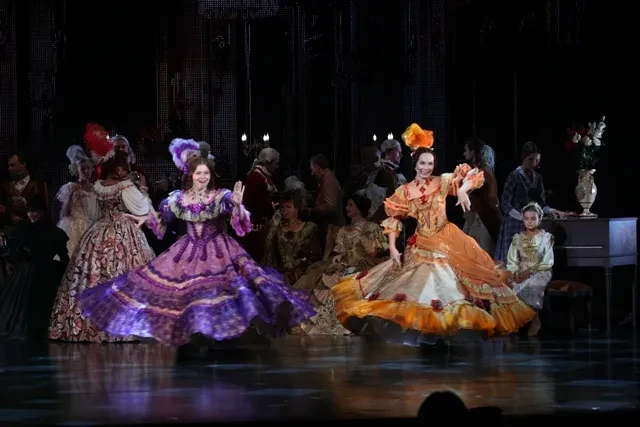
Photo by Olga Lokhova
The most flattering words are deserved by a staging group: director Alina Chevik, musical director and conductor Konstantin Ryatynets, choreographer Irina Korneeva and artist Vyacheslav Okunev. Together with the artists, they composed a talented and very spectacular performance, where humor, satire, drama, melodrama are represented on equal terms - and all the highest quality! This is the case that K.S. Stanislavsky and Vl.I. Nemirovich-Danchenko: so that in operetta the artists talk normally, as in a drama, but sang, danced and moved, as in opera and ballet. And most importantly, that these transitions are made, as a certain need for itself.
Artists of different generations are engaged in the play, but they certainly compiled a single ensemble where almost no one is trying to attract special attention. Maybe such a noble restraint stems from the British roots of the original source? It is especially necessary to note Olga Kozlova (Jane), Maxim Katyreva (Rochester), Svetlana Krinitskaya (Mrs. Fairfax), Alexander Markelova (Rivers), Olga Belokhvostova (Elizabeth) and Alina Frenk (Giorgiad). I would like to wish a slightly greater restraint in the behavior of Natalia Sidortsova (Mrs. Reed), Olga Ratnikova (Berta) and Alexander Golubev (Mason). I’m not talking about this from harmfulness: I just really liked the performance - touching, clean, awakening and noble feelings in us, without resorting to extremes, false pathos or banalities. The excitement in it is organically combined with restraint, which is why there is a feeling that it was created by people not just talented, but truly intelligent, endowed with good taste, knowing the price of humor and therefore not abusing them.
If you want to see young talented artists, I advise you to postpone things and hurry to the premiere at the Operetta Theater.
Boris Pyuurovsky - especially for "New"