
Translated material
The birth of superpower
According to the results of the G20 summit, we are not discussing this new phenomenon, but why Putin did not stay for breakfast
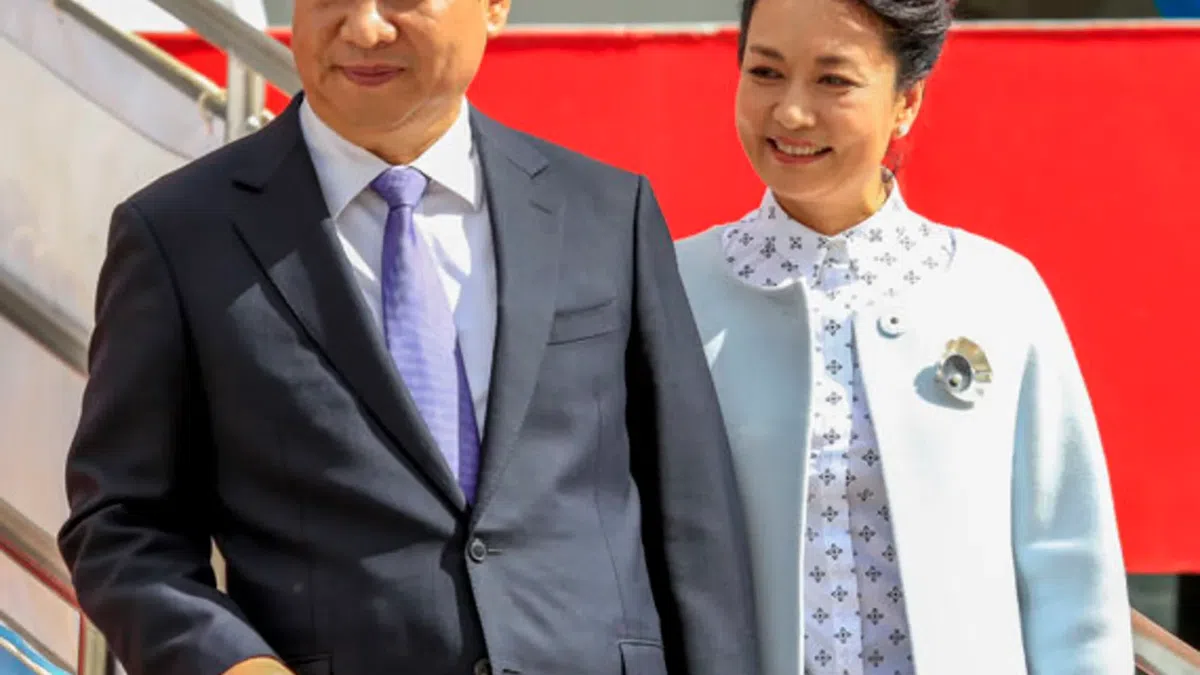
According to the results of the G20 summit, we are not discussing this new phenomenon, but why Putin did not stay for breakfast
The Russian media are full of discussions on why Vladimir Putin left the G20 summit early in Australia, and whether he did the diplomatic Faux PAS, giving the chal to his wife Xi Jinping.
It was Xi Jinping that was the star of this summit, and in this sense, the story with Putin, who serves Schale Pan Liuan, does not look sorry because the Russian president violated Chinese customs and touched the first lady of the Middle Kingdom, but because the Russian president at least somehow tried to draw attention to himself while the head of the Celestial Empire talked with Barack Obama.
At the G20 summit, Si Jinping signed a new visa agreement with Obama. The Chinese visa is to get elementary: now the Chinese will be able to receive a 10-year multiple visa for entry into the United States. This will attract millions of new tourists and buyers of property in the United States, destroy the corruption visa business in China, and most importantly, we note how much the spirit of this agreement differs from the small -town paranoid “to ban and not let go”, which more and more acts regarding abroad in Russia.
In addition, Xi Jinping signed with Australia Prime Minister Tony Ebbot an unprecedented scope of free trade agreement.
De facto agreement completely opens the Chinese market for Australian goods, any-from dairy and winery to health and education, canceling the already low duties for four years, and in exchange the Chinese receive wider opportunities for investment in Australia. I note that such a policy (zero duties for imports) can be carried out by a country confident in its economic superiority. That is why in the 19th century Britain was such a supporter of freedom of trade. But the value of the agreement is much greater than just a demonstration of the power of the Chinese economy. China (and not the USA and not Europe) as a result of this agreement becomes number one for developed democratic Australia. And not only economic-at the signing of the agreement, Xi Jinping spoke about his "Asia-Pacific Dream." A similar agreement was signed with South Korea.
Again, compare these agreements with constant milky-mandatory-mapped-mixed wars that the Kremlin is engaged in, accepting fine hooliganism in the sandbox for large geopolitics.
Simultaneously with the visa agreement with the States and Trade Agreements with Australia and South Korea, China announced its “Marshall Plan” for the whole of Central Asia - about the plan for the restoration of the Great Silk Road under the motto “One Belt, one Road”. The initial capital of the corresponding fund amounted to $ 40 billion.
“One belt, one road” is designed to permeate Asia with a Chinese road infrastructure - with the inevitable consequences for geopolitics. In fact, we are talking about the fact that the “big game”, in which Russia and Britain played in the 19th century, and in the XX - the USSR and the USA, without any problems and with the complete indifference of the rest of the players will be won in the XXI China. At the same time, China announced the creation of Asian Infrastructure Investment Bank with a headquarters in Beijing. The AIIB will just finance construction, becoming an alternative to the World Bank and the IMF in Asia, with the only difference being that democratic countries that are equity holders of the World Bank and the IMF do not use these financial institutions to achieve geopolitical goals (contrary to the conspiracy theories that are common in Russia), and, of course, will be used. It is noteworthy that among the 21 Asian country, which joined AIIB, there is still no Russia: few people are interested in her opinion.
Finally, Xi Jinping signed an agreement on changing climate with the United States in Kanberr. The agreement does not oblige China to use, which will not happen by itself. The economic growth of the Middle Kingdom, of course, was accompanied by the growing emissions of carbon dioxide, and China only promised that the peak of emissions would be in 2030 - a natural process for the country, which is becoming more and more high -tech and energy -saving. But this non -meaningful piece of paper instilled a wild joy in the hearts of an ecological western lobby. “No matter how the child is amused,” the pragmatic Chinese, who have long used ecofundmentalists, thought as a practical weapon in a trade war: for example, it is noticeable that “green” ministers are systematically struggling with European and Russian fishing, without touling much more large -scale (and frostbitten) Chinese anglers.
What else? Even before that, at the APEC summit, Xi Jinping normalized the relationship of China with Japan, which the last two years were spoiled by the problem of belonging to the tiny islands of Senkaku. And by the way, we note when in the spring in Vietnam began anti-Chinese pogroms due to the fact that China began explosive drilling on the controversial section of the South China Sea, the great China did not play in any Donbasses and the Krymas, did not cherish the population with stories that “the US Vietnamese actually was worth the machinations of the United States, which only dreamed of humiliating”, and quietly removed the brown brown. Great powers do not play in the sandbox.
I’m afraid, against the backdrop of all the above children's resentment of President Putin, who left the summit until its end, remained most of the participants unnoticed.
Three circumstances are striking in all of the above.
First. All the discussions about the “Russian-Chinese axis”, about the exclusive geopolitical relations of China and Russia, who overwhelmed the official Russian media after signing the Russian-Chinese gas agreements, simply have nothing to do with reality. In the general network of Chinese agreements, they occupy about the same place as agreements with other sources of raw materials - African countries, for example, and mean, I suspect, much less than agreements with Australia. It would be naive to think that the insightful Chinese bureaucracy, thinking for millennia, does not see that Russian Kleptocracy with a tongue stuck in his tongue is in a hurry to sell gas to China at a loss -making price for Russia, only in order to master the “forces of Siberia” that will now not be able to master the construction of the “South Stream”.
Second .
In contrast to democracies, the Celestial Empire is precisely the same by geopolitics, not only at the level of the Stone Age, like the Kremlin, but at the level of a cosmic century. Chinese officials think for millennia, and the Kremlin - children's insults and dollars.
And finally, the third . For the Celestial Empire, a natural continuation of the economy, and a prosperous economy is a necessary base for successful geopolitics. Everything that the Celestial Empire does in geopolitics is the opposite of what the Kremlin does, whose catastrophic provincial, medieval and place of place is precisely perfectly characterized by the fact that according to the results of the G20 summit, we are not discussing the world of the new superpower, but why Putin did not stay for breakfast.