
Translated material
"Quiet rot" will not pass
Despite the war and the difficulties of the economy, the number of citizens of Ukraine, evaluating the situation as "hopeless", has halved
Citizens of Ukraine are still divided in their assessments of the meaning and essence of the Maidan and the political changes of recent months, although in general the country is growing a sense of national unity. The vast majority of Ukrainians, according to public opinion polls, are not ready to come to terms with the loss of territories, in Ukrainian society they are increasingly treated not as a brother, but as an aggressor.
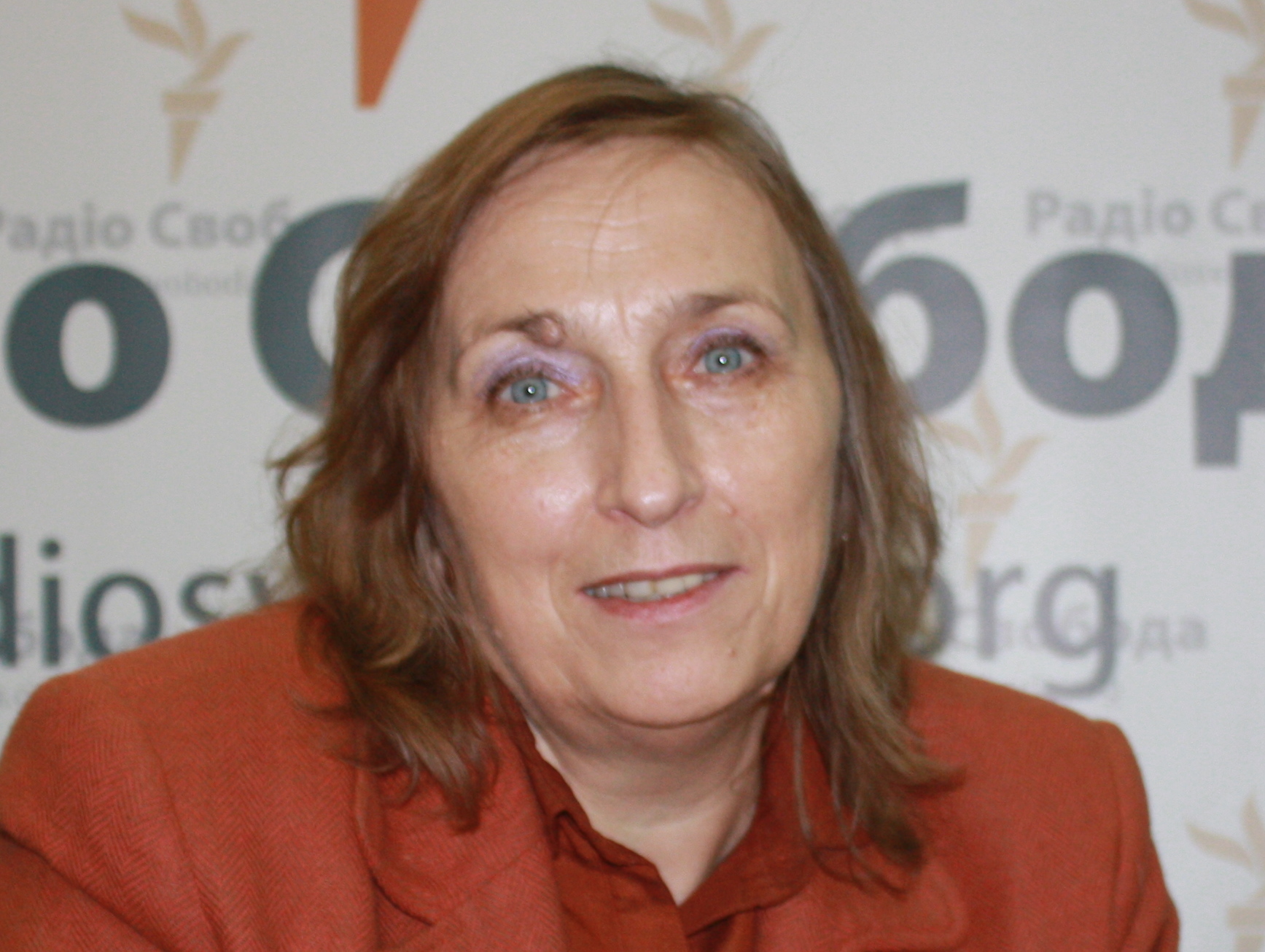
As the director of the Kiev Sociological Foundation "Democratic Initiatives" Irina Bekeshkin said in an interview with Radio Radio, despite the threat of war, economic problems and life difficulties, the vision of the future among residents of Ukraine turned out to be more optimistic than a year ago:
- As before, the attitude to the Maidan in the country and its various areas is different. About half of the respondents gives positive characteristics to the Maidan, these people believe - the Maidan in one form or another was the struggle of society for their rights, for changes in the country. Opinions are divided only depending on the fact that one part considers this struggle to spontaneous, and the other that this struggle was organized. About 30% of respondents gave a negative determination of the Maidan. Here, opinions were also shared: 15% of the population believe that this "coup d'etat" was organized by the opposition, and another 15% - that it was organized by the West.
-Is there any dynamics of relations to events in the center of Kyiv and throughout the country? Or is it more or less stable data?
- This is relatively stable data. During the Maidan, the estimates were slightly different - then there were about 50 positive on 40 negative assessments. The regional division is mainly also preserved. The Maidan is unequivocally perceived in the west of Ukraine, in the north and in the center of the country, and mainly negatively (approximately 40 by 30%) in the south and east. The Maidan in the Donbass is clearly negatively evaluated, and the vast majority of respondents there believe that it was a state coup, which was organized by the West.
- Did you talk about the loss of Crimea with Ukrainian citizens? What do they think about this?
- The vast majority of Ukrainian citizens believe that Crimea should belong to Ukraine. Even if you take Donbass, there are 50 to 50 opinions there. In Ukraine, the point of view according to which Crimea is Ukraine.
- What is the level of confidence in power and what is the dynamics of attitude to the new government from citizens?
The attitude towards the Russians in Ukraine worsened, and worsened sharply - both to the country and its citizens
- So far, they continue to trust the government and the president. The question, however, was not so much about trust, but about the assessment of activity. Poroshenko received 49% of positive assessments and 42% negative. Yatsenyuk - 53% of positive assessments and 40 negative. Here is also noticeable regional division. In the West and in the center, the president received 72% of positive assessments, in the west - 68, in the north of the country - 65. The same is the same for Yatsenyuk - 78, 74, 72. If we talk about other regions, then in the east, opinions are divided in the south and in the Donbass by negative assessments.
-Are these two main-sheal Ukrainian politicians? Other characters of the Ukrainian political scene-say, Klitschko, Tymoshenko, Lyashko-cause public interest to some extent?
- The level of interest in them is much less. Klitschko now - "just" mayor of Kyiv; 5% of the votes received by Tymoshenko in the elections are also not impressive. They are not making politics now.
- How has the attitude towards Russia, Russians and the Russian government changed in Ukraine? Do Ukrainians share two concepts - the Russian people and the Russian government? How does the attitude towards Vladimir Putin change?
- The attitude towards the Russians in Ukraine worsened, and worsened sharply - both to the country and its citizens. But in the clarifying issue, people still share Russians and Putin. Few in the country treat Putin well, with the exception of the same Donbass. Throughout Ukraine, Putin’s rating simply collapsed. In the monitoring of the Institute of Sociology, which has been held since 1994, there is a question about evaluating the activities of presidents of different countries on a 10-point scale. Putin had the highest rating - about 6 - in fact, all the time of his stay in power. And in the past year, this rating collapsed up to 3. The attitude towards Russia sharply worsened, which, generally speaking, until 2014 remained very warm - better than the Russians related to Ukraine. Even in Western Ukraine, not a negative, but a neutral attitude predominated. And now it all just collapsed. This is what the war does.
Despite the war and the difficulties of the economy, the number of citizens of Ukraine, evaluating the situation as "hopeless", has halved
- What associative definitions people operate when they talk about their attitude to Russia - a bad relative, difficult neighbor, enemy, aggressor? How is the attitude towards Russia are verbalized now?
-I am still a sociologist, and you pose a question in the plane of psychology. I can only talk about my wide environment, and not in general about Ukraine. In general, Russia is perceived as an aggressor.
- Fraternal feelings left?
- They are no longer there, and, generally speaking, it will take more than one year to restore good relations with Russia even with the most favorable development of events. Because people die every day.
-Has the attitude of Ukrainians to Western countries, to the United States, somehow changed?
- It's hard to say about the United States, because we did not ask about the United States. But the attitude to the European Union, of course, has improved dramatically. If a year ago we could talk about the equalization of two vectors - Western and Eastern - now the eastern is not much noticeable.
-Some new feeling of Ukrainians, citizenship, patriotism is noticeable in the results of your polls?
Ukraine once again - at a crossroads. As in a fairy tale, when fate depends on whether you will go right to the right or left
- Yes, it is felt. Such an indicator as identification by people as citizens of Ukraine has grown significantly. We asked the following question: who do you feel in the first place? Previously, local identification was quite strong - with the city in which I live, with the region, and only one identification could be indicated. Now the identification of themselves by citizens of Ukraine has increased by 15% - 65%. This is a very high indicator.
- In recent years, a lot has been said that Ukraine has been divided. Today you also used this definition. According to your estimates, what is the general trend - in the direction of the unification or split of the country, do this be a serious problem for Ukraine?
- Of course, in the direction of the union, if only because Ukraine used to share the foreign policy vector more - to move to Russia or to Europe. Now we can confidently talk about more consolidation and the greater Ukrainianization of Russian -speaking Ukraine. Consolidation increases, moreover, quickly enough. Another thing is that the Donbass is mentally separated, especially those territories that Ukraine does not control. On the other hand, Ukraine is not ready to give Donbass. Only 17% of citizens are ready for the department of territories that are now not controlled by Ukraine.
- Do you understand how citizens of Ukraine draw a picture of the future?
The hopelessness decreased from 16 to 8%. Changes in the country gave most citizens some hope
- Ukraine once again - at a crossroads. As in a fairy tale, when fate depends on whether you will go right to the right or left. If Ukraine goes the right way, if internal transformations are carried out, this will mean a way out of the economic crisis and even greater consolidation of the country. This will mean a desire to live in Ukraine, including the inhabitants of Crimea and the inhabitants of Donbass. Moreover, Western neighbors are ready to help us if we ourselves will take the necessary steps - first of all, with regard to the restructuring of the country in the sense of developing entrepreneurship and the fight against corruption. That is, it is necessary to carry out those reforms that, for example, at least Poland, for example.
If everything that happened in Ukraine ends simply with a change of persons in power, then the result may be tragic. But the "quiet decay" will not pass, because the country's public sector is already strong enough in the country. In addition, in Ukraine there are a certain number of people who are ready for radical actions. We have the following expression: “The Maidan must move to the parliament,” otherwise it may arise on the street again, and the consequences may be the most tragic.
- Most Ukrainian citizens are optimistic in their thoughts about the future or are waiting for big troubles?
- In the monitoring of the Institute of Sociology, the question was: what feelings do you feel when you think about the future of Ukraine? If you compare the July last year (a stable situation, everything is calm, moreover, the authorities still promise us European integration) since July of this year (there is war, inflation, prices are growing, people, an uncertain future are dying) - oddly enough, the level of hope has grown from 38 to 51%, optimism - from 12% to 24, however, anxiety has grown. But what is interesting: hopelessness decreased from 16 to 8%. Changes in the country gave most citizens some hope, ”Ukrainian sociologist Irina Bekshkina said in an interview with Radio Liberty.
Fragment of the final issue of the Freedom Time program
-
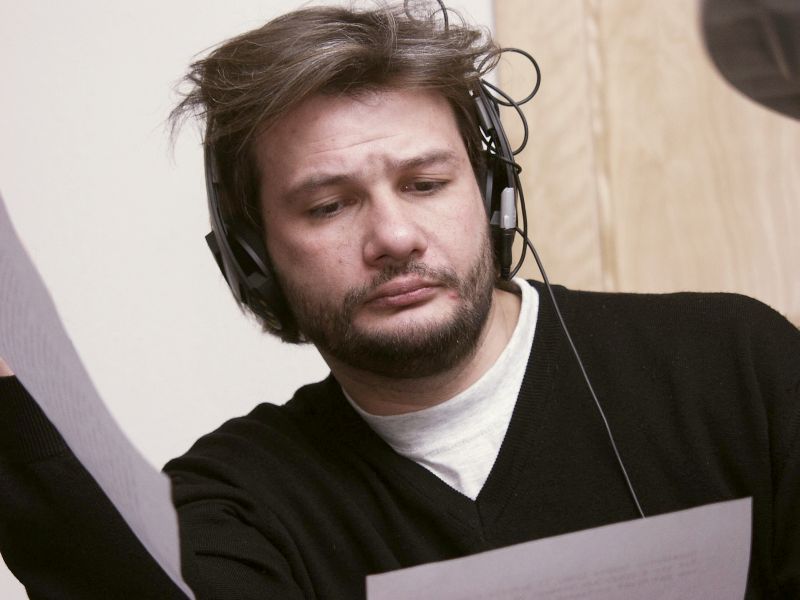

Andrey Shary
I.O. Regional Director of Radio Free Europe/Radio Liberty for Russian -Sound Content
Andrey Shary on Facebook
Sharya@rferl.org