
Translated material
Ugly, but uniformly
The State Duma voted in the third reading for an additional tax on a small business: the head of the Trading Ground will appear in the Tax Code. What to expect from the innovation - the New Times sorted out

The new head of the Tax Code on trade collection will hit the most vulnerable part of the small business - small retail
Photo: Shutterstock, Photoxpress.ru
The fact that was originally planned at the legislative level as a sales tax, and then turned into fixed fees from almost all types of small businesses - from shoemakers to hairdressers - ended with the introduction of the collection only from retail trade. And so far only in cities of federal significance-Moscow, St. Petersburg and Sevastopol. Why is it to large cities during the crisis is a question.
On the verge of survival
In many areas of Moscow there are very few small shops. The competition is cruel - near any outlet, as a rule, there are all X5 Retail Group stores - both Pyaterochka and the Crossroads - or the same “Seventh Continent”. The New Times correspondent managed to talk with Nikolai, the owner of one - a small shop that has survived so far. The fact that the owner is exactly him, it is clear right away: who else with such inspiration in the early morning will repair the plastic door of the pavilion?
Ordinary grocery stall. Forty square meters. Further, everything is on the list of the “Central Russian Upland”-beer, water, tobacco, dumplings (let me bury your face in your knees) ... sausages, milk, some cereals, oil, mayonnaise and canned food, of course, too. Of course, it can be assumed that Nicholas did not say the whole truth, and he screwed the door of his pavilion not out of savings, but from an innate tendency to needlework. But still, the key figure - daytime revenue - sounded in the conversation.
However, there is nothing special to hide here. What is this money? 25 thousand rubles a day. That is, approximately 750 thousand per month. Further, it is quite simple to consider. The margin of small trade is around 30 %. It is impossible to increase it in any way, since buyers are already striving to go to a large network supermarket. Therefore, the ceiling of earnings is 250 thousand per month.
From which you have to pay, pay and pay. For rent - 100 thousand two saleswomen - taking into account the funds - about the same, a little more. Further on the list - taxes, electricity ... In short, you have to screw the door yourself, wash and repair the shelves, and sometimes stand behind the cash desk.
Standing behind the counter for owners of small businesses is not only not shameful, but even honorable. Actually, this Nikolai-a petty salary from the prestigious district “Krylatskoye”-is just right to hand some appropriate honorary sign. For example, "For heroism in business." As well as other owners of a little more than 4,000 similar Moscow retail outlets.
But there will soon be no one to hand signs in the foreseeable future. Unless memorable. When the new tax will work - and this should happen on July 1, 2015 - in the capital, most of such stores will close. According to the calculation system of the chapter “Trade”, the new additional tax on small outlets will be about 10 thousand rubles monthly. All. Quite a little, but he can become critical for businesses on the verge of survival.
1 of 22
The innovation was not without intrigue. Allegedly, in the government about the idea of new fees, two opinions clashed - those who believed that this would fill local budgets, and those who believed that in a crisis a small business cannot be touching. However, sometimes it seemed that mutually exclusive ideas often come from the same person. Although those who know the Russian realities a little will not be surprised by this.
One way or another, but after the meeting with Dmitry Medvedev on November 17, the day before the vote in the Duma, the bill prepared by the head of the Duma budget and tax committee Andrei Makarov resolutely rewritten. And from the initially offered 22 additional taxes left only one - retail trade.
Now opponents of the Duma amendments hope to block them at the level of the Federation Council. But since in Russia the last word has long remained behind one person, and this person the other day unequivocally supported the introduction of fees, hopes for survival for business, which will affect the innovation, remains a few.
Logic flaws
So why is all this done? The question that in our Fatherland very often becomes rhetorical. However, Vladimir Putin at the ONF forum recently gave an explanation. It turns out that the idea of introducing fees from small and medium -sized businesses arose after a report of the metropolitan authorities about low tax fees from large retail chains. Strange logic. Large cannot pay, so let those who are already barely survived. At the same time, everyone understands that, since small retail will begin to close, local budgets will have little benefit from this. Including in Moscow, which acted as the main lobbyist of the tax innovation.
But suppose that the number of small stores will not be reduced. What will the city get in return? Simple calculations show that a maximum of 150 million rubles a year will enter the city treasury. This is less than 0.01 % of the city budget. If the stores begin to close, then this means not only that several thousand unemployed will increase in Moscow, but probably prices will probably increase. For competition will become less. Why was it necessary to spend so much effort on pulling the law? The only rational explanation that comes to mind is purely stylistic. The army principle “albeit ugly, but uniformly” has long been held in high esteem in the capital. It is enough to look at the ugly fences, which have recently fenced everything, even the smallest shreds of the earth, painting them together with the borders uniformly nauseating colors.
Well, do not like the capital's power any manifestation of diversity and initiative from below. You can recall where Sergey Sobyanin began on the post of metropolitan mayor. From the elimination of trading stalls. Including quite pure and neat tones, who sold, for example, pancakes. For some reason, bread stalls were removed, and they have to go further for bread to the supermarket. They even demolished the kiosks that existed in the center from the middle of the last century. Now there is a turn and small stationary shops. They also do not fit into such an Armenian uniform picture of the world.
However, another option, which is also quite combined with the Russian paradigm, is also possible. Everything will remain as it is. Amendments allow local authorities to establish zero rates on new fees. But something suggests that there will be no zero rates in Moscow. Rather, maximum. Otherwise, why did the capital's authorities become the main lobbyists of their adoption?
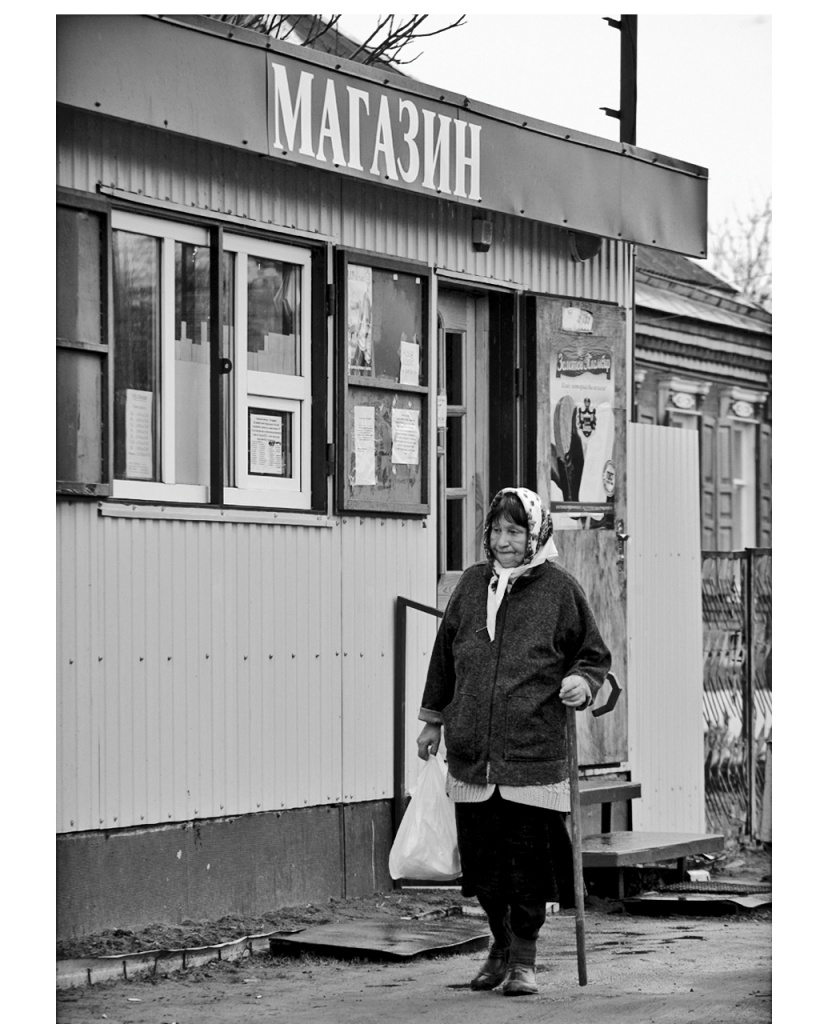
Photo: Elena Palm/ITAR-TASS, Mikhail Zhukovich/Photoxpress.ru