
Translated material
Molotov cocktail - Ribbentrop
75 years ago, the Soviet Union provoked a war with Finland. The course of that campaign and its consequences are full of historical allusions
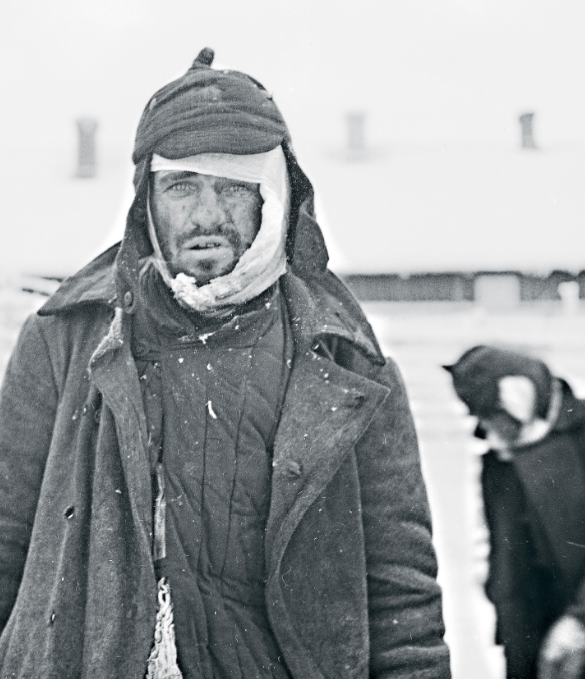
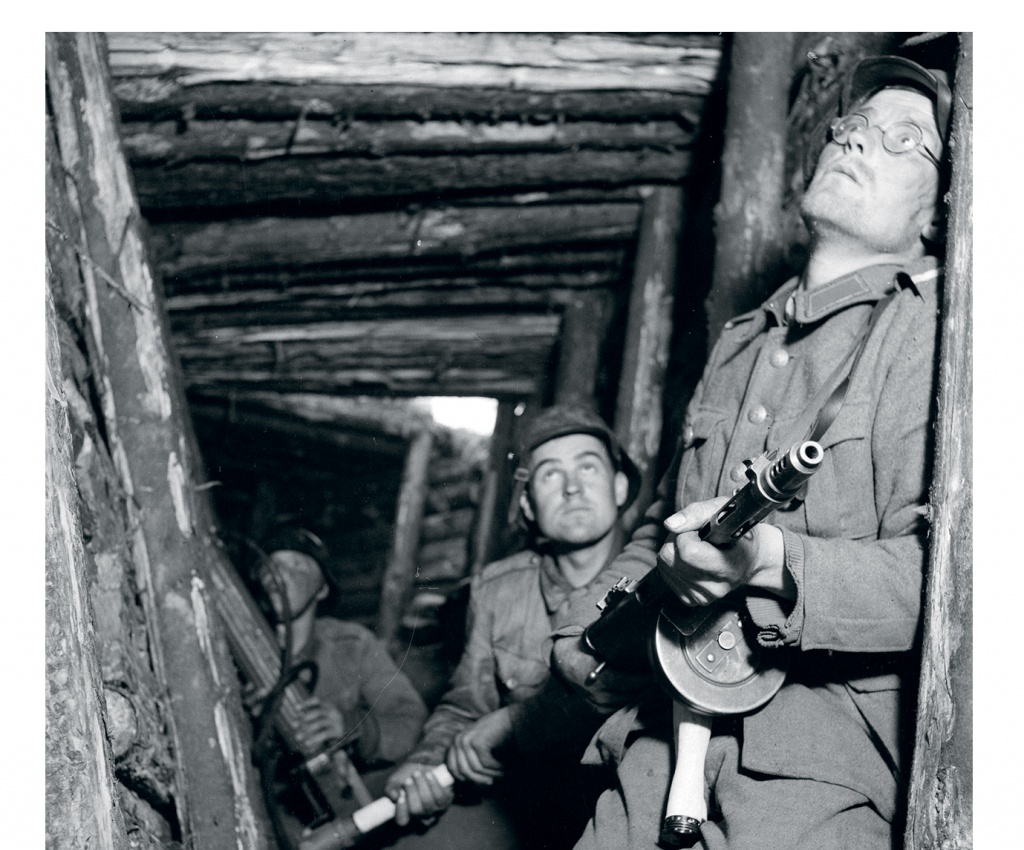
Plane Red Army soldier. Finland, January 29, 1940 // Photo: sa-kuva.fi
In early December 1938, the Embassy of Finland opened in the Kropotkinsky Lane in Moscow, directly opposite the house where the GPU workers lived. At the official reception - completely unexpectedly for the owners - an unprecedented number of Soviet guests arrived.
The Foreign People's Commissar Maxim Litvinov, dressed according to the rules of White-Tie and with the Order of Lenin on his chest, was equipped with a reinforcement in the person of Marshal Semyon Budyonny-with the same order on a modest tutorial. Despite the abundance of snacks, the marshal, sitting surrounded by two ladies-the wife of Nancy Yury-Koskinen Ambassador and the wife of the Minister of Transport of Finland Lovisa Salovar, only Russian vodka drank, biting it exclusively with herring. Sergey Eisenstein and Alexei Tolstoy with a young wife Lyudmila Ilyinichnaya shone in the embassy hall. “Red Count” also managed to solve business issues: he was indignant that the second book of the novel “Peter the Great” would not be translated into Swedish.
The guests parted far after midnight. The Ambassador of Aarno Yury-Koskinen was terribly pleased-the number of guests, including cultural figures, testified that the Soviet leadership favored Finland.
But, obviously, during the reception there were secret negotiations, which were called “Yartsevsky” - by the name of the Second Secretary of the USSR Envoy in Finland Boris Yartsev, in fact - an employee of the NKVD Borukha Rybkin. The subject of negotiations - the territorial claims of the Soviets - became the cause of the winter war: the Soviet side, which was waiting for a clash with Germany, was preoccupied with the formation of military bases in the Finnish territories and, in addition, insisted on the construction of defense structures on the Aland Islands.
In March 1939, the Finns were already proposed to exchange individual forest territories of Soviet Karelia for the rental of some islands in the Gulf of Finland for 30 years. In the summer of the same year, 60 thousand Finnish volunteers resumed the construction of military fortifications on the Karelian Isthmus - the Mannerheim Line. And not in vain: after the conclusion of the Molotov -Ribbentrop of the USSR in August, the USSR imposed bonded “mutual assistance agreements” to the Baltic states. The next next in line was Finland.
In mid -November, negotiations came to a standstill: the Finns showed adamance. On November 26, Molotov said that Finnish artillery fired at the village of Minila on the Soviet part of the Karelian Isthmus. The Finns replied that they have no such artillery near the border.
On November 30, the embassy was turned off the telephone connection. The Red Army began an attack on Finland. Helsinki was bombarded.
Alcoholic parcels
The USSR was preparing for war with Germany. Back in 1938, he saw in Finland not that an ally, but a state with a “complex” history, which for military purposes - especially for the defense of Leningrad - could also share its sovereignty with the Soviet Union. The Finns did not believe that they could trade their territories. After the conclusion of the Molotov-Ribbentrop Pact, Stalin saw in Finland something like Latvia or Estonia-his natural future colony, a buffer state that encourages the USSR from a probable enemy. In this sense, the situation is really partly similar to today: the southeast of Ukraine is a buffer for Russia in a situation where Ukraine itself “leaves the West”.
The Finns decided not to put up with the role of the territory-the exchange map-and in response to the Molotov-Ribbentrop pact, they began to prepare Molotov cocktails. In the literal sense of the word. At the Alco factory in Rayamyaki, they began to make an incendiary mixture called Molotovin Koktaili. It is even known how many sparkling bottles were made - 542 194.
"Karelian Pereudesecnash"
Immediately after the Red Army on the Karelian Isthmus in the city of Terioki (Zelenogorsk), the People’s Government of the Finnish Democratic Republic, led by Otto Kuusinen, was formed, one of the few, who survived during the Stalinist purges of the Finnish Communist Party, a member of the Comintern Secretariat.
Stalin began a small victorious war, being completely confident in victory. If the Finns do not give the buffer territories voluntarily, you will have to take them by force. Thus, as noted in the friendship agreement with Kuusinen, “territorial issues that complicated relations between Finland and the USSR were finally resolved. A sort of logic "Karelian Pereudesecnash". True, it was not possible to solve this problem "without a single shot." But Stalin granted the government, who met in the building of the former officer assembly of the resort Terioki, unnecessary lands in Eastern Karelia. Thus - in the terms of that time - the “centuries -old national hope of the Finnish people to reunite the Karelian people” was satisfied ... ...
Two unpleasant surprises were waiting for Stalin. Firstly, the offensive of the Red Army did not cause any enthusiasm in the Finnish left and even the working class itself, which was quite satisfied with its position in Finland of the late 1930s. Secondly, despite the power of the Armed Forces thrown into the Finnish front, the Red Army faced desperate resistance: for the Finns, the winter war became what the Great Patriotic War became for the Soviet people-namely the people's war.
It was not possible to give the “war with the White Finns” and the romantic fleur. Exactly because it was unfair: one thing is Spain. Or even Khalkhin Gol, sung by Konstantin Simonov. Another thing is Finland: vain victims and Pirrova victory. Which was excellently expressed by Alexander Twardowski in the poem “Two lines”, written, which is characteristic, in 1943, about a fighter-punishment, who was killed “in Finland on the ice”: “I feel sorry for that fate of distant ...” The little victorious war turned to the “unacceptable war”. And the failure of the Red Army in the Finnish campaign, perhaps, added confidence that Hitler had added a great war against the USSR.
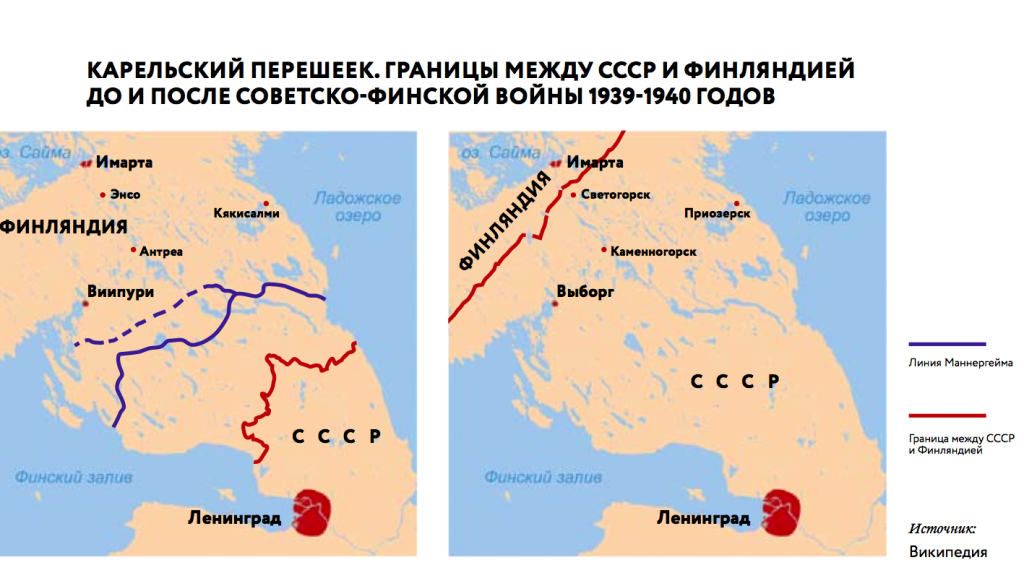
Paasikivi line
Already in early January 1940, it became obvious to the councils that the war was delayed-the plan of the blitz-scriget and the Sovietization of Finland is failing. For the Finnish government, it became obvious that territorial concessions were inevitable. Despite the continuation of hostilities, negotiations were conducted about the world through the envoy of the USSR in Stockholm Alexander Kollontai. On March 12, a peace treaty was signed. Stalin received buffer territories. Finland has retained independence and socio-political system. Marshal Karl Gustav Mannerheim, who served a significant part of his life in the Russian army, became a national hero.
Then there was the so-called “war-continuation”: fighting on the side of Germany, the Finns returned the lost lands. But the territorial circuit returned to the situation of 1940-this was Stalin's demand, expressed at the Tehran Conference in 1943. In August 1944, Marshal Mannerheim became president - to withdraw the country out of the war. Then there was a war in Lapland - the Finns, without hesitation, turned the bayonets against the Germans.
Stalin had a second chance to turn Finland into his satellite: such a variety is the restriction of sovereignty and is called “Finlandization”. From 1944 to 1947, Andrei Zhdanov, sitting in Helsinki in “Torni” (“Tower”-now the hotel of the same name), tried to turn Finland into a protectorate (formally he headed the Commission for Monitoring the Cross). But again unsuccessfully. The Finns did everything so as not to “finish”. The main instinct-to independence-turned out to be stronger than the Stalinsko-Featan Management. Yukho Paasikivi, who had already concluded a Tartu peace treaty with Soviet Russia in 1920, signed another in 1948 as president of Finland. The most unsuccessful in Stalin’s political career were negotiations with unyielding Finns.
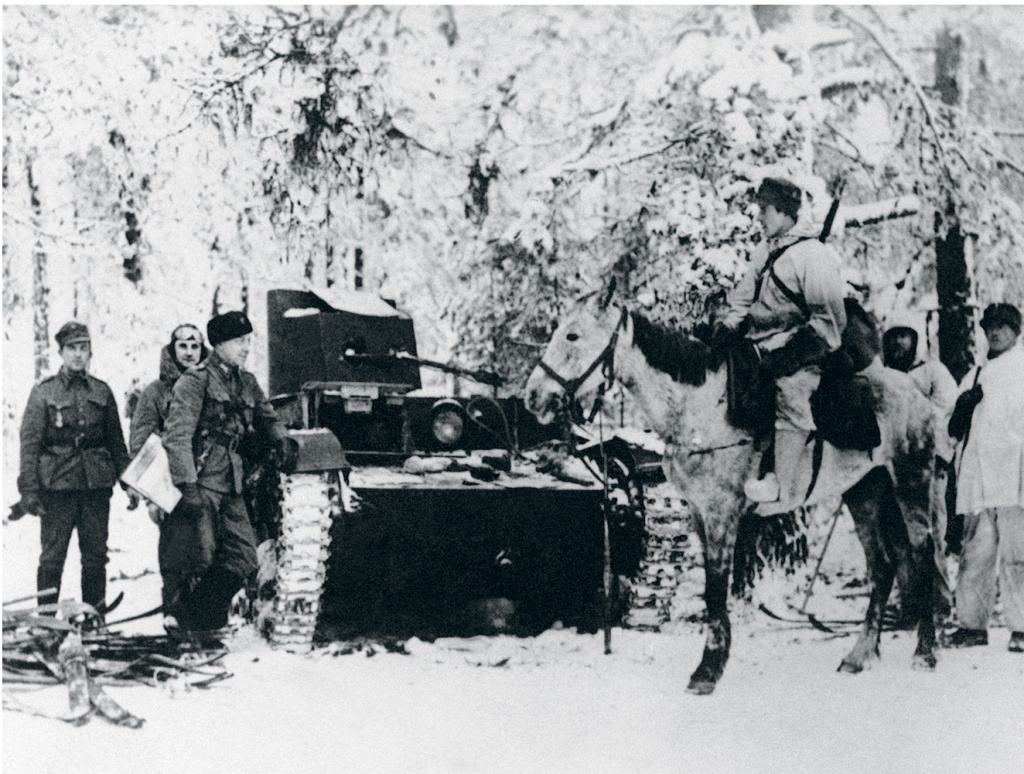
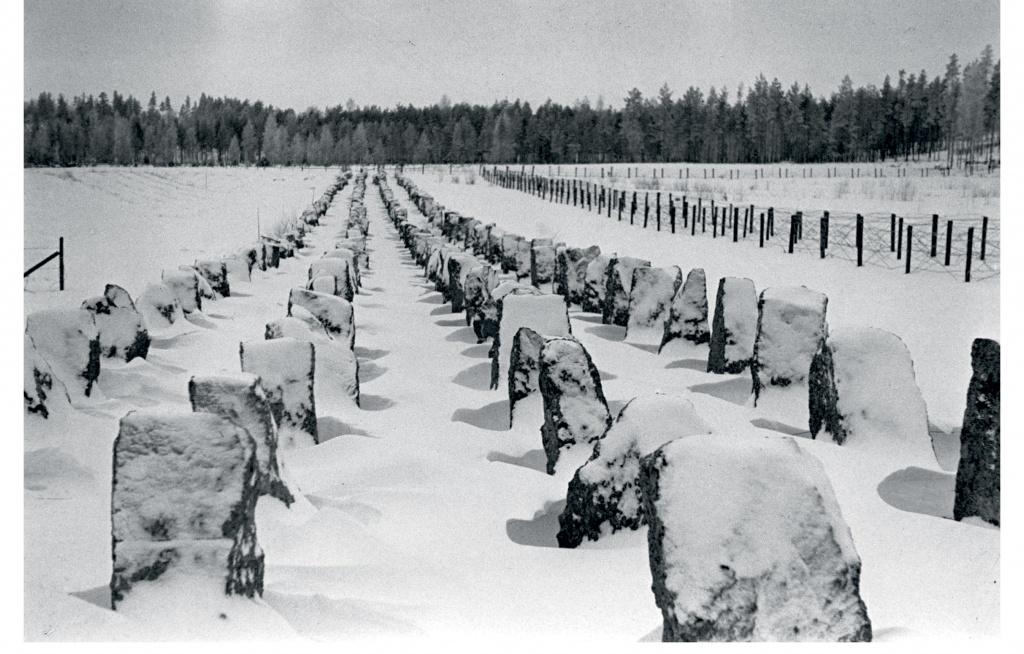
District and wire fences on the Karelian Isthmus. January 1940
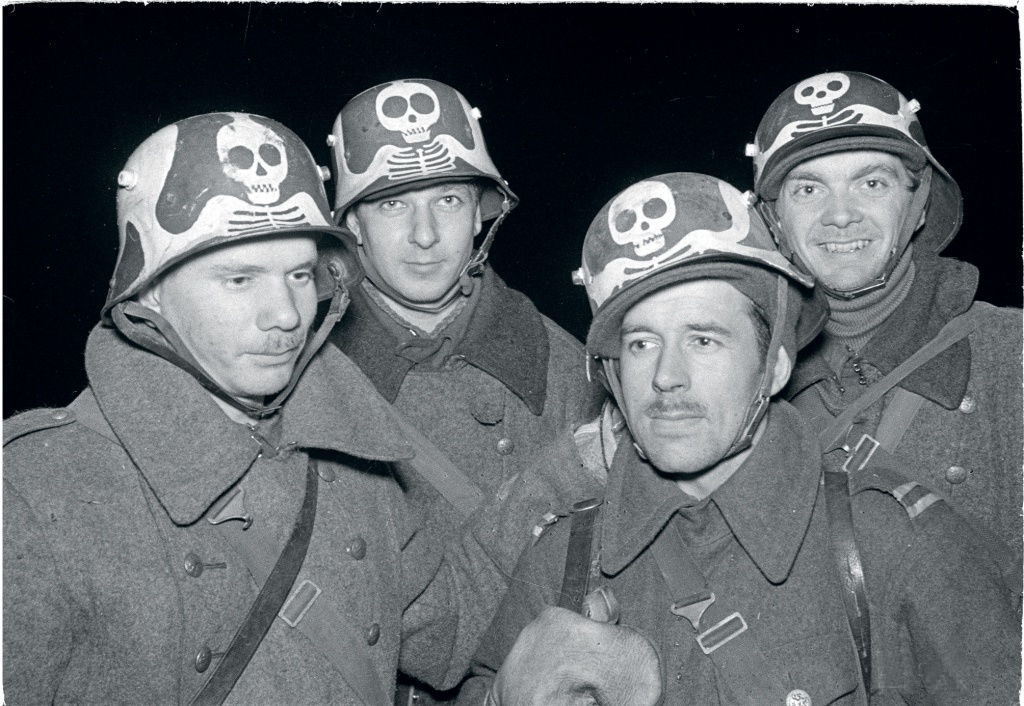
<figure> <img SRC = "https://archivarius-public.s3.us-west-2.amazonaws.com/rima/web/Media/img/31012bf4dad466A2D4D2BB4842FA2.jpg"/> </figure> The Finnish invention -“Molotov cocktail”-a bottle of incendiary mixture photo: ITAR-TASS, AP, SA-KUVA.Fi