
Translated material
"The Soviet regime deceived us around ..."
In March 1940, volunteer detachments from the Russian White Guards and prisoners of the Red Army soldiers were ready to fight on the Finnish side
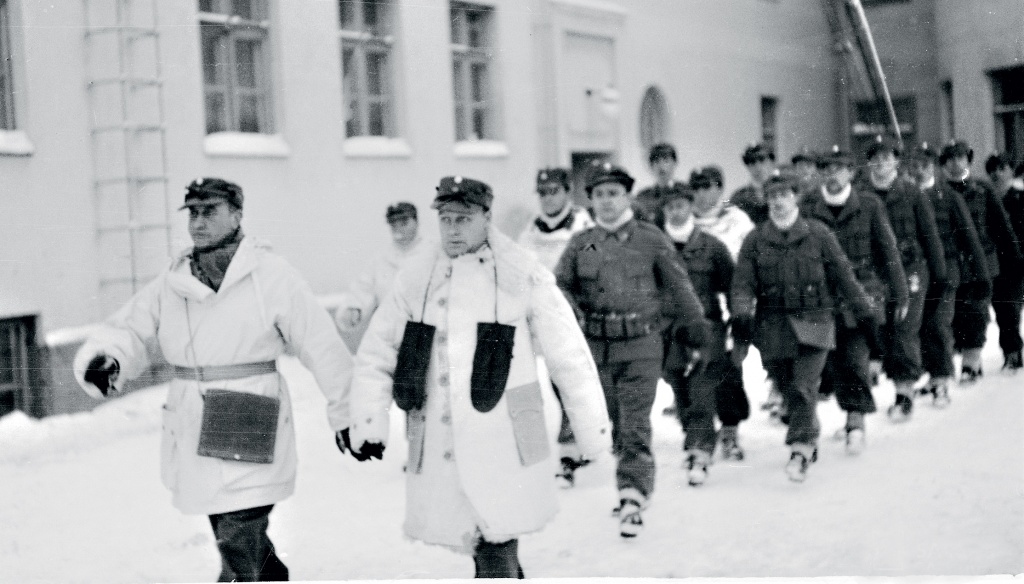
The attack on Finland on November 30, 1939 perceived the population of the USSR ambiguously. Over the ten pre -war years, at least 9 million people became victims of the Stalinist social policy, including those who died from hunger, dispossessed, executed for “counter -revolutionary crimes”. Therefore, during the Finnish war, the genuine moods of Soviet citizens looked far from so blessed and enthusiastic, which later the Soviet authors described them **. In December 1939, manuscript leaflets “with slander to the party and the Soviet government” were distributed in Leningrad ***.Regular reports of the NKVD organs were sharply different from the rally resolutions and collective letters, branded the Finnish White Guard. For example, at the front, the specialty recorded such statements by the Red Army men: “We have no truth in the Soviet Union, there are no laws, those that should be in our interests”, “Hitler cares better (about his citizens. - The New Times) than Stalin, we don’t have a homeland”, “It is time to pay off the Communists for three children lost in 1933”, “We need to shoot everyone who brought us here, and especially the commanders”*, etc.
Unfinished civilian
Meanwhile, in European emigration there were thousands of ranks of the White Armies and their children, members of Russian military and political organizations, ready to use any opportunity to resume the armed struggle against the Bolsheviks, it seemed that the war in Finland provided them with such a chance. “We will have to invest in this struggle, remembering that each bullet against the Red Army is beneficial to us,” wrote Vasily Orekhov on the pages of the “sentry” Captain-Markovets **. “Each blow to the Bolsheviks is beneficial for Russia and every failure of Stalin - the joy of the Russian people” ***. Georgievsky Cavalier, headquarters Captain Adrian Borshchov in a report in the name of the head of the I (French) department of the Russian National Union (ROVS), Lieutenant General Vladimir Vitkovsky proposed to form a special Russian Finland Corps **** with the help of allies.
On December 29, 1939, a letter to Karl Gustav Mannerheim was addressed by his former subordinate for a separate Guards Cavalry Brigade of 1914, Lieutenant General of the General Staff Nikolai Golovin, the hero of the First World War, a well-known scientist and zealot of military knowledge. He began a letter with “expressions of delight before the valor of the Finnish people” and recommended the Field Marshal of members of the new generation of national labor union (NTSNP), ready to conduct anti-Stalinsky agitation. Arkady Stolypin, the son of a Russian prime minister, went to Finland from the "Novopokolens" to Finland. However, the proposals of NTSNP leaders to form groups of paratroopers to land the location of the camps in order to raise the uprising of the prisoners, did not meet understanding from the French allies.
The proposals of Russian emigrants about the creation of military units from captured Red Army soldiers met a negative reaction in Mannerheim’s headquarters. In mid-January 1940, the situation changed. Russian emigrants got the opportunity to serve in the army of Finland, including local ROVS officials-Lieutenant Markovets Vladimir Bastamov, Kornet Labinsky, member of the NTSNP Kuksinsky and others. Prince Emmanuel Golitsyn, credited to the training squadron, arrived from Britain. Finally, Boris Bazhanov, a former technical secretary of the Politburo, who fled from the USSR in 1928, flew from France through Sweden to Finland. He met with Mannerheim at his headquarters at Mikkel and received permission to form detachments of the Russian People’s Army (RNA) from prisoners of war. The head of the ROVS, Lieutenant General of the General Staff, Alexei Arkhangelsky, who lived in Brussels, brought Bazhanov the personnel of the Finnish subsurrent of the Union, headed by captain Fedor Shulgin.
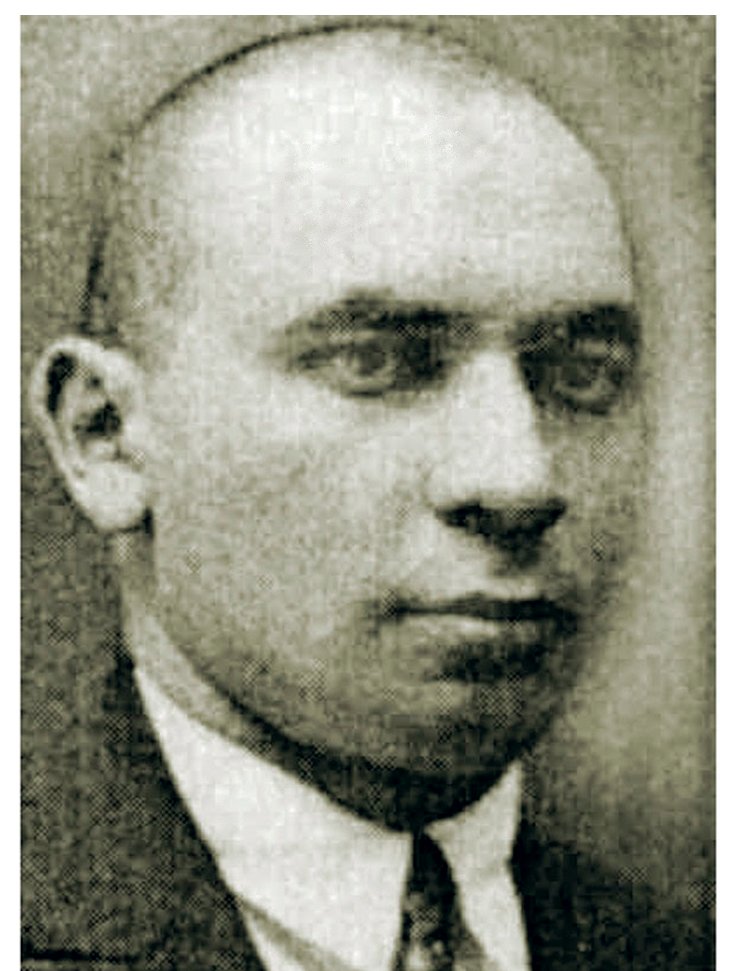
Boris Bazhanov, who fled from the USSR, received the permission of Mannerheim to form detachments of the Russian People's Army (RNA) from prisoners of war
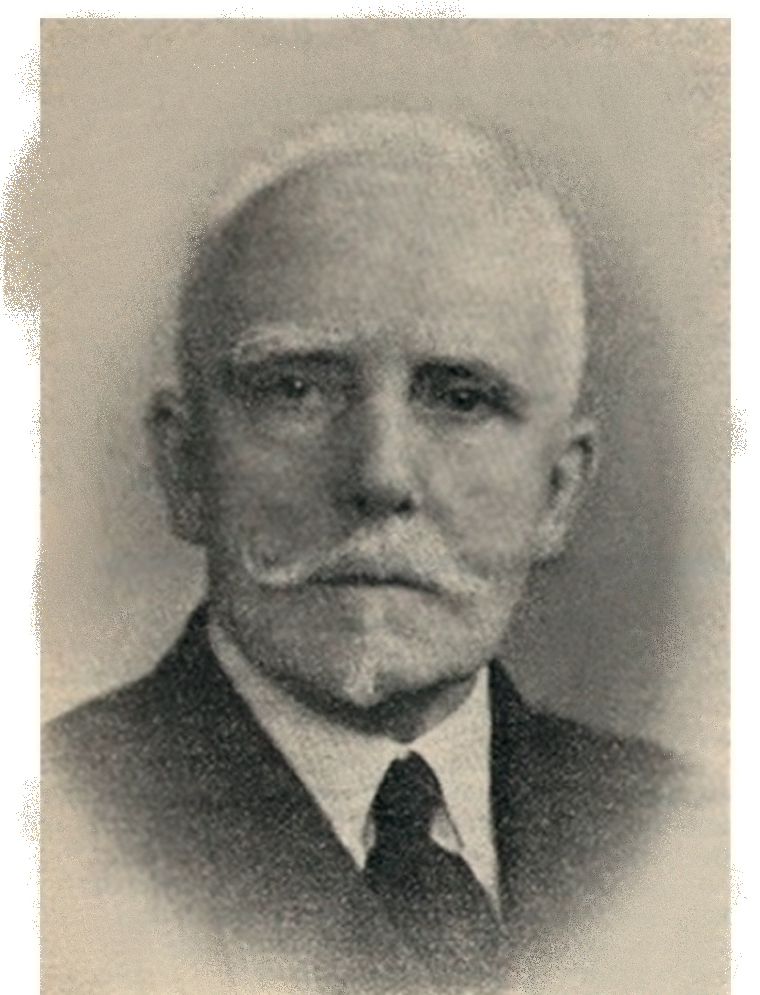
General Alexei Arkhangelsky considered the experience of interacting with "sub -Soviet" people successful
Antistaline slogans
Mannerheim skeptically evaluated the chances of a set of volunteers, but Bazhanov, with the help of white officers, zealously set to work. He visited prisoners of war camps in Pelso (January 20–21, February 6–9), Köylio (January 23) and after personal conversations with the Red Army summarized: “It is true that the masses of the population (peasantry, workers, servants) are hostile to power. Reflecting the mood of the masses, in recent years, both the government apparatus and the main personnel of the Red Army have become completely unreliable. ” At first, it was supposed to create from four to six detachments (platoons) of 30 fighters each under the command of ROVS officers. Of the 197 fighters and commanders personally interviewed Bazhanov in the Pelso camp, 94 expressed their readiness to join the RNA. In total, by February 12, 550 people enrolled in Pelso's detachments in Pelso. Of these, the emigrants took away 150 fighters to send to the combat line, equipping them with the first five detachments. The calculation of Bazhanov and Shulgina was based on the fact that, under the influence of the campaign of the "Narodniks", individual units of the Red Army will begin to switch to the side of the RNU. In the future, this will carry out larger operations, and then to expand the rebel actions in the north and north-west of the USSR.
The short political program of the RNA was consonant with the anti-Stalinist slogans of the first half of the 1930s: "The dissolution of collective farms and the distribution of land to peasants, freedom of labor for workers and its participation in the profits of the enterprise." In the leaflet addressed to the Red Army, the command and military personnel of the RNU stated: "The Soviet government deceived us around ... We were torn away from the families and sent us to make the Soviet government rob the Finnish peasant and the Finnish worker just as it robbed the Russians." In the last weeks of the war, RNA leaflets spread on the front section in the North Ladoga.
The RNA detachment managed to take part in the combat operation between March 2 and 4, 1940 north of Lake Ladoga, in the lane of troops of the IV Army Corps, Major General Jukhan Hegglund. The Bazhanovites passed the exam. They completed the task and returned with the defectors, the number of which, according to some information, possibly exaggerated, reached two hundred people. However, on March 13, 1940, in connection with the end of the war, Bazhanov ceased his activities and urgently left Finland. He died in exile in 1982. So the short story of the RNA detachments ended.
Tragic experience
Among the Soviet prisoners of war repatriated after the Winter War in the USSR, Beria especially noted 166 "participants in the anti -Soviet volunteer detachment." On June 28, 1940, the Military Collegium of the Supreme Court of the USSR sentenced 232 people from the repatriated 5468 prisoners to be shot. 158 people shot, most of them were Fighters of the RNA. Another 4610 former prisoners received different camp terms.
Russian emigrants did not achieve the ultimate goal, but acquired the first experience of cooperation with "sub -Soviet" people. In his report, General Arkhangelsky summed up: “The general situation for the“ experience ”and for propaganda was unfavorable. There was a harsh winter, and it was difficult to hope that the captured Red Army soldiers who had just been saved from danger at the front, after severe frosts in the warmth, fed are sprinkled, could be excited by propaganda to such an extent as to go again to cold and hunger and again to expose their lives of danger. Nevertheless, despite the unfavorable situation and for a short time, given to us by fate, made “experience” with prisoners gave brilliant results ”*****.
After a year and a half on the Eastern Front, the Germans will be captured by more than 3 million Red Army soldiers, and Stalin’s Russian opponents will again be the problem of choosing. And the tragic story of the RNA will happen again - already with other participants - on a much more serious scale.
*** Author - candidate of historical sciences. The author of the books “Officer Corps of the Army of Lieutenant General A. A. Vlasov 1944–1945” (M., 2009), “Russian soldiers of the Wehrmacht” (M., 2005).