
Translated material
They can when they want
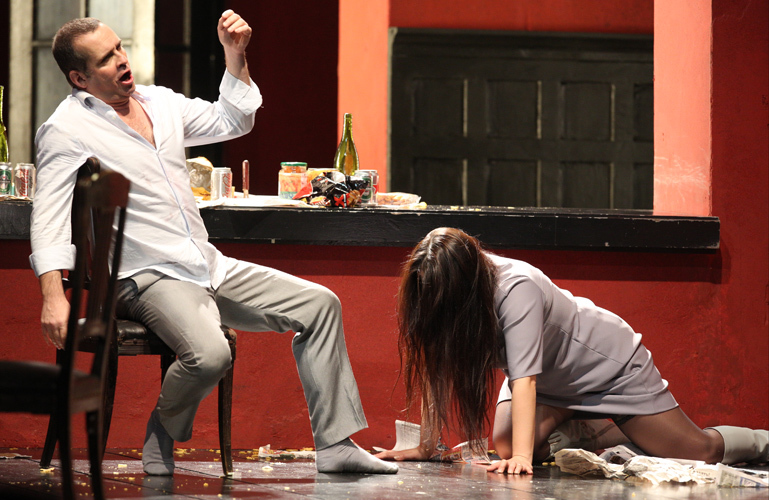
The fate of the key event of the 2014/2015 season of the first from the time ofRuslan and Lyudmila, the production of Dmitry Chernyakov in Russia was already prepared in absentia-for nothing, the chiseled mise-en-scenes and cinematographically detailed large plans for the I had been released in the summer in Brussels La Monnaie And published at the beginning of this fall, at the DVD “Trubadura”, they learned by the entire near-theater community two years ago, when the video recording of the performance hid in Internet networks shortly after its European premiere. Then, in the summer of 2012, few, in essence, could have assumed that “Ruslan and Lyudmila” would turn out to be the last original production of Chernyakov, released in their homeland: in the foreseeable time, all creative plans of the director are connected with the western opera scene (the closest prime minister-the Wagnerian “Parsifal” in the Berlin Staatsoper ), and those who took the next year) Conservative-freezing course domestic quartermasters do not be too zealous in the desire to get to the repertoire of their subordinate theaters products TCHERNIAKOV .
Why it happened-the plot, requiring a separate difficult conversation, but the fact remains: at some point, the Russian operator number one was not found on the Russian stage-and therefore the current prime minister of Trubadura is difficult to perceive otherwise as a symbolic event and, in a sense, even political.
 © Stas Levshin / Mikhailovsky Theater
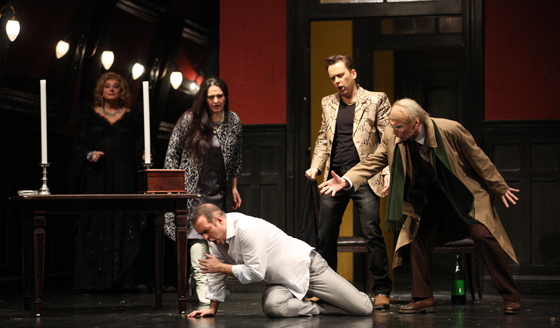
Personally overseeing the transfer of Trubadura from Brussels to St. Petersburg, writing one resonant project after another (next in line- Boris Godunov, Mussorgsky with The Assistance Orchestra of The Age of Enlightenment under the direction of Vladimir Yurovsky) G Enius Loci The Mikhailovsky Theater Vladimir Kekhman subtly felt the market conditions: the art area is not just the best, but the only possible refuge in Russia for the performances of Dmitry Chernyakov today. Each of the two largest opera houses in the country - both Mariinsky and the Bolshoi - has its own complex and contradictory history of relations with the director, making any attempt to resume relations equally traumatic for both sides. The Mikhailovsky Theater, on the contrary, is in this situation something like a neutral territory that is not burdened by the load: the young, ambitious, dynamically developing institution has managed to build up production capacities sufficient for the comfortable work of the perfectionist Chernyakov in recent years. From the very beginning, his cooperation with Kekhman looked mutually beneficial: for the first transfer of Trubadur, it means the opportunity to regain a presence in the Russian market with little blood, the second gets the most perfect repertoire exclusive and the largest image victory.
In recent years, the first production of Dmitry Chernyakov in Russia is difficult to perceive differently as a symbolic event and, in a sense, even political.
The results of the first premieres of the St. Petersburg version of the performance, lasting until the end of this week, turned out to be much less expected - and therefore so impressive.
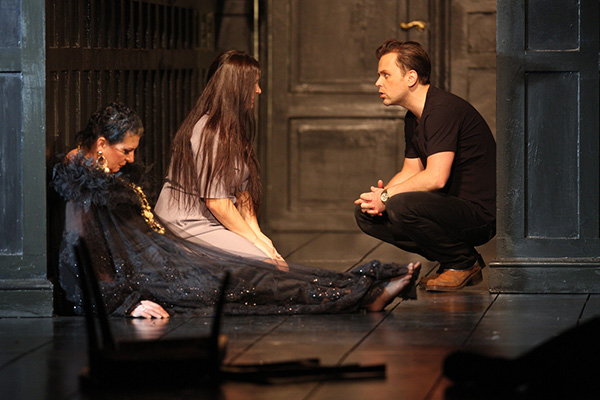
The sad experience of “Don Juan” -a masterpiece of mature Chernyakov, who turned out to be a heartbreaking nightmare during a trip from ex-en-Provence to Moscow for the author of the performance and for his fans, is no exception, but the rule: the latest history of the domestic opera does not know artistically effective examples of ready-made productions released abroad. The Trubadur establishes a precedent that is quite unique to local practice-the Mikhailovsky Theater managed that we never really succeeded in nobody: the production of a more successful biography, which was released in one of the main European theaters and has a setting on a domestic scene as a glove-without a single compromise. All the most problematic issues, from casting and ending with integration in the performance with, as always, complicated by Chernyakov with the dramaturgy of the score of the score and the stage text of the new conductor, are impeccably worked out. Only two singers from the original Brussels quintet are engaged in the St. Petersburg version - to Scott Hendrix (Count Di Luna) and Giovanni Furlatto (Ferrando) were joined by Hungarian Metzo Ildiko Komloshi (azachen), Prima Mikhailovsky Tatyana Ryaguzova (Leonora) and Polish tenor Arnold Rutkovsky (Mancicon),, Mikhailovsky,, - But in terms of the cast of losses there are neither semantic nor high -quality, but much more chamber than LA Monnaie , Mikhailovsky’s space, the intimate drama of the Trubadura looks almost more expressive.
 © Stas Levshin / Mikhailovsky Theater
Perhaps the key success of the production is the work of Mikhail Tatarnikov. It’s not that someone doubted the abilities of the chief conductor of the Mikhailovsky Theater (in the two years that he holds this post, the class of the local orchestra grew many times), but after the revolutionary interpretation of Mink Minkovsky , it was quite difficult to imagine another musical decision of the Trubadura. Not limited to the task of achieving quite European style of sound from Mikhailovsky instrumentalists, Tatartnikov managed to achieve an unheard of the orchestra in recent years in St. Petersburg in the dramatic whole performance: for the productions of Dmitry Chernyakov, who, in the vast majority of cases in Russia, excluding excluding the legendary Novosibirsk Aida - still had to diverge with it. Conductors in diametrically opposite directions, this is especially important. Tatarnikov’s living and meaningful orchestra, which is immediately connected to the drama unfolding on the stage, in itself is a rather good reason not only to review, but also to listen to the Petersburg Trubadura.
“After all, they can, when they want,” as they say in such cases.