
Translated material
Orban between two lights

The Hungarian prime minister angered Washington. Reasons - friendship with Moscow and suspicion of corruption
Hungarian Prime Minister Viktor Orban, whose politics has long been concerned with the leadership of the European Union and the USA, has been in a difficult situation: recently, he seriously angered his opponents both abroad and within the country.
In response to a corruption scandal in Hungary will create an anti -corruption coalition. Andrash Croat, one of the organizers of numerous protests taking place in the last few weeks in the country, has recently stated such a decision. The coalition will include former politicians and employees of the tax and other state departments, to whom attempts to indicate the facts of corruption were worth the positions. After the prohibition due to suspicions of corruption in the United States, thousands of people went outside to several Hungarian officials and demanded their resignations. At the same time, experts argue that the essence of the conflict of Hungary and the United States is not so much in corruption suspicions as in the fears of Washington regarding the pro-Russian policy of Hungarian Prime Minister Viktor Orban.
Since in mid -October, it became known about the ban on six Hungarian officials to enter the United States , the polemic of the two countries - NATO allies - is on the growing one. The American side does not reveal the names of Person non grata, referring to its laws, and indicates that the Hungarian government has all the necessary information. The official Budapest denies this and requires the United States to evidence of the involvement of Hungarian citizens in corruption. The attorney in US affairs in Hungary Andre Goodfrend does not say anything concrete, limiting himself to the general words about Washington’s desire to help the alliance ally in the fight against corruption.
The conflict is far from permission. The last decision of the Hungarian government is to introduce a new tax on tobacco products-according to experts, is directly related to diplomatic frictions with the United States: half of all the profit from tax (more than 20 million euros) plan to receive from the American manufacturer of Tabacian "Philip Morris". Political scientist Gabor Terek calls the conflict of the two countries "an unequal struggle of the elephant and moska" and believes that such a game can have dangerous consequences for Hungary:
The USA and NATO doubted that Hungary is a reliable ally
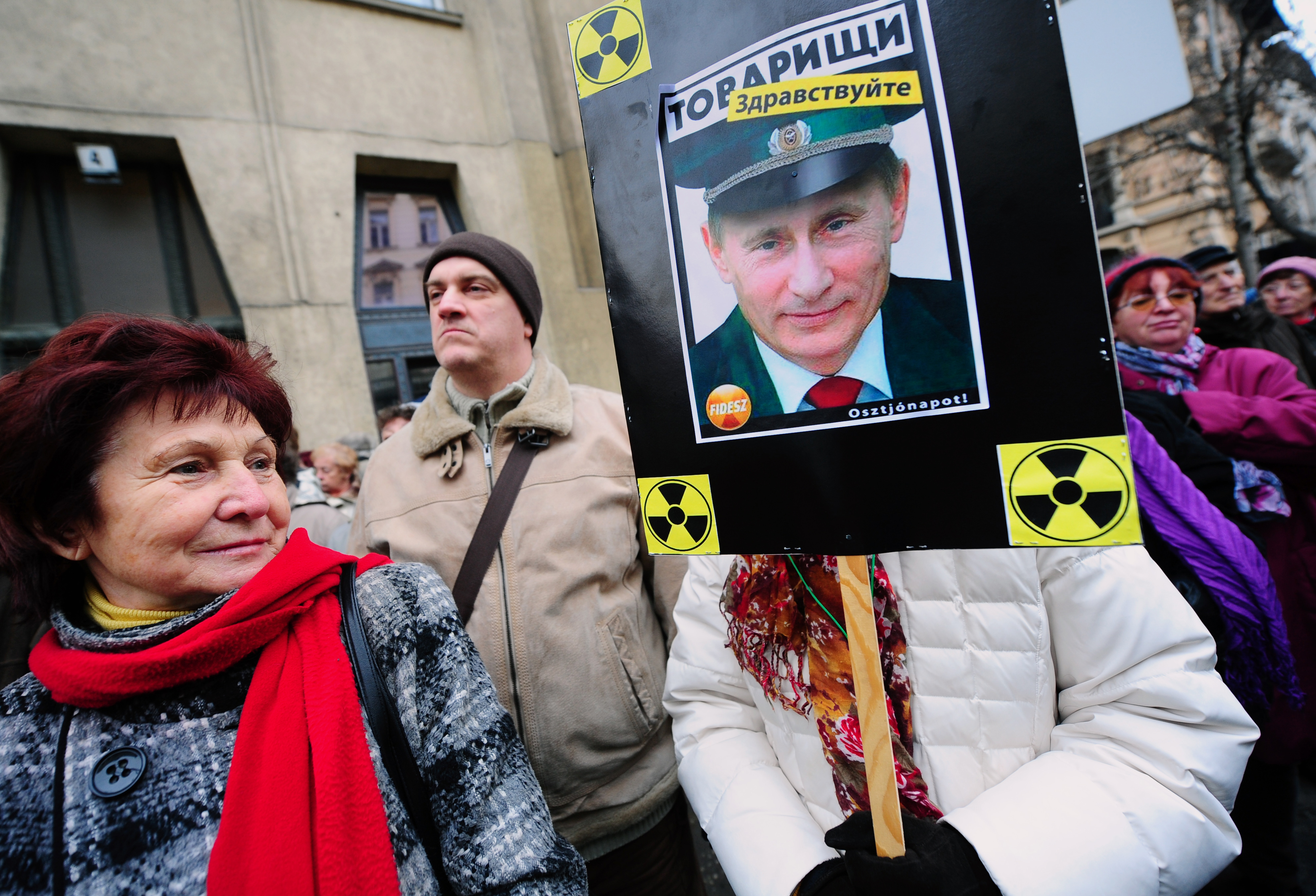
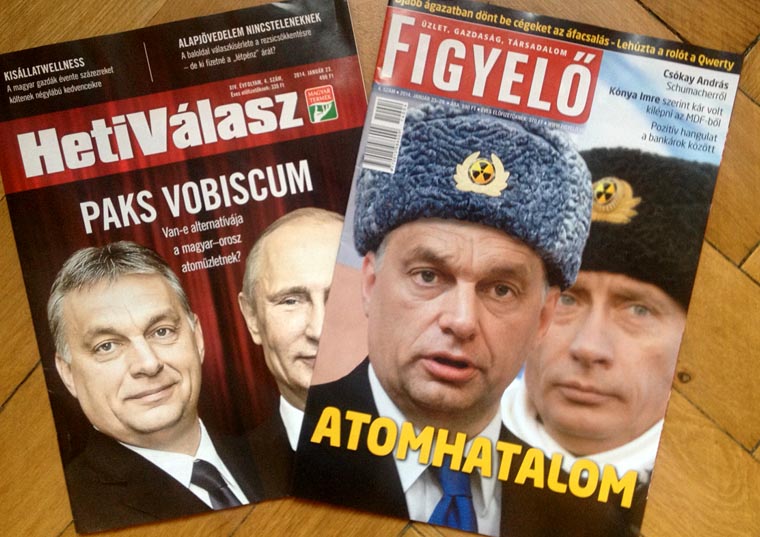
- In this situation, there is a third important participant - Russia. Hungary has recently behaved not quite well -being behaved from the point of view of the United States and NATO. It is enough to recall the Hungarian agreements with Russia for the construction of the PAKSH nuclear power plant or plans for the South Stream , as well as those statements that the Hungarian government has recently made regarding the situation in Ukraine. One must think, the United States and NATO doubted that Hungary is a reliable ally. And if earlier such a “free” behavior could get away with Hungarian politicians, then in connection with the Ukrainian conflict this issue became important for America.
The American "click on the nose" was painfully perceived by the Hungarian government. The ruling party “Fides” did not achieve any results outraged statements, as well as a clear reluctance to understand corruption accusations, but only set up part of the Hungarian electorate against itself. The last straw was the recognition of the head of the tax service Ildiko that it is one of the people who are prohibited from entering the United States. A few days later, more than ten thousand people went outside, demanding the resignation of an official. And although the lady of the species denies all the accusations of corruption, the protests did not stop: last week the streets of several large cities of Hungary were filled with protesters. Despite what is happening, Gabor Terek believes that the Hungarian opposition still has no chance of a political victory:
-I do not think that the resulting crisis of trust can somehow help the Hungarian opposition. The so -called optical effect is important here: a large -scale protest movement that has grown recently throughout the country. The slogan, which Viktor Orban always relied on his speeches, was as follows: Hungary is one in his support for the current government, Fides is supported by most citizens. With this statement, he legitimized his power. But then the protest movement, which has intensified recently, undermines the image of power and calls into question its unshakability.
Moscow also adds oil into the fire: Vladimir Putin at the official meeting with the Hungarian ambassador called Hungary one of the most important "political and trade and economic partners of Russia ." In the current situation, such statements are unlikely to hear with pleasure in Washington. You might think that recently the Hungarian prime minister began to retreat: last week at a meeting of the Hungarian Diaspora Council, he said that "as a member of NATO and the European Union, Hungary would be loyal to his allies even in the situation, he did not agree with them in some matters." However, political scientist Gabor Terek does not advise taking the words of the Hungarian government for a pure coin:
The United States does not set their task to overthrow Victor Orban. But they need the Hungarian government to be more predictable
- If we want to understand the actions of Hungarian politicians, we need to monitor not their statements, but rather the actions. For example, Viktor Orban recently decided - after numerous protests - that the so -called Internet tax must be reviewed. This means that the Prime Minister understands the situation and does not want his power to shake. In the situation with America, it is still unclear whether the prime minister is aware of the seriousness of the moment. The United States does not set their task to overthrow the Fidesho party and Viktor Orban. But they need the Hungarian government - it doesn’t matter, left or right - to be more predictable, and its steps are transparent and clear to the allies.
After the scandal with Snowden , when we know what were the scale of listening to foreign politicians, including the German chancellor, from the American special services, it can be assumed that the United States can also be known for many "underwater trends" of Hungarian politics. And if necessary, Americans will be able to achieve the necessary pressure on Budapest. Everything will now depend on the decisions of the Hungarian government. Hungary is located between the two lights - clamped by obligations in relation to Russia and the West, and it will not be easy to get out of this situation, the Hungarian political scientist believes.