
Translated material
Nadezhda Mandelstam: After Samatihi
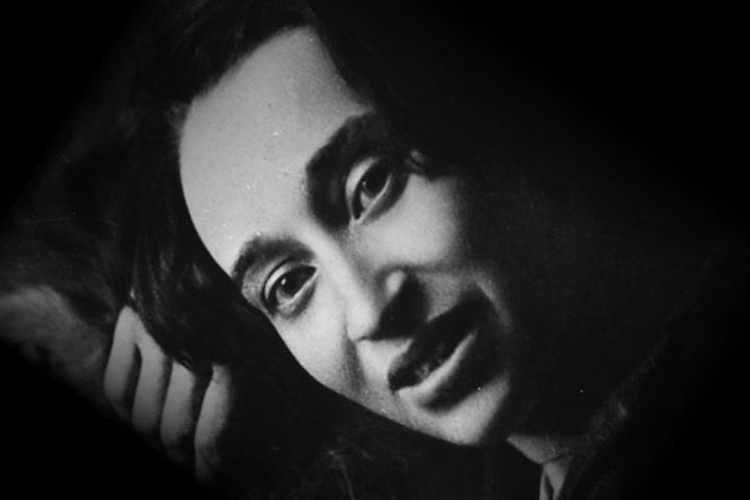
The Yekaterinburg publishing house Gonzo published a two -volume collected works of Nadezhda Yakovlevna Mandelstam, prepared with the participation of the Mandelstam society. We consider the release of this publication a big event and we intend to devote separate material to it in the near future. In the meantime, we offer the attention of readers an essay to Pavel Nerler, one of the compilers of the Yekaterinburg two -volume, about the life of N.Ya. - From the arrest of O.E. Mandelstam before his death.
1.
From the very first Kyiv meeting in the nineteenth, May 1 became for Osip Mandelstam and Nadezhda Khazina Sacred Date. They remembered her in the thirty-eighth, on the 19th anniversary of the Kyiv "engagement", in the snow west of Samatihi. “At night in the hours of love, I caught myself thinking - what if they enter and interrupt now? So it happened on May 1, 1938, leaving behind a kind of trace - a mixture of two memories. "
On the very morning of May 2, enkavedeshniki knocked on and separated them forever. "We did not have time to say anything to each other - we were cut off at a half and we were not allowed to say goodbye to us." So rushed and hurried so that they took Osip Emilievich even without a jacket!
This time, his wife was not allowed to accompany her husband at least to Moscow: the validity of the Stalin “Miracle” of 1934 has already expired.
Only on May 6 or 7, Nadezhda Yakovlevna managed to get out of Samatikha. And, apparently, immediately after that she went to Kalinin, where from November 17, 1937 to March 10, 1938, in a five-walled hut on the 3rd Nikitinskaya St., 43, in the house of the working-metallurgist Pavel Fedorovich Travnikov and his wife Tatyana Vasilievna, they rented a room with an Osip.
In Kalinin, she took a basket with manuscripts: about half of the Mandelstam archive, the second half was in Leningrad by SB Rudakova. N.Ya. I understood that the same “plaque” would inevitably undertake the organs, but managed to get ahead of the already overloaded NKVD apparatus. Two employees of the regional department of the NKVD-Non-Sobozhin-Zharov and Puk-also visited the trawn, but only on May 28, 1938 and without much result.
From Kalinin - through Moscow and Samatikh - the Cross of the Osip Mandelstam already began towards the death of the Pacific Ocean.
Her own “steep route” after the arrest and death of her husband went through several intermediate stations: Strunino - Shortanda - again Kalinin - Muinak - Tashkent - Ulyanovsk - Chitoksary - Tarusa - Pskov.
The first two of them, shifted by Moscow and Leningrad, incorporated the same eight months of 1938, which separated the arrest of Mandelstam from his death.
We will look at the more eight months in these eight months [1] .
2.
All this time N.Ya. I lived in the position of "ribs" [2] .
The very first and long station was Stronino.
Someone advised her to try her luck and get a job along the Yaroslavl road-the very one, on which the east of the convicts went east daily: the secret hope of meeting her husband at least at least a barred window was also present in this choice.
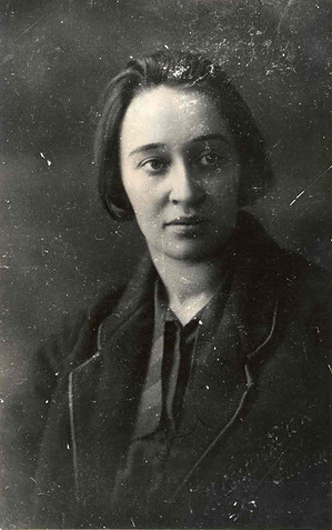 Nadezhda Yakovlevna Khazina (Mandelstam), 20s
She began with Rostov the Great: “... on the first day I met Efros there [3] . He turned pale, learning about the arrest of O. M., - he had just had to sit for many months in an internal prison. He was perhaps the only person who escaped with Yezhov a simple expulsion. O. M., having heard a few weeks before his arrest that Efros had gone and settled in Rostov, gasped and said: “This is Efros the Great, not Rostov ...” And I believed the wisdom of the great Efros when he advised me not to settle in Rostov: “Leave, there are too many of us ...” .
But the failure turned out to be a success: “On the train, on the way back, I talked with an elderly woman: I didn’t find a room in Rostov, they say, they say, I advised me to go out in Strunin and gave the address of good people: she didn’t drink and did not swear with obscenities ... and immediately added:“ And her mother was sitting - she would regret the Moscow people and always guessed that I had always guessed that I guessed that I guessed that For the bird, although it was spring and casing I managed to sell. <...> ... I went in Strunin and went to good people. I quickly got friendly relations with them, and I told them why I needed a “cottage” in a stroke zone. However, they already understood it. And I took off their porch through which no one went. When the cold began, they dragged me into their room by force, blocking my corner with cabinets and sheets: “So that you seem to be their room, otherwise you are not used to the common ...” .
Once, Ivan the Terrible hunted in these wild places and “put up” from the musket of a wild beast. But even in 1938, Strunino, Vladimir Region, was a small working village, which became even a city in the same year, in fact, decisively was no different from the village. Especially in the summer-when the owners have a cow on a grazing and a garden, and a fish in the Pichkure river, which can be caught even with a basket, and in the forest there is raspberries, which can be typed “professionally”-two-three-liter banks.
However, crazy fish and seasonal berry are not the best basis for the diet. “The owners noticed that I had nothing to eat, and they shared with me their trousers and murders. The radish there was called “Stalin's lard”. The hostess poured me with fresh milk and said: “Eat, you’re not completely weakening.” <...> And I wore raspberries and other berries from the forest. ”
3.
Although N.Ya. To be in Leningrad (not only in Moscow!), But I had to. She spent almost the whole of June at the bed of Ani, who was dying from cancer, and when she died, spent her - the three of them: with her brother Zhenya and Anna Akhmatova - on the last journey. She also said goodbye to the “grandfather” - Emil Veniaminovich: he rejoiced at the daughter -in -law and cried, but was indignant at the elder and disrespectful son, who could not come to him, dying! Grandfather died very soon, July 11, - in hospital mud, in desperate loneliness and resentment, and also from cancer.
Despair was familiar with N.Ya.: "It seems to me that I did not have time to say the Osa, as I love him ..." [4] . Sometimes it was replaced by bursts of hope ( “Maybe someday I will see and tell Osa how I was waiting for him ... Maybe the three of us will sit at the table” [5] ), but despair was stronger and clearly prevailed: “That I never see - I know, but I can’t understand this” [6] .
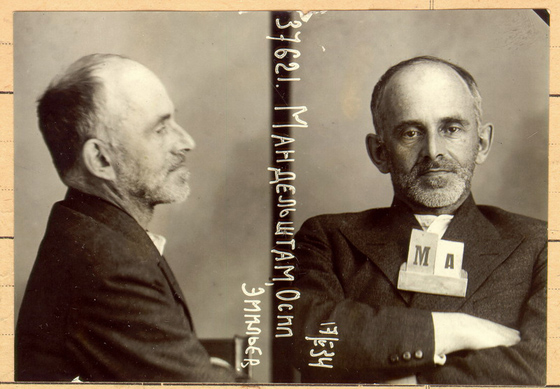 Osip Mandelstam, 1934
“There is no axis in Moscow. I don’t know if I will hear something else about him. It is unlikely ... For the axis, I ask only fast and at least light death. " [7] . This quote is from a letter of September 10, and the Mandelstam echelon tapped the seventh (or eighth?) September (or the eighth?) On September 10. But no one - neither he was in the carriage, nor she - did not notice anything.
In mid -September, the exiled Boris Kuzin - the closest friend and interlocutor of the Mandelstam couple - invited N.Ya. To his own (it was invited, not called). To yourself - this is in the Zhelzelnozhnozhnoi village of Shortanda near Kazakh Akmolinsk [8] , where he himself got only in the middle of 1937 as an exile and as an employee of an agricultural experimental station. The shorts, however, was not a string alternative because it was too far from the reference NKVD on the Kuznetsk bridge, 22.
And N.Ya., running into Moscow a couple of times a month and each time no more than a couple of days (it would be risky longer), the first thing was to go to this reference. Of the answers received there, she knew about the transfer of Mandelstam from Lubyanka to Butyrka ( "Osia changed the apartment" [9] ), and about the sending of his echelon ( “There is no axis in Moscow” ). It is possible that one day she managed to get the address of the transit camp, which Mandelstam would not pass by, and then she sent a letter to his camp [10] .
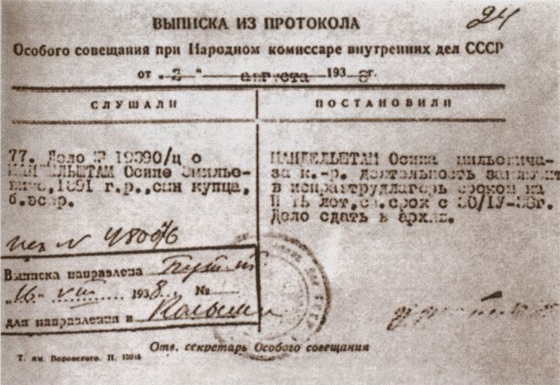 © svoboda.org Investigative case of O. Mandelstam. Extract from the protocol. 1938
In Moscow N.Ya. I had to demolish a lot, but perhaps the most difficult for her was violent “communication” with loved ones, especially with her brother and daughter -in -law. “It’s much easier for me to be one, ” she wrote to Kuzin. - One as if with the axes. Not so sharp separation. <...> Any conversation in Moscow “in general” or “about art” (which I can’t stand to tears) feel like treason ” [11] .
But Moscow was and remained a necessity. On every visit N.Ya. The Mandelstami library graduated gradually, which, in fact, was paid for Struginsky housing. When the rarities ended and there was nothing to live on - the understanding of what needs to be sought and find other, more reliable methods of food and existence came.
In other words, think about work and salary. “My owner was a textilesman, the mistress was the daughter of the weaver and the dye of fabrics. They were very upset that I was also harnessed to this strap, but there was no way out, and when an announcement about the set appeared on the gate, I got into a spinning department. I worked on bankrupt machines that make a “tape” from “cloth”. At night, I, sleepless, ran along a huge workshop and, seasoning cars, muttered poems. <...> Eight night hours were given not only to the tape and cloth, but also to the verses. ”
“There is no axis in Moscow. I don’t know if I will hear something else about him. It is unlikely ... For the axis, I ask only a quick and at least light death. ”
From September 30 to November 11, 1938, she worked as a pelvic [12] of the spinning plant "5th October" in the city of Strunin, Vladimir Region. Know yourself substituting the tin "basins" under the broken snow-white cotton wool, with a tape, crawling out of bankrupt machines. Trending payment - 4 p. 25 kopecks. per day [13] , monthly earnings - between 115 and 200 rubles.
Strunino became for N.Ya. The experience of immersion in the working environment and the real solidarity of workers: “They treated me well, especially elderly men. Sometimes someone came to my workshop and held out an apple or piece of pie: “Eat, wife yesterday.” In the dining room during the break, they held a place for me and taught: “Take it with Khlovovo. You won’t go without Khlobov.” At every step, I noticed a friendly participation - not to me, but to the "Stoopnitsa" ... "
The work has changed a lot in the lifestyle of N.Ya. On October 10, she admitted to Kuzin: “... I live motionless. I still lived with her misfortune - thoughts about the Osa. Now I was separated by work with my grief - my only property. "
In contrast with specific Moscow relatives, distant and yet a little abstract kuzin became closer and more and more urgent.
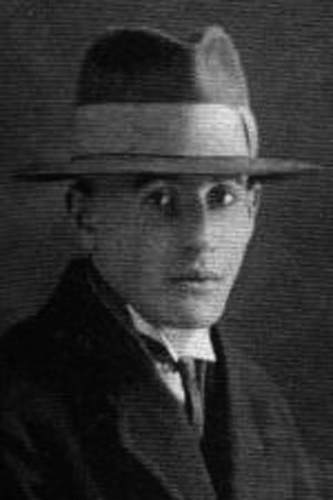 © ru.wikipedia.org Boris Kuzin, Country of the 1920s
“Dear Boris! <...> I know that you are the only person who shares my grief. Thank you, my friend, for that " [14] . Or: "After the axis you are the closest person to me in the world" [15] .
The already mentioned topic of a personal meeting - in string, in Shortanda - has settled in correspondence since September. September 20: “As for my arrival, I, of course, will come. But when? Now I will wait for a letter [16] . I think I can't wait. After how long will I believe that it will not be? I just can’t imagine ... " [17] But from a letter of October 14: “I will definitely come to you. <...> In all likelihood, it will be in April. <...> I am afraid that we will never see each other. And I'm afraid of a meeting. After all, we both have probably become different over the years. We will not recognize each other " [18] .
On October 22, she wrote her last letter to her husband [19] . But - desperate - did not send him.
The mood and stylistics is a letter - as if part of its correspondence with cuisine, correspondence, once so familiar and so dear to all three correspondents.
“Osia, dear, distant friend! My dear, there are no words for this letter that you may never read. I write him in space. Maybe you will return, but I will no longer be. Then it will be the last memory.
<...> every thought of you. Every tear and every smile is you. I bless every day and every hour of our bitter life, my friend, my companion, my dear blind guide ...
We, like blind puppies, poked each other, and we were fine. And your poor hot head, and all the madness with which we burned our days - what happiness it was - and how we always knew that it was this happiness!
<...> You are always with me, and I am wild and evil, who never knew how to just cry - I cry, I cry, I cry.
This is me - Nadia. Where are you? Goodbye. Nadia "
4.
On the November holidays N.Ya. I went to Moscow. Returned to Strunino, apparently, only on Thursday, November 9 [20] , for it was curtained on a night shift.
On the same night, and maybe on Friday (however, Saturday is not excluded) , “... two clean young people and, turning off the cars, ordered me to follow them into the personnel department. The path to the exit - the personnel department was placed in the courtyard, in a separate building - lay after a few workshops. As I was led by the workshops, the workers turned off the cars and followed. Going down the stairs, I was afraid to turn around, because I felt that they had arranged wanders: the workers knew that they were often taken away from the personnel department directly to the GPU.
An idiotic conversation occurred in the personnel department. I was asked why I do not work in my specialty. I replied that I had no specialty. <...> I did not understand what they wanted from me, but that night they let me go, perhaps because the workers crowded in the yard. Visiting me, they asked me whether I was working on a night shift tomorrow, and ordered to appear before I started working in the personnel department. I even signed such a piece of paper ... "
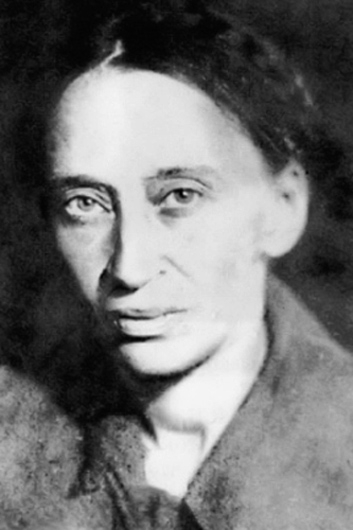 © atheatre.ru Nadezhda Yakovlevna Khazina (Mandelstam), 30s
Judging by the fact that in the Princeton archive, Strugino Labor Book of N.Ya. was preserved, that's how N.Ya. And she acted - she came to the personnel department on Monday, quit and left. But N.Ya. finishes a different picture:
“I did not return to the machines that night, but went straight home. The owners did not sleep-someone from the factory came running to them to tell that they dragged me “into the frames”. The owner took out a quarter and poured three glasses: “We’ll drink, and then we judge what to do.”
When the night shift ended, one after another workers began to come to our window. They said: “Leave” - and put money on the windowsill. The hostess laid my things, and the owner with two neighbors loaded me on one of the first trains. So I slipped away from the disaster thanks to people who have not yet learned to be indifferent. If the personnel department was originally not going to arrest me, then after the “wires” that they arranged for me, of course, I would not survive ... ”
E. Statland, who devoted all kinds of "revelations" by N.Ya. A special blog, did not believe in this story, doubting in reality such a demonstration of solidarity by textile workers addressed to the intelligent pillowment unfamiliar to them. I doubt his reliability and I.
But I do not agree that such a “short story” is almost an operation to cover allegedly to justify the escape precisely in the shorts, about which N.Ya. He does not even mention his books.
One thing is undoubted: in Strunin N.Ya. She took refuge and took refuge from the Kalinin “dove” (she calls the gesniks for their blue pegs and caps). After the factory department of personnel became interested in it (whether it was theatrical as with a pair of clean young people who turn off the cars at night for a walk with N.Ya. for the workshops, or somehow less theatrical), it became unsafe to stay here. It was necessary to hide once again in order to hide from the doves already Stroninsko-Vladimir.
But where? Moscow and St. Petersburg fall away. There were only two places on the ground, where her refugee would not be asked the next day, as the family of the arrested Ben Livshits with his wife and son did. These two places - Voronezh with the Yasnaya Natasha and the shorts - with a man who once woke Mandelstam with his friendship.
There were no letters from Natasha for a long time, but even if they were, N.Ya. All the same, I would prefer shortants where she was already mentally gathered - however, not earlier than April [21] .
In the “Second Book”, she writes about Stronin and about the whole situation as follows: “From there I also slipped away in time. They did not find and did not look for me, because I was a needle, an infinitely small size, one of tens of millions of wives of tens of millions sent to camps or killed in prisons. ”
About where she slipped away, N.Ya. I considered it not to write for the benefit.
Only brother and daughter -in -law knew about this, Osin Brother Shura and his wife and Shklovsky (the path to Shortanda ran through Moscow, of course). Even the girlfriend of Emma, sparing her "old -fashioned imagination", N.Ya. Prudently said nothing. She said later, but did not specify when it was [22] . But she herself did not guess, otherwise all would have gone in the “comments” and “interpretations” of Nadin's Adjulter!
5.
In Shortandy N.Ya. I stayed a month or more, returning to Moscow only on the eve of the New Year itself.
In her absence, it was what she did not want to leave. Osino came from under Vladivostok-the real, without stretching, news from the other world. Actually, sending and receiving up to two letters per month were allowed. But it seems to Mandelstam other letters did not write [23] .
Written around 7 November [24] , digested by censorship and sent from the camp on November 30, it reached Moscow, judging by the stamp, December 13.
So, the addressee was delivered on December 14.
“Dear Shura!
I am-Vladivostok, Svitl, 11th Barak. I received 5 years for K.R.D. By decision of a person. From Moscow, from the Butyok, the stage left on September 9, arrived on October 12. Health is very weak. Exposed to extreme. Ironged, almost unrecognizable. But I do not know to send things, products and money if there is a point. Try it all the same. Very cramped without things.
Native Nadinka, I don’t know if you are alive, my darling. You, Shura, write about Nadia to me right now. Here is a transit point. They didn’t take me to Kolyma. Wintering is possible.
My relatives, kiss you.
Osia.
Shurochka, I write more. The last days I went to work, and it raised my mood. From our camp as transit is sent to permanent. Obviously, I got into the “screening”, and we must prepare for the winter.
And I ask: send me a radiogram and money with a telegraph " [25] .
Прочтя и перечтя письмо, Шура бросился со Старосадского на Страстной, к Евгению Яковлевичу. Он-то и отправил Осе 15 декабря денежный перевод и «глупую», по словам Н.Я., радиограмму: мол, не волнуйся, Надя под Москвой. Тогда же телеграмма ушла и в Шортанды, где подействовала скорее расслабляюще: Ося жив!
Надя, однако, не бросилась сломя голову в Москву, а приехала только под Новый год — не позднее 28 или 29 декабря. Встречать 1939-й Надя пошла не к своему брату, где невестка собирала художнический бомонд, а к Осиному: даже неутихающий семейный скандал между Шурой и Лелей казался ей против «бомонда» музыкой.
…Посылку во Владивосток с теплыми вещами и салом Женя без Нади отправлять не стал. Это сделала уже она сама — 2 января 1939 года: а между тем самого Оси уже шесть дней как не было в живых!..
6.
Весь январь и первую половину февраля 1939 года Н.Я. провела в Москве без прописки, что было опасно: нарушения паспортного режима было достаточно и для «своего» срока.
Через Виктора Шкловского и каких-то журналистов из «Правды» до нее дошел разговор, якобы имевший место в начале нового года в ЦК. Аппаратчики качали головой и говорили, что у Мандельштама, оказывается, и не было никакого дела и это все ежовские штучки и ежовые рукавички, намекая на перегибы снятого в декабре наркомвнудела. Новелла фантастическая, но Н.Я., поверив, сделала и другой вывод: так говорят только о покойниках.
Между тем земля стала полниться слухами о чуть ли не остановке Большого террора и либерализме нового наркома в пенсне. И 19 января 1939 года Н.Я. написала Берии дерзкое заявление с наглым требованием — или освободить мужа, или привлечь к ответственности и ее как постоянную свидетельницу и участницу его жизни и работы.
Но до 30 января она еще не знала наверняка, что освобождать было уже поздно и некого.
В этот день [26] принесли повестку из почтового отделения у Никитских Ворот, откуда Женя отправлял во Владивосток почтовый перевод, а Н.Я. — посылку. Возвращая посылку, почтовая барышня пояснила: «За смертью адресата» [27] .
С этого мига и началась ее, Надежды Яковлевны Мандельштам, новая — вдовья — жизнь.
О том, кáк именно она началась, рассказано в одном из ее последних писем Харджиеву:
«В день, когда я получила обратно посылку “за смертью адресата”, я зашла сначала к своему брату Жене и тыкалась, как слепая, по светлому коридору, не находя двери. Узнав о посылке, они мне сказали, что у Лены сейчас будут люди по делу (режиссеры!), и я ушла (попросту выгнали). Во всей Москве, а может, во всем мире было только одно место, куда меня пустили. Это была ваша деревянная комната, ваше логово, ваш мрачный уют. Я лежала полумертвая на вашем пружинистом ложе, а вы стояли рядом — толстый, черный, добрый — и говорили: Надя, ешьте, это сосиска... Неужели вы хотите, чтобы я забыла эту сосиску? Эта сосиска, а не что иное, дала мне возможность жить и делать свое дело. Эта сосиска была для меня высшей человеческой ценностью, последней человеческой честью в этом мире…» [28]
Придя в харджиевской комнате в себя, Н.Я. сделала последнее и, наверное, единственное, что не могла не сделать в этот день, — написала в Шортанды:
«Боря, Ося умер. Я больше не могу писать. Только — наверное придется уехать из Москвы. Завтра решится. Куда — не знаю. Завтра Женя напишет.
Nadia.
Я не пишу — мне трудно» [29] .
Назавтра Н.Я. попробовала прописаться на месяц в своей же квартире — у матери, на правах ее гостя. Но бдительный Костырев парировал такую угрозу: дочку-нелегалку вызвали в милицию и предложили собраться и уехать.
Между тем через положенное время пришел ответ из Шортанды [30] :
«Милая Надежда Яковлевна!
Нынче получил ужасную весть от Вас. Мне тяжело невыносимо. Только нынче, может быть, я понял, как мне был лично дорог бедный Осип. Здесь я даже не могу никому рассказать об этом горе, и оно меня разрывает. И для Вас, и для меня было бы лучше, если бы мы узнали это, когда Вы были у меня. Если бы можно было отслужить по нем панихиду. До чего все это страшно. Но ведь ждать можно было только этого. И как хотелось надеяться на хороший конец. Вы знаете, что я стоек в несчастьях. Но нынче, быть может, в первый раз я с сомнением посмотрел на все свои надежды.
И все-таки, я прошу Вас — держитесь. Не делайте никаких глупостей. Помните, что я Вам говорил. Мы не имеем права судить сами, нужна ли наша жизнь зачем-нибудь. Наш долг стоять, пока нас не прихлопнет судьба. Take care of yourself. Если моя дружба над Вами не имеет силы, то этого требует память об О. Я говорю это Вам с совершенным убеждением. Я не всегда верю своему уму. Но совесть у меня крепкая. Она меня не может обмануть. То, что я Вам говорю, — только от совести.
В феврале, вероятно, моя комната будет занята. Перебейтесь чем-нибудь месяц. Потом приезжайте ко мне. Хотите — останьтесь у меня совсем. Хотите — поживите в гостях. Считайте вместе со мной, что О. был мой второй несчастный брат. О. знал мою верность. Мне кажется, и он понимал, что мы с ним встретились не совсем случайно. Он был бы рад, если бы мог знать, что Вы поселились у меня. И Вам не будет трудно жить у его и Вашего друга.
Целую Вас, бедная Наденька.
Ваш Борис К.».
Это было именно дружеское письмо и братское приглашение от человека, их искренне любившего — и мертвого О., и его бедную Н., человека, готового поделиться с ней последним и сделать все для того, чтобы смягчить уже полученный удар. Но это не было предложением руки и сердца (последнее у Бориса Сергеевича было уже занято). Бедная же Надежда Яковлевна, понемногу приходящая в себя, кажется, не уловила или проигнорировала этот нюанс. Она явно воспрянула духом и стала благодарно собираться в Шортанды — полагая, что про «погостить» или «насовсем» она решит (или они решат) на месте. В этот-то «нюанс» она и врезалась в конце апреля — фронтально, лоб в лоб — и рассвирепела. Но их дружба-любовь была из прочных материалов, она разбилась не насмерть, а так, чтобы воскреснуть и уже в мае встать на костыли, а потом, когда затянулись раны, растянуться еще на десятилетие, оставив по себе пронзительную эпистолярную память.
«Я не хочу, чтобы после моей смерти гадали, были вы моим любовником или нет».
О первой, она же последняя, поездке Н.Я. в Шортанды и даже о том, что Н.Я. была влюблена в Кузина, я слышал задолго до выхода книги Б.С. Кузина и Н.Я. Mandelstam [31] . «Тому не быть, трагедий не вернуть!..» — эта замечательная книга, вышедшая в 1999 году, обнажила искрящий на стыках нерв этого сюжета и словно возвращала нас в поле античной трагедии и шекспировского накала страстей.
«Я не хочу, чтобы после моей смерти гадали, были вы моим любовником или нет» [32] , — писала Н.Я. Кузину в мае 1939 года и требовала вернуть ей свои письма для уничтожения (и ее можно понять). И если бы Кузин тогда поддался ее напору [33] , или если бы их уничтожила Ариадна Валерьевна Апостолова — вдова Кузина (которую тоже можно было бы понять), или если бы издатель и составитель книги 1999 года не отважились публиковать их так, как они были написаны, то сведения о поездке, рано или поздно просочившись, оставили бы по себе какое-то обывательское послевкусие, как от какой-то низменной (да еще, мол, в такой момент!) измены.
Со временем восторжествовала бы бытовая — плоская и опущенная — версия событий, на которую столь падка так называемая женская проницательность. И достался бы этот трагический дуэт рукам, либо трясущимся от ненависти и морализаторства [34] , либо лоснящимся от ханжества и пошлости — с «вердиктами» наподобие этого: «…Известно, что Надежда Яковлевна пыталась устроить свою личную жизнь еще в то время, когда муж находился в заключении…» [35]
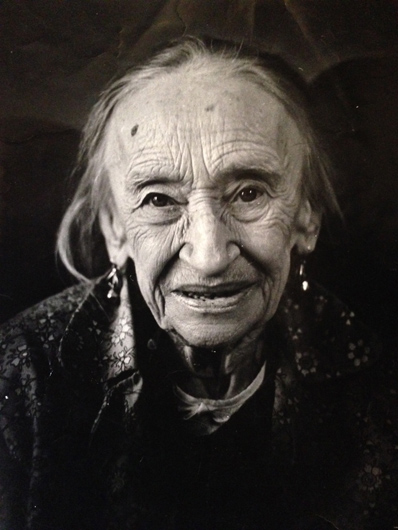 © из архива Веры Лашковой Н. Я. Мандельштам. The end of the 1970s
Вольнó же святошам, читая чужие — уж не для их-то глаз точно — письма, морщить лобики и корить Н.Я. за разные нестыковки и за то, что в кратком общении и откровенном, искреннем обмене мыслями и чувствами с близким по духу человеком она черпала силы и находила как утешение, так и отчаяние.
Письма Надежды Мандельштам к Борису Кузину — это пространство трагедии, стихия, но еще и непреднамеренная и остросюжетная проза!
Проза не меньшая, чем воспоминания, а по мне — так и вовсе лучшая ее проза!
[1] Основными источниками нам послужат воспоминания Н.Я. и ее переписка с Б.С. Кузиным.
[2] «Стопятницы», «стоверстницы» — те, кому было запрещено проживать в Москве и ближе чем в 100 км от нее.
[3] Абрам Маркович Эфрос (1888—1954) был арестован в конце августа 1937 г. и в начале 1938 г. выслан на трехлетний срок в Ростов Великий. Судя по воспоминаниям Н.Д. Эфрос, его вдовы, режим пребывания был достаточно мягким.
[4] Из письма Б.С. Кузину от 1 июля.
[5] Из письма Б.С. Кузину от 8 июля.
[6] Из письма Б.С. Кузину от 17 июля.
[7] Из письма Б.С. Кузину от 10 сентября 1938 г.
[8] Примерно в 60 км от Акмолинска (ныне Астаны). В годы освоения целины на базе этой опытной станции был развернут Казахский НИИ зернового хозяйства (ныне им. А.И. Бараева).
[9] Из письма Б.С. Кузину от 25 августа 1938 г.
[10] Получение из дома письма или телеграммы засвидетельствовал В.Л. Меркулов (РГАЛИ. Ф. 1893). Если так, то пришло оно после 7 ноября — «Дня письма», когда и сам О.Э. написал и отправил домой письмо (см. ниже). Получи он письмо от Нади раньше, наверняка бы упомянул в своем. Но, может быть, Меркулов видел в руках поэта телеграмму, отправленную Е.Я. Хазиным 15 декабря? Теоретически это было еще возможно — в случае, если телеграмму доставили быстро. В 11-м бараке, как и во всем лагере, был в это время карантин по сыпному тифу, и хотя Меркулов как лагерная обслуга и имел туда доступ, но сам О.Э. был уже крайне слаб (Нерлер П. Con amore . Этюды о Мандельштаме. М., 2014. С. 451—504).
[11] Из письма Б.С. Кузину от 25 августа 1938 г.
[12] А согласно трудовой — ученицей тазовщицы.
[13] Расчетная книжка № 585 (Архив Мандельштама. Princeton University, USA. Box 3. Folder 104. S. 1. Item. 594—595, 625 — далее АМ).
[14] Из письма Б.С. Кузину от 20 сентября 1938 г.
[15] Из письма Б.С. Кузину от 14 октября 1938 г. Эту фразу сам адресат подчеркнул.
[16] Не свидетельство ли это того, что Н.Я. сама написала письмо О.Э.?
[17] Из письма Б.С. Кузину от 20 сентября 1938 г.
[18] Мандельштамы переписывались с Кузиным, но не видели его с весны 1934 г., то есть более четырех лет (О.Э. был арестован в 1934-м, а Кузин — в 1935 г.).
[19] Оригинал письма сохранился в АМ. Но есть читатели, оспаривающие аутентичность письма, полагающие, что это не более чем позднейшая стилизация. И письма Н.Я. к Кузину, в их глазах, — лучшее доказательство их правоты (см.: Shtatland E. Последнее письмо или последний миф «Второй книги» // К 40-летию «Второй книги» Надежды Мандельштам: великая проза или антология лжи? [Блог] 2013. 29 декабря / В сети ). В моих же глазах — наоборот: именно в контексте этой переписки письмо Н.Я. погибающему мужу приобретает свою подлинную и истинно трагическую высоту.
[20] В страшную дату Хрустальной ночи!
[21] См. в письме Кузину от 14 октября 1938 г.
[22] Ср. упоминание у Э.Г. Герштейн: «Надя ездила к нему в Казахстан, где он работал в совхозе, кажется, агрономом».
[23] Разве что товарищу Сталину, о чем О.М. говорил как-то своему солагернику Д. Маторину. Наверное, с напоминанием, что ему, Сталину, пора уже его, Мандельштама, выпускать — как это между ними уже давно заведено и принято. История, правда, умалчивает, где именно такие письма бросали в печку — во Владивостоке, Магадане или все же в Кремле.
[24] Нерлер П. Con amore. Этюды о Мандельштаме. М., 2014. С. 489—491.
[25] Мандельштам О. Собрание сочинений в 4 тт. T.4. М., 1997. С. 201. Оригинал письма ныне в Принстонском университете, вместе с основной частью АМ. Копия, сделанная, по-видимому, тогда же адресатом — Александром Эмильевичем, была отправлена Жене — младшему брату О.М., в архиве которого и сохранилась.
[26] Сама Н.Я. датировала это 5 февраля — днем публикации в газетах указа о награждении орденами и медалями писателей. Однако Кузину о смерти Мандельштама она написала еще 30 января, и тем же днем датировано письмо Э. Герштейн Ахматовой с той же новостью.
[27] По другой версии, это был денежный перевод — с такой же припиской.
[28] Письмо от 28 мая 1967 г.
[29] Возможно, в тот же день она написала и в Воронеж, Наташе Штемпель. А сообщить в Ленинград — Ахматовой и Рудакову — она попросила Эмму Герштейн. Та была в Ленинграде, вернулась через несколько дней и сразу же приехала в Марьину Рощу, к Харджиеву. Еще через несколько дней А.А. прочла: «У подружки Лены родилась девочка, а подружка Надя овдовела» (письмо Э. Герштейн. Подружка Лена — это Елена Константиновна Гальперина-Осмеркина, девочка — ее дочь Лиля, родившаяся 30 января 1939 г.).
[30] AM . Box 3 . Folder 103 . Item 14 . Одно из двух писем Б.С. Кузина к Н.Я., не уничтоженных ею.
[31] См.: Нерлер П. Con amore . Этюды о Мандельштаме. М., 2014. С. 734, 736. Об этом рассказывала мне и Э.С. Гурвич, вдова Шуры.
[32] Из письма Кузину от 8 июля 1939 г.
[33] Замечу, что и сама Н.Я., когда Евгений Эмильевич, младший брат О.Э., попросил ее отдать адресованные ему письма брата (однозначно компрометирующие его), не колеблясь, отказала ему.
[34] См. блог Эрнеста Штатланда «К 40-летию “Второй книги” Надежды Мандельштам: великая проза или антология лжи?» / В сети .
[35] Обоймина Е., Татькова О. Мой гений — мой ангел — мой друг: музы русских поэтов XIX — начала XX века. М.: ЭКСМО, 2005. С. 584.