
Translated material
Books for vague and unstable time
Galina Yuzefovich-about why it is difficult to write non-fiction in Russia
November is a month when Russia talk about non-fiction. Just in Moscow, the Enlightener Award has been awarded, and a few days later the largest scientific and journalism fair in Non/Fiction will open. At the request of Medusa, the literary critic Galina Yuzefovich tried to find out why high-quality non-fiction in Russia is still a rarity.
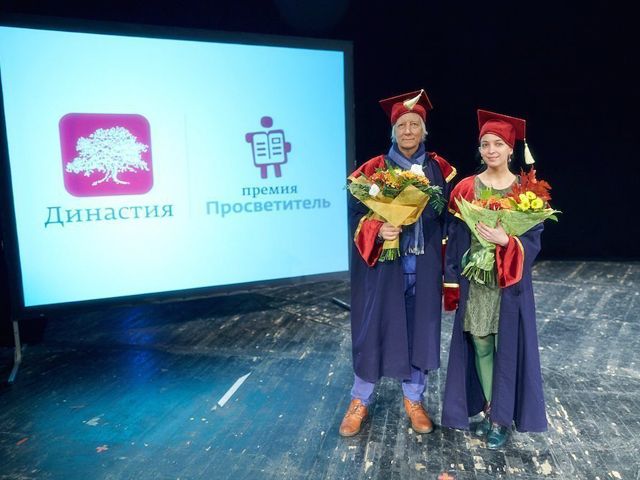
The current pair of laureates of the literary prize "Enlightener", the results of which were summed up on November 20, looks ideal for this profession. Young Asya Kazantseva (her book “who would have thought! How the brain makes us do nonsense” won the natural-scientific nomination)-a journalist who writes about science. The elegant gray -haired Sergey Yarov (in the humanitarian nomination, his book “Everyday Life of Blockade Leningrad” was recognized as the best, on the contrary, a serious academic scientist, a professor of history from the European University in St. Petersburg. Together, they seem to send a signal to the world: in Russian cognitive literature, everything is fine, it lives and develops according to the same laws as all over the world.
Historically, it happened that the non-fiction genre is developed by two types of authors: journalists who decided to go beyond the profession and write something large-scale and practicing scientists, for one reason or another, are ready to descend to communicating with the general public. We, as the results of the current “enlightener”, are clearly demonstrated, is everything arranged in a similar way. However, as usual, there is also its own specificity - with all its unconditional utility, the premium serves only as a front window, behind which some subtleties and problems are hidden.
“Today, any non-fiction is sold better by definition than novels,” says Varya Gornostaeva, editor-in-chief of Corpus (which, among other things, also published the book of Asi Kazantseva). - Basically, of course, we are talking about translated texts - Russian books in this niche are simply very few. All that our stars write - biologist Alexander Markov, historian Viktor Sonkin, linguist Maxim Kronhaus - is always very warmly accepted by both the reader and criticism. Another thing is that there are units of such authors. ” If you leave aside obviously low-grade literature (they include anything-from the “journalistic investigations” collected by open sources of “journalistic investigations” to fence esotericism, masking under science), it should be recognized that with all its demand, high-quality cognitive literature remains in some way of exotic. Despite the fact that the circulation of the books of the very successful Russian author of Non-Fikshn Alexander Markov is selected by 30 thousand copies (in modern domestic book publishing a circulation of 3 thousand is already considered very good), who want to follow his example and talk about complex things to the mass reader.
The economy of the issue
There are several reasons for this, the most banal - money. “In the West, there is a practice of buying a book at the project stage,” says Gornostaeva. - The author can bring a plan to the publishing house, and if the editor is interested, the author will receive an advance on which he will live calmly for a year and write his book. Of course, the authors also pay advances, but this is a completely different order of numbers. ”
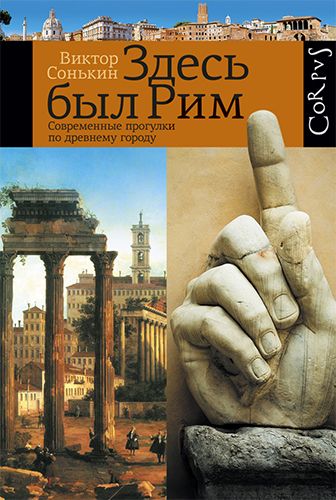
This disaster applies equally to scientists who want to speak in a popular genre, and journalists who seek to write a book. “Scientists are already engaged in the case of difficult and unsatisfied - melancholy notes last year’s laureate of the Enlightener, the author of the guide to the ancient Rome“ Rome ”Viktor Sonkin was here. “To add one more thing to this, equally difficult and equally unsatisfied is non -adaptive.” Journalists from periodicals are not in the best position. “It is difficult for us to choose the time to write a book, first of all, because of a daily exhausting turnover,” says Nikolai Kononov, journalist and author of Durov Code. - But what is the book - sometimes even for a long development of the topic of effort and time remains. And no one will provide a journalist with our creative vacation, as this, say, did the Newyorker magazine for Malcolm Gladell. In the West, it is believed that a popular book written by the author of a publication is a kind of advertising: it promotes not only its creator, but also the media book with which he is associated. Such mechanisms do not work in our country: whatever journalism star you are, no one will send you on vacation, sit and write a fellow.
In short, in the Russian market today there are no institutions ready to support the authors of non-fiction at the most difficult stage-the stage of creating a book. Even the Dynasty Foundation - perhaps the main player on the field of cognitive literature and the founder of the Enlightener Prize - does not have resources in order to systematically evaluate and select promising texts, and then address their authors. “We support the release of a large number of translated books,” says Valentin Korievsky, the curator of the Publishing Project of the Dynasty, “and everything that concerns Russian writers, we shifted to the shoulders of the Enlightener. Any author who has passed a strict selection of the expert council can count on all kinds of bonuses: members of a short list and, of course, laureates, receive a monetary reward, we will buy part of the circulation for libraries and so on. But this is already, so to speak, help in fact when the book was written and even published. In the course of work, we can provide the authors perhaps producing services: find a good publisher, give advice or simply to morally support the writer who has fallen into despondency in the middle of the race. ”
Language disease
However, the problem of money is not the only one. “Russian serious scientists are poorly accustomed to perform in a popular genre,” Viktor Sonkin believes. “This state of affairs has many reasons, but one of the main ones, perhaps, is that scientists are poorly related to the media flickering of colleagues, in the scientific community this is perceived as a sign of superficiality and indulgence of the base tastes of the public.” Varya Gornostaeva is also shared by the same opinion: “There are many wonderful scientists in Russia, but it rarely occurs that it is also interesting for an ordinary reader to know what they are doing in their science.”
The continuation (or, if you like, generation) of this problem is another - the problem of the language: people who know and at the same time ready to state complex things are simply and understandable, in our country there is a dramatically few. “Scientists (and if only they) are not accustomed to use rhetoric,” says Viktor Sonkin. -It reaches ridiculous: if at the conference someone fits in the due for 15 minutes, this is perceived as a heroic act. At school, this is poorly taught, universities are even worse. As a result, the basis is collapsed on which it would be possible to build an understanding between people. There was such a bike about Yegor Gaidar, who answered “by no means” to some question, and then everyone remembered him. Unjustly, probably, but the essence of the problem is captured correctly: people need to speak in the language that they understand. ”
Satellite and coaching
However, despite the abundance of difficulties, there is also a positive dynamics. “The consideration of the book is a serious investment with a not very predictable result, and it is not easy to decide on it,” says Nikolai Kononov. “But on the other hand, this is a challenge -“ hacute ”such a situation in the market in itself is interesting.” Tools for such a "hucking" gradually appear. And although the book rarely pays off on its own (due to the publishing advance and royalties), the author can sell the right to its film adaptation - by the way, it was in this way that Nikolai Kononov’s book “Durov’s Code”, telling about the founder of the VKontakte network, “fought off”. There are other opportunities for earnings: “The already mentioned Gladwell for his books, of course, receives good money, but public lectures bring him even more income,” says Kononov. “A few years ago he was invited to speak at the Amazon anniversary and, as people close to the company say, the fee amounted to 30 or 50 thousand dollars.” The path of public lectures is not the only possible: if the author plans to work with some socially significant topic, he can resort to crowdfunding and enlist the support of future readers. You can, on the contrary, start the already written text in free swimming on the Internet on post-payment terms. You can capitalize your literary fame through courses, coaching or write texts to order - like Ghost Writer. “In a word, there are opportunities,” Kononov is sure, “but they are not entirely direct and suggest the presence in the author of a variety of abilities - in addition, in addition, the main thing is the ability to write a class book.”
Nevertheless, right now, high-quality non-fiction has a good chance to reach a literary advance-this, in particular, is said more than convincing sales figures. “When the advice launched a satellite in 1957, for the Americans it was a tremendous shock,” says Viktor Sonkin. -They immediately began to rebuild the system of higher education, and we still see the results of this process in the form of the best universities in the world, Nobel laureates and indirectly-a huge number of excellent popular science books. Now, I must say (right now, on a scale, rather, months than years), it seems to me, there is a surge of interest in science, lectures, readings, poetry, literature - everything, so to speak, spiritual and enduring. Of course, this is the phenomenon of vague and unstable time, but, nevertheless, it would be nice to not miss this chance. ”
Galina Yuzefovich
Moscow