
Translated material
Fish, real by 95 percent
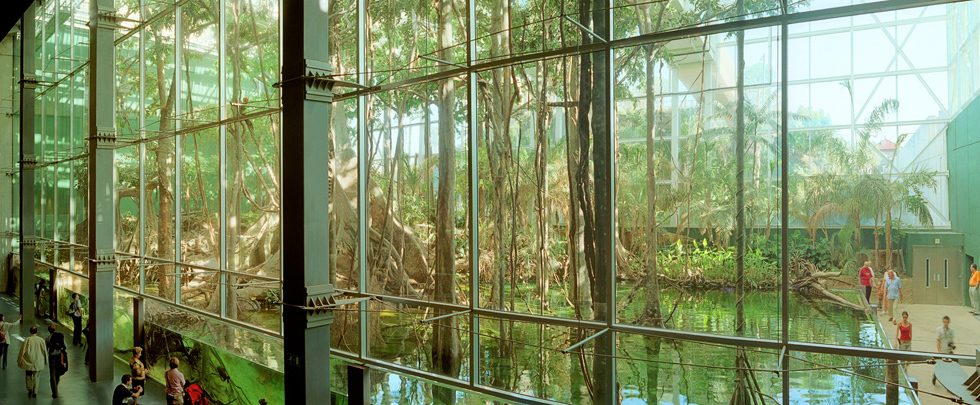
The Cosmokaisha Museum in Barcelona opened in 2004 on the site of the old city museum of science. The founders invited him from scratch by a professor of physicist Jorge Wagensberg, who was engaged in plots at the junction of disciplines-for example, using the laws of thermodynamics, he found out how many insects were permanent in the jungle.
Vagensberg composed and published in the scientific journal the manifesto of the Total Museum, where he claims, for example, that he invented a tool against a dictatorship, which imposes on citizens the thought "more smart and better trained people will decide everything for you." The Museum of Science of the new type, on the contrary, requires "individual thinking for any reason."
In Cosmokaisha, he settled a living storm forest - with trees, vines and constant rain. From under the roof with an interval of several minutes, maple seeds are pouring-this is to demonstrate their aerodynamic qualities. Giant pieces of cliffs built into the walls show where the minerals are found and where they came from.
At the invitation of the Polytechnic Museum, Vagensberg gave a lecture for museum workers in Moscow and commented on its editor of the section "Science" COLTA . Ru Borislav Kozlovsky. We did not separate one from the other and publish a summary of the performance with the laid out the explanations of the professor.
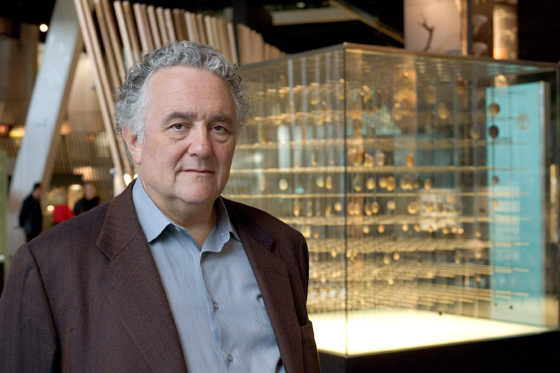 © Universitat de Barcelona Professor Jorge Vagensberg
Why do you need a museum of science at all if we already have books, magazines, schools and universities? In schools and universities, reality represent ( represent ) . In museums, we present it ( Pressent ) . Why make reality better than representing? So that you understand the difference, I will give a gastronomic example. If you eat black caviar, this is a completely different matter than to listen to the story about how someone liked it.
The second point applies to contradictions. Here you have any idea of reality in your head. And you look at the presented reality - not at its idea! “And you see the opposite of what you thought.” You think “a”, but you see “nope”. You say to yourself: “This cannot be. Either I need to think differently, or look differently. ” Get to contradictions is the most important. This is not enough books, magazines and TV, since the contradiction is not so strong when you are dealing with the ideas of reality instead of itself. Reality is richer, you can survive the contradiction directly.
The common wisdom of teachers orders to hide contradictions. But, in my opinion, a good teacher should, on the contrary, wait for them with impatience.
The new type of science museum is a tool against dictatorship, which imposes the thought "more intelligent and better trained people will decide everything for you."
For seven years, I have been looking for a “cosmokai” thing under which you can hang a sign “We don’t know what it is”. And he found: it was a stone from a desert with a very unusual pattern. We really did not know where he came from. It was shocked by people. The museum admits that he does not know something. So you show that science is an open thing, science has not yet ended.
Now, by the way, we figured out, and a whole scientific article is devoted to the stone. He was born when there was a storm forest in the place of the desert. There was a cave, water flowed along the cave, stones moved from place to place and were overlined by bacteria. Concentric structures were formed from the layers of bacteria. And then the cave's arch collapsed. And on the territory of the desert there are only ten square meters left, where you can find such stones.
***
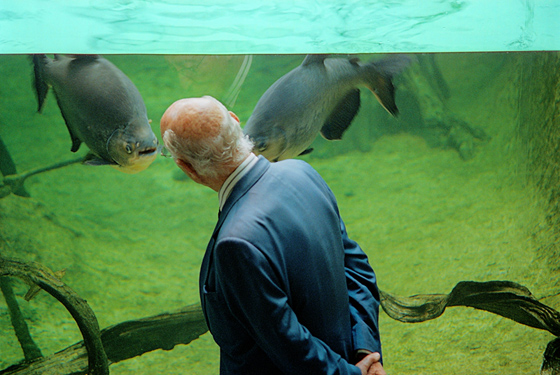
If a fish floats in the museum - is this a real object? Yes, but not one hundred percent. Since the fish behaves differently in the aquarium than at large. She is real by 95 percent. Good museums are different in that they use objects that are real to the maximum possible extent. If the fish is extinct, its fossil remains are suitable. This is still better than a dummy.
The museum is a concentrated reality. Like a zoo in comparison with the forest. It is difficult to meet the beast in the forest, since the animals are scattered in space and in time. And when you come to the zoo, they are concentrated in a small part of space and everything is in sight.
 © cosmocaixa
But here we are faced with a problem. If we bet on reality - objects and phenomena - then we limit ourselves harshly. Because most of the reality is invisible. I can’t see the atoms, they are too small. See how the soap bubble bursts. What is happening before and after, I can. But not the process itself. It is too fast and therefore invisible. You can’t see how the tree grows. I have no opportunity to wait a hundred years while it grows up. This happens with many things: some opaque, others are too distant, others are too large, the fourth is too small.
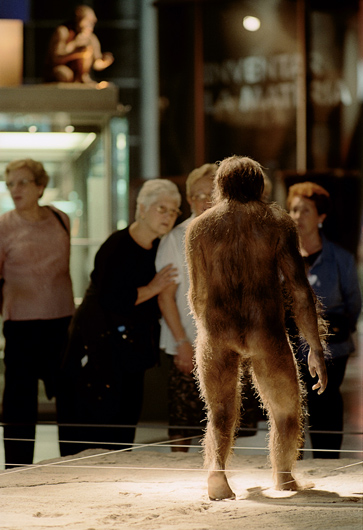
In one museum of technology, I asked the curator: why did the first bicycles have the wheels of the wheels? The front is large, the back small. He said: such, they say, in those days there was aesthetics. Such a style. Of course, his answer was not suitable. Next to the subject, it was worth showing the phenomenon: the chain gear rotates the bicycle star. But in those days, the chain has not yet been invented, and the guy in the saddle pedals attached to the front wheel. Therefore, the more it is, the further you can leave. As soon as the chain was invented, the wheels are the same diameter.
 © cosmocaixa
In the Dominican Republic, I found a piece of amber with a whole family of ants inside, they drowned in Smol 20 million years ago. Humanity, view of homo Sapiens , has existed only 200 thousand years. In this amber there is a lot of interesting things. Here the ant drags eggs. The other gives an alarm. Here is an anti-worker with a larva. As on a sinking Titanic. There are a lot of events, and a good question - what happened 20 seconds before the resin recorded this scene 20 million years ago. The case of science is to reconstruct phenomena. This is one square centimeter of reality, and we dedicated an exhibition of 150 square meters to explain it.
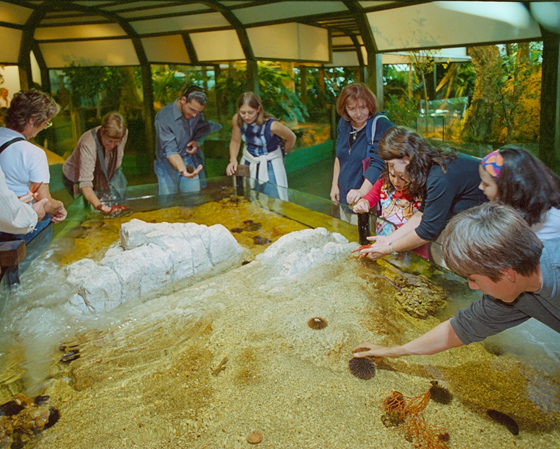 © cosmocaixa
My new task is to make a museum where science and art are present at the same time. It will be a Hermitage in Barcelona.
***
Science is able to interest art and vice versa. I had happiness to know in the last years of his life and somehow asked: where did he get in the picture of hyperkub (an analogue of a cube in four dimensions.- Ed. )? He lied that this is the invention of Raimund Lullius, a medieval mysticism. But when I shared with him his interpretation of the hyperkub, he agreed with her. And he admitted that in the 1930s he was friends with one German mathematician who explained to him the idea of hyperkub shortly before his death.
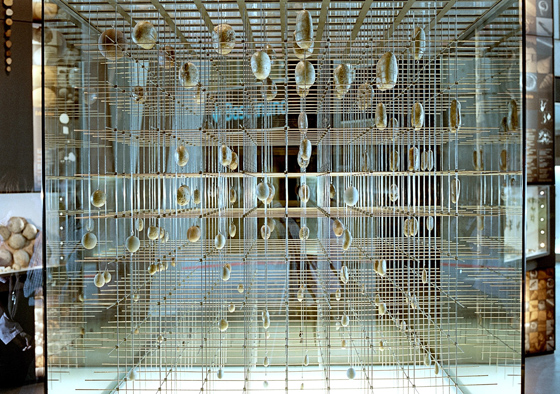 © cosmocaixa
We met this way. I wrote an article that physicists are not in vain interested in philosophy, and philosophers - physics. It is impossible for the philosopher to interpret the world, not knowing anything about quantum mechanics and the theory of relativity. But you can’t do physics if you have not heard about Heidegger and Spinoza. And one politician invited me to discuss between philosophers and scientists. But he gave me too little money. A quarter of the amount required. My publisher mentioned this in a conversation with Dali, and he said: O'Kay, I will pay the remaining three quarters. We met at the Dali in the theater-museum, he himself was present, and therefore everyone was very interested in this. The philosopher did not appear. But other scientists and I talked about philosophy perfectly. From this, our friendship with Dali and began. He had a very strong intuition about science, although he did not understand anything in it.
There is a picture, you probably can find it on the Internet, where 26-year-old Dali poses a photographer with Scientific magazine American . There were more scientists among his friends than artists.
Once - he was already very sick, with tubes in his nose - the Nobel laureate Ilya Prigozhin asked me to translate for a given question: is it true that a soft watch is a metaphor for the theory of relativity? Dali answered: no, no, nothing like that. He read the book “What is Life” by Erwin Schrödinger (Nobel Laureate in Physics, Creator of Quantum Mechanics. - Ed. ), And Schrödinger argued that living systems are the middle between the cloud that has no shape and for hours with their mechanism. Therefore, he drew his soft watch.