
Translated material
The results of the week. Dollar and oil pressed on the government
In the economy
 The results of the week. Dollar and oil pressed on the government
November 28, 2014 Maxim Blut
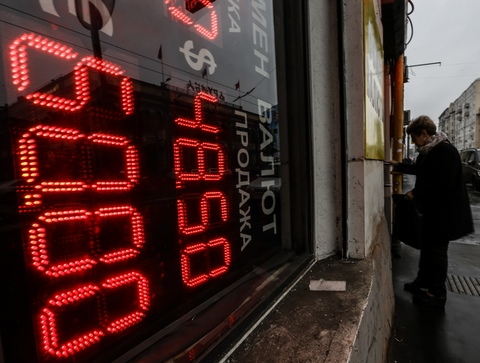
After the “historical” decision, not to reduce quotas for oil production, adopted at the OPEC meeting on November 27, oil in world markets updated minimums, collapsing at once at six percent. The Brent mixture collapsed below $ 72 per barrel, refuting the numerous comments of the last week that the “bottom” has been passed and much below $ 80 will not fall in the near future. Instead of the pricing corridor, which was supposed to some analysts in the framework of 80-90 dollars per barrel on the horizon, at best, the range of $ 70-80 is loomed. At the same time, it is already obvious that even in the current situation, OPEC will not take any decisive actions, so the probability of further falling - up to $ 60 - is much higher than the prospects for a return to $ 100. Against this background, the ruble returned to its historical minimums. The dollar came close to the mark of 50 rubles, and the euro is already higher than 61.
So if someone had hopes that cheap oil and expensive currency are temporary phenomenon, now they are melting like a predawn fog. Plus, inflation catches up with all Russians. Prices for production products have already gone. They grow in a spasmodic, as they sell old warehouses. For new imported goods and prices are new. The thesis that the population will have to pay for the crisis, which, in essence, turned out to be overlapped “inflationary”, becomes a reality.
The fact that the Russian economy is not ready for low oil prices, nor for sanctions, or for any other shocks, has been written more than once. As well as the fact that now the government and the monetary authorities have to extinguish the predicted fire. And now one of the ministers can be accused of except of excessive softness and a lack of fundamental. After all, they themselves signed under the May decrees and under the large -scale program of the re -equipment of the army. They with their own hands visited ambitious investment programs of Russian Railways like the reconstruction of BAM and the Trans -Siberian Railway, and allowed the allocation of money from the budget and reserves on them.
Therefore, today, instead of Kudrin, the Minister of Finance Anton Siluanov, who once refuted the words of his former boss about the absence of a sufficient amount of money to fulfill all Putin-Medvedev’s election promises, looks, to put it mildly, pale. Especially when it begins to evaluate the damage that the Russian economy and the budget from the fall of oil prices and Western sanctions will suffer next year.
In fairness, it should be noted that, agreeing to become the Putin Minister of Finance, Siluanov could hardly predict Krymnash. As well as Alexey Ulyukaev, who agreed to become the Putin Minister of Economics. Now both, and with them the head of the Central Bank Elvira Nabiullina, faced a very unpleasant prospect of being appointed by the main culprits of the crisis that covered the country. Moreover, the topic of machinations of external enemies is largely played out. Now internal accomplices are needed. This is a standard reception of authoritarian modes. When the authorities are not able to maintain the standard of living of the population, it should immediately present, and it is advisable to approximately punish those who are to blame for hardships and hardships.
The current decline in oil prices and the Russian national currency for the government and the Central Bank is especially inappropriate. Since the federal assembly, from which some software statements, is waiting for the Putin’s message, are a few days remain. And the background, on which Putin will pronounce his words, plays far from the last role. If the forecasts of the imminent resignation of the government are fair, then in the current situation this resignation seems completely not honorable.
The ministers obviously feel it. Moreover, everyone has their own way to respond to a threat. Ulyukaev acts more and more often, and with more and more bold criticism. He criticizes the Ministry of Finance and the Central Bank for plans to return to the GKO market. He criticizes the nationalization of Bashneft. He criticizes plans to allocate the money of the Federal Federal Tour into the Rosneft. The list of what Ulyukaev can be continued for a long time. The official can be understood. He needs to have something, so that, after resignation, to be able to get it and say something: “You see, I warned!”
Siluanov, on the contrary, is trying to fully use the tools available to him. So I remembered the sad memory of GKO. It would be better, of course, he did not do this: any references by 1998 are especially painful today.
The only person who has recently simply beg with confidence, is the head of Rosneft Igor Sechin. Given the state of the oil market, it looks at least strange. However, it is pointless to engage in political speculations. Everything will be clear already very soon: the message is previously appointed on December 4.