
Translated material
The price of oil falls with the ruble. Barent barrel costs less than $ 70, dollar - more than 50 rubles
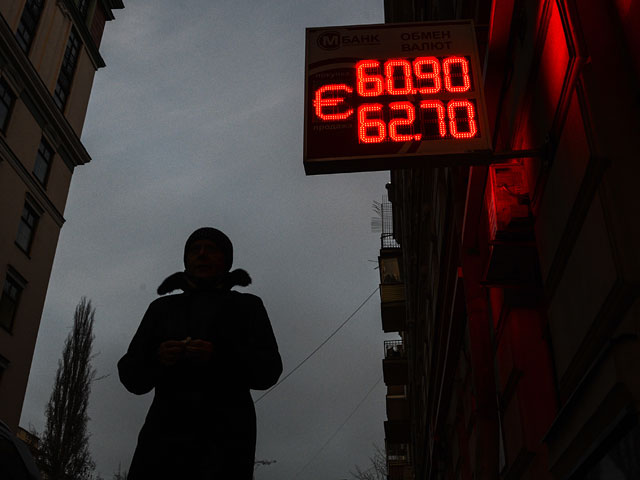
A sharp drop in oil cost again collapsed the ruble. According to TASS, by 22:00 in Moscow, Brent oil has decreased by 3.7 percent - to $ 69.9 per barrel. Such a low price - below $ 70 - is fixed for the first time since May 2010, the agency notes.
Against this background, the dollar on the Moscow Exchange set the maximum, exceeding 50 rubles. To date, the dollar costs 50.01 rubles. Thus, since the beginning of the year, the dollar to the ruble has increased one and a half times. Over the past three months, the ruble weakened by more than 25 percent of the dollar.
By 19:00 Moscow time, the dollar remained at the level of 49,4299 rubles (by 193.98 kopecks higher than according to the results of previous bidding), the euro cost 61,5905 rubles (grew by 234.83 kopecks).
The day before, after the OPEC decision , not to reduce oil production quotas, the price of Brent on the ICE Futures London Exchange dropped to $ 73.06 per barrel. At the same time, during the trading, the price fell to $ 72.74 per barrel - the lowest mark since September 2010.
Analysts do not exclude: such a fall is not the limit
Russia, which receives about half of the budget revenues from oil and gas revenues, is approaching the first recession since 2009, Bloomberg notes. With a decrease in oil price by $ 10 per barrel, total budget revenues fall by $ 10 billion.
Rosneft President Igor Sechindid not rule out that the price of oil could fall to $ 60 per barrel and below. Russian President Vladimir Putin, however,is sure that the price for the barrel of energy will not remain at a low level.
The Minister of Economic Development of the Russian Federation Alexei Ulyukaev also expects an increase in oil prices in the winter - according to him, this will be due to an increase in its world consumption. The minister suggested that the cost of a barrel will be closer to $ 90, RIA Novosti writes.
Meanwhile, Raiffeisenbank called a fair ruble exchange rate when the oil price is reduced - according to analysts, for the average annual oil price of $ 70 per barrel, the dollar will cost 55 rubles. If the oil price drops to $ 65 per barrel, the dollar will rise to 60 rubles.
The Central Bank of the Russian Federation said that he was ready to conduct foreign exchange interventions in the event of a destabilization of the situation - this will help protect the ruble from further fall. Earlier, the Central Bank refused regular foreign exchange interventions. Experts interviewed by Bloomberg suggest that the Central Bank would resume foreign exchange interventions if the ruble weakens up to 50 rubles per dollar.
Recall that in October, Russian President Vladimir Putin claimed that the world economy would collapse while maintaining oil prices at $ 80. And the deputy Minister of Finance of the Russian Federation Alexei Moiseev, when the dollar cost 39.7 rubles, and the euro 50.12 rubles said that the "ruble reached the bottom" and would not fall anymore.