
Translated material
Your own memory
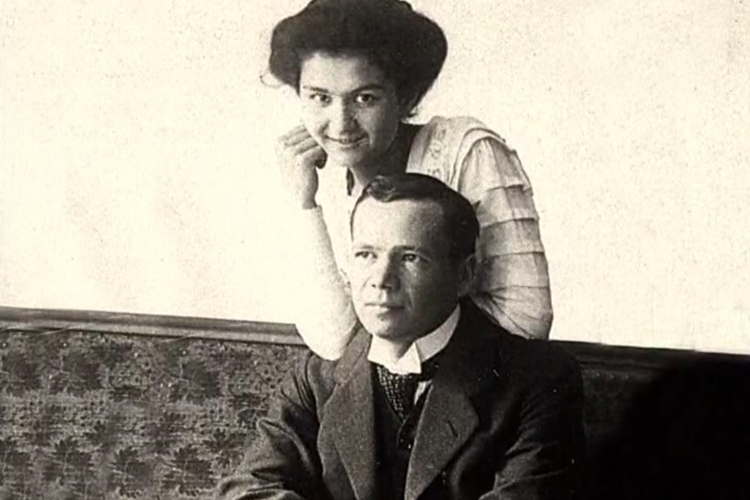
In the XX century, the role of “recallors” in Russia went to mostly women - wives, daughters, sisters.
Previously, they were the guardians of “household memory”, the legends transmitted intimately - according to the chains of personal connections, according to what they call the “spirit of the family”, general not so much with memories, but the memorable words stored by things - who mean a lot “for their own”, dumb to others, in the best case, they can guess their past, but are no longer able to restore it, since the “object of memory” is an “object of memory” is an “object of memory” The sign, not the memory itself, it is designed only to encourage him.
They kept the memory at the level of “life”, while men were responsible for the “big context” - they wrote memoirs, while the ladies were usually limited to notes, small texts that transmit family, everyday life, as a rule, to the same “their own” children and relatives. Sometimes these texts fell into print, but remained “addition”, something interesting precisely due to the screening of the usually non-inspection details-the worldly density that their men rejected: the interweaving of family and related ties, the excitement of matchmaking, relations with numerous sisters, son-in-law, etc., memoirs of picnics or trips to the LogYs with the entrance to the cousin.
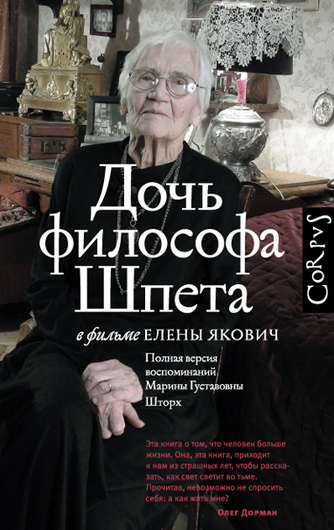 © Corpus
The Soviet twentieth century changed everything. Not only because many men could not write their memories: some - not having time, others - afraid. But because those who “managed” were broken, lost their voice. That is why in the next century, in contrast to the previous one, in those cases when its voice sounds, where the closest to talk about himself, about his time, about himself in time is artistic prose, story, poems. Where it just manages to move away from yourself - to get the opportunity to get closer.
In the Soviet world, men often turned out to be weaker than women - therefore, probably, the call to “be a man” sounded so often. Weaker because there was no shelter in their weakness - and weakness turned out to be naked, the retreat turned out to be surrender, and there was no way to go into private life, to accept the values of the family as the highest values that did not need other justification. The attempt to such a acceptance itself presented only by another option of surrender - on the contrary, for a woman in the Soviet world, such a privilege was provided, it had the right, appealing to the “female”, “private”, “private”, slipping out of the trap, for her - besides the most cruel moments - there was the right to “irresponsibility”.
The woman had the right to unofficial memory. And, among other things, women who are able to recall those who had something to remember, elementarily survived much more. Therefore, the Soviet age conveys the memory of itself mainly by female texts - Lydia Chukovskaya and Lydia Ginzburg, the Hopes of Mandelstam and Emma Gershtein, Lilianna Lungina and now - Marina Storch, the daughter of the outstanding Russian philosopher of the Silver Age Gustava Speet, Aunts of Ekaterina Maksimova, relatives of the Guchkov, Ziloti, Rachmaninovs. In her memoirs, recorded and processed by Elena Yakovich, the intonation is primarily striking - sober, solid, smart and at the same time sensitive speech.
However, in this book an illustrative series is no less important than the text: a rare example of a book as a whole, where everything is from the paragraph breakdown to the sequence of photographs, meeting on one page or neighborhood on adjacent - thought out and felt, works to reproduce the intonation of a long conversation with chronological interruptions, returning to the past or running forward, and the main thing is with a living. memory. And the last: perhaps the main value of the book is not a story about certain circumstances, but the very way of recalling when that the fact that it seems to have become a story has already turned out to be personally memorable - to become one of the paths for the reader, leading not into a “great history”, but to a personal experience that is always more of an individual person: after all, this is the experience of his situations, with friends and close ones, that makes our memory more directly, allows us to be more directly, allows us to be more directly. Recommended by us to perceive from others.
The woman had the right to unofficial memory. And, among other things, women who are able to recall those who had something to remember, elementarily survived much more.
There are very few those who can tell such stories: after all, it is necessary for this to exist “memory of the family”, “memory of your circle” - the great layer that exists between me and what I can reach directly - and “history”: between the personal past and what I can know, but I can no longer survive as “my past”. And here it requires what was more difficult to survive in the Soviet world - the continuity of memory, the continuity of things. After all, the “memory” does not live on its own, she holds in objects, in Pushkin’s posthumous mask, which remained of her father, the only one that has survived from the Big Pushkin collection that had to be sold, so that there was something to survive in Yeniseisk and in Tomsk, in a poetic initiation inscribed by Kachalov “Marinochka Shpet” in his photograph, but which can be sorted out if “it is“ You know".
A year and a half before his death, in April1936, Shpet wrote to Baltrushaite: “It was pleased to teach me a lesson, to force me to understand things and people in order to find his real, not an illusory place. It seems to me that the lesson was submitted late and I will not apply all the benefits of its edification, but who knows where the deadlines are set and how the times should be filled? .. ”(p. 163). Life was rich in the lessons taught by his daughters (the youngest born in 1916), and, much more surprisingly, she was able to survive in a world where everything was against the ability to remember: not in slavery of his memory, but to remember precisely in order to live, associating herself with the past, with the fact that more than you.
And one more, last, remark. In the interweaving of different stories in this text, another, unusual image of the Russian 20th century grows-where history did not break ties in time, where family stories from the beginning of the century continue in the 20s and 60s and where even Klyuyev, asking for alms near the bridge through a Ushaika, is also a part of “its history”-terrible and fierce, but also in the ultimate cruelty of the memory that finds the human measurement of memory.
Yakovich E. Daughter of the philosopher Spet in the film Elena Yakovich. The full version of the memoirs of Marina Gustavovna Storch. - M.: AST: Corpus , 2014. - 219 p.