
Translated material
"Correspondence": Exhibition in "Memorial"
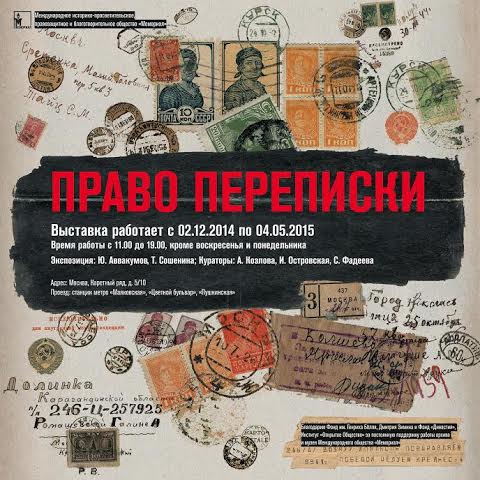
December 1 at 18:00 in the "International Memorial" (carriage of 5/10) an exhibition "Right of correspondence" will open. The exhibition will work until May 2015 from 11:00 to 19:00 daily, except Sunday and Monday.
Exposition: Yu. Avvakumov, T. Soshenin.
Curators: A. Kozlova, I. Ostrovskaya, S. Fadeeva.
The exhibition presents notes and letters of political prisoners of Soviet camps of the 20th and 80s from the collection of the International Memorial. These materials give a documentary idea of the correspondence mode, the little -known side of the Gulag repressive system, which regulates the communication of prisoners with the "will".
Having neither pencils, nor papers, nor envelopes, prisoners were forced to write to the will on cigarette boxes, scraps of newspapers, embroider fish on fabric shreds, scratch the words on birch bark, hide tiny notes to relatives in the folds and buttons of clothes, etc. Special messages are news thrown out by prisoners from stage wagons in the hope that someone will select, but will not give the "organs", but will send the letter home.
Throughout the history of the Gulag, the administration of the camps with a favorite means of punishing prisoners was a ban on correspondence.
The peculiarity of the post -Stalin period - letters cease to be only a private business. Letters from the camp were intended not only to close, but also to a wide circle of friends. Many began to write to the camp unfamiliar political prisoners to support them. In their letters and statements, the political prisoners opened the camp world for everyone, and the very problem of camp correspondence has become a socially significant topic.
Letters from the will were for prisoners a single thread connecting prisoners with another, not camp life, the main evidence that they are waiting for them to return. And those who returned from the camps brought these letters with them as the greatest value. The fear of new arrest forced people to destroy these letters. But many, in spite of everything, hid them and managed to save them.
Today they have become exhibits of the exhibition.