
Translated material
"If I were president ..."
The New Times decided not to wait for the president’s message and with the help of experts to write his own version of the message of the head of state
podpiska.newtimes.ru/
On December 4, Vladimir Putin will come with an annual message to the Federal Assembly. They are waiting for him - with fear and hope - as they did not wait, probably, never in the 14 years that Putin is in power. People who think have a persistent sensation: the country in all pairs rushes downhill. As one good economist said, "we are really in the fork, and too much depends on what the course will be proposed."
The preparation of the message, like all of the last years, takes place outside of any public discourse. Only in the media from time to time various kinds of leaks break through: “Putin will declare the introduction of a moratorium on raising taxes on business,” writes RBC, “while maintaining political freezing, he will offer a program for the liberalization of the economy,” the source said.
But what will be in the final version of the message now (the number has gone on Saturday, November 29), no one knows, even at the level of key ministers and deputy prime ministers.
The technology of work is as follows. First, the ministries “ship” their proposals to the presidential administration - often, as the insider says, bypassing the government, and then some proposals may appear in the message that is lobbied by the sectoral minister, but which are by no means supported by the cabinet. Plus, the president holds several (from two to four) “installation” meetings to which, if issues relate to the economy, are invited, in addition to Prime Minister Dmitry Medvedev and First Deputy Prime Minister Igor Shuvalov, key ministers of the economic bloc (this year-Minister of Finance Anton Siluanov and Minister of Economic Development Alexei Ulyukaev).
At the entrance and at the exit there are presidential assistant Andrei Belousov (economics) and first deputy head of the administration Vyacheslav Volodin (politics).
Further, the President and his advisers in areas who rule the heads of presidential speech are taken for business (speechwriters) of the President and his advisers.
However, according to the interlocutors of The New Times, all Putin's messages are to a large extent “copyright”: “He personally agrees on all ideas.”
As a rule, 5-6 options for the message are born: the iconic ministers in the government, if you are lucky, see some versions in the process of their preparation, and the final option is a day before the message, as they say, pour into granite. However, Putin at the very last moment can fit something by hand. This technology of the presidential “surprises” creates a lot of problems for the government: any statement by the president costs money and very big money, and they sometimes do not have time to calculate them (as, apparently, with the famous May (2012) decrees of the president).
According to sources, this year the main topics of the message will be the situation in Ukraine and national security issues.
The New Times decided not to wait for the president’s message and with the help of experts to write his own version of the message of the head of state.
It was not easy for us all year. Our policy against Ukraine led to consequences that we did not calculate and did not expect. Rupture with the West. Sanctions against state banks and state -owned companies in the United States and the European Union. De facto collapse of the Customs Union. The war in the east of Ukraine, as a result of which several thousand people, including Russian citizens, tens of thousands of refugees and displaced persons have already died. A tense relationship with the neighbors with whom we were once citizens of the same country and where many people who speak Russian still live. In fact, we were isolated, and if not for China, this isolation would have become complete. We find understanding in North Korea, but it is unlikely that many of you are pleasing.
In addition, the conjuncture of energy prices has also changed: the budget for the next year is a overflow at the rate of $ 93 per barrel, and the most optimistic forecasts predict that the price will stay around $ 80–90.
Budget losses from reducing oil prices, Western sanctions against Russia - they will cost us $ 40 billion a year, and reducing imports - and this, including the result of the introduction of our ban on the import of products from Europe and the United States, will amount to 1 trillion rubles.
The economic results of the final year were not at all rainbow. The growth of production is 6 times less than we expected, inflation is almost 2 times greater, the outflow of capital will be 6 times higher than our expectations and can reach a figure of $ 130 billion, the exchange rate has become out of control (Evsey Gurvich, the head of the economic expert group) *. For 12 months, the ruble exchange rate to the dollar fell by 48 %, to the euro - by 36 %.
Prices are rising, not only for imported goods: prices for Buckwheat beloved by Russians have increased by more than 16 %, and wholesalers already warn sellers that the price will continue. And not only for buckwheat. In general, for 2014, the consumer price index is close to 10 %.
In 2015, we are now planning the growth of GDP at 1.2 %, but most likely it will be lower, and the pessimists predict that it will completely go a minus.
I am ready to repeat what I once said: “To not be worse, you do not need to constantly frighten yourself”*, but it would probably be wrong to turn a blind eye to the real state of affairs. This is what experts advise me.
So far, in Russia, one person decides everything. Bye
What to do?
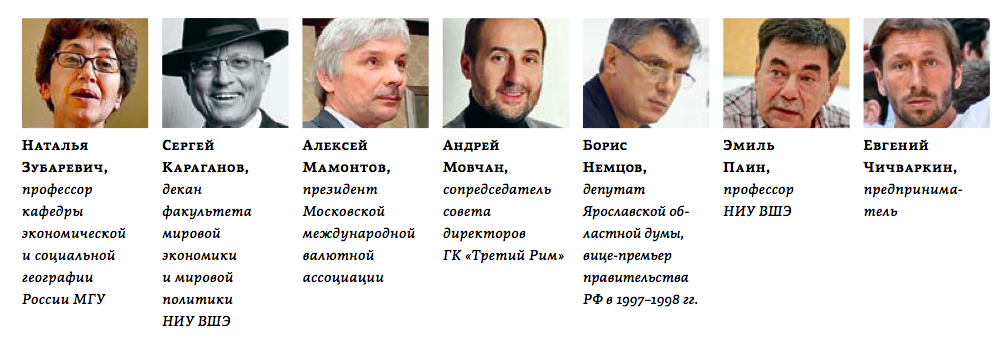
Crimea. We are ready to start negotiations with Ukraine on the special status of Crimea. Probably, we need to think together that the peninsula is provided with a significant autonomy and the status of a free economic zone, an open border with both Russia and Ukraine, the equal rights of three languages-Russian, Ukrainian and Crimean Tatar. Such a special status could be fixed for a long period of time - say, for 25 years, followed by a referendum (Andrey Movchan, co -chair of the board of directors of the Third Rome Group of Companies) .
Donbass. Immediately withdraw special units from the Lugansk and Donetsk regions, return the “vacationers” home ( Evgeny Chichvarkin, entrepreneur) , disarm the Russian Federation illegal armed groups in the DPR and LPR and put the territories under control of the Ukrainian authorities, subject to the Ukrainian side of several conditions - in particular, the tradition of the Donetsk and Luhansk regions of the regions economic autonomy (without the right to adopt their laws on foreign economic activity), the consolidation of the Russian language as a regional, amnesty for everyone who has not committed or was not the organizer of crimes in the territory of the DPR -LNR (Andrey Movchan) .
Foreign policy and national security. Today, Russia has been late for 15 years to grow to the growing markets of Asia. But our new foreign economic orientation should not mean the refusal of Russia from the Western, European development vector, that is, the refusal of Russia, in fact, from itself - from what it received from the Vikings, Byzantium, Vladimir Red Sun, and even more so from Pushkin and Tolstoy - from European culture and identity ( Sergey Karaganov, the dean of the faculty of world economics and world policy of the NRU NSE) .
The central topic for us is a decrease in the level of tension in Europe. This is of paramount importance for us. The need for this is set as an increase in negative trends in the Russian economy, and the development of an international situation.
By the way, the reversal of Russian foreign policy to the east and a qualitative deepening of strategic partnership with China can be implemented only with normalizing the situation in Europe. The Chinese leadership gives us unambiguous signals: the increase in tension is contrary to its political plans. The Eurasian project, which remains the most important in Russian foreign policy, is also seriously deformed by the threat of a new Cold War, and cannot develop normally. The risk of developing existing tension into a full-scale military-political confrontation is not critical, but it is extremely worried about both elites and public opinion in many European countries. The real and systemic steps of Russia, aimed at reducing risks, would make a strong impression - and would become a serious factor in the growth of disagreements within the NATO block. But it should be understood: such steps cannot be rhetorical or negotiating.
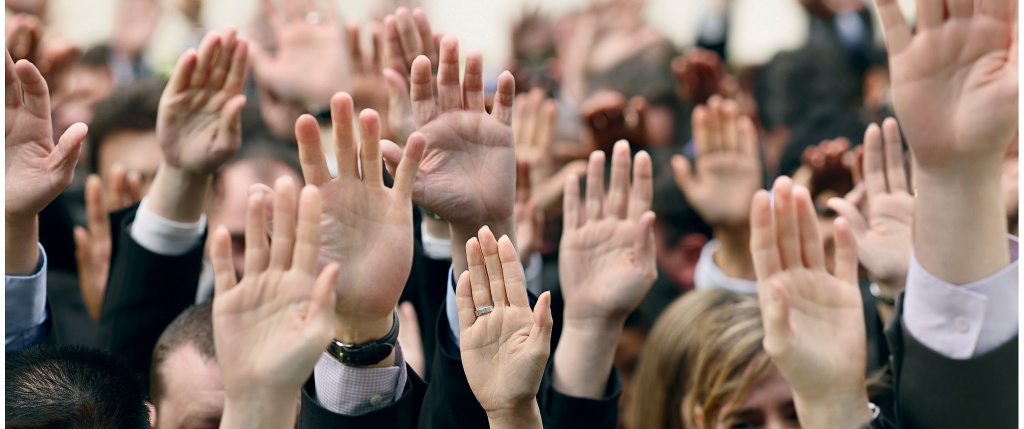
“All as one” is good only in the army. Development requires discourse
What can we offer?
First. Strengthening trust measures and reducing military activity in the Baltic region. Namely: the introduction of a system of notifications about the flights of military aircraft (as you know, in NATO they operate with a figure of 400 intercepted our aircraft in 2014, but we know a genuine figure) and the movements of the ships of the Baltic Fleet. In addition, in the framework of strengthening of trust measures, one -sided restrictions on the number of our troops in the Kaliningrad region can be carried out and declare the non -missing complexes of Iskander. Timely would be such an initiative as an invitation on a regular basis of foreign observers to the exercises of the Pskov Division of the Airborne Forces.
Such measures will not infringe on the safety of Russia, but will deprive NATO plans to increase the presence in this region. It is known that the Baltic countries, as well as Poland (as well as Sweden), are the most active critics of Russia's policy; Trust measures will help neutralize such criticism and create the opportunity for us to demand the elimination of even the symbolic military presence of the United States in the Baltic countries.
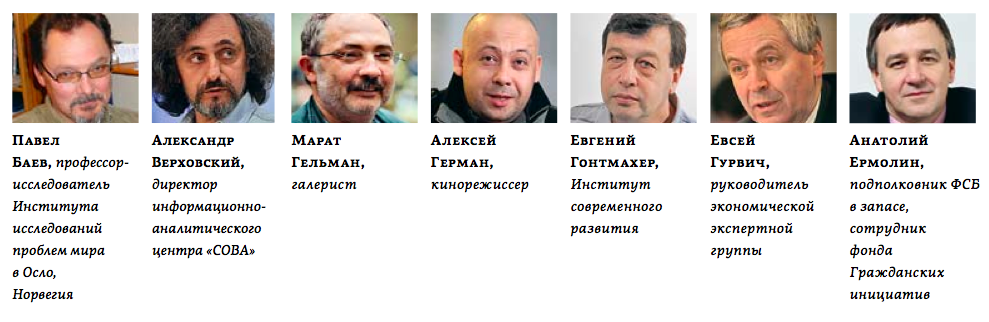
Second. A decrease in military activity in the Black Sea region: for example, a warning about the movement of ships of the Black Sea Fleet and transparency in the deployment of a group of Russian troops in Crimea ( Pavel Baev, professor-research institute of research of peace in Oslo, Norway) .
Army. The reform of the Russian army stopped halfway. We could not completely proceed to the contract service, this year we should have 304 thousand soldiers, which is about a third of the total number of armed forces. I am convinced: we need a mobile modern army of an extraterritorial type, and it should be completely professional.
Despite the fact that we declare that our armed forces should be able to conduct successful hostilities at once in all theaters of military operations, they are not capable of this. The military themselves admit that on the fourth day of such a war we will be forced to use nuclear weapons. And if so, it is much more profitable for Russia to have a small, combat -ready army, like military special forces, which is easy to throw from one theater of military operations to another.
In addition, there must be a “second” army - in case of large -scale military operations - the so -called “national guard”. This is an updated military reserve, periodically undergoing training and retraining. Young people can receive military specialties in courses at the place of residence, and not in the barracks, plus - military training. Such a “guard” should form on the territorial principle: where a person lives - there he serves. Here the principle of fosteen is included, and from the point of view of the fighting spirit, such units can be very durable.
Finally, a law must be adopted, which prohibits the staff of the Armed Forces to participate in special operations or in hybrid wars. There are specially trained people who know what they are going to, and an ordinary soldier should not fall into a situation where he suddenly finds himself on an adjacent territory, with an incomprehensible status, and is forced to shed his blood, and his mother, receiving a coffin, can not even ask where and under what circumstances their son (Anatoly Ermolin, the FSB lieutenant colonel, an employee of the Civil Initiatives Fund).
Financial and economic policy. We are standing in front of a serious fork. I have already said above that the economic results in 2014 are very far from optimism. And to that, in addition to sanctions and prices, there are fundamental reasons.
First of all, we never left oil dependence. As soon as oil prices stabilized - even at a record high level - the economy has stopped, their fall can cause a recession. The ruble is still firmly tied to the oil barrel, which is weakly responding to other signals. For more than ten years we have been talking about the need to diversify the economy, but have not advanced to solve this problem. It was easy to put up with this while the oil was valued, but now we are entering a long lane of cheaper oil - in the past, such periods lasted 15–20 years. This means that we have only two paths.
We can be content with small - to come to terms with the fact that the real incomes of the population will be stomping at the current level at best, the growth of pensions will gradually begin to lag behind inflation, medicine and health care will be less and less meet modern requirements. Our country will slide down to the life level of the “third world”, maintaining its significance in the world due to military potential. If this prospect does not suit us, there is another way. It is much more difficult, but will not only get out of stagnation, but over time to enter the number of developed countries.
I invite business to pay all taxes and invest in the Russian economy. For my part, I promise that every year the burden of excess regulation will decrease, which today hangs on each company. We will never do business as easy and convenient as in Hong Kong or Singapore - this is not affordable for anyone. But after 10 years, we can achieve conditions as in the UAE or Thailand.
I urge citizens boldly to take my future in my own hands. Get promising professions - and the government will ensure the demand for modern specialists who can receive a decent salary. This will require an influx of investment and advanced foreign technologies, the development of competition and increase the openness of the economy. Of course, we will remove the fears of investors - I firmly guarantee the absolute security of property rights in our country.
Those who have an entrepreneurial vein, I advise you to boldly open their own business. You can be sure that now inspectors from numerous controlling authorities will not come to you daily. I also promise not to increase taxes until we are equal to economic development with the leading countries.
I believe that the Fund of National Welfare should be an inviolable margin - in case of real storms in world markets. This is a more correct use of the FNB than the support of ineffective and clumsy industrial monsters. From now on, both state and non -state companies should not rely on the state, but on itself, the government will simply provide everyone with favorable conditions, without preferences and privileges (Evsey Gurvich) .
I also consider it appropriate to fix for a term of at least 10 years a zero tax rate on all forms of capital growth invested in Russia, as well as on dividends. At the same time - to introduce 20 % tax on capital invested outside our country. I propose to legally prohibit the arrest as a measure of pre -trial suppression on any household nature crimes ( Andrey Movchan ).
Voices are heard, calling for the financial authorities of the country to introduce restrictions on the free movement of capital, prohibit the dollar and the euro, and turn the country into a besieged fortress. I want to warn them from this: the abandonment of market exchange rate in favor of administrative regulation, the restoration of old currency restrictions and the creation of new encumbrances will abandon the country in years ago. But the work on building calculations in rubles with counterparties in the near and far abroad must be stimulated in every possible way. The government needs to more actively maintain export potential in those industries - not raw materials, but producing high -degree processing products, which is able to join the competition in world markets (Alexei Mamontov, President of the Moscow International Monetary Association).
Privatization. For a reasonable time, we must save the state of the function of a shareholder of banks and companies unusual for it. Carry out a real (that is, without the participation of state -owned companies) privatization of the VTB group; To single out the industrial and financial assets of the VEB group in a separate investment fund with a life explosion of no more than 10 years ( Andrey Movchan ). Gradually begin to prepare the privatization of state oil companies, as well as Gazprom, Russian Railways, Aeroflot, state corporations. The experience of recent years has shown: the state is an ineffective owner, government officials are not motivated to increase profits, their salaries do not depend on whether the shares of their companies are growing in the price or fall. A recent example: according to the results of three quarters, the net profit of the VTB group fell by 8.6 times, compared to the same period last year, VTB asks the government for help in the amount of 250 billion rubles, and the salary of the VTB head Andrei Kostin is $ 37 million a year, or almost 5 million rubles a day! Here I figured out the total cost of top managers of the largest state-owned companies and banks-more than $ 200 million per year! And they tell me that the Ministry of Health does not have money to continue the state program to combat oncology! There is nothing more important than human capital, and in conditions of budget deficit and stopping the growth of the economy, we must first of all take care of how to maintain healthcare, education, culture ( Evgeny Gontmamer, the Institute of Modern Development) .
Corruption . And here is the time to say about the disease, which is struck by all state governments and all branches of power. This is corruption. According to Transparency International, Russia in corruption occupies 137th place in the world, is on a par with Nigeria, Venezuela and Benin in the list of the most corrupt countries of the world. It is difficult to talk about any state policy in any field of our lives, if the resources are simply plundered: whether it is humanitarian aid coming from Russia to the inhabitants of Donbass-almost half is plundered in Russia! - Or medicines intended for the treatment of cancer patients. A fresh example is in Yaroslavl with connivance, if not patronage, vice-mayor in healthcare, its relatives were supplied to the market due to public procurement medicine for breast cancer and stomach cancer at high prices. It sounds like a mockery, but this is a fact: the governors are responsible for the implementation of anti -corruption programs, which are often involved in extremely unseemly matters ( Boris Nemtsov, deputy of the Yaroslavl Regional Duma ).
Regional policy. Along with the economic crisis, Russia also encountered the crisis of the budgets of the regions. The deficiency of their budgets increased by 3 times. In an effort to fulfill the May (2012) decrees of the president, the regions have accumulated a debt of 2 trillion rubles, which is a third of the regions' own income. I must admit: regional policy is one of the key problems of the state construction of Russia. The rigid vertical of power and super -centralization of the management system are not able to stimulate the development of edges and areas. The system of allocation to the regions of federal transfers should be more transparent. Now only 25-30 % of these transfers are distributed according to the formula taking into account the level of development of the region. Next year, support for regional budgets from the center will be reduced by 13 %. The most difficult financial situation has now developed in the Smolensk, Kaluga, Voronezh and Yaroslavl regions - there the budget deficit reaches 19–21 %. Numerous regional development programs remain on paper, stimulating mechanisms (special zones, etc.) do not give a noticeable result, they are not able to overcome the barrier of poor investment climate. The state has reached the subordination of local self -government vertical power. The vertical, broken to the local level, is dead by society ( Natalya Zubarevich, professor at the Department of Economic and Social Geography of Russia by Moscow State University ).
National policy. Unfortunately, the situation in the humanitarian sphere is also not at all happy. The patriotic wave, which has now covered the population of the country, is accompanied by a high level of xenophobia and aggression towards any other. According to the estimates of Levada Center sociologists, the level of xenophobia is now the highest over the past 25 years, in all directions: against the West, against internal enemies, against migrants. The interethnic problems that existed in the country in recent years have not gone anywhere. Moreover, it is by no means talking about Russian nationalism. Studies of ethnocentrism by the Institute of Sociology of the Russian Academy of Sciences show that the representatives of the so -called “title” nationalities in the republics that make up Russia, the level of ethnocentrism was and remains higher than in the Russians. So ethnic consolidation plays a key role in the republics of the North Caucasus, in Yakutia, Tatarstan, Kalmykia. There, the idea of the “Russian world”, which has now become so popular, works as a red rag. After all, if you can consolidate the “Russian world”, then why is it impossible to consolidate “Islamic” or “Turkic”? The consequences of this can be the most tragic. Therefore, today the country is simply necessary to leave “ethnic nationalism” and “ethnocentrism” to the idea of a civilian nation. ( Emil Pain, Professor NIU HSE ).
TV. In this regard, two words about state television channels. It is necessary to stop this crazy propaganda campaign, which replaced the news, analyst, discussion and launched into public discourse people who allow racist statements: they used to be marginals, but now almost became the mainstream. It is also worth recalling that there were many radical nationalists for fighting for the DPR-LNR
Corners, who are raised today to the goskanals shield. But sooner or later they will decide to return to Russia: these are several thousand people with combat experience and often very rigid views. Their return can lead to an explosion of violence in Russian cities ( Alexander Verkhovsky, director of the SOVA information and analytical center ).
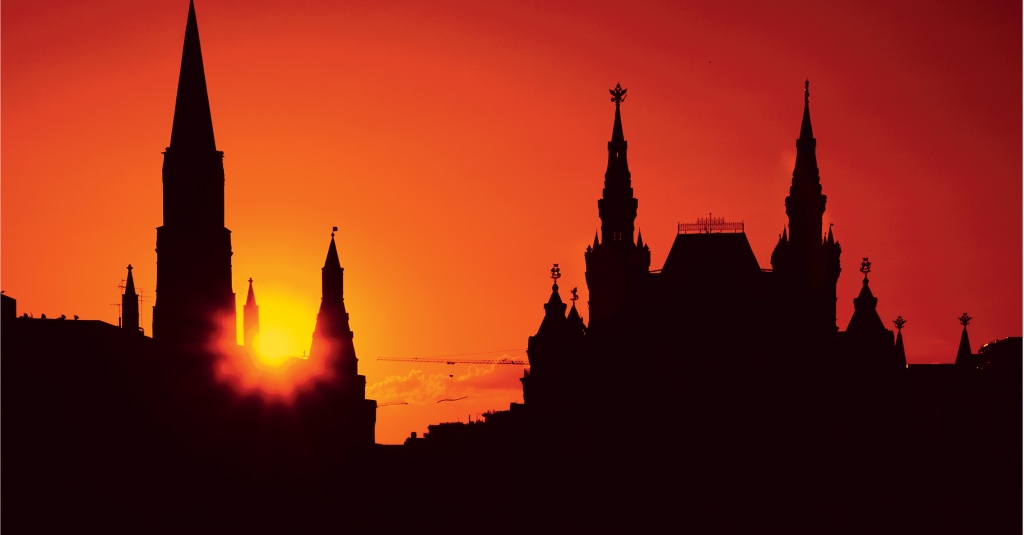
“Morning paint the walls of the ancient Kremlin with delicate light,” Soviet pioneers sang
Culture. In recent weeks, the media also pay much attention to the conflict of the Minister of Culture Vladimir Medinsky with the famous documentary director Vitaly Mansky. And here is the same problem as in other areas of our lives. The state takes on the functions unusual for it, tries to regulate what should not be regulated. In this case, to influence the fact that artists should shoot, put, write, ultimately - think. We have already passed all this. In addition to the mythology of war and space, we never had any other mythology. We closed from the world, and the world closes from us. Instead of trying to control everything and everything, it is necessary to facilitate the access of people, especially young, to modern world culture ( Alexei German, film director) . The function of the state is to take care of the preservation of cultural heritage. Otherwise, the state should stimulate patronage, so that the entrepreneurs are not only honorable, but also profitable to maintain projects in the field of culture. We should all understand: culture is created by private people. Tretyakov Gallery, Hermitage, Russian Museum - all these collections were created by private people. Therefore, culture should also be developed by private people, private institutions ( Marat Gelman, Galerist ).
What next?
It remains for me to tell you the most important. I'm leaving. I fly to the moon to do colonization and landscaping. And here you are somehow dealing with everything that I just told you about. And - yes, take care of Russia ( Evgeny Chichvarkin ).
Photo: Shutterstock