
Translated material
The visit of the old lady to the sanatorium for the blind
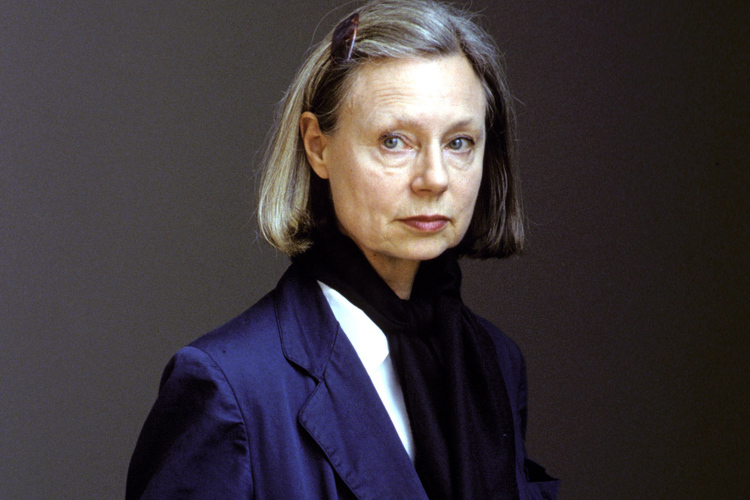
At the Non / Fiction Fair , where there was a large Swiss literary program , the famous writer Fleur Yeggie visited.
Fleur Yeggi was born in 1940 in Zurich. The future writer spent most of childhood in boarding houses, where she began to write; According to her, at that time it was a “least boring” occupation. Since 1968, he has been living and working in Milan and writes in Italian.
The books of Fleur Yeggi are translated into English, French, German, Spanish, Catalan, Dutch, Norwegian, Greek, Polish, Croatian, Serbian, Chinese and other languages, she is a laureate of the Bokkaccio Prize for the book “Happy Unfortunate years”, Donna Dee Dee Dee Di for the novel “Proletarian”.
Madame Yeggi is deliberately inconsistent, she does not use mobile and computer, prints on a typewriter, instead of gadgets she is interested in stationery and says that he loves when all things lie in their places. She is peremptorous in judgments, calls even the most painful things with his proper -names and has the slightest desire to like or make contact.
The action of the most famous novel by YEGGI “Happy Unhappy years” unfolds in a boarding house for girls with stiff ones, not leaving time for leisure rules, cruel children and strict nuns. Actually, there are no actions in the novel, this is a set of postcards faded by the time of the cards and the photographs of the flashes of fragmented memories in the manner of Effei Bridge, who were overwhelmed by children's perception. Of course, the book is related to the novel of education and its variation - the novel about the school (here is the “Torlas” of Muzil, and “Jacob von Gunten” by Valser). As it usually happens, the storyteller does not comply with the rules, there is, as it were, in the gaps, the daily routine, rises before everyone and goes on a secluded walk, always late. But what is true that fiction is already impossible to understand. As Yeggie says, in the literature you can use absolutely everything that happens to you in life, including things that happen when you sleep. Maybe all this is only a dream and life in the boarding officer’s boarding house only sought up: having returned to these places after many years, she does not detect either a guesthouse or any of the previous friends, only a sanatorium for the blind. Perhaps the guesthouse can be understood as a metaphor of the uncomfortable, but still twisted by a romantic Fler of life (not accidentally in English, the novel is called “ Sweet Days of Discipline " ), which the current inhabitants of these places do not see or do not remember.
Madam Yeggi even calls the most painful things with his names and has the slightest desire to like or make contact.
However, Fleur Yeggi is a vivid example of the writer Per. se . After the point is set in the text, she no longer associates herself with him, the word says, she has nothing to add. Yes, she does not have such a desire. She does not like to give an interview.
Like the “happy unhappy years”, the novel “Proletarian”, a kind of literary Road Muy, is through and through autobiographical. The heroine goes with her father in a sea cruise. She knows her father poorly, it turns out that her own past is even worse. This journey is not only to the father, but also to the knowledge of oneself - and oneself real. In the same way, with the most complicated system of characters, take -offs that turn around falls, and vice versa, the autobiographical novel “Tanner Family” was built of one of the favorite writers of Yeggie - Robert Valser.
The boarding house, where Fleur Yeggie grew up, was not far from the last refuge of the great Swiss, she literally had the opportunity to look at Valser's world with his eyes, spent a lot of time in those places, wandered through the same mountain paths; Moreover, YEGGI talked a lot with the inhabitants of the psychiatric clinic of Kherizau (where Valzer spent more than 20 years and where the Walzer died. - Ed. ) And, according to her, she found them completely sound. Elfrid Elinek once called Valser her “personal saints”. The attitude of YEGGI to the writer is not devoid of personal, but the innate severity of thinking, the hygiene of thought determined its attitude to his work - through translation.
Among other translations to Italian are “imaginary life” by Marseille Shvoba, one of the most famous works of French symbolism. Following the rune, Yeggie also translated the “confession of the Englishman who used the opium” de Queens. And also Kitsa poems. It is possible that on the recommendation of Joseph Brodsky, a long -term friend of Yeggie and an enthusiastic reviewer of her books. To the question of Elena Kalashnikova on Non / Fiction , as she imagines the ideal reader of her books, Yeggie called him. Then his publisher.
She does not associate Brodsky with Russia.
Among the close friends of YEGGI were both Ingeborg Bakhman and Thomas Bernhard. Bakhman died of burns received during the fire-fell asleep without extinguishing a cigarette, in the "happy unhappy years" and in the "Proletarka" there is an episode when someone tries to burn a woman, and this involuntarily causes an association with the circumstances of Bakhman's death, but Yeggi denies this connection; Perhaps this is one of those things that happen while you sleep.
The German language in Yeggie’s books occupies a special place: the heroine speaks to it with her father (the father of Yeggie comes from German -speaking Switzerland), the characters from Germany are clearly distinguished among others, as of the other, they are endowed with all typically German attributes, which could not slip away from the close attention of touchy German criticism.
However, with any of the modern writers, Swiss or German, she does not associate herself and refuses to put her books in any row, to attribute them to any literary tradition. At the request to make a list of favorite Swiss authors of past centuries enthusiastically calls Keller and Gotthelf. In both, Switzerland appears an extremely isolated country, including metaphorically; The image of a closed, limited space (boarding house, ocean liner), undoubtedly, is related by Yeggie with these venerable Swiss authors.
In “Happy Unhappy Years” among the few real names encountered (this is Walzer, Sisters Bronte, Bodler and Wilhelm Bush) suddenly pops up the name of Lenin. In one of the diaries of Max Frisch, who was so many in the fate of his friend Fleur Yeggi Ingeborg Bakhman, there is an anecdote about the imaginary meeting of Valser and Lenin . They lived in the same house in Zurich, however, at different times (in the same house there was Dada Kabare "Voltaire"). Valzer allegedly asked Lenin if he loved the bread with pear tsukats. In Moscow, Lenin is everywhere, however, Russian Yeggie knows a little and not so interested. Or just lets at itself an indifferent look. She does not associate Brodsky with Russia. Thinking a little, he calls Akhmatov. Outside with Brodsky. And Chekhov.
At the Moscow Non / Fiction, Fleur Yeggi presented a collection of stories "Fear of Heaven." In the seven novels, Yeggie managed to create a panorama of Swiss life. The topics of stories are the simplest, if not primitive, human emotions, the fabric of these texts is completely unpredictable. Their goal is the goal of the classics of Swiss literature: Glauzer, Durrenmatt, Frisch, Ramya - to disrupt the cover of well -being from the image of Switzerland, to expose the inside of decency and external gloss.