
Translated material
Fools and road
In early December, the “fool” Yuri Bykov, a sign that in Russia in 2014, contrary to the obstacles of the Ministry of Culture, appeared on the screens, a tough social cinema of the new generation appeared
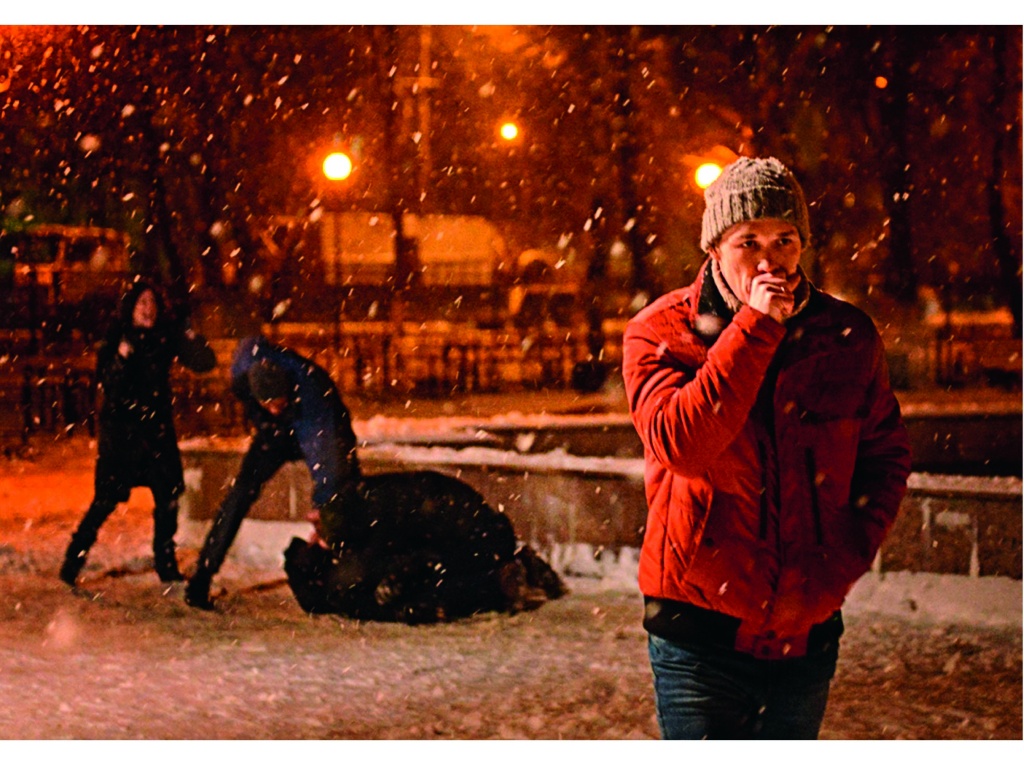
"Fool" - frankly journalistic cinema/ photo: TPO "ROCK"
This year takes place for the film professional under the sign of Leviathan Andrei Zvyagintsev, who is also an extremely strong political statement about today's Russia. But, firstly, Leviathan is still not available to the public: it will appear on the screens only in early February and unknown in what form (there is a lot of Mata, which the creators of the film seemed to have agreed to make a compromise with censorship). Secondly, this film is also about the eternal: about friendship, love, betrayal, about the nature of man, about the meanness in which the church has repeatedly closed with a corrupt state in the course of world history.
The “fool” Yuri Bykov is frankly journalistic and straightforward, for which even many progressive critics of the movie scold him. This, in fact, is the terrible guide to the system of Russian corruption.
Fools and roads have always been considered the main nightmare of Russia. In the film, Yuri Bykov, a fool is her last hope.
Intellectual
The hero of the film performed by Artem Bystrov (for his role in the "Fool" he received a prize at one of the leading European film festivals in Locarno) - the son of his father. Even a faithful spouse calls his father in his hearts a fool, because he did not steal anything in his entire life. His son, deputy foreman of the plumbers of a provincial city who studies at a construction institute and is able to analyze the condition of houses with the help of computer programs, the same fool, since he does not tolerate irresponsibility. Russia is a country of riddles. Here even fools are not necessarily fools. General fools often live wonderful. But the fools who are for the truth, those yes are really idiots.
On one of the winter nights after an accident in an old nine -story working dormitory, the hero, having checked with a computer, clearly understands that the house will collapse, and within a day - with all its inhabitants, of which eight hundred people. And at night he excites the mayor - the mistress of the city, nicknamed Mom - and the entire city administration. Those at first, of course, are scared (who wants to prison?). And they intend to evacuate the tenants. But there is nowhere to resettle them. And outside the windows of the cold. There is one option, but then the shadow owner of the city, who modestly lurked in his mother in the swing, will have to fork out. And this owner forces his mother to go to the massacre. To begin with - destroying the fool and their two of their own administration, who are responsible for the state of urban buildings. In order to then blame them all the blame: they say, they stole the money for major repairs (which, by the way, is true) and, learning about the fall of the house and victims, went on the run (although they were under the ice of the local river).
Everything, however, is not quite according to plan.
The magic of power
In the "fool" there are really a lot of poster: power is bad, the hero is good, the environment is indifferent. Once in a critical situation, government representatives immediately begin to blame each other of theft, clearly explaining (clear, not to each other, but exclusively to the viewer) Russian corruption schemes. Marsha, justifying herself, recalls that she is forced to roll back to the regional center exactly half of the budget money. Its deputy, the shadow owner of the city, cynically declares: in our country they live either as a person or as a cattle; There is not enough for all a good life; Divide it into everyone - we will find ourselves in poverty. There are more unexpected phrases. The same shadow owner, getting angry, attacks the mayors with evil logic: you say, you are mourning about the potential death of eight hundred people, but you don’t give a damn that in your city because of bad roads, non-financial medicine, alcoholism and drug addiction, people die daily a ten a day.
Due to endless conversations, it seems like the film is based on the play. It resembles one of the dramas of Alexander Gelman of the 70-80s, in which the classic of the Soviet theater tried, as much as time allowed, to denounce the then public shortcomings. His play “Zinulya”, where a fool is also shown, but in a female guise, by the way, was the second unofficial name “Funny”.
These are journalism, laid out into talking heads. For the front -line phase, the film is scolded by some quite good critics. It is difficult to disagree with their arguments. The most interesting thing is that the director Yuri Bykov himself agrees with them: he understands that the picture is hasty, but he wanted to speak as tougher and faster as possible (the script, as he, by the way, assures, is based on real history).
And here is the most important thing. Yes, the "fool" is not a phenomenon of cinema. But nothing of the kind in anger and courage in our cinema has not yet appeared! In our XXI century, they almost did not make socio-political paintings; With rare exceptions, among which the main are films of the recently deceased Alexei Balabanov. And we did not like the cowardice of directors and producers. Now director Yuri Bykov and producers Alexei Teacher and Kira Saksaganskaya made a truly honest movie-and we do not like it again. Where is the logic?
The film is also scolded because he demonstrates known to everyone. What is the “all”, if we take into account the popularity of our president? It is remarkable that in the “fool” almost everything that can be said about life in our country is consciously uttered.
In addition, the film in Yuri Bykov has an incredible and completely gloomy turn. Most of those who are the hero of the film - a fool - are trying to save in a hostel, a natural cattle, for whom a fool becomes the same enemy as for the city authorities.
And then the most gloomy and very clearly spoke output of the film: if you were born wisely, talent, and even a conscience, then you need to get out of here (in the film, to bring down from a particular provincial city, but there is a generalization). There is only one road - anywhere, but away. Because we can no longer fix it. Neither those nor these. Neither those who are upstairs, nor those below. It is pointless to engage in both the education of power - nothing will change there, until the country collapses completely, and by populism: the cattle will remain cattle.
Perhaps this idea was worth expressing straightforwardly, as Bykov made, and not to encrypt in a subtext, where many would not see it.
New social cinema
Surprisingly, it was in 2014 that we had a new social cinema. Of course, it was periodically born before. Last year, for example, she came out (but what kind of came out there? Also, few people saw it) “The long happy life” of one of the leaders of the generation of 30–40-year-olds-Boris Khlebnikov. This film was director Yuri Bykov, creating a “fool”, clearly kept in his mind, because there was a fool-farmer (a fool also because he decided to go to the farmers, being urban), too, turned out to be a tete-a-a-test both with a corrupt authority and with a people easily betraying his real defenders.
But 2014 is remarkable in that a movie of very young directors appeared who sincerely suffer for what is happening in the country. Here are just two examples (both films are made in a pseudo -documentary but very convincing style of “dogma” invented by Lars von Trier with comrades).
“Nadezhda plant” Natalia Meshchaninova (which turned 32): a film about a nightmare-to be an 18-year-old woman in a terrifying Russian city, in this case, Norilsk. The film still does not have a Russian distributor, although back in January, he successfully held at the very mass film festival of the world - in Rotterdam (which at the same time appreciates movie art). The problem, as usual, is also in the mat. But if you remove the mat from the "Hope" plant, then we will get a debugged Russian reality. And Natalya Meshchaninova, a native of the city of Krasnodar, who received his personal provincial experience in it, demonstrates an unrefined reality.
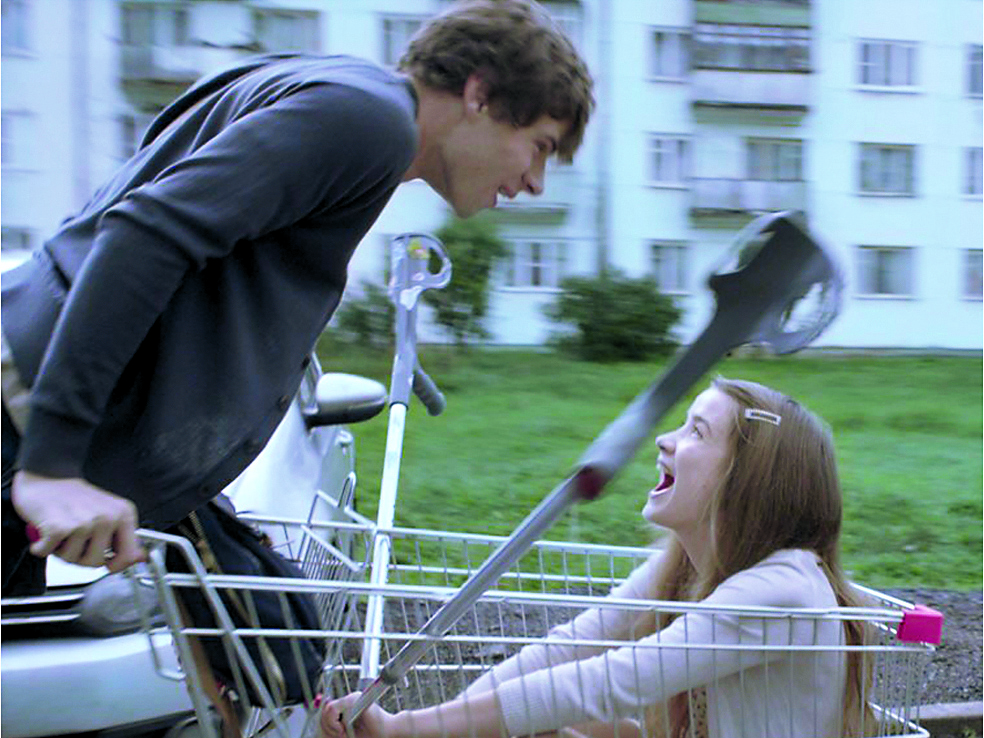
"Hope" Hope - a film about an unbearable life in a small provincial city
On the snack - the “correction class” of Ivan Tverdovsky (he is 25 at all). This film was formally released in September. But exactly what is formally: raise your hands those who saw. Another horror is the experience of the life of a young girl in a provincial town. Another film about that (the tendency, however!) That an honest and unusual person is faced with hatred of both the upper reaches and the lower classes. In this case, we are talking about a beautiful girl, actually a young woman who, after many years of reclusion, is trying to become a normal schoolgirl in the graduation class due to illness. While in a wheelchair. The fact that in Russia, unlike the West hated by it, there are no conditions for the disabled, only one of the topics of the film. The main thing is that both the tops (in this case are the director and teachers of the school) and the lower classes (in this case, students of the class for patients, in which the main character is credited), hate her equally - because not like everyone else, and even smart. This is a film about the triumphant in the country of unspoken correlation. And also about what we already talked about: cattle rules the ball in the country at all levels. And the only normal reaction is to send it to the ass.
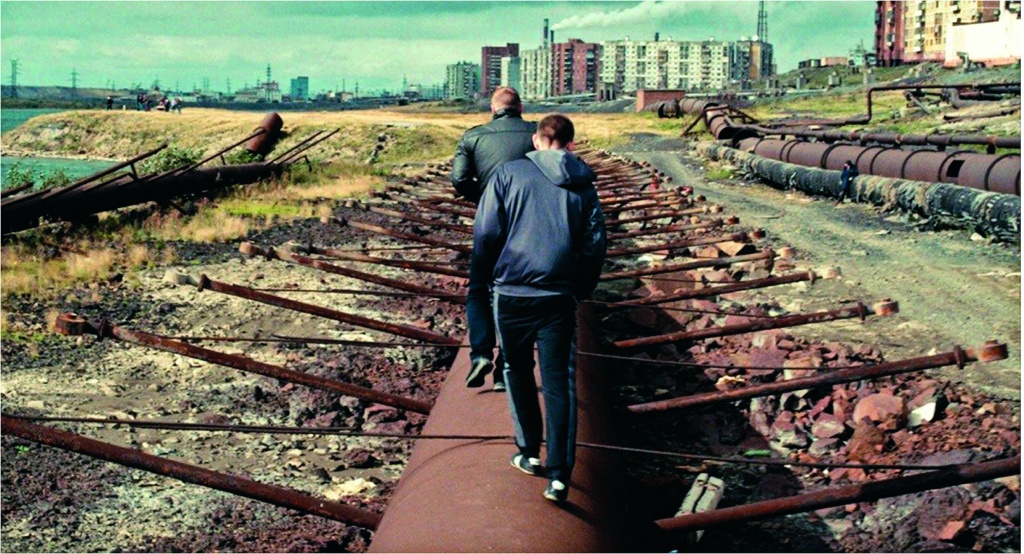
The film "Class of Correction" is that an honest person in Russia is faced with hatred of both upper reaches and lower
The film ends with an amazing scene: a humiliated heroine who seemed to have one way out - to get back into the apartment of her high -rise building (where, like at school, there are no ramps for the disabled, at least normal) and there to die from despair, suddenly gets up and goes. Although the doctors seem to have sentenced her to the chair.
The intelligentsia in Russia will stand up and go - this is the meaning of the "class of correction".
Once such films appear, we will still change something.