
Translated material
System catastrophe
Poverty of Western Africa countries is the most important reason for the spread of Ebola fever
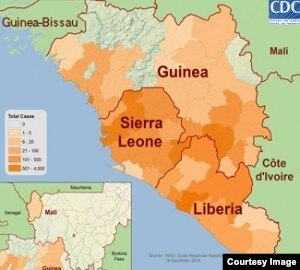
The number of Ebola infected with the Ebola virus in the world exceeded 16 thousand people. According to WHO, most of the cases - 7 thousand in Liberia. In second place in this mournful list is Sierra Leone, in the third-Guinea. The reasons that Ebola cannot be stopped is by no means only medical; In the same way, according to its consequences, the epidemic can go far beyond the limits of personal suffering and losses, acquiring the nature of the common -standard catastrophe. If not world. Says Evgeny Aronov.
The attention of the expert community was recently attracted by an article entitled "Ebola, anarchy and failed states." The author of the article, the senior analyst of the North American research center The Geopolitical Monitor Benjamin Van America, answered our questions by phone from Geneva, where the headquarters of the World Health Organization is located.
The general picture of the epidemic, judging by the latest WHO data, is as follows: more than 16 thousand infected, more than five and a half thousand fatal outcomes in three countries that form the main focus of defeat. This is a very high mortality ratio. Over one week alone, six hundred new cases of the disease have been recorded. Today, Liberia has suffered the most, but doctors suggest that Sierra Leone is about to bypass Liberia both in the number of patients and the number of dead. This is a very formidable symptom in terms of the dynamics of the epidemic; 20 percent of all patients in Sierra Leone fell ill over the past three weeks. Thirteen percent infected, in violation of WHO standards, are not in quarantine. The World Health Organization formulated its minimum task: isolation of 70 percent of all patients and a safe burial of 70 percent of the dead. Financial donors, however, are in no hurry to transfer the promoted funds, and the WHO budget does not allow her to reach the calculation indicators. And the picture may potentially be already in the middle of January next year is completely terrible: a million four thousand thousand infected; Material damage from the epidemic in the region of West Africa by the end of 2015 with the most unfavorable scenario will reach 32 billion $ 600 million.
The numbers that are the basis of WHO models notes Van Americaen, are thoroughly verified. Real statistics are probably even more severe: due to the wretchedness of the telecommunication and medical infrastructure of Guinea, Sierra Leone and Liberia, information about a large number of diseases and deaths does not reach the authorities at all:
All funds are now abandoned to combat Ebola, the prevention and treatment of malaria, cholera and HIV infection are practically discontinued, and they create a background favorable to the spread of Ebola
- As of mid -November, I received funds from donors, covering only half of the financial obligations they have taken. What does this mean in practice? Well, for example, that the need for beds for medical centers taking the Ebola virus is satisfied only by 4 percent. Or the fact that less than 40 percent of the burials of the bodies of the dead meets the established safety standards. The inability of the international community, not to mention countries affected by the epidemic, respond promptly and adequately to a catastrophe of this scale, plunges me into deep despondency. It is scary to think what would happen if this disease was transmitted by airborne droplets. See: in Liberia, about four and a half million people account for only 45 local doctors. In Sierra Leone for five thousand three hundred people there is only one health worker; Not even a doctor, but only a health worker. The energy systems in the region are so weak that even hospitals often find themselves without electricity. It is clear that without the coordinated efforts of the international community and without proper financing, the price of this problem will reach an astronomical value.
The monstrous backwardness of the countries of West Africa in the field of healthcare is also a completely not accidental phenomenon, notes Benjamin van America, and goes from here to the nodal thesis of his article "Ebola, anarchy and failed states":
- Ebola is both a symptom of state disorganization and a reason that can cause the total collapse of management institutions in Western Africa. Such a tropical disease as Ebola is a rare phenomenon, it does not grow into an epidemic overnight. In order for this transformation to occur, the socio-economic environment should be favorable. Which in reality is: the body of people living in the poverty line, exhausted by malnutrition or chronic malaria, is more subject to infection with an exotic virus more than the body of people who eat normally and vaccinated against malaria. Moreover, the governments of countries, constantly shaken by civil wars, namely, this is what is happening in Sierra Leone and Liberia-there are no funds even to completely elementary educational programs of the population in terms of sanitary-hygienic norms, the non-compliance of which provokes the spread of the type of ebola. On the example of West Africa, we see how the mechanism of vicious poverty logic works: all means are now abandoned to fight Ebola, the prevention and treatment of malaria, cholera and HIV infection are practically discontinued, and they, as I said, create a background that favors the spread of the Ebola.
The following phrase from the article by Benjamin Van American: "Up to 90% of economic damage from pandemia may result in the irrational reaction of the local population to it, to the connection between the catastrophically inadequate measures of the authorities in the field of education and the severity of the epidemic."
- Yes, an economic disaster is able to cause a simple thing to life as a refusal of peasants motivated by an unreasonable fear of infection to bring their products to the market. And the equally unreasonable fear of wholesalers or ordinary consumers to go to the market for food. Thus, the entire production and ditter chain can collapse. The same disaster will give rise to the closure of factories and other enterprises. Imagine also long -term economic damage from the fact that the population, without alternative scientific information, will begin to spend their already meager funds not on food and medicines, but completely useless, but inexpensive, and therefore attractive "vaccines" of folk healers.
- This is an example of the harmful interaction of the epidemic with social factors, fraught with the risk of a collapse of statehood. What about other interactions?
- Borders. This is probably a key point. The inability of states, weakened by perennial civil wars and large -scale banditry, protect their borders. To this, it is necessary to add the decaying effect on the state structures with drug carthes and terrorist organizations that have recently been settled in West Africa. In addition, let's not forget that these boundaries often do not correspond to the geographical realities of the resettlement of the ethnic group, only formally divided by boundary poles. Representatives of the disconnected tribe or people calmly move between them, neglecting the rules of sanitary and epidemiological supervision. Doctors are sure that inadequate border control is one of the most important circumstances that exacerbate the current crisis.
System corruption, another sign of weak statehood, demoralizes society in regular situations. And in abnormal, its influence becomes more dangerous than a hundred times, up to the threat of the very survival of the institutions of power. This is, of course, not about the banal extortion of bribes with funeral teams from the native victims of the epidemic, which is often reported by the media. And, for example, about the massive theft of medical supplies and equipment, although the interlocutor assured me that the control system in WHO would not allow this. Or the fact that the rulers of individual cities or provinces, "roofed" by criminals, will give them a "subordinate" population for the sake of access to scarce imported drugs. Very dangerous consequences from the point of view of the survival of state institutions, Benjamin Van Americaen believes, may also have a combination of corruption with the common Tybalism in West Africa, that is, the construction of authorities on the basis of tribal ones than national ties. One scenario in this regard suggests itself: the predominant provision of medical care to single -players, regardless of the real needs of representatives of other nationalities. But this scenario, fortunately, is more likely a hypothetical than real, expert of the Geopolitical Monitor research center in conclusion.